
If you're over 50 and wondering whether it's too late to build income online, you're not alone. A lot of women feel behind financially, not because they failed, but because life happened, family came first, or Retirement looked farther away than it does now. Tech can feel like a moving target too, and that can make the whole idea of an online business seem bigger than it really is.
You do not need to be the youngest person in the room to start. You need judgment, patience, and the ability to notice what people still need help with. That's real value, and the online world rewards that more than many realize.
If you're carrying the quiet fear that Retirement won't be enough, that fear makes sense. It also doesn't mean you're stuck. You can learn this in steps, and you can build something simple without turning your life upside down. For mindset support while you start, developing a success mindset for your second act can help you shift from hesitation to action.
You Are Not Too Late to Start
I've heard versions of this story many times. A woman gets through her workday, checks her savings, looks at rising bills, and thinks, “I should've learned this years ago.” Then she opens a tab about making money online, sees jargon everywhere, and closes it again because the whole thing feels built for someone younger, faster, and more technical.
That feeling is common. It's also misleading.
Your life experience is part of the business model
Online audiences don't only want speed. They want clarity, good judgment, and someone who can explain things without making them feel small. That's where midlife creators often have an advantage, because they've already spent years solving problems, helping people, and making careful decisions.
The U.S. Census Bureau reported that woman-owned firms generated $2.1 trillion in receipts and employed 12.2 million people in its 2022 Survey of Business Owners, which is a strong reminder that women already operate at scale in business ownership. You're not starting from zero just because you're starting now. You're starting with a long list of skills you may have stopped counting.
Practical rule: If you've ever helped a friend make a decision, organize a home, cook a meal, plan a trip, manage a budget, or explain something patiently, you already know how to create value online.
The digital economy is also not some tiny side alley anymore. The U.S. Census Bureau reported that retail e-commerce sales reached $326.7 billion in the first quarter of 2026, about 16.9% of U.S. retail sales in that quarter, while total U.S. retail sales were $1.929 trillion in the same period, showing how central online channels have become in everyday commerce. That matters because it means the market is broad enough for ordinary people with useful knowledge to find their corner.
By the end of this guide, you'll know what an online business really is, which beginner-friendly model fits your life, and how to follow a realistic 90-day start without quitting your day job or learning to code.
What an Online Business Really Is
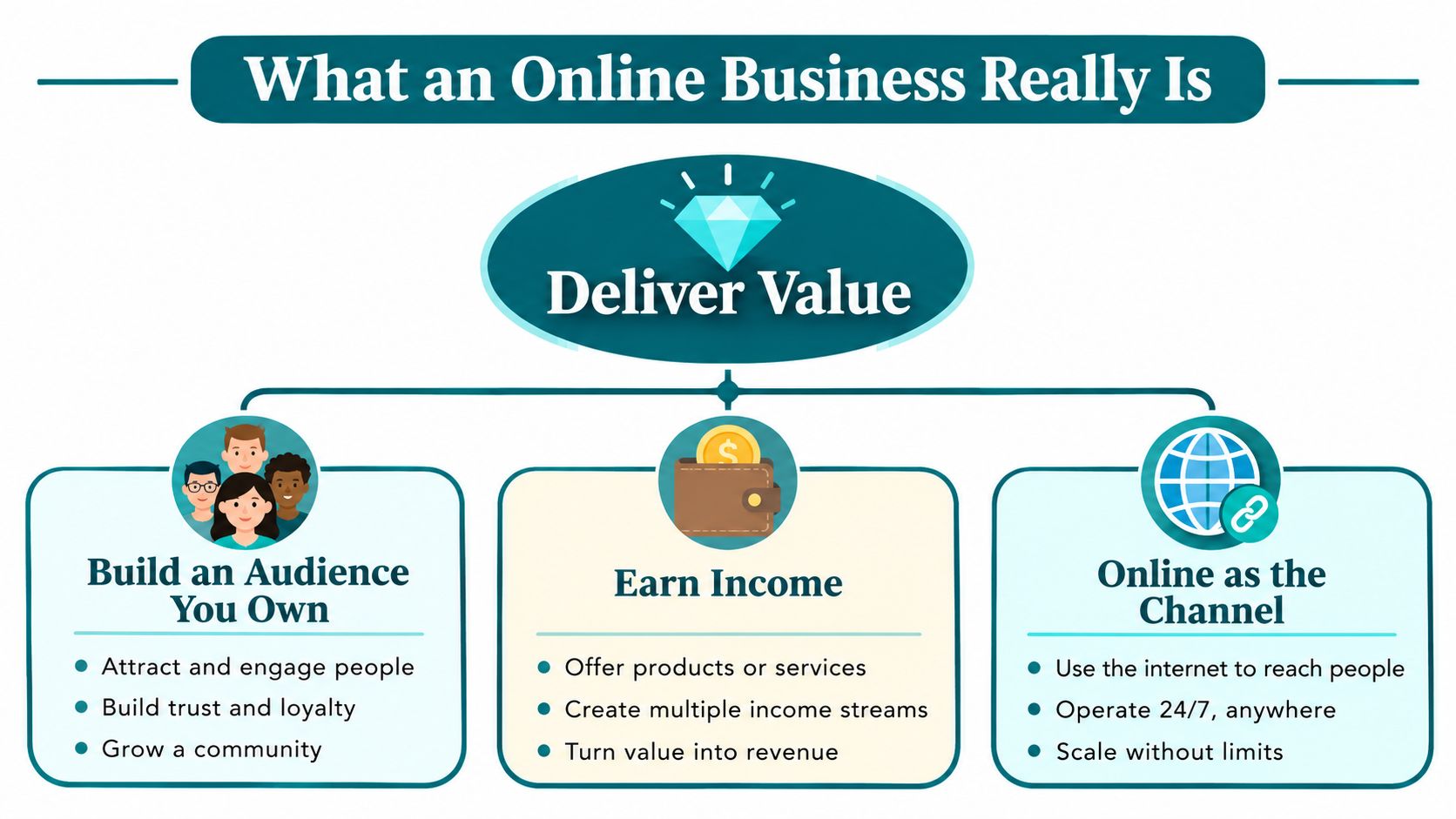
An online business is a way to deliver value through the internet, build an audience you own, and earn income from that relationship. The value might be information, recommendations, products, or services. The channel is online, but the business itself is trust.
That definition matters because people often confuse a real business with a hobby account, a side gig, or a social media following. A hobby can be enjoyable, but it doesn't have to produce income. A gig app gives you short-term work, but you usually don't own the customer relationship. An online business is different because it builds an asset you can keep working from over time.
The email list is the part you actually own
Social media can help people discover you, but it's borrowed land. Your email list is different. It's a direct line to people who asked to hear from you, which is why many creators treat it as the core asset of their business.
That idea shows up again and again in practical online business advice because ownership matters. The more controlled the channel, the less dependent you are on a platform's changing rules, feed, or mood. If you've ever watched a post disappear into silence, you already understand the problem.
A useful way to think about it is this, social media is the busy food court, and your email list is the private dining room. People can walk past the food court and move on. The private dining room is smaller, quieter, and easier to serve well.
If you want a simple content workflow that fits a one-person business, streamline video content marketing can give you ideas for turning one message into multiple assets without making the process complicated.
Bottom line: If you don't own the relationship, you don't fully own the business.
For creators who like to build with less technical strain, a clean website and email system usually matter more than a polished social presence. The site gives your work a home. The email list gives your audience a place to come back to. That combination is what turns content into something stable.
Five Beginner Online Business Models Explained Simply
There isn't one correct way to begin. The best model is the one you can keep showing up for when life gets busy, because consistency matters more than cleverness at the start.
Affiliate marketing is the easiest to understand. It means recommending products and earning a commission if someone buys through your link. If you already tell people which cookbook, gadget, or course you like, you're halfway there.
Productized services are also beginner-friendly. Instead of offering every kind of help under the sun, you package one service into a clear offer. A retired office manager might offer résumé reviews. A former teacher might offer lesson-plan organization. A bookkeeper might offer small business cleanup sessions.
Info products are digital teaching tools. These can be checklists, templates, guides, short lessons, or mini-courses. If you know how to simplify a task, you can turn that knowledge into something someone else downloads and uses.
Brand ambassadorship is close to Affiliate Marketing, but it usually centers on ongoing representation of a product or company. It can fit people who like steady partnerships and don't mind being visible over time. It works best when the products match your actual life.
E-commerce-lite means selling a small number of items without building a giant store. Think printables, digital downloads, or a narrow product line. It's often less overwhelming than full-scale retail because you can keep the offer focused.
The right model depends on your energy, not your age. If you want the broader creator-business view, this content creator business model guide is a useful companion.
| Model | Upfront Cost | Time Commitment | Best For |
|---|---|---|---|
| Affiliate marketing | Low | Part-time, steady | People who like recommending useful products |
| Productized services | Low to moderate | Client-based, structured | People with a clear skill they can package |
| Info products | Low | Upfront creation, then lighter upkeep | People who like teaching and organizing knowledge |
| Brand ambassadorship | Low | Ongoing relationship building | People comfortable with visibility and repetition |
| E-commerce-lite | Low to moderate | Setup plus upkeep | People who want a narrow, simple offer |
If you like the idea of affiliate work, you might also explore faceless video affiliate if showing your face isn't comfortable yet. Some beginners prefer that path because it keeps the focus on the product and the message, not personal performance.
Realistic Income Timelines and Honest Pros and Cons
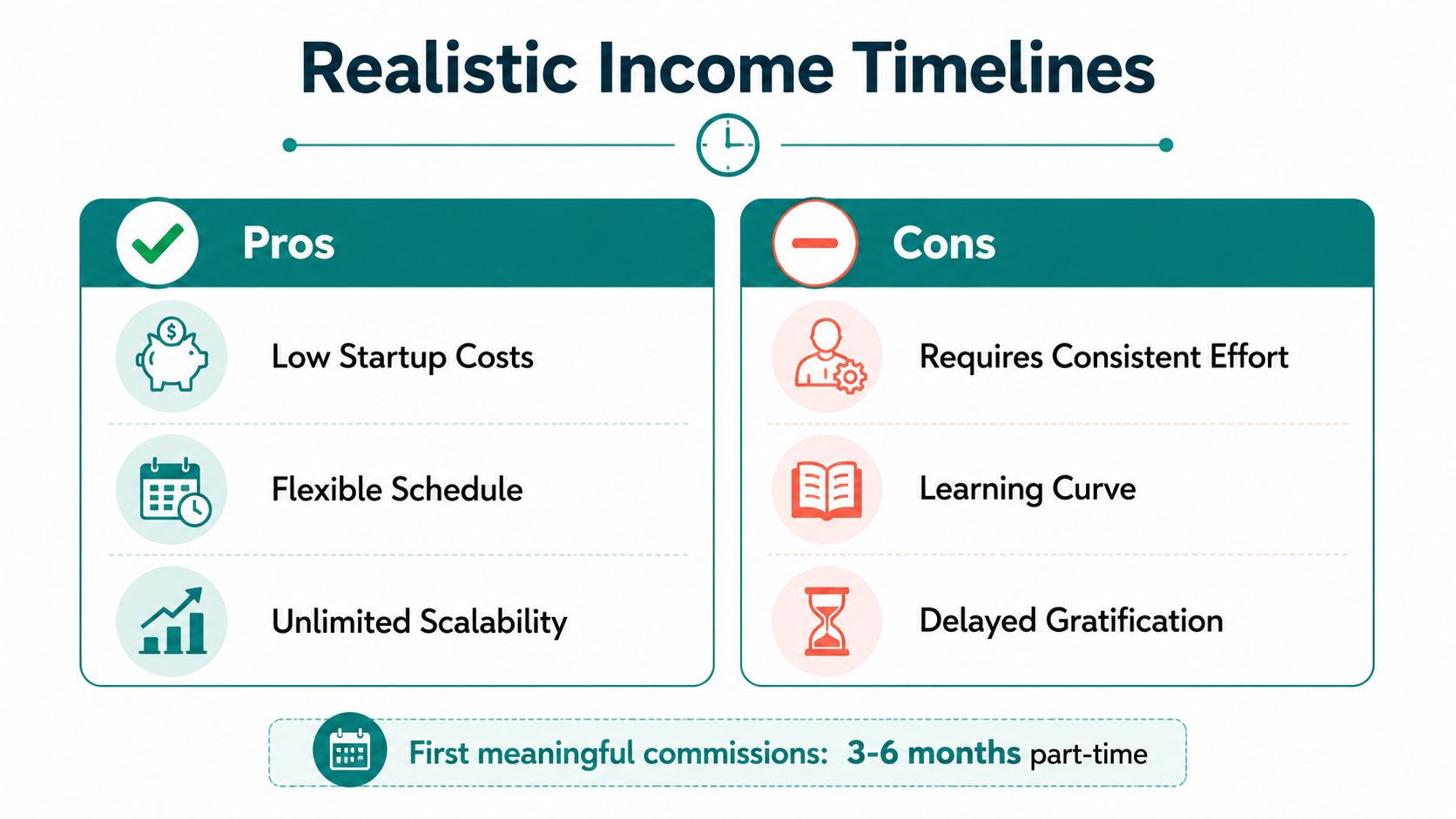
A calm plan beats a fantasy every time. For a beginner working part-time, meaningful commissions or sales usually take time to build, and steadier income tends to arrive later, not immediately. That's not a warning to scare you off, it's a sign to set expectations that protect your confidence.
The creator economy is still growing, but the earnings are uneven. One 2024 estimate put it at more than $190 billion, while commentary around the space keeps pointing out that many creators need multiple income streams instead of relying on one sponsorship or one viral post. That's why lower-risk paths like affiliate offers and email List Building can make more sense than chasing brand deals first.
What tends to help, and what tends to slow things down
The upside of an online business is real. You can work flexibly, you can own the audience relationship, and you can build something that grows without needing permission from a boss or platform manager. For many women, that sense of control matters as much as the money.
The downside is equally real. The start is slower than many hope, the learning curve can feel awkward, and the internet is full of shiny distractions. One week you may think you need a new logo, and the next week you may think you need a different niche. Usually, you need fewer tools and more repetition.
Good expectation: The first year is often about building the asset, not paying every bill.
That's why the Big Five metrics matter so much for an online business. A business can get traffic and still not make money if the site doesn't convert. On the other hand, a smaller audience with strong trust can outperform a bigger, colder one. Revenue follows the quality of the relationship, not just the size of the crowd.
The honest middle path is this, expect a slow beginning, keep your costs low, and measure progress by stronger habits and better audience response. That keeps you from quitting too early and from believing any promise that sounds too easy.
Your 90-Day Starter Roadmap
The first ninety days should feel simple enough to repeat on a busy week. You're not trying to build the whole house at once. You're laying the first strong rooms in the right order.
Days 1 to 30, choose your lane
Pick one subject you can talk about without forcing it. Then name the small group of people you already understand, maybe women near Retirement, new grandparents, church friends, caregivers, hobby cooks, or former coworkers. Start where your real life already gives you access.
A good test is this, if you had to answer the same question ten times, what would you happily explain? That topic is often a strong niche because it already lives in your memory, not just in research notes.
Checklist for this phase
- Choose one niche.
- Write down three audience problems.
- List the people or groups you already know.
- Decide what you can talk about for six months without running out of patience.
Days 31 to 60, build your owned audience
Create one simple lead magnet, such as a checklist, guide, or printable. Then connect it to an email signup form so people can join your list. The goal is not a fancy funnel. The goal is ownership.
Keep the welcome sequence short and kind. One email can introduce you. One can deliver the free resource. One can point people toward the next useful step. That's enough to begin.
If you want a practical example of how small businesses think about this stage, the growth playbook from EmailScout offers a useful lens for building around a clear offer and repeatable communication.
Days 61 to 90, make the first money move
Now choose one way to earn. That could be one affiliate recommendation, one paid newsletter, or a few productized service clients. Keep it small enough that you can finish it without burning out.
The launch does not need perfect branding. It needs one clear offer, one clear audience, and one clear next step. That's how confidence grows, one complete cycle at a time.
The video below is helpful if you like seeing the sequence in a more visual format.
Done looks like this
- You've picked one audience.
- You've created one lead magnet.
- You've connected one signup form.
- You've made one monetization choice.
An Ethical Marketing Mindset for Midlife Creators
There's a quiet strength in building slowly. Midlife creators don't need hype to stand out. They need trust, consistency, and the kind of honesty that makes readers feel safe coming back.
Affiliate marketing only works well when people know what you're recommending and why. The Federal Trade Commission requires a clear and conspicuous disclosure when there's a material connection, including affiliate commissions, so your readers know the relationship before they act. That protects your audience, and it protects your credibility too.
A simple disclosure can sound like this, “I may earn a commission if you buy through my link, at no extra cost to you.” That's enough when it's written plainly and placed where people can see it. You do not need to hide the relationship or dress it up.
Integrity is a strategy, not a limitation
When you only recommend things you've used, researched, or understand, your audience learns that your word means something. That makes your email list more valuable over time because people don't have to guess whether you're being careful. They already know you are.
If a product doesn't fit your readers, say no. If a promotion feels rushed, skip it. If a claim sounds dramatic, leave it out. A slower path can still be a smarter one, especially for people who are building a second chapter and don't want to spend it repairing trust.
For a deeper look at this part of the business, ethical business standards are worth keeping close.
Simple standard: Promote what helps, disclose what matters, and never ask your audience to carry the cost of your shortcuts.
That approach fits older creators especially well because it treats reputation as an asset. And reputation, once built carefully, is hard to replace in a noisy market.
Next Steps, Checklist, and Simple Examples
Keep this week small and concrete. That's how momentum starts when you've been thinking about change for a long time.
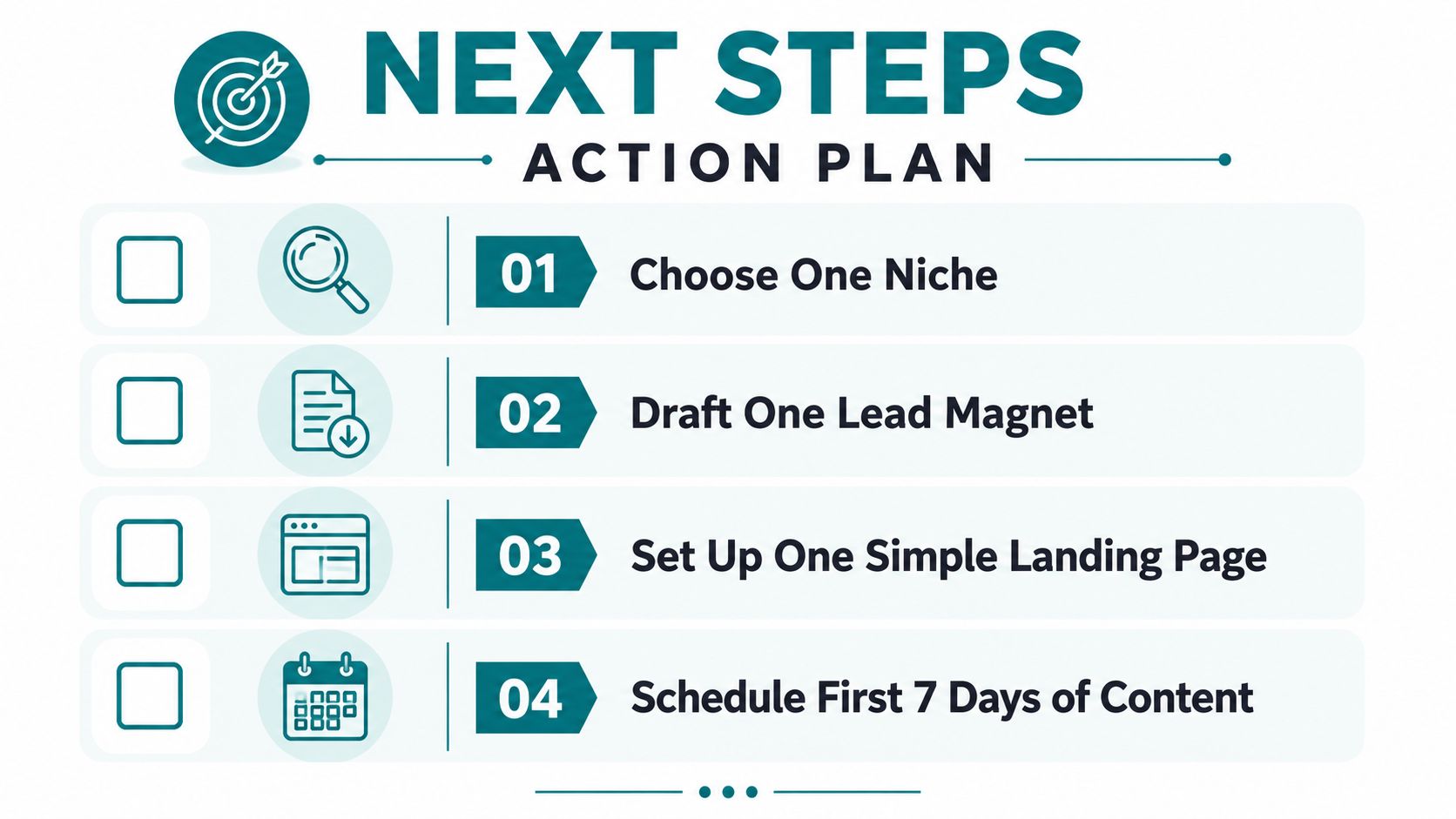
Your action list
- Choose one niche.
- Draft one lead magnet.
- Set up one simple landing page.
- Schedule the first seven days of content.
- Write one welcome email.
- Recommend one trusted product.
A retiree might recommend travel gear to other older travelers and build an email list around trip planning. A former teacher might sell a printable budgeting workbook and write helpful emails about household planning. A home cook might review small kitchen appliances and use affiliate links to recommend the ones that make dinner easier.
Victoria OHare also offers step-by-step guidance on Affiliate Marketing, brand ambassadorship, List Building, and simple automation for people who want a calmer path into an online business. If you want a practical next stop after this guide, the Victoria OHare site is a natural place to continue learning.
The Next Five Years Will Pass Either Way
Starting at 50, 55, or 60 is not a last resort. It's a second chapter, and it can be a very steady one if you build something small, honest, and owned. You don't need to outrun anyone. You only need to begin.
The next five years will pass either way. The only question is whether you'll use them to build an asset that gives you peace of mind, or keep waiting for a perfect moment that never really arrives. Start with one useful thing, one small audience, and one clear offer, then let the work teach you.
If you'd like a calmer, step-by-step place to keep going, Victoria OHare offers beginner-friendly guidance for women who want to build an online business without tech overwhelm or fake urgency. Visit Victoria OHare to explore practical next steps for Affiliate Marketing, email List Building, and a more owned, more peaceful way to earn online.