
If you're over 50 and wondering whether it's too late to build income online, you're not alone. A lot of women look at their savings, look at the cost of living, and wonder if Retirement will feel as secure as they hoped. Then they open YouTube or Instagram, see polished creators half their age, and think, “I missed my chance.”
You didn't.
You are not behind. You can learn this. And a content creator business model doesn't have to mean dancing on camera, chasing trends, or becoming an influencer in the way the internet often portrays it.
It can mean building something steady, useful, and yours.
You Are Not Behind You Are Right on Time
I remember how strange the online business world felt at first. Tabs everywhere. New words I didn't know. Young creators talking fast, as if everyone should already understand funnels, monetization, offers, and analytics.
For many women in midlife, the hardest part isn't laziness or lack of ability. It's the feeling that the internet became a marketplace while you were busy living your life, raising children, working, caregiving, or trying to keep everything afloat.
That feeling is real. It can make you freeze before you even begin.

This isn't about becoming internet famous
A sustainable content business is much quieter than that.
It's a woman who knows how to organize a home on a tight budget and shares simple tips.
It's a former teacher who explains confusing topics in plain English.
It's a gardener, quilter, caregiver, book lover, Health advocate, or experienced professional helping other people solve everyday problems.
That's all content really is. Useful help, shared consistently.
You don't need to look trendy online. You need to be helpful, honest, and clear.
A lot of readers get stuck because they assume they need a huge personality or advanced tech skills. But many solid creator businesses begin with ordinary strengths:
- Life experience: You've already solved problems other people still struggle with.
- Patience: Midlife creators often explain things better because they aren't trying to impress anyone.
- Trustworthiness: People buy from creators who feel safe, grounded, and real.
- Consistency: Flash gets attention, but steadiness builds a business.
The real opportunity is peace of mind
If you're worried about financial security, this path can matter for reasons that have nothing to do with hype. You're building a skill set. You're creating digital assets. You're learning how to communicate online in a way that can support income over time.
I understand being cautious. There are scams online. That's why education and mentorship matter, and why it's wise to focus on ethical models you can understand clearly before you spend money or commit your energy.
This is learnable.
And if technology feels intimidating, that's not a sign you should stop. It's just a sign you need a slower, simpler path.
The New Financial Security Building Digital Assets
A paycheck is important. But a paycheck depends on you showing up today.
An asset is different. It's something you build once and keep using. A blog post can keep helping people. An email list can keep connecting you with readers. A simple guide, workshop, or recommendation page can keep working long after you create it.
That's why the content creator business model matters. It isn't only about making posts. It's about building small digital assets that can support income and give you more control.
This is a real business category
This space is far bigger than many people realize. One market estimate values the creator economy at USD 117 billion in 2024 and projects it to reach USD 1,143 billion by 2034, with advertising, sponsorships, and subscriptions named as core revenue channels in that market outlook, according to Market.us research on the creator economy.
That matters because it tells you this isn't a fringe hobby anymore. People aren't only earning from ad views. They're building layered businesses with multiple ways to serve an audience.
What a digital asset looks like in real life
You don't need to start with something complicated. A digital asset can be:
- An email list: A direct way to stay in touch with people who want to hear from you.
- A helpful article: A piece of writing that answers a question your audience keeps asking.
- A short video: A teaching clip that points people toward your newsletter, service, or recommendation.
- A repeatable system: A publishing rhythm you can sustain without burning out.
If content creation sounds messy, it helps to think in systems. A good start-to-finish content system can show you how one idea becomes several useful pieces of content without starting from scratch every time.
Practical rule: Don't measure your early progress by followers. Measure it by assets created.
A woman with a small email list, a few helpful articles, and one simple offer is often on firmer ground than someone with platform attention but no way to turn that attention into a stable business.
That's the shift. You're not chasing visibility for its own sake. You're building something that can support your independence and your peace of mind.
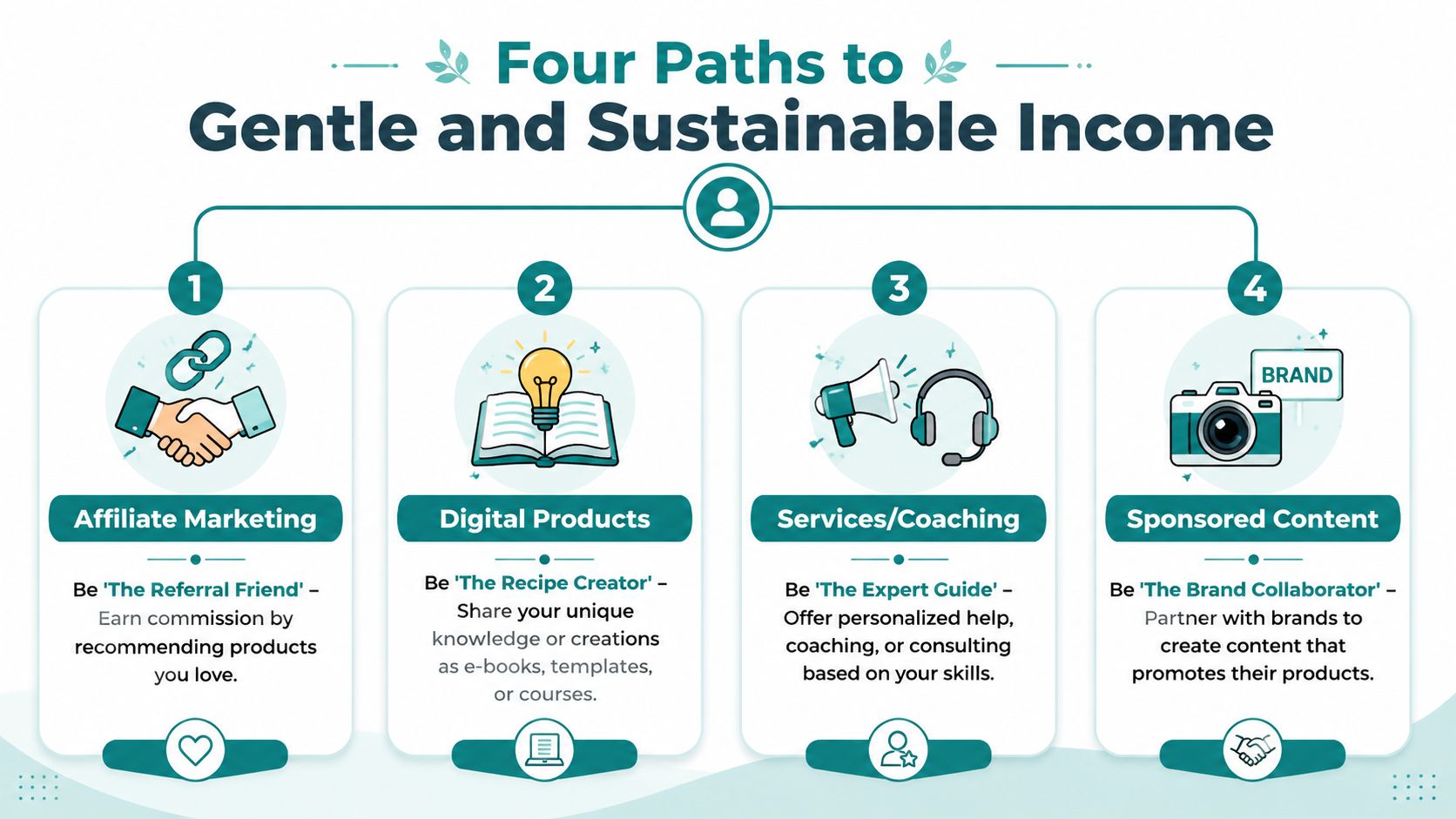
Four Paths to Gentle and Sustainable Income
Most beginners think they need to pick one perfect way to earn online and stick with it forever. That's not how many stable creator businesses work.
In practice, creators often combine a few simple income types. According to ShortsIntel creator economy statistics, full-time creators use 2.7 income streams on average, and the median creator earns about $3,000 per year. That doesn't mean this path can't work. It means relying on only one income source is risky, especially in the beginning.
So think portfolio, not pressure.
Affiliate marketing as trusted recommendations
Affiliate marketing is one of the easiest models to understand once someone explains it plainly.
You recommend a product or service you personally like. If someone buys through your special link, you may earn a commission.
That sounds technical, but in everyday language, it's just being the friend who says, “This is the one I use, and it's effective.” The ethical part matters. You don't need to push things people don't need. You connect people to useful solutions.
Digital products as packaged wisdom
This model is about turning your experience into something people can buy and use on their own.
That could be:
- A guide: A PDF that solves a specific problem.
- A template: A checklist, planner, workbook, or swipe file.
- A course: Lessons that walk someone through a process.
- A paid workshop: A live or recorded teaching session.
If you like the idea of building for long-term growth, you may also find it helpful to understand passive income vs. residual income, because not all recurring or semi-passive income works in the same way.
Services and coaching as direct help
Some women don't want to wait for a product to sell. They want to help someone now.
Services are perfect for that. You might offer writing help, accountability coaching, brand support, tutoring, organization sessions, or consulting based on your professional background.
This path is often the clearest first step if you already know how to solve a problem and would feel more comfortable helping one person than speaking to a large audience.
Some of the most stable creator businesses start with service work, then grow into products later.
Sponsored content as selective partnerships
Sponsored content means a brand pays you to create content that features its product or service.
This model usually makes more sense after you've built trust with an audience. You don't need celebrity-level reach. You need relevance and credibility. A small, loyal audience can be valuable if the right people are paying attention.
If you're curious how this idea works in audio, this guide to podcast revenue streams gives a good beginner-friendly view of how creators combine sponsorship, audience trust, and multiple offers.
The gentle way to approach all this is simple. Start with one lane, learn it well, then add another when you're ready.
Choosing Your Best First Step
The best content creator business model for you is the one you'll keep doing.
That's why choosing a first step matters more than choosing a forever plan. If a model feels forced, too technical, or too salesy, you probably won't stay with it long enough to see results.
Ask yourself better questions
Instead of asking, “Which model makes the most money?” ask questions like these:
- Do you enjoy teaching at scale? Digital products may fit you well.
- Do you prefer personal interaction? Services or coaching may feel easier.
- Do you naturally recommend useful things? Affiliate Marketing can be a comfortable starting point.
- Do you enjoy creating media for brands? Sponsored content may grow into a good option later.
If you need a broader beginner overview first, ClipCreator.ai's guide to creators can help you sort through the basic roles and possibilities in simple language.
Comparing Content Creator Business Models
| Business Model | Startup Effort (Time & Tech) | Income Style | Best For You If… |
|---|---|---|---|
| Affiliate marketing | Low to moderate. You need content, trust, and basic link setup. | Can become semi-leveraged over time if content keeps working. | You like recommending tools, books, products, or programs you already use. |
| Digital products | Moderate. You need to organize your knowledge into a useful format. | More leveraged once created, though updates and promotion still matter. | You enjoy teaching and want to turn knowledge into an asset. |
| Services or coaching | Low to moderate. You can often start with a simple offer and conversation. | More active, because you trade time and attention for income. | You want quicker clarity and like helping people directly. |
| Sponsored content | Moderate to high. Brands usually want proof of audience trust and clear content quality. | Project-based and somewhat variable. | You enjoy content creation itself and don't mind working with brand guidelines. |
If you're worried about feeling salesy
That concern is common, and it's a healthy one.
A good business model doesn't pressure people. It helps them make a decision that's already on their mind. The difference is intent. If you're trying to manipulate people, they'll feel it. If you're trying to help them choose wisely, they'll feel that too.
Ethical selling is simply clear communication plus a useful offer.
For many midlife women, the easiest first move is this: choose the model that feels most natural, not the one that looks most impressive online.
Quiet consistency beats forced performance.
Your Most Important Asset An Audience You Own
You can create excellent content and still feel unstable if all your connection lives on someone else's platform.
Social media is useful for discovery. But if a platform changes what people see, your reach can change with it. That's why creator businesses become stronger when they move from platform dependence toward owned audience assets, especially email.
According to Digiday's breakdown of creator business models, creator businesses are structurally stronger when they shift from platform-dependent reach to owned audience assets like an email list, because that direct relationship isn't subject to the same algorithm volatility.
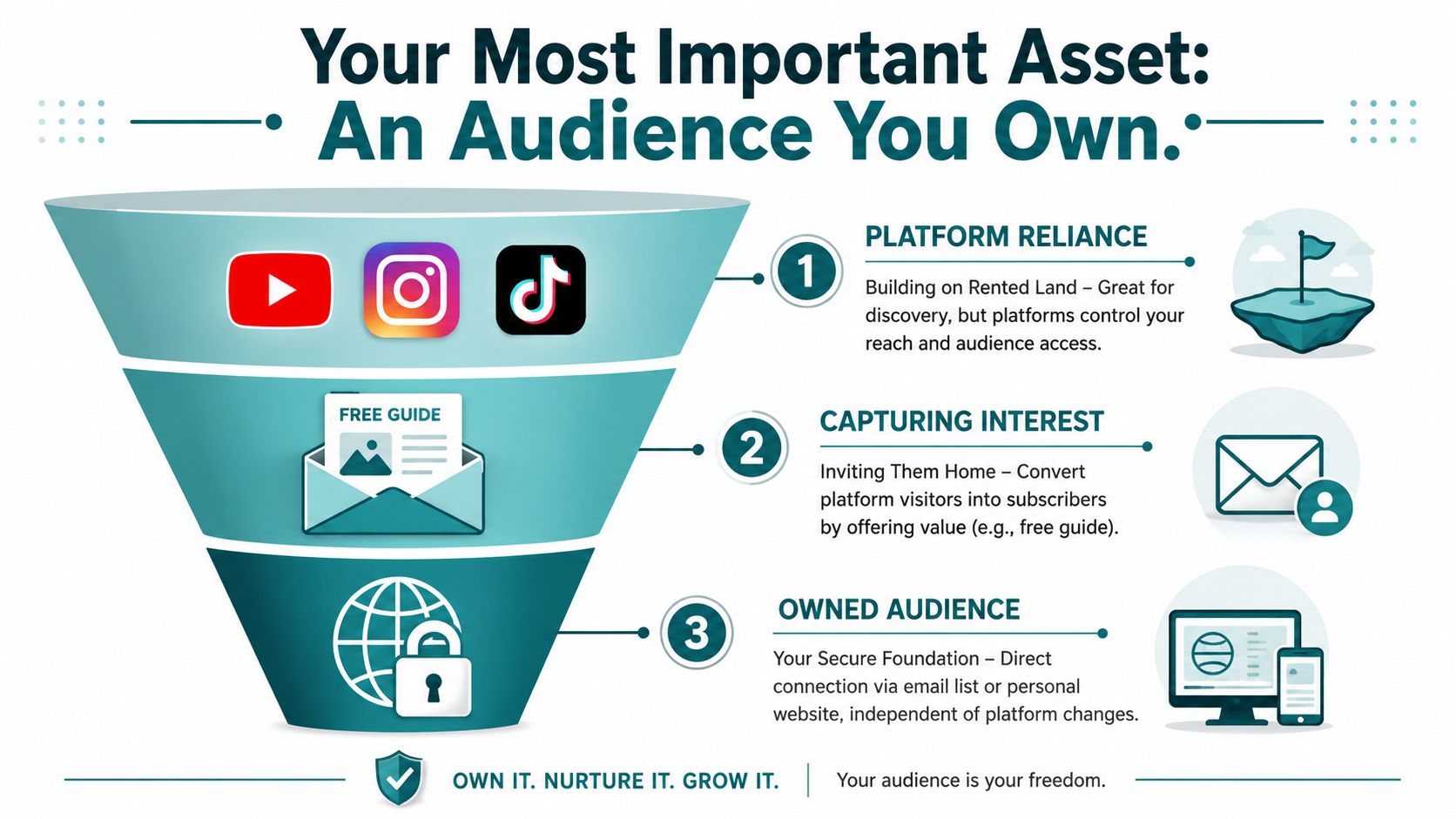
Social platforms are rented land
A rented apartment can be lovely. But you still don't control the building.
That doesn't mean you should avoid social media. It means you should use it wisely. Let your posts, videos, or podcasts help people find you. Then invite interested people into a more direct connection you control.
For beginners, that usually means an email list.
An email list is a quiet form of security
Some people hear “email list” and picture aggressive marketing. That's not what I mean.
Think of it more like writing letters to people who raised their hand and said, “Yes, I'd like to hear from you.” You can send a helpful note, a new article, a recommendation, or a gentle invitation when you have something useful to share.
If you're unsure how that works in practice, this simple guide to building an audience online walks through the basics in a beginner-friendly way.
What if you think no one would subscribe
That thought stops many good creators before they begin.
But people don't subscribe because you're famous. They subscribe because you're useful, relatable, and clear about what they'll receive. If you help women simplify meals, understand Retirement transitions, organize paperwork, care for aging parents, decorate small spaces, write better resumes, or start Affiliate Marketing with confidence, there are people who want that support.
Start small. Ten interested readers are more valuable than a hundred random likes.
Your Simple Plan to Begin This Week
Starting gets easier when you stop trying to build the whole business in your head.
You only need a small first win. A topic. One piece of content. A simple way to stay in touch. That's enough to begin.
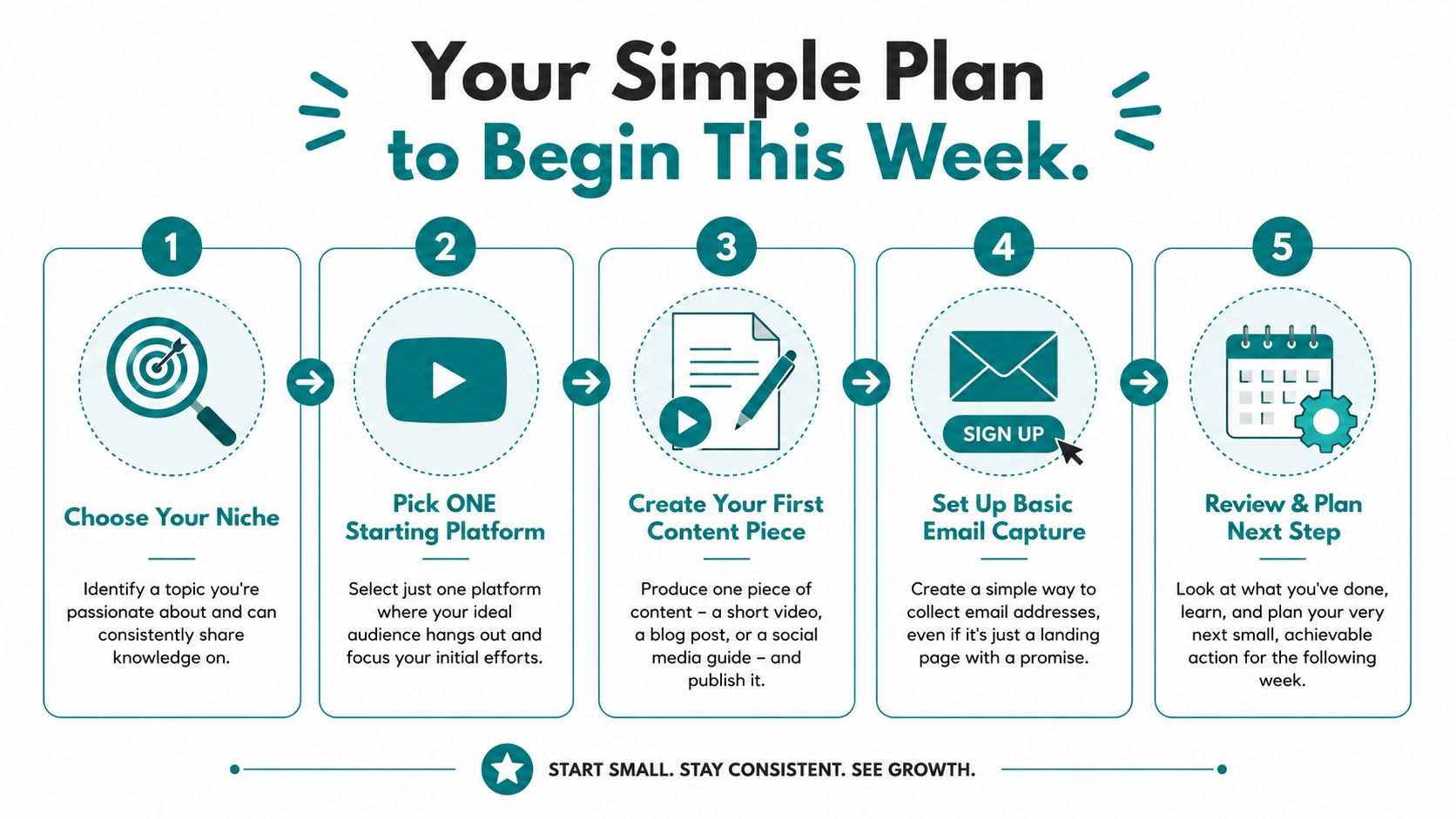
A calm five step checklist
Choose one topic you can talk about easily
Pick something practical, not perfect. It could be budget cooking, beginner gardening, caregiving routines, confidence at midlife, home organization, or a skill from your work life.Pick one place to publish
Don't scatter your energy. Choose one home base for now, such as a simple blog, YouTube channel, or newsletter.Create one helpful piece of content
Keep it short. Answer one question. A blog post, a short video, or a simple email is enough.Set up a basic email signup
Use a beginner-friendly email platform and write a short welcome note. Tell people what kind of help you'll send and how often.Plan your next small move
Decide what you'll publish next week. Not next month. Not next quarter. Just next week.
A short video can make this feel less abstract, especially if you're a visual learner.
Why tiny steps matter more than big plans
Many educational creators eventually turn their knowledge into high-margin digital products. According to Designrr's overview of content creator types, products like courses commonly sell in the $50-$500 range, with some specialized professional-development offers priced higher. The important part isn't the price tag. It's the idea that what you know can become an asset without inventory or shipping.
That's a powerful shift.
A short teaching post today can become an email series later.
An email series can become a guide.
A guide can become a course or paid workshop.
If you want help mapping those pieces into a simple structure, Victoria OHare's content creator business plan guide outlines how to choose a niche, publish weekly content, and build an email list around a core offer.
Keep this in mind: Your first content isn't supposed to impress strangers. It's supposed to help you begin.
Progress counts. Clarity comes after motion, not before it.
Your Second Chapter Is Waiting For You
You do not need to build a flashy brand to build meaningful income.
You need a calm plan, useful content, and the willingness to keep learning one step at a time. That is enough to begin a second chapter that feels more secure, more independent, and more aligned with who you are now.
A good content creator business model isn't about chasing internet attention. It's about creating value, building trust, and turning your experience into assets you can own. That's what gives this path dignity. That's what makes it worth considering if you want more peace of mind in the years ahead.
Let it be simple
You don't have to master everything this month.
You don't need to be the fastest learner.
You don't need to know every tool.
You don't need permission to start small.
You only need to decide that your knowledge still has value, and that your future is worth building with care.
A steadier kind of ambition
There is nothing silly about wanting more security. There is nothing selfish about wanting income that doesn't depend entirely on a paycheck. And there is nothing late about starting now.
The next five years will pass either way. The only question is whether you'll use them to build something that gives you peace of mind.
If guided, step-by-step support would make this journey feel lighter, it's okay to look for it. Learning with structure and community can make a big difference, especially when you're doing something new.
If you'd like gentle, practical help as you explore your next step, you can visit Victoria OHare for beginner-friendly guidance on Affiliate Marketing, content creation, List Building, and building a sustainable online business at your own pace.