
If you're over 50 and wondering whether it's too late to build income online, you're not alone. Many women feel behind financially, not because they failed, but because life happened. Retirement can feel less like a finish line and more like a question mark, especially when bills, caregiving, job changes, or inflation have chipped away at your sense of security.
Then the internet adds another layer of stress. New terms. New tools. New promises. A lot of noise.
If that's where you are, take a breath. You are not behind. You can learn this, and you don't need to build your future by becoming someone louder, pushier, or less honest than you are.
Is It Too Late to Build Financial Peace of Mind Online
A woman I know described it this way. She opened her Retirement account, looked at the number, and felt her stomach drop. Not because she had done everything wrong, but because she had done what is commonly recommended. Work hard. Be responsible. Hope it adds up.
Sometimes it doesn't feel like enough.
That moment can bring a flood of doubts. Am I too old to start? Do I need tech skills? Is online business just a fancy word for scams? Those questions are normal. They don't mean you're incapable. They mean you're careful.
Why this fear feels so heavy
For many women in midlife, money isn't just money. It's about security, dignity, and the ability to make choices without panic. It's about not wanting to depend on luck, or on someone else, or on a system that may not stretch as far as you hoped.
Online income can sound risky when what you want is peace of mind.
But an ethical online business isn't about chasing trends or pretending to be a social media star. In simple terms, it can look like this:
- Affiliate marketing means recommending a product or service and earning a commission if someone buys through your link.
- List building means collecting email subscribers who want to hear from you, so you aren't relying only on social media.
- Simple automation means using basic tools to send welcome emails or organize subscribers without doing everything by hand.
None of that requires you to become a different person.
You don't need hype to build income. You need a trustworthy offer, a clear message, and the patience to learn one skill at a time.
Your age is not the problem
In fact, your life experience can become one of your biggest strengths.
If you've raised children, managed a household, worked with difficult people, solved problems under pressure, or learned to spot nonsense quickly, you already carry skills many new marketers don't have. Good judgment matters online. So does empathy. So does knowing how to talk to people like real human beings.
I remember the first time I logged into an online training dashboard. I felt clumsy and annoyed. I clicked around, got confused, and nearly closed the tab for good. What helped wasn't trying to become more impressive. It was deciding to become more teachable.
That shift changes everything.
Why Ethical Standards Are Your Greatest Business Asset
The online world is crowded. People see sponsored posts, flashy claims, countdown timers, and promises that sound too good to be true. In that kind of environment, trust becomes your real advantage.
That's why ethical business standards matter so much. They're not just a legal checklist. They're the habits that help people feel safe buying from you, joining your email list, and listening to your recommendations.

Ethics support real business growth
A strong benchmark on ethical culture found that companies with the strongest ethical cultures outperformed others by approximately 40% across business measures such as customer satisfaction, employee loyalty, innovation, adaptability, and growth, according to the LRN benchmark on ethical culture.
That matters even if you're not running a large company.
If you want to make money online after 50, your business probably won't rise because you're the loudest. It will rise because people trust your judgment. They believe you'll tell the truth. They sense you won't disappear after the sale. Ethical business standards turn that trust into something stable.
What this looks like for a solo business
You don't need a legal department to act ethically. You need a few steady practices.
| Business habit | What it signals to your audience |
|---|---|
| Clear disclosures | "I'm honest about how I earn." |
| Honest product reviews | "I'm not hiding the downsides." |
| Respectful email practices | "Your inbox and privacy matter to me." |
| Calm marketing | "I won't pressure you to buy." |
For many beginners, ethics sounds stiff or corporate. It isn't. It's practical.
If you ever worry that teaching, onboarding, or expectations could become confusing as your business grows, resources on designing engaging compliance training can help translate rules into everyday behavior. Even a one-person business needs clear standards.
And if you've ever carried guilt around selling, this thoughtful perspective on money and evil beliefs can help you separate honest income from manipulative behavior.
Practical rule: Ethics isn't what slows down a good business. It's what keeps a good business from collapsing under pressure.
The Three Pillars of Ethical Business for Creators
For a solo creator, ethical business standards don't need to feel vague. I like to think of them as three simple pillars. If a decision supports these three, you're usually on solid ground.
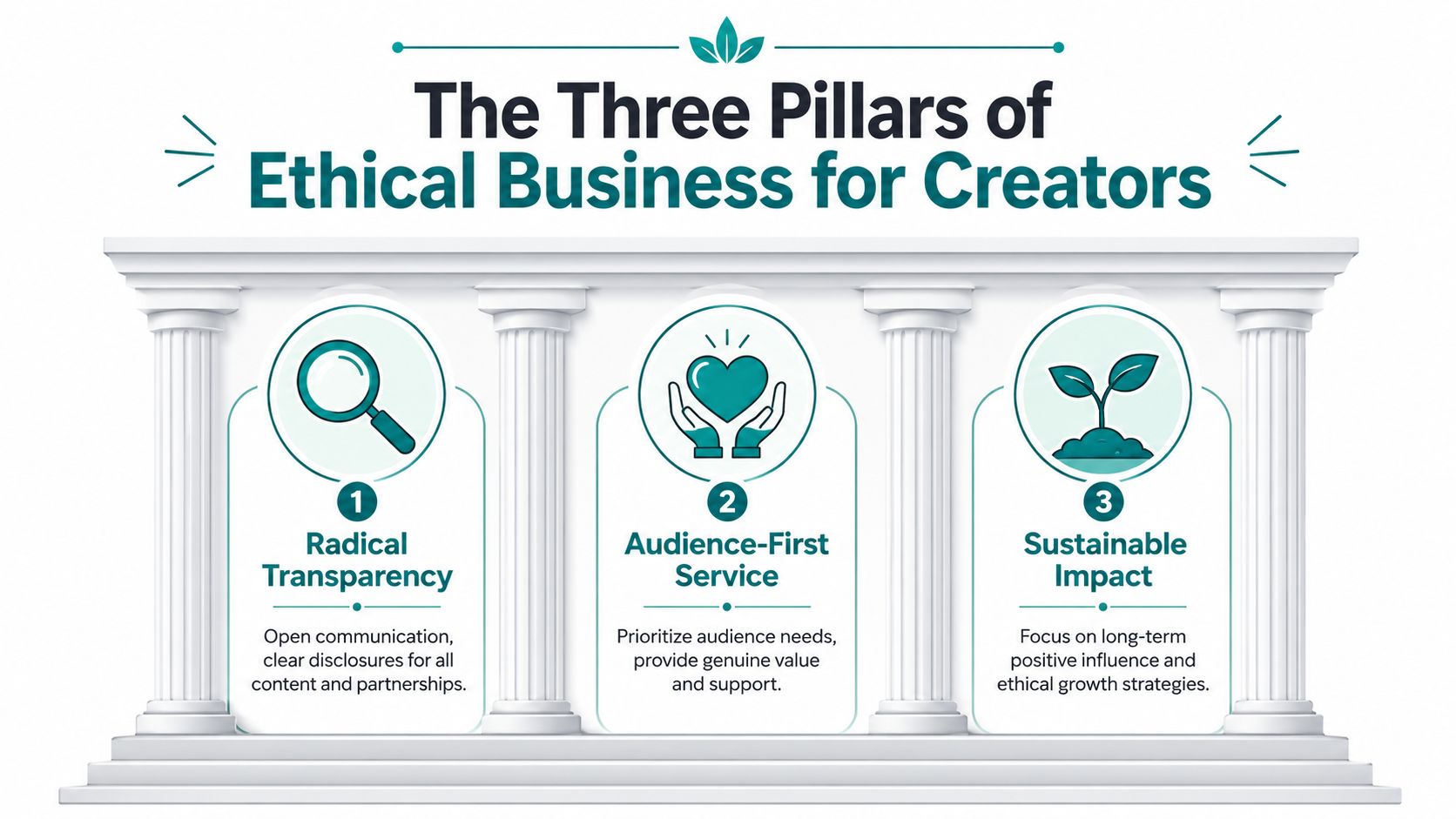
Radical transparency
This means people should not have to guess what you're doing.
If you're using affiliate links, say so in plain English. If a result you're describing came from your own experience, say that too. If something varies from person to person, be honest about that. Transparency lowers confusion. It also lowers regret after someone buys.
A simple example:
Less clear
"This is my favorite tool. You need it."More ethical
"This post contains affiliate links, which means I may earn a commission if you buy through my link. I recommend it because I've found it useful for this specific purpose."
That second version doesn't feel slick. That's the point. It feels safe.
A short visual walkthrough can help make these ideas easier to remember.
Audience-first service
This pillar asks one question. Are you helping your audience make a good decision, or are you only trying to make a sale?
When you're new, it can be tempting to promote anything with a commission attached. But audience-first service means slowing down and asking what your reader needs.
Try these checks:
Problem fit
Does this product solve a real problem my audience already has?Clarity
Can I explain who this is for, and who it is not for?Support
If someone buys because of my recommendation, will I still feel good answering their follow-up questions?
Creators who lead with service often build a steadier business because subscribers begin to trust their filter.
Long-term integrity
This is the pillar people often skip when they're anxious to earn quickly.
Long-term integrity means you protect your name. You promote fewer things. You say no when something feels off. You don't borrow urgency tactics that leave people feeling manipulated. You remember that every email and recommendation is shaping your reputation.
A quiet, honest recommendation can earn less today and still be worth more over time because it protects the relationship.
If you build an online business for older women, or for any audience that values sincerity, this pillar matters deeply. Your reputation becomes an asset. Once people trust your standards, they don't just buy once. They stay.
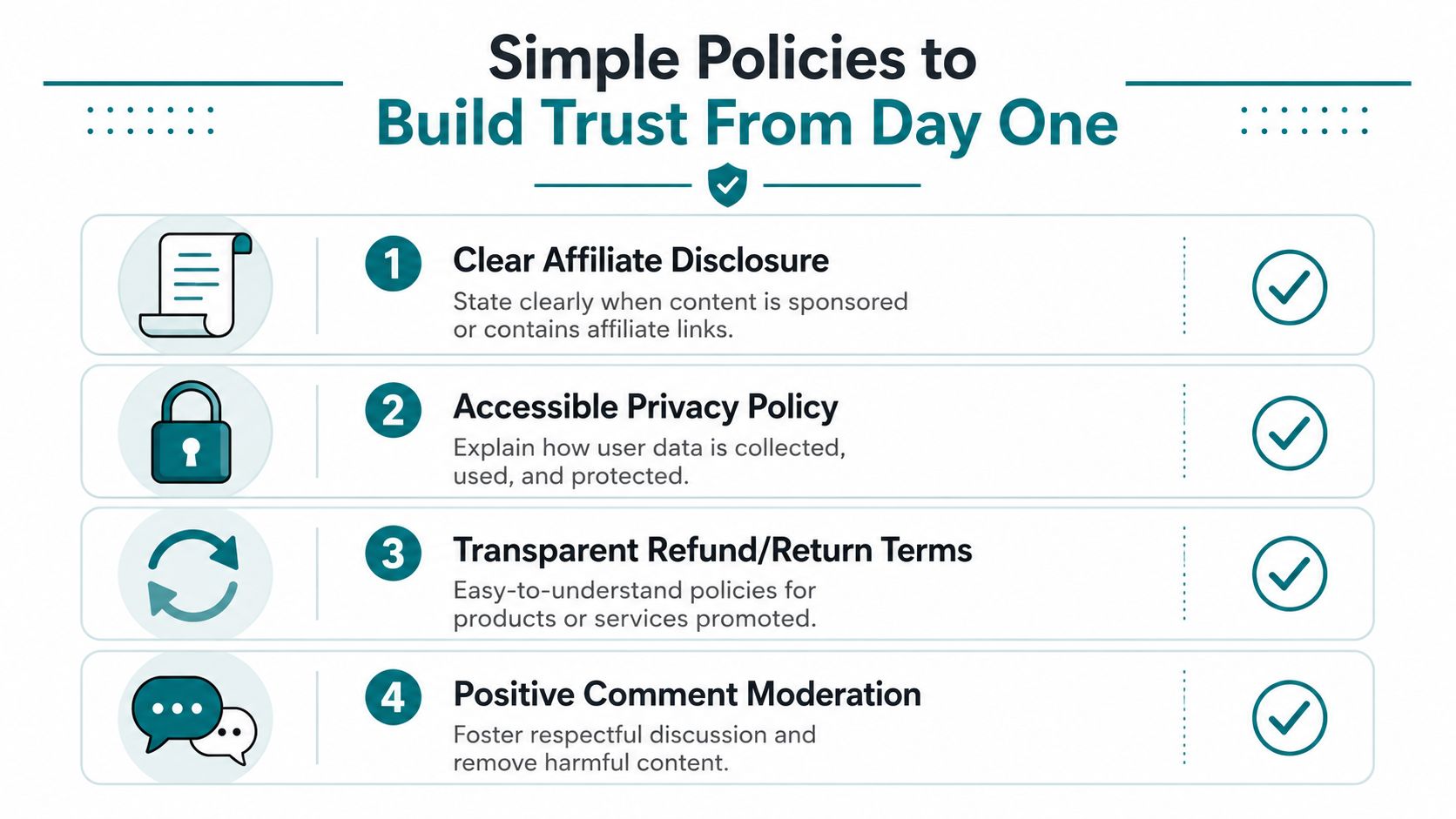
Simple Policies to Build Trust From Day One
A lot of beginners think policies are for bigger businesses. But even a small creator business needs a few clear promises. They don't have to sound legalistic. They just need to be understandable.
A human-sounding affiliate disclosure
You don't need complicated language. You need clear language.
You could use something like:
Some links on this page are affiliate links. That means I may earn a commission if you choose to buy through them, at no extra cost to you. I only recommend tools and products I believe are genuinely useful.
That kind of statement respects the reader. It also removes the uneasy feeling that you're hiding how you get paid.
A simple privacy mindset
One of the strongest ethical standards for online businesses is data minimization. That means collecting only the minimum data you need, using it only for its stated purpose, and deleting it when it's no longer needed, as explained in this article on key data ethics principles.
For creators, this is more practical than it sounds.
If someone joins your email list to get a free checklist, you don't need to collect extra details just because a form allows it. If you said you'd send helpful emails about a topic, don't use that information in ways your subscriber wouldn't expect.
A healthy list isn't just a large list. It's a list built on permission and trust. If you'd like a practical example of respectful list care, this guide to unsubscribe management is worth reading.
Four starter policies worth having
You can begin with these:
Affiliate disclosure policy
State where and how you use affiliate links.Privacy policy
Explain what information you collect, why you collect it, and how people can contact you.Refund and complaint policy
If you sell your own offer, say how refunds work. If you promote another company's product, explain that their terms apply and where readers can review them.Comment moderation policy
Let people know you welcome respectful conversation, but you remove spam, abuse, and misleading claims.
| Policy | Plain-language purpose |
|---|---|
| Affiliate disclosure | Helps people understand your financial relationship |
| Privacy policy | Shows respect for personal information |
| Refund or complaint terms | Reduces confusion when something goes wrong |
| Comment policy | Protects the tone and safety of your space |
I understand being cautious. There are scams online. That's why education and clear boundaries matter so much.
A Simple Framework for Choosing Ethical Promotions
One of the hardest parts of Affiliate Marketing for beginners over 50 is this question. How do I know if I should promote something at all?
You don't need a perfect system. You need a few honest questions that keep you from talking yourself into a bad fit.
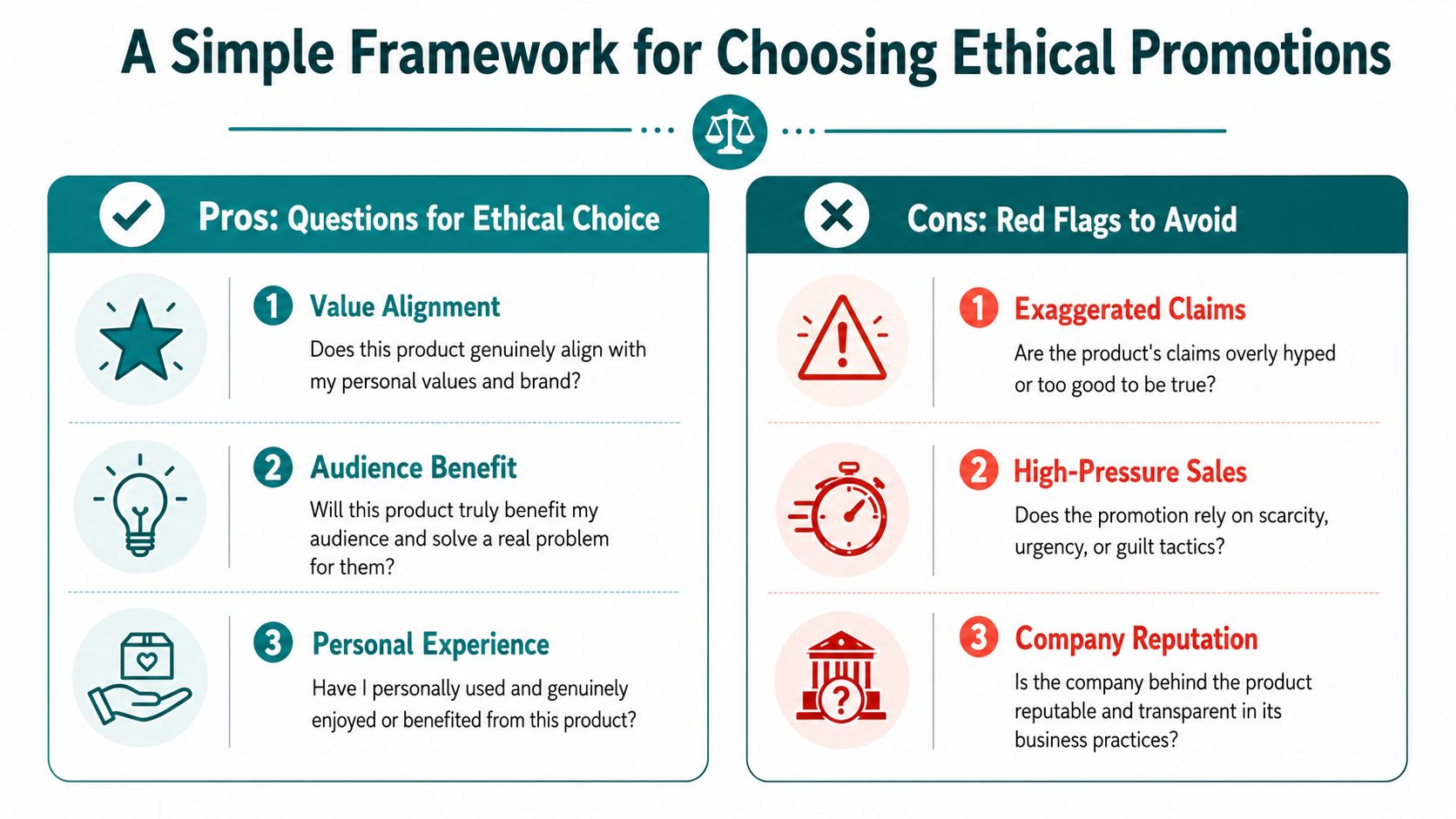
Ask these before you say yes
I like a simple five-question filter.
Would I recommend this to my sister or closest friend?
That question cuts through a lot of noise. If you would hesitate with someone you love, pause.Does it solve a real problem for my audience?
A product can be good and still be wrong for your readers.Have I used it, tested it, or researched it carefully?
You don't need to own every product on earth, but you do need enough knowledge to speak responsibly.Are the claims calm and believable?
If the sales page leans hard on fantasy, pressure, or vague promises, that's a warning sign.Will I still feel good about this recommendation next month?
Ethical promotion protects future-you, not just today's commission.
Watch for red flags
Some offers answer your questions for you.
Exaggerated promises
Claims that sound magical usually create disappointed buyers.Pressure tactics
Constant urgency, guilt, or fear-based selling often leaves people feeling pushed.Fuzzy company behavior
If it's hard to find contact details, terms, or honest explanations, step back.
A thoughtful discussion of business ethics points to a real tension for creators. Short-term tactics like hype and urgency can tempt people who need income now, but long-term strategies based on trust and retention build a more sustainable business over time, as noted in Creighton's piece on understanding business ethics and social responsibility.
A better way to write promotions
Ethical doesn't mean boring. It means grounded.
Instead of writing, "You need this before the price disappears," you might write:
I don't recommend this for everyone. But if you're trying to simplify this specific problem, this tool may be worth a look. Here are the pros, the limits, and who I think it's best for.
That's persuasive without being manipulative.
If you want help shaping that kind of honest recommendation, this guide on how to write affiliate product reviews can make the process feel much more manageable.
Navigating Modern Tools Like AI and Social Media
Modern tools can save time. They can also create distance between you and your audience if you let them run the show.
That doesn't mean you should avoid AI or social platforms. It means you should use them with a clear standard. A key challenge for solo creators is making sure automation and third-party relationships don't undermine transparency, data privacy, or your core commitment to your audience, as discussed in this article on business ethics examples.
How to use AI without losing your voice
AI can help you draft outlines, brainstorm headlines, or organize notes. But it shouldn't replace your judgment.
If a tool writes your newsletter, add your own experience before you hit send. Include the story only you can tell. Mention what worked for you, what confused you, and what you would do differently. That's what keeps content human.
I still think about the first draft I ever got from an AI tool. It sounded polished, but it didn't sound like me. It had no hesitation, no warmth, no lived experience. It could have come from anyone.
That's the test.
Keep oversight human
Review everything before publishing.Protect private information
Don't paste sensitive subscriber details into tools casually.Stay honest about assistance
If automation plays a meaningful role in your process, don't let it create false authority.
Social media needs boundaries too
Platforms reward attention. Sometimes that pushes creators toward outrage, clickbait, or overstatement. If a strategy makes you feel like you're performing a version of yourself you don't respect, it's probably not a good long-term fit.
For readers who want to understand how professionals are thinking about AI-related legal workflows more broadly, this Guide to AI legal tools for firms offers a useful outside perspective on where tools can help and where oversight still matters.
Use tools to support your business. Don't let them rewrite your values.
Your Path to an Honorable and Profitable Business
If you've felt nervous about starting an online business, that's understandable. There are real reasons to be careful. But careful doesn't have to mean stuck.
Ethical business standards give you something solid to stand on. They help you decide what to promote, how to speak to your audience, how to treat subscriber data, and how to use modern tools without losing yourself in the process. They turn online business from a shaky hustle into something calmer and more respectable.
What this path really offers
Not instant perfection. Not a fantasy.
It offers a way to build income with peace of mind. A way to create assets instead of depending only on a paycheck. A way to earn with dignity, knowing your business reflects your values rather than fighting them.
Rather than focusing on whether Affiliate Marketing is legitimate, a more pertinent question may be this. Can it be done in a way that is honest, useful, and sustainable? Yes, it can. But only if you choose that standard from the beginning.
One small next step
Pick one area and clean it up this week.
You could:
- Add a clear disclosure to one blog post or email
- Review one tool you use and ask whether you'd still recommend it to a friend
- Simplify one opt-in form so you collect only what you need
- Rewrite one promotion to remove pressure and add honesty
Small steps count because they shape habits. Habits shape reputation. Reputation shapes income.
You are not too old to learn this. You are not too late to build something meaningful. The next five years will pass either way. The only question is whether you'll use them to build something that gives you more control, more dignity, and more peace of mind.
If you'd like gentle, step-by-step help building an ethical online business, you can explore Victoria OHare. It's a supportive place for learning Affiliate Marketing, List Building, and simple online income skills without hype or overwhelm.