
Passive income is upfront effort or capital exchanged for later cash flow that needs only light upkeep. In the U.S., only about 20% of households receive it, and the median among those households is about $4,200 a year.
If you're over 50 and wondering whether it's too late to build something online, you're not alone. Retirement can feel less secure than people promised, tech can feel overwhelming, and it's easy to look at everyone else and think you missed your chance.
You didn't miss it. Life happened, and now you're looking for a steadier second chapter, one that gives you more control without asking you to become someone else.
What is passive income? In plain English, it's money that comes from an asset you've already built or bought, then keep lightly maintaining, instead of trading every dollar for another hour of work. That can mean investments, rent, royalties, or digital assets, but the common thread is the same, front-loaded effort or capital first, later cash flow after.
That's why the Census-based reality matters so much. Passive income is real, but it's not universal, and it's usually modest at first. One summary of the same pattern says households with passive income often earn less than $5,000 per year from those sources, which is a far cry from the internet's glossy promises.
Passive income is a system, not a shortcut, and the next chapter is learnable at any age.
A Calm Starting Point for Anyone Who Feels Behind
If Retirement doesn't feel secure, that feeling has logic behind it. If you're wondering whether you're too old to start, or whether the tech will swallow you whole, that fear makes sense too. A lot of women over 50 aren't lazy or unprepared, they're just carrying years of responsibility and trying to build something new without wasting time.
That's exactly why the phrase passive income gets misunderstood. People hear “passive” and imagine money arriving with no work, no learning, and no risk. More accurately, you build or buy an asset first, then let it produce cash flow with lighter upkeep later.
The U.S. household data helps keep expectations honest. If only about 20% of households receive passive income, and the median is about $4,200 a year, then the first lesson is simple, this usually starts as a supplement, not a replacement. That number is roughly $350 a month, which can matter a lot, but it's not the same thing as quitting everything overnight.
That doesn't make it useless. It makes it clear. When you know the first year may be small, you can choose a path that fits your energy, your schedule, and your season of life without feeling tricked by hype.
The goal isn't instant freedom. The goal is building an asset that keeps working after the workday ends.
Passive Income vs Active Income in Plain English
Active income is the familiar model most of us already know. You trade hours for dollars, and when you stop working, the paycheck stops too. Passive income works differently, because you're building or buying something that can keep producing with reduced ongoing effort.
A helpful way to compare them is side by side.
| Dimension | Active Income | Passive Income |
|---|---|---|
| Time investment | Ongoing, repeated labor | Heavy upfront effort, then lighter maintenance |
| Risk | Lower learning curve, but income stops when work stops | More setup risk, but the asset can keep paying later |
| Startup cost | Often low in cash, high in time | Can require time, money, or both |
| Scaling potential | Usually tied to your hours | Can grow without adding the same amount of labor |
| Tax framing | Ordinary earned income | Rental activities and businesses without material participation are the IRS's passive categories |
The tax piece matters because people often use the phrase casually, but the IRS is more specific. For tax purposes, only rental activities and businesses without material participation are treated as passive, which is useful to know before you plan around a second income stream. If you want a clear explainer, this guide to passive vs earned income is a practical place to compare the language people use online with the way the tax world defines it.
There's also a useful distinction between how online income begins and how it matures. Most midlife creators don't start with a fully passive system. They start with a helpful post, a recommendation, or a simple opt-in, then build an email list and a digital asset that becomes less hands-on over time. If you want another plain-language contrast, see this passive income vs residual income overview.
The practical takeaway is gentle but important. Most online income for women over 50 starts as mostly active, then becomes more passive as the asset compounds. An email list, a digital product, or a library of content can keep working, but only after you've done the first stretch of real work.
Four Myths That Keep Women Over 50 From Starting
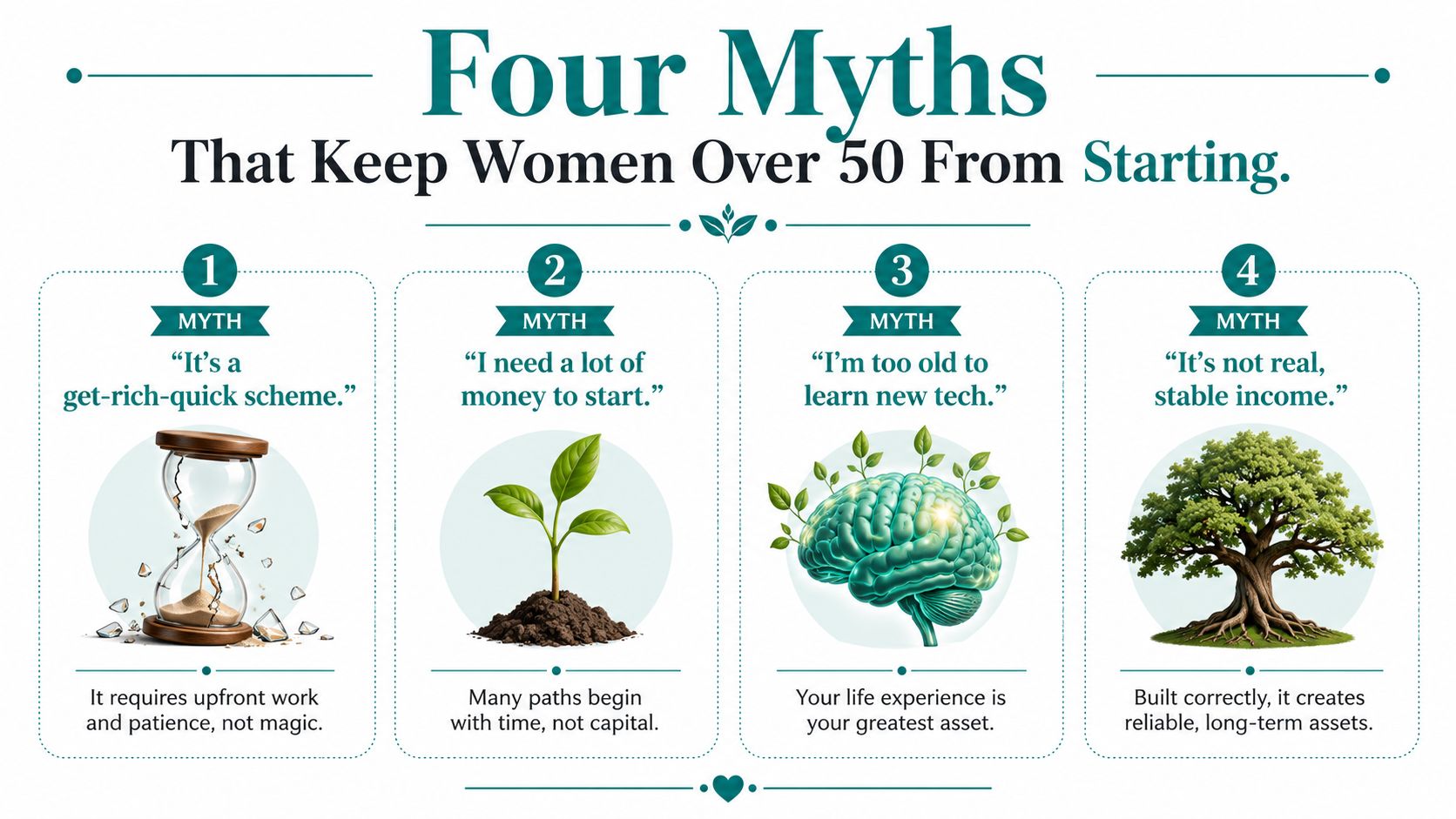
Myth one, it's a get-rich-quick scheme
The modern creator economy sounds flashy, but the earnings pattern is still modest for most. Reporting on the space says the typical passive-income hustle pays around $200 per month, and only about 12% of Americans earn what it defines as meaningful passive income, more than $500 per month. That doesn't mean it's hopeless, it means the first year usually asks for patience.
Myth two, passive means fully hands-off
That's not how real assets behave. Even digital products need updates, affiliate links need checking, and content needs occasional care. The IRS definition also reminds you that the word passive has limits, because tax treatment depends on whether you materially participate.
Myth three, you need to be tech-savvy
You really don't need to be a coder to start. Affiliate marketing is recommending products and earning a commission when someone buys through your link. That can be learned step by step, and a lot of the system is simpler than it looks from the outside.
Myth four, you're too old
This one is emotional, not factual. Women over 50 often have better judgment, more discernment, and more lived experience than younger creators who are still chasing trends. In a crowded online world, that can be an advantage, not a disadvantage.
I understand being cautious. There are scams online, and that's why education and mentorship matter. If you've been waiting for permission, here it is, you don't need to be younger, louder, or more technical to begin.
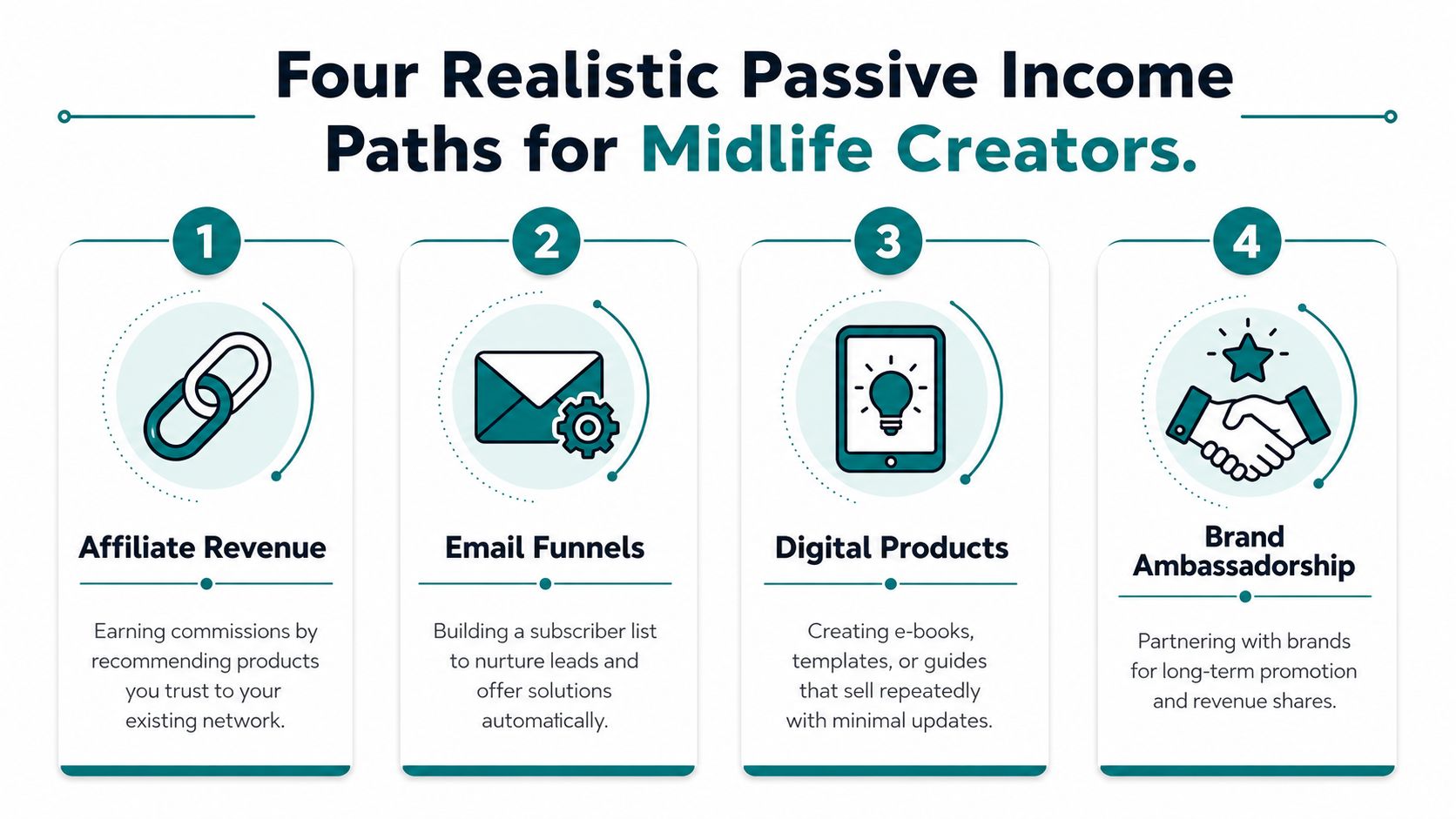
Four Real Examples That Fit a Midlife Creator's Life
A survey summary cited in 2024 said 52% of Americans have at least one passive income source, but only 16% earn passive income through digital products or content creation. That gap matters, because it shows the online path is real, but still much less common than the headlines suggest.
Affiliate revenue
This is the simplest version to understand. You share a product you already trust, someone buys it, and you earn a commission. Startup cost can be low if you already have a topic, a social account, or a blog, but it still takes time to build trust before the first dollar arrives.
Email funnels
An email funnel starts with one owned list, then sends helpful messages automatically. That list becomes your core asset because you're not depending entirely on social media reach. If you want structure for this path, the course business income strategies resource connects well with the idea of turning knowledge into repeatable income.
Digital products
This usually means something small and useful, like an e-book, template, checklist, or guide. It takes more upfront work than sharing a link, but it can be reused again and again after launch. For a beginner, it often starts as a simple fix to one specific problem you know well.
Brand ambassadorship
This is a longer-term relationship with a brand, not just a one-off post. The idea is to keep showing up consistently while sharing products that fit your audience and values. If you want a broader look at this path, the passive income business ideas page shows how this can fit into a larger income mix.
If you want a practical way to think about the first year, stack these instead of forcing yourself to pick only one. Affiliate revenue can support early content, email funnels can capture interest, digital products can deepen value, and brand ambassadorship can create steadier collaboration over time.
These aren't competing choices. They're layers, and most stable income systems are built one layer at a time over 12 to 24 months.
A Simple First Weekend Checklist to Get Moving
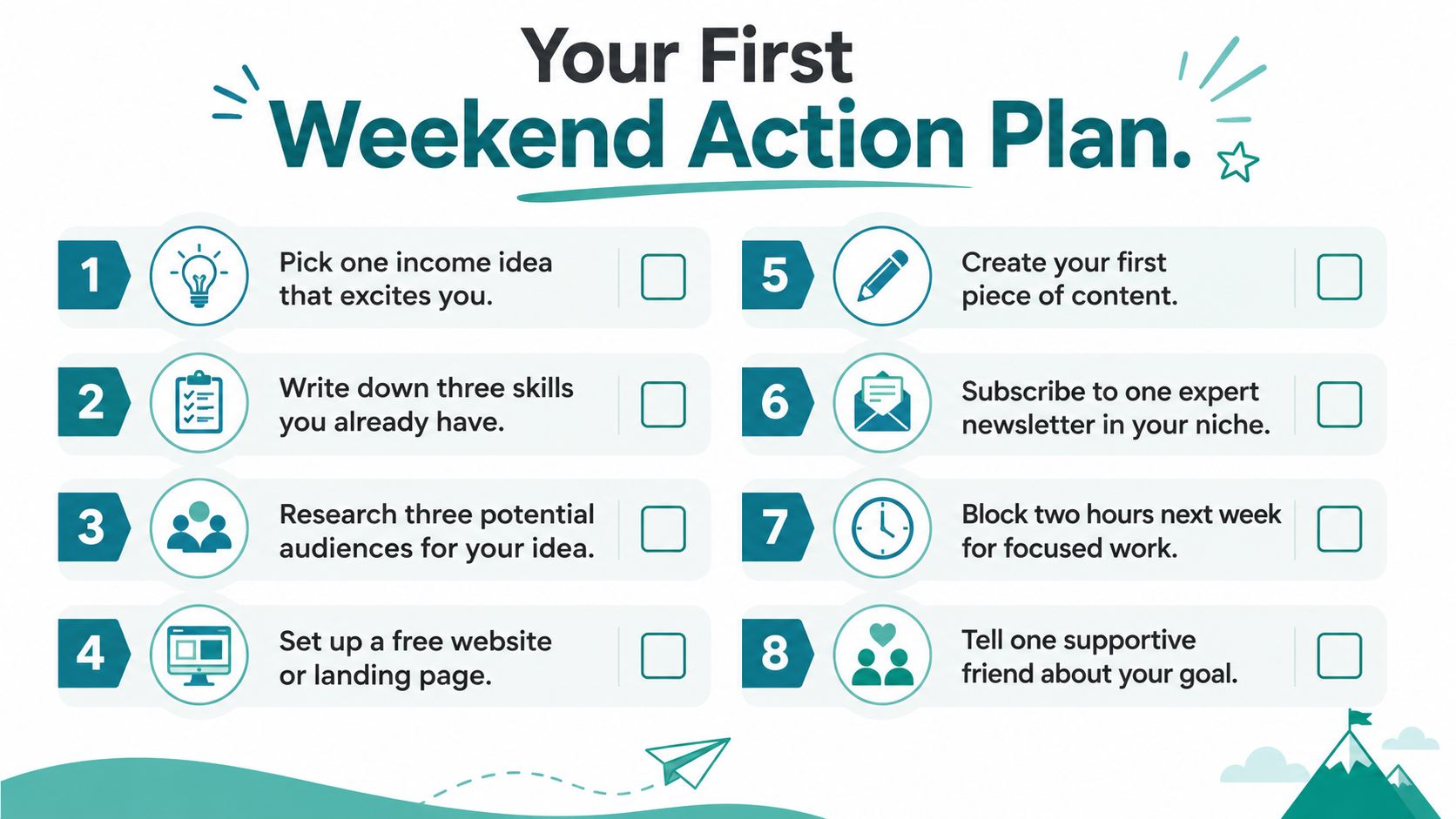
If you've been stuck in research mode, this is the part that gets your feet on the floor. A few focused hours can move you from thinking about passive income to starting it.
If you like step-by-step guidance, this how to guides resource can help you stay organized while you build.
- Pick one niche rooted in your lived experience. A clear topic makes it easier to know who you're helping. It gives you a direction instead of a pile of random ideas.
- Choose one affiliate partner to start with. One product is enough for a first draft. It gives you a simple link to place inside content without decision fatigue.
- Set up a free email list tool. Your list is the asset you own. It gives you a place to gather interested readers instead of losing them to a scrolling feed.
- Draft one welcome email. A friendly first message builds trust fast. It gives new subscribers a reason to stay.
- Publish one helpful piece of content. One post, one video, or one guide is enough to begin. It gives people something concrete to find and share.
- Invite one person to subscribe. Ask someone you trust to join the list and give feedback. It gives you your first real subscriber and a little courage.
- Write down one problem you know how to solve. Clarity beats cleverness here. It gives your future product or content a purpose.
- Schedule one hour to revisit the work next week. Momentum matters more than perfection. It gives the plan a second date, which is how projects become systems.
I remember the first time I opened a training dashboard, I almost closed it again. It looked more complicated than it really was. A finished rough draft of one email is worth more than ten unfinished ideas.
Realistic Timelines, Metrics, and the Asset Mindset
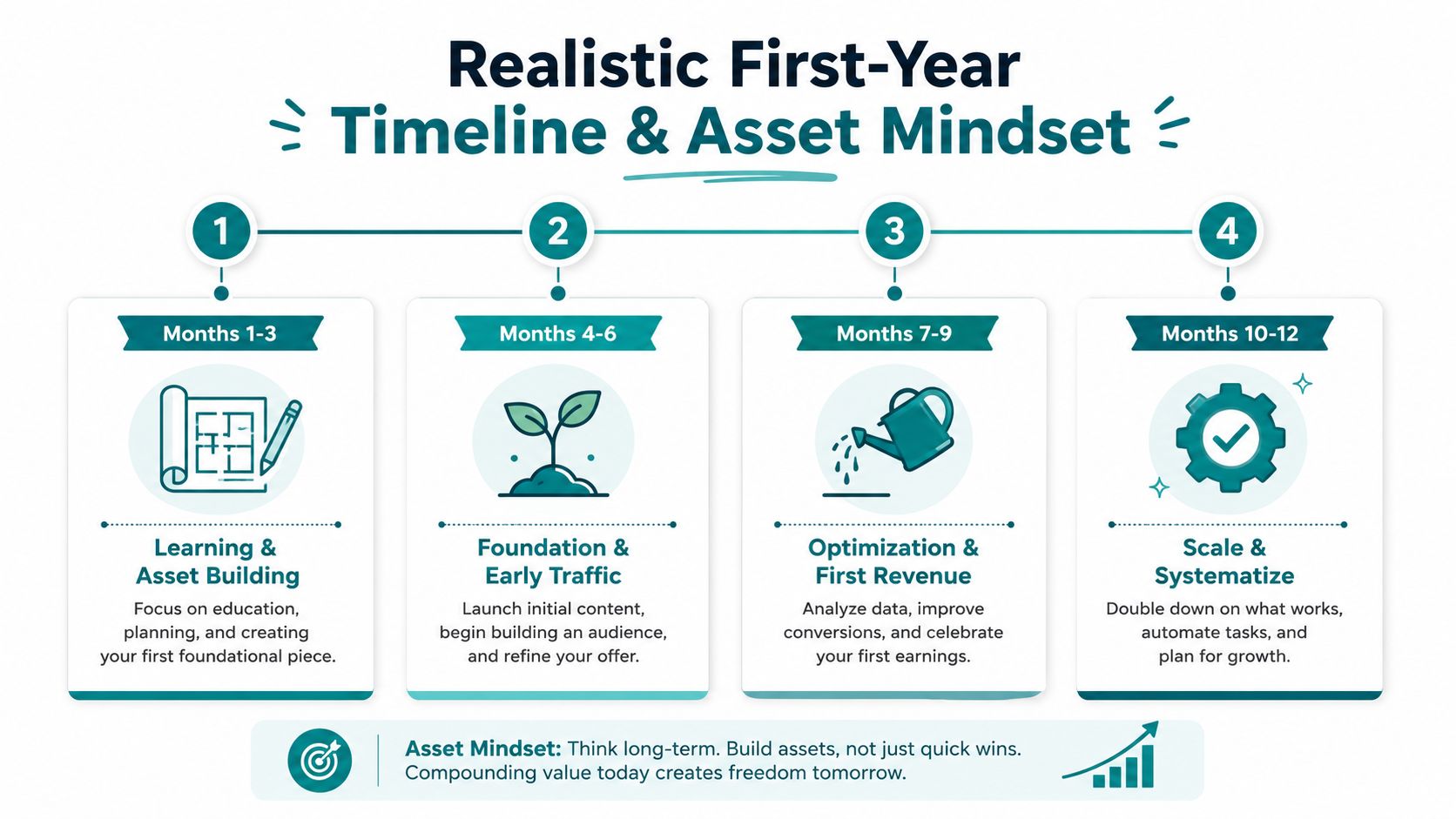
The first six to twelve months usually reward consistency more than brilliance. Months one to three are for learning and building the first asset. Months four to six are often about small commissions, a growing list, and better clarity on what people want.
By months seven to twelve, a digital product or email funnel can begin producing repeatable revenue if you've kept showing up. That's also when the asset mindset starts to make sense emotionally, not just conceptually. You begin to see that an email list is owned land, while social media is rented space.
That distinction matters because it changes how you think. You stop asking only, “How do I earn today?” and start asking, “What am I building that can keep working?” That's the difference between chasing a paycheck and building an asset.
The Investopedia framing is useful here, because passive income is front-loaded labor or capital deployed into an asset that later keeps generating cash flow with low ongoing participation. That means the engineering problem is not just earning the first dollar. It's reducing maintenance drag so the asset still works later, without asking for constant attention.
If you want a deeper look at the bigger-picture strategy, the passive income strategies resource fits naturally with this mindset. It reinforces the same idea, security grows when you own the thing that produces the income.
Income can be peace of mind when it's tied to something you own. That's why assets matter. They can support dignity, independence, and a little more control over the next season of life.
You Are Not Behind and the Next Five Years Will Pass Either Way
I remember feeling overwhelmed the first time I tried to make sense of all this. I almost talked myself out of it because I thought everyone else had started sooner, learned faster, or understood the tech better than I did. They hadn't, not really, they had just taken the next small step.
The next five years will pass either way. The only question is whether you spend them wishing you had started, or building something that gives you peace of mind. You don't need a perfect plan to begin, you need a clear next step and a little willingness to learn.
I understand the caution, and I want to say it plainly one more time, scams exist, so education and mentorship matter. If you'd like a gentle place to keep learning about Affiliate Marketing, List Building, and simple online income systems for women over 50, you can visit Victoria OHare and see what fits your season.
Frequently asked questions
Does passive income count toward Retirement income? Yes, it can be part of the income picture you rely on in Retirement, but the amount matters more than the label. For most households, it's best treated as a supplement that adds flexibility.
How long does an email list take to reach its first paying subscribers? There isn't one fixed timeline. For many beginners, the first steps are List Building, trust, and one clear offer before any sales show up.
Can you start with no money at all? Yes, some paths begin with time instead of cash. You may still need patience, consistency, and a willingness to learn, but that's very different from needing a big budget.
The work doesn't have to be loud to matter. If you're ready, start with one clear idea and one quiet hour this week.