
If you're over 50 and wondering whether it's too late to build something online, you're not alone. A lot of women feel behind financially, not because they didn't try, but because life kept happening. Retirement can feel uncertain, tech can feel noisy, and the whole online world can seem like it was built for younger people who grew up with it.
You're not behind. You're just in a chapter that asks for a steadier kind of plan. That's where long form content can feel surprisingly gentle, because it lets you teach from experience instead of performing for attention.
Why It Feels Hard to Start Creating Online After 50
A common first thought is, “I missed my chance.” That feeling shows up, often after a bill arrives, a Retirement statement feels thin, or a friend mentions something online that sounds far more complicated than it is. None of that means you're incapable. It usually means you're cautious, and caution makes sense when money and time matter.
I remember the first time I tried to organize an idea into a real article. The page felt too blank, the tools felt unfamiliar, and I wanted to quit before I even began. That's not a sign you can't do this. It's a sign you need a calmer path.
Why a slower format helps
Long form content gives you room to breathe. You don't need to squeeze your whole idea into a quick post or chase whatever's trending this week. You can explain what you know, show the steps, and answer the questions people are already asking.
That matters because long-form writing is built for clarity and trust. A helpful benchmark from an Orbit Media survey of 808 content marketers found the average blog post in 2025 was 1,333 words, down from 1,427 words in 2022, while only 9% of bloggers said they published posts longer than 2,000 words. In that same survey, bloggers who did publish posts above 2,000 words reported stronger outcomes, with 39% saying those posts delivered strong results, compared with 21% among all bloggers regardless of length, which suggests depth is still underused and still valuable. The source also frames long-form content as a format that can signal completeness and authority in competitive markets, especially when the goal is beginner-friendly education. Orbit Media long-form content statistics
Practical rule: If your life experience can answer a real question clearly, you already have something worth writing.
For women who want peace of mind, that changes the task. You're not trying to become flashy. You're building something steady that can support income, trust, and dignity over time. If imposter feelings are getting in the way, this piece on how to deal with imposter syndrome as an entrepreneur after 50 can help you feel grounded before you start.
What Long Form Content Means
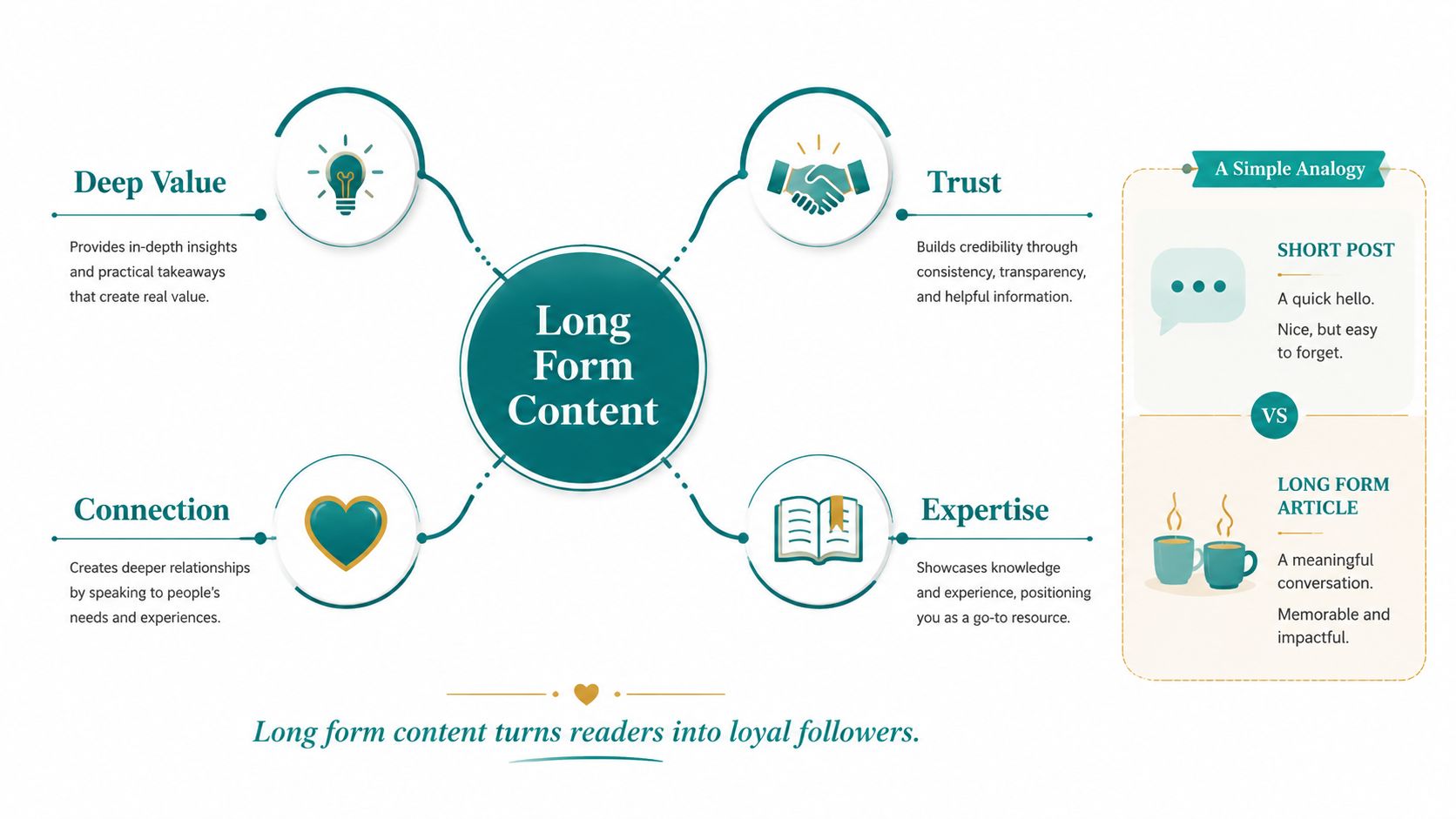
A short post is like a quick hello at the mailbox. Long form content is more like sitting down for coffee and finishing the conversation. It gives enough space to explain the problem, show the path forward, and answer the follow-up questions that usually appear after the first few minutes.
For midlife creators, that extra room matters. If you are trying to build trust without sounding rushed or performative, a longer article lets you slow down and explain the idea in a way that feels steady and clear.
In practical terms, long-form writing is a substantial article that covers one topic in full. Many content guides treat 1,500+ words as the basic threshold, with 2,000 to 3,500 words often used for strong guides and 4,000+ words for pillar pages when a topic needs deeper coverage. The point is completeness, not word count for its own sake.
What it is and what it isn't
Long-form writing is a complete answer written in plain words. It gives readers enough context to understand the issue, enough detail to use the advice, and enough structure to keep moving without confusion.
Padding does the opposite. So does academic language, and so does endless rambling. A long article earns its length by helping the reader finish with less uncertainty than when they started.
That usually means a few things are present:
- A clear promise. Readers know what problem the article will help them solve.
- A logical path. The piece moves from confusion to understanding.
- Helpful details. Examples, steps, and context make the advice usable.
- A finish line. The article ends with a clear next step, not a vague fade-out.
The reason this format fits midlife creators so well is simple. You already have stories, judgment, and perspective. Long form content lets you use those strengths without trying to sound young, trendy, or artificial.
A useful way to judge the length is by reader relief. If someone could finish your article feeling clearer, calmer, and ready to act, the piece is probably long enough.
A longer article can also feel easier to write than a string of short posts. You stay with one question cluster, answer the related concerns that already have visible demand, and build a resource that feels trustworthy without forcing it.
How Long Form Content Supports Affiliate Income and email list Growth
Long form content fits nicely with affiliate marketing, which means recommending products and earning a commission when someone buys through your link. That can sound technical at first, but the heart of it is ordinary. You share something useful, explain why it helped you, and point readers toward a tool, course, or service that may help them too.
The calm part is this. A detailed article gives you room to recommend without sounding pushy. You can explain who a product is for, who it isn't for, and what problem it solves. That kind of honesty builds trust, and trust matters more for midlife creators than hype ever will.
If you want a useful resource on writing content that supports both ranking and conversions, the Baslon Digital SEO tips piece is worth a look because it connects clarity, structure, and reader intent in one place.
Why long form helps owned assets
Long articles also make it easier to invite readers onto an email list without sounding grabby. You can offer a checklist, a simple next step, or a related guide right where the reader is already engaged. That feels respectful.
Your email list is an asset you own. Social platforms change, algorithms shift, and trends come and go. An email list gives you a direct line to the people who want to hear from you, and that makes your business feel more stable. If you want a practical walk-through, see how to monetize an email list.
I understand being cautious. There are scams online, and plenty of people promise easy money with no substance. That's exactly why long form content works well for an education-first approach. It lets you show how something works before asking anyone to buy, join, or trust you.
SEO and Engagement Best Practices That Feel Manageable
SEO doesn't have to feel like a puzzle box with no key. At its simplest, it means answering real questions clearly so search engines and readers can both understand what your page is about. If your article is useful, easy to scan, and organized around the questions people ask, you're already doing the important part.
The best long-form pages usually start with a promise, then move through the full journey from problem to decision. That structure lines up with how readers think. They want to know what's wrong, what to do, what to expect, and whether the solution is worth their time.
Small habits that make content easier to find and read
A few gentle habits do a lot of work:
- Use plain search phrases. Write the way your reader speaks, such as “make money online after 50” or “is Affiliate Marketing legit?”
- Break ideas into headings. Headings help readers find the part they need without scrolling blindly.
- Add internal links. A link to a related post keeps people moving through your site and helps them understand the bigger picture.
- Keep paragraphs short. Two to four sentences is usually enough.
- Share one small story. A quick personal moment makes the page feel human.
That's the same spirit behind the AI SEO tools guide from GetIntel. It's useful if you want to understand how tools can support drafting and research without replacing your own judgment.
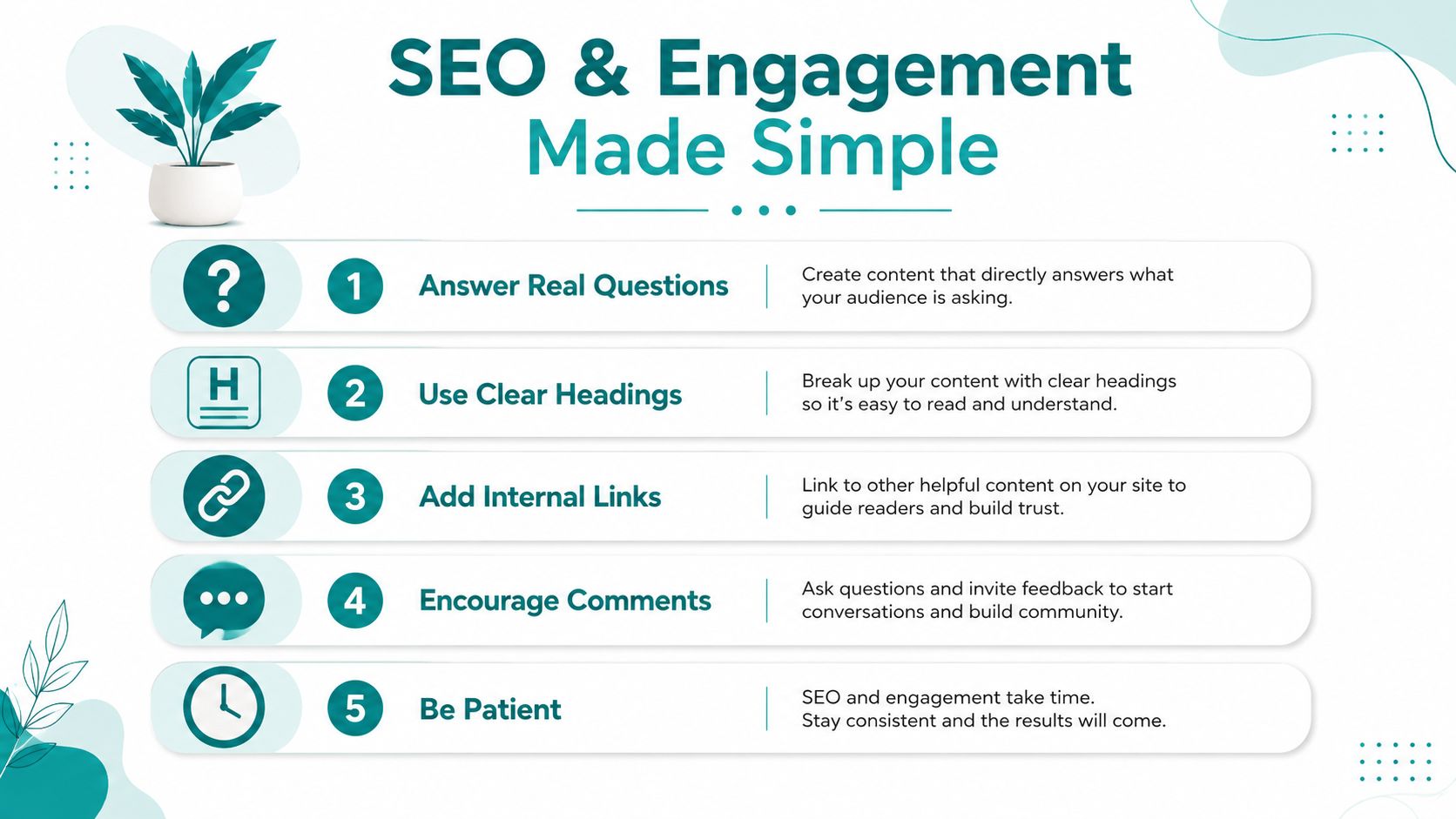
The goal isn't to impress an algorithm. The goal is to make your article easy to trust. If you want a clean example of structure, the done-for-you SEO page can give you a sense of how a service page can be organized without feeling cluttered.
One more thing helps a lot. A detailed outline before you write keeps the page from wandering. Jasper's guidance on long-form writing also emphasizes planning with sections, examples, data, and linking opportunities, then ending with a clear call to action, which matches what thoughtful readers expect. Jasper long-form content guide
Good SEO feels like good manners. You answer the question, show the path, and don't make people work harder than they need to.
Choosing the Right Format and Word Count for Your Article
A good article starts with a fit, not a target. A beginner guide needs a different pace than a personal experience post, and a resource roundup asks for a different kind of attention than a step-by-step tutorial. If you are writing after 50 and want to keep the process calm, the question is simple, what will help the reader take the next step without making the page harder than it needs to be?
For many topics, 2,000 to 3,500 words gives enough room to explain the idea clearly without turning the article into a chore. A pillar page may need 4,000+ words when the subject is wide and the reader needs a full map, not just a short answer. The number still matters less than the usefulness of the page. A small question does not become stronger just because it is stretched into a giant article, and that kind of padding can make the message weaker instead of clearer. Webtonic on long-form content
Long Form Content Formats at a Glance
| Format | Best For | Typical Word Count |
|---|---|---|
| Beginner guide | Teaching a new topic clearly | 1,500 to 2,500 words |
| Step-by-step tutorial | Showing a process in order | 2,000 to 3,500 words |
| Personal experience post | Building trust and relatability | 1,500 to 2,500 words |
| Resource roundup | Comparing tools or options | 2,000 to 3,000 words |
| Pillar page | Covering a topic in full | 4,000+ words |
Question clusters often give midlife creators a better path than chasing length for its own sake. One article can answer the main question, then follow with the related questions readers usually ask next. That works especially well in topics where search results are crowded, because the opening answer is only part of the job. The opportunity is to cover the full set of connected questions with more care than the pages already out there. Search Engine Land on long-form content strategy
When your energy is low, choose the format that feels easiest to finish well. A personal story can open the door for a reader who wants reassurance. A guide can carry them through each step in a steady way. A roundup can help someone compare options without feeling overwhelmed. The best structure fits your season of life, instead of asking you to force a shape that does not suit the material.
If you want a clean reference point, the guide to blog structure from RewriteBar shows how headings and flow can support a reader without making the page feel stiff.
A Simple Structure Template You Can Use Again and Again
A blank page feels less scary when you know the shape you're filling. The simplest long-form structure follows how people make decisions in real life. They notice a problem, look for relief, test the idea, and then decide what to do next.
A template that stays calm and flexible
Use this as scaffolding, not a cage:
- Hook. Start with the feeling or problem your reader recognizes.
- Problem. Name what's making the situation hard.
- Solution. Offer the simple path forward.
- Example. Show it in real life, even in a small way.
- Call to action. Invite the next step gently.
That mirrors the structure many readers prefer because it moves from emotion to understanding to action. It also keeps you from wandering off topic when the page gets long.
If you want a second example of a clean article layout, the blog post format guide from RewriteBar is a useful reference. It helps to see how headings, flow, and reader movement can work together without making the piece feel stiff.
Start with the question your reader is afraid to ask, then answer it like a patient friend would.
A simple outline can also include prompts beside each section. For example, in the hook, write one sentence about how the reader feels. In the example, add one moment from your own life. In the call to action, keep the invitation soft. That way, the page stays personal instead of sounding mass-produced.
Real Examples and Mini Case Studies From Midlife Creators
A woman I spoke with once had spent years helping friends choose tools, understand websites, and sort through online offers. She thought her experience was too ordinary to write about. Her first long article was a simple guide that answered the same question people kept bringing her in private messages. It didn't look fancy, but it felt useful, and usefulness is what made it work.
Another creator started with one detailed post about a topic she already knew well. She was nervous about the length and almost stopped halfway through. Then she remembered that readers often need more than one answer. She added a personal example, a few common mistakes, and a clear next step. The result was not instant magic. It was trust.
What these small wins tend to have in common
- They start with lived experience. The writer already knows the problem.
- They stay focused on one real question. No clutter, no wandering.
- They sound human. The writing feels like a conversation, not a sales script.
- They invite the reader forward. A useful article naturally leads somewhere.
I've seen this pattern enough to trust it. Midlife creators often think they need advanced tech skills or a huge following before they begin. In practice, they usually need clarity, patience, and one topic they can explain well.
The quiet strength of long form content is that it rewards consistency. You don't have to be loud. You don't have to be everywhere. You just need to keep showing up with useful answers that respect the reader's time and intelligence.
Repurposing and Sharing Your Content Without Burnout
One good article can do more than sit on a blog page. It can become an email newsletter, a short video script, a community post, or a Pinterest graphic. That's the beauty of building one thoughtful piece at a time. You're not creating more pressure, you're creating more mileage.
The key is to repurpose lightly. Don't turn every article into a full campaign. Pick one or two formats that fit your energy and use them to point back to the original piece. That keeps the work manageable and gives your content a longer life.
Gentle ways to share without feeling pushy
- Email your list. Send a short note with one takeaway and one link.
- Record a simple video. Read the main points in your own voice.
- Share in a trusted group. Add context, not hype.
- Clip one idea for social. Use a sentence that stands alone clearly.
If you want one thought to carry with you, it's this. The next five years will pass either way. The only question is whether you'll use them to build something that gives you peace of mind.
If you'd like a calm place to keep learning how to build income through useful content, Victoria OHare offers beginner-friendly guidance on Affiliate Marketing, List Building, and simple online business steps. Take the next step at your own pace, and choose the kind of work that helps you feel more steady, more independent, and more in control.