
If you're over 50 and wondering whether it's too late to build income online, you're not alone. Retirement insecurity can make every new idea feel urgent, while unfamiliar dashboards, websites, and marketing terms can make you doubt yourself. You may feel behind, but you haven't missed your only chance. You're choosing your starting point.
Affiliate marketing is simpler than it sounds. You recommend a useful product through content, a newsletter, or social media, and you may earn a commission when someone buys through your referral link. The best Affiliate Marketing websites aren't automatically the biggest ones. The right choice depends on your audience, niche, merchant quality, approval requirements, commission structure, payout timing, and how much technical work you're comfortable learning.
I understand the skepticism. Scams exist online, and careful research matters. I remember how overwhelming a first training dashboard can feel, with unfamiliar menus and instructions everywhere. The answer isn't to rush. It's to compare your options calmly, choose one manageable first step, and build trust before you place links.
1. Victoria OHare
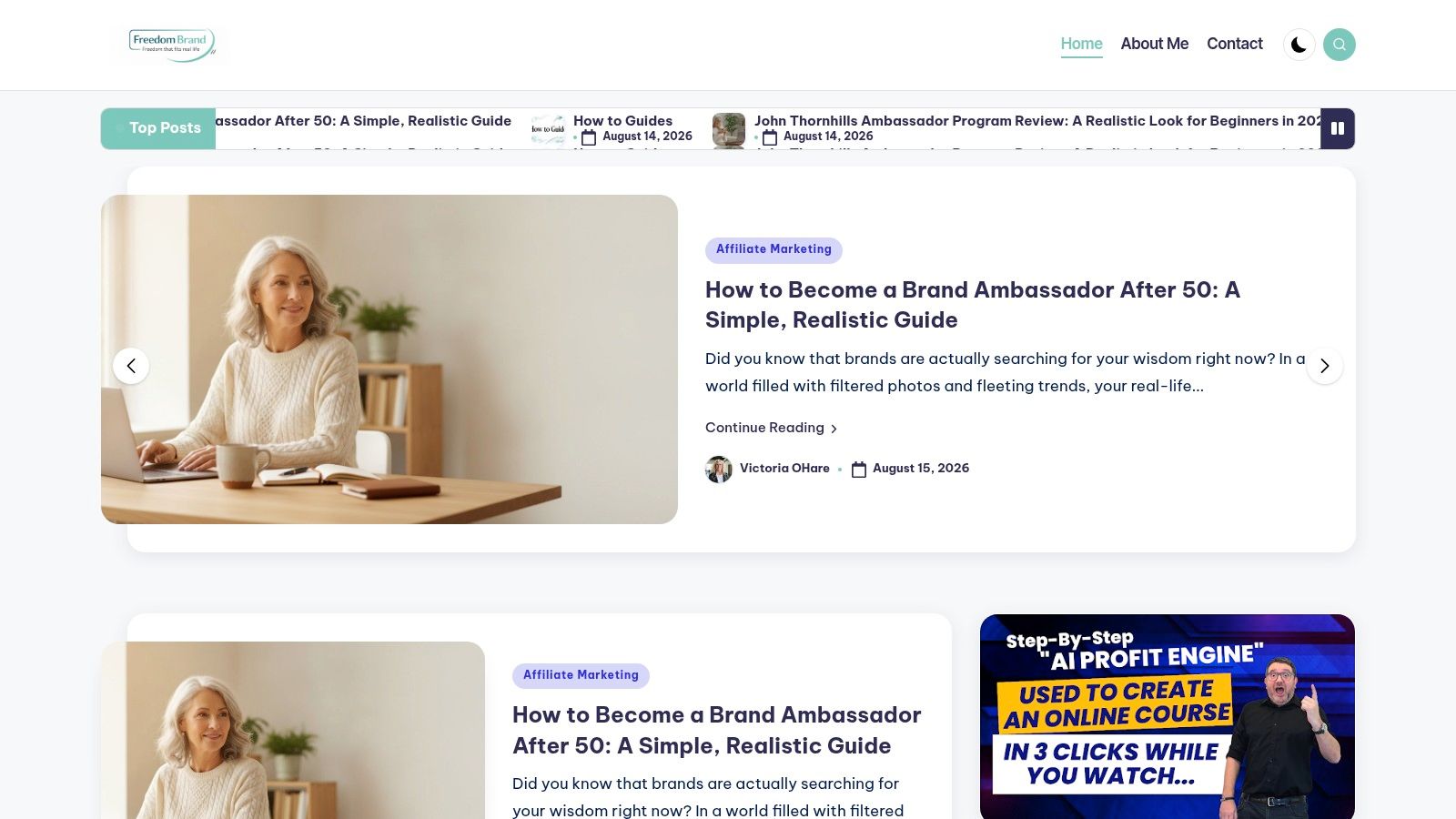
Victoria OHare offers a practical starting point for midlife women, new bloggers, newsletter writers, and affiliate marketing for beginners over 50. Its blog-led approach connects personal experience with online income while avoiding pressure to master complicated technology immediately.
The material covers Affiliate Marketing, brand ambassadorship, niche selection, traffic sources, funnels, email lists, automation, deliverability, retention, webinars, and do-it-yourself versus done-for-you options. That breadth helps explain the system behind an affiliate recommendation. A useful article attracts the right reader, an email list keeps the conversation open, and an ethical product suggestion gives that reader a relevant next step.
Why it stands out for beginners
The site gives particular attention to owned audiences, especially email lists. Search and social platforms can change their reach, while an email list gives you a direct channel for continuing to help subscribers. Readers should still treat traffic claims cautiously and test advice against their own niche, audience, and resources.
The guidance is written for people starting a side business, leaving traditional employment, or creating a Retirement pivot. It favors repeatable tasks over instant-income promises, which can make the first month feel more manageable. I would begin by learning one process at a time rather than trying to configure every tool at once.
A useful standard: Choose advice that helps you build an audience you can keep, not just traffic you hope a platform will continue sending.
The limitation is clear. Victoria OHare appears primarily blog-driven, without a clearly advertised paid course, coaching offer, or membership pricing. Anyone seeking personal mentoring may need another source of support. Reviews of programs and discussions of done-for-you services also call for independent checks on terms, costs, and fit.
Simplest first use case: Read one beginner guide, identify a narrow audience problem, and publish one helpful article or email. Then assess whether that topic attracts genuine questions before applying to several affiliate programs.
2. Amazon Associates
Amazon Associates suits lifestyle bloggers who recommend a wide range of practical products. A reader might trust your suggestions for kitchen equipment, books, gardening supplies, home organization products, or technology, then find those items in one familiar marketplace.
Amazon's greatest advantage is breadth and buyer familiarity. You don't need to negotiate with individual manufacturers for every product recommendation. Its SiteStripe tools can help approved associates create text and image links, while category-based commission rules determine what you may earn. Payments typically follow a net-60 cadence, with payment methods that can include direct deposit, gift card, or check, according to the program details provided for this comparison.
Where beginners need caution
Amazon's category-based rates can be lower than those offered by specialty merchants. Rates and program rules can change, so you'll need to check the current operating agreement rather than relying on an old tutorial. Amazon also has detailed compliance requirements around link placement, disclosures, and how you describe pricing or availability.
The program is useful when your content naturally answers a buying question. “What do I need for a beginner vegetable garden?” is more helpful than publishing a thin list of random product links.
For a practical explanation of using Amazon recommendations as part of a broader content strategy, see this guide to passive income with Amazon.
Simplest first use case: Publish one honest buying guide based on a subject you know well, and recommend only products you can explain clearly.
3. CJ
CJ, formerly Commission Junction, is a broad affiliate network rather than a single store. It connects publishers with advertisers across retail, finance, travel, services, home, technology, and other consumer categories.
That variety can help a new blogger whose topic doesn't fit neatly into one marketplace. A home and lifestyle site, for example, may find furniture, travel, insurance, software, and household brands through one account. CJ also provides tracking, product feeds, reporting, and developer tools for publishers who eventually want more control.
A network for growing publishers
CJ's Content Certification can connect qualified content sites with 600+ brands, based on the network information supplied for this comparison. That may reduce some manual searching, but it doesn't remove the need to review each advertiser's terms. Individual program approvals can still take time, and advanced tracking tools may feel like too much when you're just learning how referral links work.
The network makes more sense once you have a clear site topic and several useful pieces of content. Applying with an empty site can make approval harder because advertisers want to understand who you reach and how you promote products.
CJ supports two monthly payouts and multiple currencies, which may appeal to publishers building an international audience. Still, payment depends on advertiser validation and the specific program's policies.
Simplest first use case: Choose one advertiser that matches your niche, read its restrictions, and create one comparison or tutorial page around a genuine reader question.
If you're also considering building a paid newsletter from a blog, CJ can become one part of a wider content and email strategy.
4. impact.com
impact.com is a modern partnership marketplace for publishers, creators, influencers, and brands. It's particularly useful when you want to work with recognizable retail companies, direct-to-consumer brands, apps, or services instead of relying only on product links from a general marketplace.
The platform combines affiliate activity with broader partnership workflows. Depending on the brand, you may apply to a program, create tracking links, communicate inside the platform, and discuss custom terms or contracts. That can be valuable for a creator who has a focused audience and wants to move beyond standard affiliate placements.
Stronger fit for relationship-led promotion
The tradeoff is complexity. A beginner may find messaging, contracting, applications, and reporting less intuitive than a simple retailer dashboard. Approvals can also be selective, so rejection shouldn't automatically feel like a judgment about your ability. Sometimes a brand is looking for a particular audience, platform, or content format.
For midlife women building an online business, impact.com may fit well when recommendations are connected to a personal point of view. A creator discussing accessible beauty products, home tools, travel services, or software for small businesses may have more opportunity than someone publishing generic product lists.
Keep your promotion ethical. Explain why a product may help, mention limitations, and disclose the relationship clearly. The Federal Trade Commission's guidance on affiliate disclosures explains that a material connection, including receiving compensation or another benefit, must be disclosed clearly.
Simplest first use case: Apply to one brand that already matches your content, then create a demonstration, review, or personal-use explanation rather than a sales-heavy post.
5. Awin
Awin offers a broad network of consumer advertisers across the United States and international markets. It can work well for bloggers who want to monetize shopping, travel, home, fashion, or lifestyle content while keeping program discovery in one place.
Awin provides publisher FAQs, onboarding resources, APIs, product feeds, and a MasterTag for publishers who later want more technical control. Its joining process includes a refundable $1 deposit, according to the program information supplied for this article. Payment runs occur twice monthly after validation, and publishers are paid on approved transactions.
A practical option for a developing blog
The education and help resources may make Awin less intimidating than a network that assumes you already understand tracking. It also includes many mid-market merchants, which can be helpful when your niche is too specific for the largest marketplaces.
Approval and validation aren't always immediate. A merchant may take time to review your site, and a sale isn't necessarily payable until the advertiser approves it. That's why payout expectations belong in your planning. Affiliate income can be delayed, and it shouldn't be treated as money for an immediate household bill.
Awin is a good reminder that commission structure isn't the only selection factor. A slightly better rate may not help if the merchant doesn't fit your readers, has poor customer service, or makes content difficult to produce.
Simplest first use case: Use Awin to find one merchant your audience already knows or needs, then write a helpful guide that answers a specific purchasing concern.
For a beginner-oriented comparison of program types, visit this guide to Affiliate Marketing platforms for beginners.
6. Rakuten Advertising
Rakuten Advertising is a strong fit for lifestyle publishers who want access to household-name retailers in areas such as fashion, beauty, electronics, and everyday shopping. It has a more enterprise-oriented feel than some beginner marketplaces, which can be reassuring for readers who value established merchant relationships and formal policies.
After approval, publishers can use the dashboard, advertiser directory, and link tools to select programs and create tracking links. Rakuten's Linkshare-style tracking approach is intended to preserve attribution, while its documentation explains network policies and publisher responsibilities.
Quality matters more than a crowded catalog
Rakuten's enterprise bias can create stricter approval requirements. A new blogger with little published content may need to build a clear site identity before applying. That isn't a reason to give up. It's a reason to publish useful material first, clarify your audience, and make your promotional methods easy to understand.
Payment timing depends on advertiser validation, so read each program's terms carefully. A familiar brand may convert well because readers recognize it, but recognition doesn't excuse weak recommendations. Your credibility is still attached to every product you promote.
A good review should explain who the product suits, who may want an alternative, what limitations you noticed, and whether the price or commitment makes sense for your audience. That approach creates more durable trust than repeating a merchant's description.
Simplest first use case: Choose one household brand that fits your niche and publish a balanced review or “who this is for” article.
7. PartnerStack
PartnerStack is designed mainly for business-to-business software and technology partnerships. It's a better fit for a blogger, consultant, coach, or newsletter writer who recommends email platforms, project management tools, customer relationship systems, website services, or other software.
The network's partner marketplace gives publishers access to programs, while its partner hub helps manage links, resources, and payments. PartnerStack emphasizes recurring commissions and lifecycle tracking, which means a referral may remain commercially relevant when a customer continues using a software service.
Match the program to the reader's problem
This isn't the right choice for a blog centered on household goods, clothing, or general consumer shopping. It can be valuable, though, for an audience of small business owners, freelancers, coaches, or creators building an online business after 50.
Software recommendations require care. Your reader may depend on a tool for her business, so explain setup difficulty, learning requirements, pricing terms as currently displayed by the merchant, and what happens if the tool doesn't suit her needs. Don't claim a platform is effortless if it has a steep learning curve.
PartnerStack lists 600+ SaaS companies in the supplied program information. That breadth can create opportunity, but more options can also create decision fatigue. Start with one tool you understand and can demonstrate authentically.
A recurring commission is only useful when the product continues helping the customer.
Simplest first use case: Write a beginner's tutorial for one software tool you already understand, using screenshots or plain-language steps where permitted by the merchant.
8. ClickBank
ClickBank is a long-running marketplace focused largely on digital products, courses, and selected physical supplements. It can appeal to affiliates looking for revenue-share or CPA offers, meaning payment may be tied to a sale or another defined action.
The marketplace includes filters and performance information to help affiliates compare offers. Its payment schedules can be weekly or biweekly once the applicable thresholds and requirements are met, according to the program details provided here. That cadence may suit someone who wants more frequent settlement than a network with longer validation windows.
Due diligence is essential
ClickBank's variety is both its strength and its risk. Offer quality varies, especially in sensitive categories such as wellness, business opportunities, and personal development. A high commission doesn't make an offer ethical, useful, or appropriate for your audience.
Read the sales page, refund terms, vendor policies, and advertising restrictions before promoting anything. Avoid unsupported Health claims, income promises, or language that pressures people who may already feel financially vulnerable. If you wouldn't recommend the product to a family member after reviewing it carefully, don't recommend it to your list.
For a plain-language discussion of promoting digital products, see this guide to digital products and Affiliate Marketing.
Simplest first use case: Select one educational product that solves a clearly defined problem, review it carefully, and explain its limitations before sharing a referral link.
9. FlexOffers
FlexOffers works as a broad affiliate network and a useful gap filler. If you can't find a suitable retailer through another platform, FlexOffers may provide another route to programs in retail, finance, travel, services, and related categories.
The supplied program information describes a catalog of 12,000+ programs, along with APIs, product feeds, real-time reporting, and a publisher knowledge base. Many mid-market advertisers may offer relatively quick approvals, though each merchant controls its own requirements.
Plan for delayed payments
FlexOffers uses monthly net-60 payments after thresholds, according to the details provided for this comparison. That can be slower than some marketplaces, and validation still depends on advertiser payments. New affiliates should treat this as delayed business income rather than instant cash.
The network's breadth makes it tempting to apply everywhere. Resist that urge. A reader doesn't need twenty unrelated recommendations. She needs a trusted answer to one question, such as which travel accessory fits a particular need or which service is practical for a small household.
Use the reporting tools to see which links receive attention, but don't mistake clicks for a successful business. A useful content asset should help people decide, even when they don't buy immediately.
Simplest first use case: Search for one missing merchant that naturally fits an existing article, then add a carefully disclosed link only where it improves the reader's experience.
10. Skimlinks
Skimlinks is a meta affiliate platform. Instead of applying separately to many individual programs, a creator can use its tools or integration to convert eligible merchant links into affiliate links and manage reporting centrally.
The supplied platform information describes access to 48,500+ advertisers through integration with 50+ networks. That makes Skimlinks attractive to publishers who write first and prefer to reduce the operational work of managing dozens of relationships. It can also suit newsletters and creators who share content across a website, social channels, and email.
Convenience comes with tradeoffs
Skimlinks may reduce technical and administrative overhead, but convenience doesn't guarantee the highest available commission. Going directly to a merchant may sometimes provide better terms. The standard minimum payout threshold is described as $65 in the United States in the supplied information, so check the current regional terms before planning around a payment.
The platform works best when your content already includes legitimate shopping references. It shouldn't turn a helpful article into a collection of automatic links. Readers need context, and your disclosure should make the commercial relationship clear.
For a beginner who feels overwhelmed by separate applications, Skimlinks can provide a simpler first experiment. You'll still need to understand which merchants are eligible, how attribution works, and when payments are released.
Simplest first use case: Connect one content site or newsletter, publish useful buying guidance, and review the resulting links and reports before expanding.
Top 10 Affiliate Platforms Comparison
| Service / Blog | Core features ✨ | Target audience 👥 | Trust & UX ★ | Pricing & payouts 💰 | USP / Best for 🏆 |
|---|---|---|---|---|---|
| Victoria OHare 🏆 | ✨ Step-by-step guides, email‑list frameworks, affiliate & Brand Ambassador walkthroughs | 👥 Midlife women (50+), new creators, newsletter builders | ★★★★☆ Clear, beginner‑friendly, ethical guidance | 💰 Free guidance, templates & reviews (no obvious paid courses) | 🏆 Audience‑first, actionable roadmap for starting later in life |
| Amazon Associates | ✨ Massive product catalog, SiteStripe link tools | 👥 General bloggers, product reviewers, lifestyle creators | ★★★★☆ High buyer trust, very beginner‑friendly | 💰 Category commissions (often low); net‑60 payouts | Broad selection + strong conversion potential |
| CJ (Commission Junction) | ✨ Large advertiser pool, robust reporting, Content Certification | 👥 Lifestyle & B2C publishers, scale‑focused blogs | ★★★★☆ Mature platform; reliable tracking | 💰 Advertiser‑specific rates; two monthly payouts | Strong reporting & brand variety for scaling affiliates |
| impact.com | ✨ Partner marketplace, built‑in contracting & creator workflows | 👥 Influencers, creators seeking negotiated deals | ★★★☆☆ Modern tools but selective approvals | 💰 Custom/negotiable rates; variable payouts | Best for negotiating custom affiliate + sponsorship terms |
| Awin | ✨ Global advertisers, MasterTag, publisher onboarding | 👥 Blog & email publishers with international audiences | ★★★★☆ Broad merchant mix; solid support docs | 💰 $1 refundable join; twice‑monthly payments after validation | Good mid‑market mix and publisher education |
| Rakuten Advertising | ✨ Enterprise retailers, Linkshare tracking, compliance docs | 👥 Fashion, lifestyle, electronics publishers | ★★★★☆ Enterprise reliability; stricter approvals | 💰 Free signup; advertiser‑dependent payout timing | Access to top‑tier retail brands with strong tracking |
| PartnerStack | ✨ SaaS partner marketplace, recurring commission focus | 👥 B2B/SaaS recommenders, martech & business tool creators | ★★★★☆ Clear partner hub; recurring payouts | 💰 Recurring/CPA deals; variable approval bars | Ideal for recurring revenue from software referrals |
| ClickBank | ✨ Digital product marketplace, flexible payout cadence | 👥 Info‑product & wellness affiliates | ★★★☆☆ High commissions but mixed offer quality | 💰 High rev‑share; weekly/biweekly payouts | High commission potential for digital products |
| FlexOffers | ✨ Large catalog (12k+), APIs, real‑time reporting | 👥 Publishers needing broad merchant coverage | ★★★☆☆ Reliable network; net‑60 cadence | 💰 Net‑60 payouts; varied merchant rates | Useful gap‑filler when merchants aren't on other networks |
| Skimlinks | ✨ Auto‑affiliates links via script, centralized reporting | 👥 Content creators, multi‑platform & newsletter authors | ★★★☆☆ Convenient autopilot monetization | 💰 Min payout (~$65) + centralized commission splits | Auto‑monetization for writers who prefer low overhead |
Choose One Useful First Step
You don't need to join every network on this list. More accounts won't automatically create more income, and too many dashboards can make a new online business feel harder than it needs to be.
Start with one audience and one problem. You might help women over 50 choose practical home products, help new newsletter writers select software, or help families compare travel services. A focused audience gives you a clearer reason to recommend anything.
Then choose one suitable program. Amazon Associates may make sense for broad lifestyle content. PartnerStack may fit software recommendations. Rakuten Advertising or Awin may suit consumer brands, while Victoria OHare is a useful educational starting point when you need calm guidance on Affiliate Marketing, List Building, and simple automation.
Before applying, read the current program terms. Check the commission structure, cookie or attribution rules, approval requirements, payout cadence, payment threshold, prohibited promotion methods, and refund or validation policies. A cookie is the tracking mechanism that helps a program connect a referral click with a later action. Its duration and rules vary, so don't assume every network works the same way.
Complete your application. Describe your site, audience, content channels, and promotion methods accurately. If your blog is new, publish helpful content first and make your purpose clear. Approval is easier to understand when you treat it as a merchant fit decision, not a personal verdict.
Create useful content before placing links. A tutorial, comparison, review, or personal experience can answer a real question. Explain both benefits and limitations, avoid unsupported claims, and disclose affiliate relationships clearly. The Federal Trade Commission's endorsement guidance makes clear that readers need to understand when a material connection exists.
Track each link so you can learn what your audience finds useful. Review merchant quality, customer experience, approval status, refunds, and payout expectations. Your goal isn't to chase every possible commission. It's to build a trustworthy body of work that can support an email audience over time.
Email deserves a place in that plan. 79.3% of affiliate marketers reportedly use AI-powered content creation tools, according to Rewardful's 2026 statistics roundup, but automation shouldn't replace judgment. Use tools to help organize ideas, refresh content, or group related topics. Keep your voice, recommendations, disclosures, and final decisions human.
Retirement planning may still leave people uncertain. Pew Research Center reported that four-in-ten U.S. adults weren't confident they'd have enough income and assets to last through Retirement. That concern deserves compassion, not panic. An online business won't guarantee security, but building useful skills, trusted relationships, and owned audience assets can give you more control over your next chapter.
You're not too old to learn this. You don't need to understand every platform today. Ethical consistency builds trust, repetition builds confidence, and small steps can become meaningful progress. The next five years will pass either way. The question is whether you'll use them to build something that gives you greater peace of mind.
Victoria OHare offers calm, beginner-friendly guidance on Affiliate Marketing, brand ambassadorship, email-list building, and simple automation for midlife women and new creators. If you want help choosing a focused niche and taking your first practical step, visit Victoria OHare and explore the free guides and reviews.