
If you're over 50 and wondering whether it's too late to build income online, you're not alone. Many women feel behind financially, not because they failed, but because life happened.
A parent needed help. A job changed. A marriage shifted. Savings didn't grow the way you hoped. Then one day you look at Retirement numbers, or rising bills, or the price of groceries, and a quiet fear settles in.
I know that feeling. The first time I started looking at online business options, I felt two things at once: hopeful and overwhelmed. Every page seemed to assume I was already tech-savvy, already confident, already younger. If that's where you are, please hear this. You're not behind. You're just early in learning something new.
You Are Not Behind You Are Just Getting Started
A lot of women arrive here in the same way.
They aren't lazy. They aren't careless. They're tired of depending on one paycheck, one employer, or one Retirement plan to carry all the weight. They want a little more breathing room. A little more control. A little more peace of mind.
Maybe you opened a Retirement calculator and closed it just as quickly.
Maybe you watched someone online talking about affiliate links, digital products, or content creation and thought, "That might work for other people, but not for me."
That doubt is understandable. Online income can look noisy from the outside. Too many promises. Too much jargon. Too much hustle.
Why this matters now
The old idea of working for decades and then coasting into a secure Retirement doesn't feel as solid as it once did. That's why learning how to make money online with no experience isn't about chasing a fantasy. It's about building options.
Options matter.
They give you room to cover a bill without panic. They give you a way to keep earning if work changes. They give you dignity when you don't want to ask for help. They give you a second chapter that belongs to you.
You don't need to build a huge internet empire. You need to build a reliable skill and a simple asset.
That could be a blog. A newsletter. A small recommendation-based business. A service you offer from home.
And if you're worried that younger women have already taken all the good opportunities, that's not how this works. Many online business models reward trust, clarity, and lived experience. Those are strengths that often get better with age, not worse.
What life experience actually gives you
You may not call it expertise, but you probably have it.
Think about what you've already spent years doing:
- Solving everyday problems: finding products that work, stretching a budget, organizing a home, caring for others
- Building judgment: knowing what to trust, what to avoid, and what proves helpful
- Communicating clearly: explaining things plainly, encouraging people, giving honest recommendations
- Sticking with things: showing up when life isn't neat or easy
Those qualities translate beautifully online.
A woman who has spent years figuring out menopause support, healthy cooking, downsizing, caregiving, gardening, budgeting, or even office organization has something useful to share. Online income often starts there. Not with being flashy. With being helpful.
A quieter way to think about income
You don't need a complicated identity for this. You don't need to become an influencer in the trendy sense.
You can think of it this way:
| What feels stressful | What builds peace of mind |
|---|---|
| Chasing quick cash | Building a simple income stream |
| Depending on one source | Creating more than one option |
| Trying to learn everything at once | Learning one model step by step |
| Posting for attention | Sharing useful help with the right people |
If you've been craving more stability, that's wisdom talking.
You're not too old. You're not too late. You're not starting from nothing.
You're starting from life.
Four Simple Paths to Your First Online Dollar
There are many ways to earn online, but beginners often do better when they choose a path that is simple, ethical, and realistic. Not trendy. Not flashy. Just clear.
One helpful reality check is that affiliate marketing reached $15.7 billion in 2023, up from $8.2 billion in 2018, and beginner-friendly entry points like data entry or transcription average $15–$25 per hour for beginners in 2026, according to this overview from Mercy University. That tells us two things. First, online income is real. Second, you can start small.
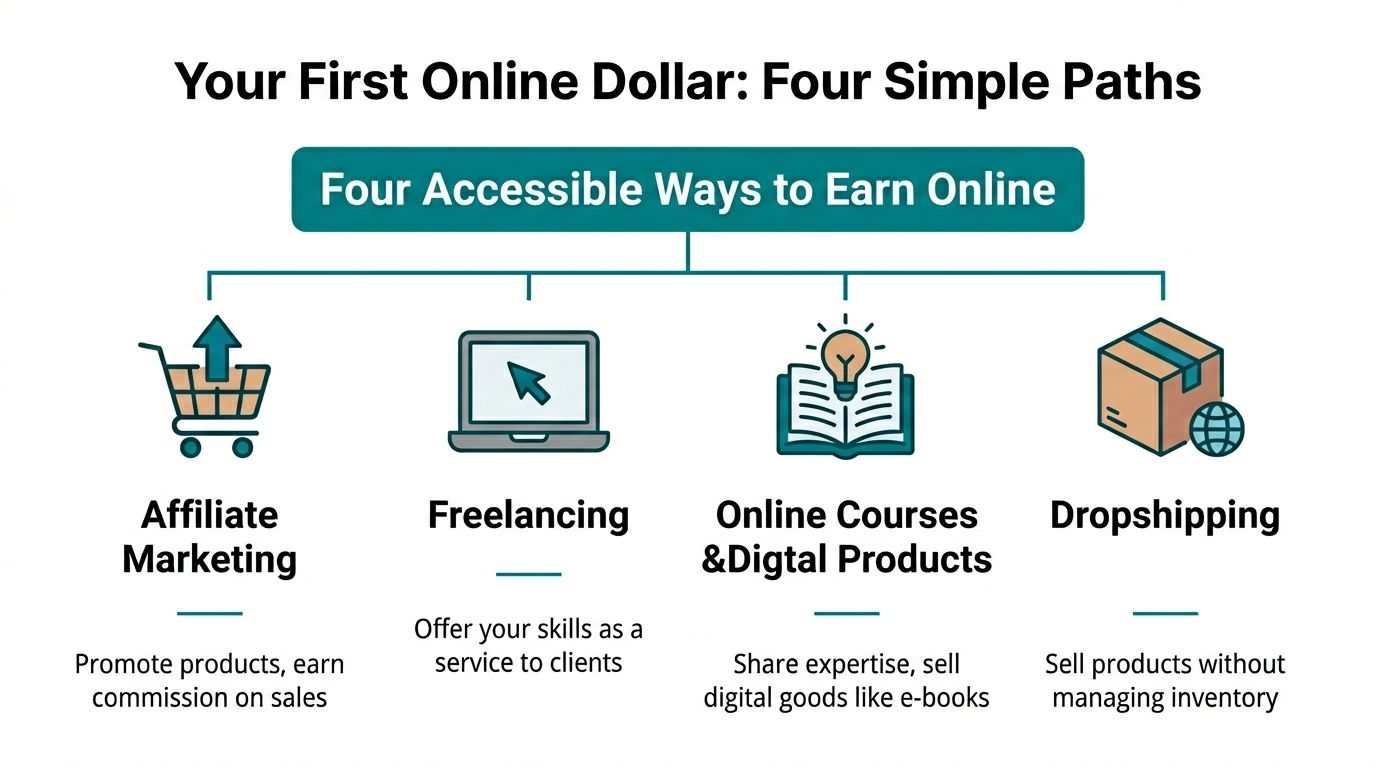 Affiliate Marketing, freelancing, courses, and dropshipping." />
Affiliate marketing
This is often the simplest place to begin.
Affiliate marketing means recommending a product or service you trust. If someone buys through your special link, you earn a commission. You don't handle inventory. You don't ship anything. You don't deal with customer service.
A plain example helps. If you love a certain air fryer, planner, skincare item, gardening tool, or book, you can write about why you use it and share a link.
This works especially well for women over 50 because trust matters. People respond to honest recommendations from someone who sounds real, not polished.
Micro-services
This is online work built from a small practical skill.
You might offer:
- Data entry: simple administrative tasks
- Transcription: turning audio into text
- Virtual assistance: email, scheduling, basic research
- Writing or editing: if you're good with words
- Pinterest pin creation: using Canva templates
Micro-services are useful if you want to earn sooner while you build a longer-term asset on the side.
Content and email List Building
This is the slower, steadier path.
You create helpful content around a topic you know. That content could live on a blog, social media page, YouTube channel, or newsletter. Over time, people begin to trust you. Then you can recommend products, share resources, and build income from your audience.
Many women find this path meaningful because it doesn't depend on being loud. It depends on being useful.
If you're curious about the broader creator path, this guide on how to make money as a content creator gives a good overview of the different ways creators turn helpful content into income.
Courses or simple digital products
This path works well once you've learned what people ask you for.
Maybe friends always come to you for help with meal planning, decluttering, budgeting, caregiving systems, or basic Excel skills. That knowledge can become a checklist, workbook, mini guide, or beginner course.
If that idea appeals to you, this practical resource on how to sell online courses can help you understand the moving parts without making it feel complicated.
Is this a scam
A fair question. There are scams online.
But the business models above are not scams by themselves. They are legitimate ways people earn. The key is how you approach them.
Look for models where you are:
- Recommending real products: not hiding what you're doing
- Using reputable platforms: such as established affiliate programs or freelance marketplaces
- Learning skills: not paying for hype
- Building trust: not pressuring anyone
Practical rule: If an offer promises fast money with little effort and won't clearly explain how income is generated, step back.
Do you need tech skills
No. You need willingness, patience, and a few basic tools.
Most beginners can start with simple platforms like WordPress, Canva, ConvertKit, Mailchimp, or social media. You don't need to code. You don't need to master everything at once.
If you want more grounded ideas for this season of life, this guide on realistic online business ideas for beginners after 50 may help: https://freedombrandambassador.com/realistic-online-business-ideas-for-beginners-a-simple-guide-to-starting-after-50/
Are you too old
No.
In fact, maturity can be a real advantage online. You know how to communicate. You know how to spot nonsense. You know what problems matter in everyday life.
That makes your voice valuable.
The goal isn't to compete with younger creators doing dance trends or constant posting. The goal is to help the right people in a calm, honest way.
Starting with What You Know Affiliate Marketing for Beginners
Affiliate marketing sounds more technical than it is. The underlying idea is simple. You share something useful. If someone buys through your link, you may earn a commission.
That's it.
For many beginners, this is one of the easiest answers to how to make money online with no experience because it doesn't require your own product, your own warehouse, or a large audience on day one.

Start with a topic you already live with
Most women make this harder than it needs to be.
They think they need a perfect niche. They don't. They need a topic they understand and can keep talking about without forcing it.
A good beginner niche often lives inside normal life:
- Home and organization: storage tools, planners, cleaning products
- Healthy living: simple kitchen tools, walking gear, supplements you personally use
- Midlife transitions: menopause support, empty nest routines, downsizing
- Hobbies: gardening, sewing, reading, baking, crafts
- Work and productivity: office tools, software, notebooks, desk setups
You are looking for overlap between three things.
| Ask yourself | Why it matters |
|---|---|
| What do I already know from lived experience? | It keeps your content natural |
| What do people ask me about? | It hints at demand |
| What products do I already use and trust? | It gives you honest recommendations |
One structured framework suggests beginners do well when they choose a niche with 1,000 to 10,000 monthly searches, publish 2 to 3 posts per week, and aim for an initial 5% click-through rate on affiliate links. It also notes that 10% to 20% of beginners who stay consistent can reach $1,000+ per month within 6 to 12 months, based on this beginner guide from Remitly.
You do not need to obsess over those numbers. They show that consistency matters more than perfection.
Find beginner-friendly affiliate programs
Once you have a topic, you need products to recommend.
Common beginner options include:
- Amazon Associates: broad product selection and familiar shopping experience
- ShareASale: many brands in one place
- ClickBank: often used for digital offers
Choose products that fit your niche and your values. If you wouldn't recommend it to a friend, don't build content around it.
I understand being cautious. There are low-quality products online. That's why education and discernment matter. Your reputation is more important than one commission.
Pick one low-tech way to share
You do not need a complicated funnel at the start.
Choose one method:
A simple blog post
Write a plain article such as:
- My favorite kitchen tools for easier weeknight meals
- What helped me organize a small linen closet
- The walking shoes I use and why I like them
Inside the post, include your affiliate links where they fit naturally.
A focused social media page
Create posts around one theme. For example, if your topic is gardening, share tips, photos, and short reviews of tools you use.
You are not trying to become famous. You're building relevance.
A small email list
This can be as simple as sending useful recommendations and short stories to people who choose to hear from you. Email becomes more powerful later, but you can start collecting subscribers early.
If you want a detailed beginner walkthrough, Victoria OHare has a guide on getting started here: https://freedombrandambassador.com/how-to-start-affiliate-marketing-for-beginners/
What to say when you share a product
Many women freeze here because they don't want to sound pushy.
Good. That instinct protects your integrity.
A natural recommendation sounds like this:
I bought this because I wanted something simple that actually worked for my small kitchen. I've been using it for a while, and it made meal prep easier. If you're looking for one, this is the one I use.
Or this:
I've tried a few versions of this and kept coming back to this one because it feels easier to use. If you're comparing options, this may save you some trial and error.
You are not trying to "close a sale." You are helping someone make a decision.
Here's a short video that can help the process feel more visual and less intimidating.
A gentle weekly rhythm
You don't need a packed schedule. Try something manageable.
- Choose one topic: for example, products that make caregiving easier.
- Pick one product: only something you've used or researched carefully.
- Create one piece of content: a post, short email, or review.
- Share it once or twice: not everywhere, just where it fits.
- Notice what people respond to: questions, clicks, replies, interest.
Your first goal is not big money. Your first goal is proof that you can publish, share, and learn.
That first small result matters. It changes the story you tell yourself.
Instead of "I don't know how this works," it becomes "I'm learning how this works."
How to Build an Audience That Trusts You
A woman in her 50s sits down with tea after dinner, opens her laptop, and wonders, "Do I really need to become some kind of influencer to make this work?"
No.
Trust grows in quieter ways. It often starts with one useful note, one honest recommendation, or one small story that makes someone feel understood. For women over 50, that can be a real advantage. You have years of lived experience. You know what helps in a busy home, what saves time in caregiving, what makes a budget stretch, and what products are worth buying. That kind of knowledge carries weight because it has been tested in real life.
This is why an email list matters. Social platforms can help new people find you, but email gives you a steadier way to stay in touch with the people who want to hear from you.

Borrowed land and owned land
Social media works like a booth at a busy market. People may pass by, stop for a moment, then keep walking.
An email list is more like a small address book of people who said, "Yes, send that to me." That changes the relationship. You are no longer trying to catch attention in a crowded feed. You are writing to someone who gave permission to hear from you.
A simple way to sort this out is:
- Borrowed land: Instagram, Facebook, TikTok, YouTube
- Owned land: your email list
Borrowed land helps people discover you. Owned land gives you stability. If a platform changes its rules or stops showing your posts, your list is still yours.
What an email list actually does
Beginners often assume they need a huge audience before email matters. They do not.
A small list can do a lot if the right people are on it. Fifty readers who trust you are more useful than five thousand casual views from people who barely remember your name.
Your list helps you:
- Build familiarity: people begin to recognize your voice and values
- Share recommendations naturally: product links make more sense inside helpful advice
- Learn what people need: replies and clicks show you what matters to them
- Create stability: you are not depending only on social media reach
That last point matters more than many beginners realize. Trust usually grows through repeated contact. One post may be forgotten. A series of helpful emails starts to build a real connection.
A beginner-friendly setup
The tech sounds bigger than it is.
You only need three parts. An email service, a sign-up form, and a small free resource that gives people a reason to join. If the phrase "lead magnet" makes your eyes glaze over, ignore the jargon. It is a useful freebie.
Good examples include:
- A checklist: daily habits for better energy after 50
- A short guide: beginner pantry staples for easy healthy meals
- A resource list: favorite tools for small-space organization
- A mini planner page: weekly budget or meal prep printable
The best free resource solves one small problem well. It does not need fancy design. It needs to be clear, useful, and easy to finish.
If you want help with the setup, this guide on building an email list from scratch walks through the basics in a way that feels manageable.
What to email people
Short emails are enough.
You are not writing a magazine. You are writing a thoughtful note to one person who wants practical help. That shift makes the process much less intimidating.
You can send emails like these:
| Type of email | Example |
|---|---|
| Helpful tip | One thing that made your mornings easier |
| Personal note | A short story about something you learned |
| Recommendation | A product you genuinely use |
| Curated list | Three tools that help with one problem |
Warmth matters. Clarity matters. Honesty matters.
Polish matters far less than beginners think.
People stay on lists that make them feel helped, not pressured.
If you want broader context on the business model behind audience building, this article on how to make money as a content creator explains how trust, content, and offers can work together over time.
What trust looks like in practice
Trust is built when your advice matches your actions.
That means you recommend products selectively. You mention what worked for you and who it may help. You tell the truth when something has limits. You show up often enough that people know you are still there.
For example, if you share kitchen tools for arthritis-friendly cooking, trust grows when you explain why one handle feels easier to grip, what frustrated you about another option, and whether the higher price was justified. That kind of detail feels human. It sounds like guidance from a friend, not a sales script.
Many women over 50 do especially well here because they are not trying to perform for the internet. They are passing along hard-earned lessons. That calmer approach can feel like a relief to readers who are tired of hype.
Keep the process light
Start small and keep it steady.
- Pick one topic people already ask you about.
- Create one simple free resource.
- Add one email sign-up form.
- Send one helpful email each week.
- Pay attention to replies, questions, and clicks.
That is enough to begin.
You are building a quiet asset that can support income over time. More important, you are building peace of mind. Each email is one more brick in something steady, useful, and fully possible to learn.
Your First 90 Days A Gentle Action Plan
You do not need to sprint. You need a rhythm you can keep.
This matters even more for women over 50 because many are balancing work, family, caregiving, Health, or simple mental overload. A structured plan helps. It turns vague worry into doable action.
Research summarized by The Muse notes that women over 50 often cite tech overwhelm as a major barrier, while also pointing out they are the fastest-growing demographic on Instagram, up 22% year over year in 2025, and that newsletters by women 50+ in niche topics grew 45% in paid subscribers last year. The audience is there. What helps is a calmer plan.
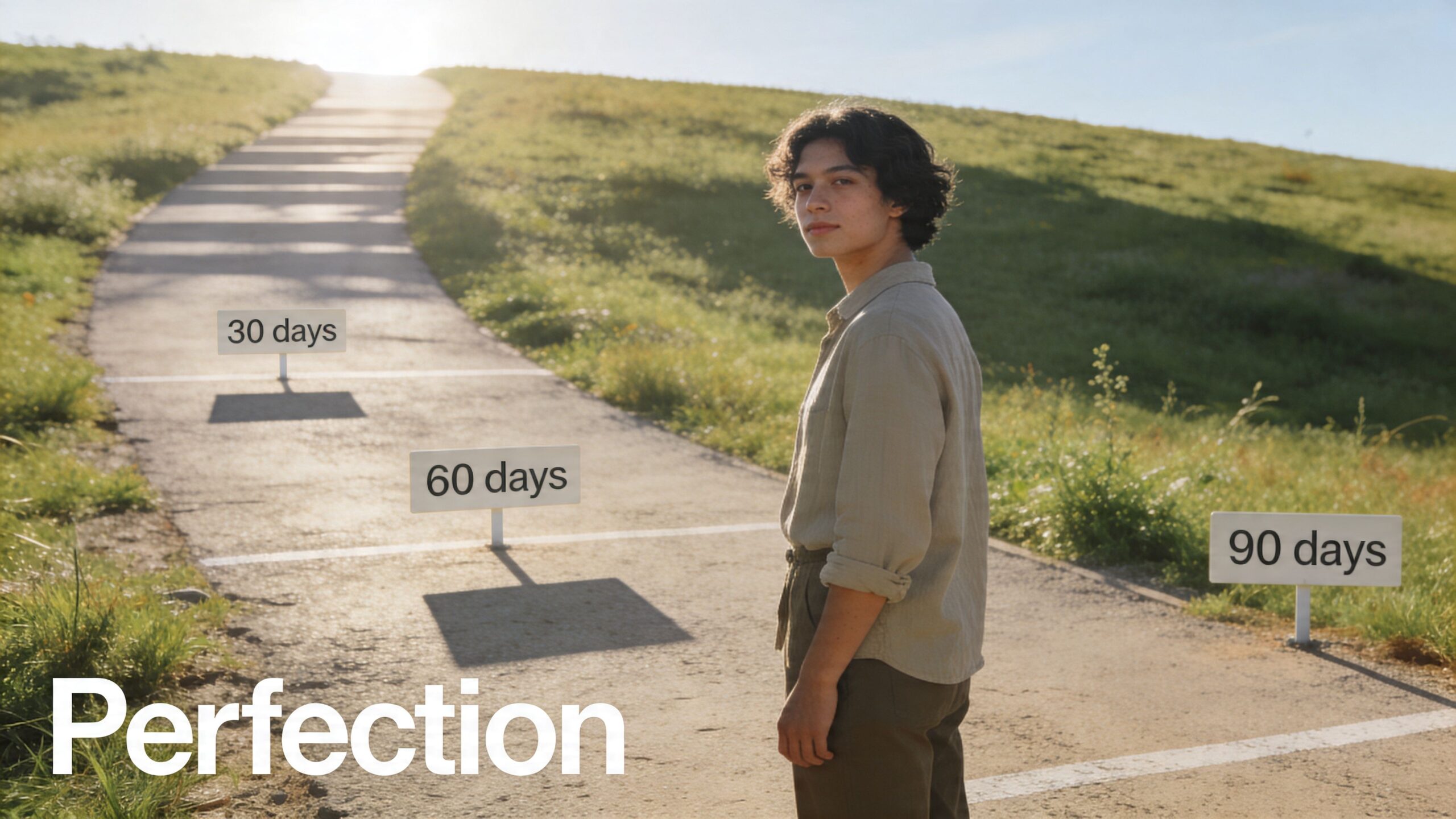
Days 1 to 30 choose your lane
This first month is for clarity, not pressure.
Pick one path. Affiliate Marketing is often the easiest starting point, but you might choose a micro-service if you'd like to earn sooner.
Keep your focus small.
- Choose one topic: something you know from real life
- List products or problems: what do you already use, solve, or talk about
- Set up one platform: a simple blog, one social account, or one email tool
- Learn basic vocabulary: affiliate link, email list, content, niche
A small win for this phase is making decisions.
If you're the type who researches for weeks, be gentle with yourself. Learning is good. Hiding in learning is different.
Days 31 to 60 create and share
Now you begin making things.
Not a huge library. Just a few useful pieces.
Try this:
- Write one helpful post each week: a review, tip list, or personal guide
- Share one honest recommendation: only if it fits naturally
- Create simple visuals if needed: Canva is enough for basic graphics
- Notice reactions: which topic gets replies, questions, or clicks
This stage can feel vulnerable. That is normal.
You might think, "Who am I to talk about this?" But if you've lived it and you're honest about your experience, you are qualified to be helpful.
Small reminder: your first content is allowed to be simple.
Days 61 to 90 begin your list
Once you've shared a bit of content, create one next step for people who want more.
That usually means a small email list.
You don't need a complicated system. A one-page checklist or short guide is enough.
A gentle setup looks like this:
| Task | Keep it simple |
|---|---|
| Choose one freebie | Solve one narrow problem |
| Create sign-up form | Use your email platform's template |
| Mention it in your content | One invitation is enough |
| Send a welcome email | Thank them and share one helpful tip |
At this point, you are no longer just trying random things online.
You are building a basic business foundation:
a niche, content, one offer path, and a direct connection with readers.
A weekly routine you can actually keep
If your schedule is full, try this light structure:
- One day to learn: read, watch, or take notes
- One day to create: write a post or email
- One day to share: publish and tell people about it
- One day to review: what felt easy, what felt clunky, what got attention
That kind of rhythm is sustainable.
It also protects you from a common beginner mistake, trying to build everything at once.
What progress may look like
In the beginning, progress is often quiet.
It can look like:
- understanding a new term without panic
- publishing your first piece of content
- getting your first subscriber
- clicking your own link and realizing you set it up correctly
- hearing a friend say, "That was helpful"
These moments count.
They are evidence that you can learn the systems, use the tools, and build something steady with time.
The Path to Peace of Mind Mindset and Common Pitfalls
A lot of women reach this stage with a quiet worry in the background.
You may have done the reading, chosen a simple path, and taken a few first steps, yet still wonder, "What if I am too late for this?" That question can feel heavier than any tool or platform. It sits in your chest and makes small tasks feel bigger than they are.
Learning how to make money online with no experience has two parts. One is practical. You choose a business model, learn a few tools, and keep showing up. The other is emotional. You stay steady long enough to let those small efforts turn into skill, trust, and income.
For many women over 50, the emotional part is the harder one.
Tech can feel like walking into a kitchen where someone rearranged every drawer. The tools are there. The labels are unfamiliar. That does not mean you are bad at cooking. It means you need a little time to learn where things go.
The traps that stop capable women
Many beginners do not quit because they lack wisdom or work ethic. They quit because they mistake beginner discomfort for a personal limitation.
That confusion often shows up in a few familiar ways:
- Perfectionism: waiting until your website, bio, or first email sounds polished enough
- Comparison: looking at someone with years of practice and using her middle chapter to judge your first page
- Shiny object thinking: changing directions every time a new method promises faster money
- Information overload: reading, saving, watching, and bookmarking without giving one plan a fair try
- Distrust of your own experience: assuming the knowledge you gained through work, parenting, caregiving, budgeting, teaching, or solving everyday problems has no online value
That last one matters more than many people realize.
Life experience is often your starting advantage. A woman who has managed a household on a tight budget, supported aging parents, changed careers, helped friends make decisions, or learned to simplify hard things already understands problems other people are trying to solve. Online income does not always begin with flashy expertise. Often, it begins with clear, useful guidance delivered in a calm voice.
You need one clear path, a simple routine, and enough patience to let your confidence catch up with your effort.
What helps instead
A healthy mindset for this kind of work is usually quiet.
It looks like choosing one low-tech path and staying with it long enough to learn the basics. It looks like using plain tools you can understand, even if they are not the trendiest option. It looks like treating skill-building as real progress, because it is. And it looks like protecting your attention from people who make business sound like a race.
Hustle culture tells you to do more, post more, launch more, and push harder.
Peace of mind asks a different question. Can you build something useful that fits your real life?
That might mean a small affiliate site, a simple newsletter, a modest digital product, or a service tied to what you already know. None of those paths need complicated tech to begin. They need consistency and trust.
When doubt shows up
Doubt does not mean you picked the wrong path. It usually means you are learning.
When that feeling hits, pause and ask:
- Am I confused, or am I still new to this?
- Do I need more information, or do I need to practice what I already learned?
- Am I delaying action because I want certainty before I begin?
- Would this task feel easier if I made it smaller?
Those questions bring things back down to size.
Sometimes the next right step is not "build more." Sometimes it is "log in, change one line, publish one post, or send one email." Small actions calm the nervous system because they turn a vague fear into something you can finish.
And your path does not have to look like anyone else's. Some women start with a simple service and add affiliate income later. Some begin with a newsletter. Some prefer low-tech models because they want less friction, fewer moving parts, and a business they can manage without constant troubleshooting.
That is wisdom, not a lack of ambition.
A calmer definition of success
Success does not need to mean replacing a full-time income right away.
At first, success may look like paying one bill with money you earned online. It may look like a small group of readers who trust your recommendations. It may look like learning skills that stay with you, whether a platform changes or a job disappears. It may look like building something steady enough to lower your stress, little by little.
That is meaningful progress.
And if you want support as you keep going, a guided resource can make the process feel less lonely and less scattered. Victoria OHare shares beginner-friendly guidance on Affiliate Marketing, audience building, and simple online income strategies for women who want a calmer, more sustainable approach.
Five years from now, you will be glad you started with one honest step and kept going. That is how peace of mind is built.