
If you're over 50 and wondering whether it's too late to build income online, you're not alone. Many women feel behind financially, not because they failed, but because life happened. Careers changed, caregiving took time, savings didn't grow the way you hoped, and now the future can feel more fragile than anyone likes to admit.
If social media feels exhausting, public, or not for you, that doesn't mean online business is off the table. You do not need to become an influencer to start. Affiliate marketing without social media can be a quieter, steadier path, especially if what you want is more peace of mind, not more noise.
That Quiet Worry About Your Financial Future
Karen is the kind of woman many of us know well. She worked for years, showed up for everyone, paid bills, raised a family, and assumed that by this stage life would feel more secure. Then one evening she sat at her kitchen table with a notebook, a calculator, and that familiar knot in her stomach.
The numbers on the page weren't catastrophic. They were not comforting.
That kind of worry often doesn't arrive with drama. It surfaces subtly. In the grocery store. In the middle of the night. While looking at Retirement accounts and wondering whether "enough" will feel like enough.
Why this fear feels so personal
A lot of women blame themselves when money feels uncertain later in life. They think they should have started earlier, saved more, understood investing better, or figured out a side income years ago.
But that's not the full story.
Life is rarely linear. People step away from careers to care for children or parents. Divorce changes long-term plans. Health issues interrupt momentum. Some women spent decades helping everyone else stay afloat, only to realize their own safety net feels thinner than expected.
You are not behind. You are standing at the point where you finally see what matters, and that clarity can become an advantage.
The goal isn't panic. The goal is control.
Even a modest extra income stream can change how you feel about the future. It can mean less pressure, more breathing room, and a growing sense that you are building something of your own instead of hoping everything holds.
What an extra income stream really gives you
For many beginners, online income isn't about replacing a lifetime salary overnight. It's about creating an asset that can support you over time.
That might mean:
- More confidence: You know you're not relying on one source of money.
- More dignity: You have choices, even if they're small at first.
- More calm: You stop feeling like time is happening to you.
- More ownership: You begin building something that belongs to you.
I remember talking to a friend who said, "I don't need anything flashy. I just want to know I have options." That sentence stays with me because it gets to the heart of this.
Most women reading this aren't looking for hustle culture. They're looking for steadiness. Something practical. Something they can learn without feeling foolish or exposed.
That's where this path begins.
Introducing a Calmer Path to Online Income
Affiliate marketing is straightforward. You recommend a product, tool, or resource. If someone buys through your link, you earn a commission.
This is all.
A gentle way to think about it is this. If you told a friend about a blender you love, a book that helped you, or a budgeting tool that made life easier, that recommendation has value. Affiliate Marketing turns that kind of helpful recommendation into a business model.
What makes it different from the noisy version you may have seen
A lot of people hear "affiliate marketing" and think of pushy sales videos, fake screenshots, or strangers promising easy money. That version exists online, and your caution is wise.
But the business model itself isn't the problem. The problem is how some people use it.
A calm version looks very different:
- You help first: You answer questions and solve real problems.
- You recommend selectively: You don't promote everything. You choose what fits your niche.
- You build trust slowly: You write, teach, and guide instead of hard-selling.
- You think long term: You create content that keeps helping people over time.
Is it a scam
This is one of the first questions many women ask, and I understand why.
There are scams online. There are also legitimate business models used badly. Affiliate Marketing is legitimate when it is done transparently, ethically, and with genuine recommendations. You're not inventing products. You're acting as a bridge between a person searching for help and a product that may serve them.
What matters is education, honesty, and patience.
Practical rule: If a program pressures you to make wild promises, hide your affiliate relationship, or buy more than you understand, walk away.
Do you need tech skills
Not at the beginning.
You need basic digital confidence, and that can be learned step by step. Opening a website dashboard for the first time can feel intimidating. I remember my own first login to an online platform. I stared at the screen, clicked around nervously, and thought I might have made a terrible mistake.
A week later, I understood more. A month later, I understood even more.
That's how this works. Not all at once. One small skill at a time.
You do not need to know coding. You do not need fancy equipment. You do not need to be naturally "good at tech." You just need to be willing to practice.
Are you too old
No.
In fact, age can help you here. Life experience gives you judgment, empathy, and perspective. Those qualities matter when people are deciding whether to trust what you say.
The online world doesn't only need fast, flashy voices. It also needs grounded ones.
If you've solved problems, dealt with change, cared for others, stretched money, learned hard lessons, or built wisdom over time, you already have raw material for a meaningful online business. The point isn't to compete with younger creators on trends. The point is to offer something they often can't. Calm clarity.
And if you feel hesitant, that's normal. Most beginners do. But hesitation doesn't mean you can't learn. It just means this matters to you.
Finding Your Niche in Your Life's Wisdom
The biggest mistake beginners make is choosing a niche they don't care about just because someone said it was profitable. That usually leads to confusion, inconsistency, and burnout.
A better starting point is your own life.

Your experience is not random
The things you've lived through can become the foundation of a useful niche. That doesn't mean your life has to be dramatic. It just means you've learned things that other people are still trying to figure out.
Some examples:
- Empty nest transitions: Organizing a new stage of life, simplifying routines, finding purpose again.
- Retirement preparation: Budgeting, downsizing, planning, or practical tools that make the shift easier.
- Wellness after 50: Gentle movement, daily habits, supplements, meal planning, or low-stress routines.
- Flexible side hustles: Low-pressure ways to earn from home without public exposure.
- Caregiving support: Systems, checklists, and products that make life more manageable.
According to CustomGPT.ai's discussion of Affiliate Marketing without social media, women over 50 represent 25% of new online entrepreneurs, and niche authority blogs focused on topics like passive income for empty nesters can convert twice as well as broader topics. That matters because it confirms something many women need to hear. Your lived experience is not a weakness. It's a market advantage.
A simple way to choose your niche
Take a sheet of paper and answer these questions without overthinking them:
What do people already ask you about?
Friends and family often reveal your niche before you do. They ask the person they trust.What have you learned the hard way?
Some of your best content may come from lessons you wish you'd known earlier.What topics can you talk about without pretending?
You don't need to be the world's top expert. You need to be honest, useful, and a few steps ahead of someone else.What kind of person do you want to help?
A broad audience is harder to serve well. A specific woman with a specific problem is easier to write for.
Niche ideas that fit this season of life
If you're stuck, start narrow.
Instead of "health," try "easy wellness habits for women over 50."
Instead of "money," try "simple Retirement planning tools for late starters."
Instead of "make money online," try "quiet side hustles for women who hate social media."
Here are a few niche directions that often feel natural:
- For the organizer: Retirement checklists, decluttering systems, planners, printable tools
- For the nurturer: caregiving resources, healthy meal shortcuts, home routines
- For the reinventer: starting over after divorce, second-act income, confidence building
- For the practical teacher: beginner tech tools, simple online business guides, low-cost resources
Narrow doesn't limit you. It helps the right reader recognize that you're speaking to her.
How to know if a niche is good enough
You do not need the perfect niche. You need one that meets three tests:
- You can create content about it for months
- It solves real problems
- There are relevant products or tools you could recommend ethically
That's enough to begin.
If you later refine your niche, that's normal. Few get it perfectly right on day one. They get clearer by writing, helping, and paying attention.
What matters now is choosing a lane where your voice feels natural. The internet has plenty of polished content. What it needs more of is thoughtful content from women who understand the stage of life they're writing about.
Building Your Digital Home A Blog and email list
A quiet online business needs a quiet place to live.
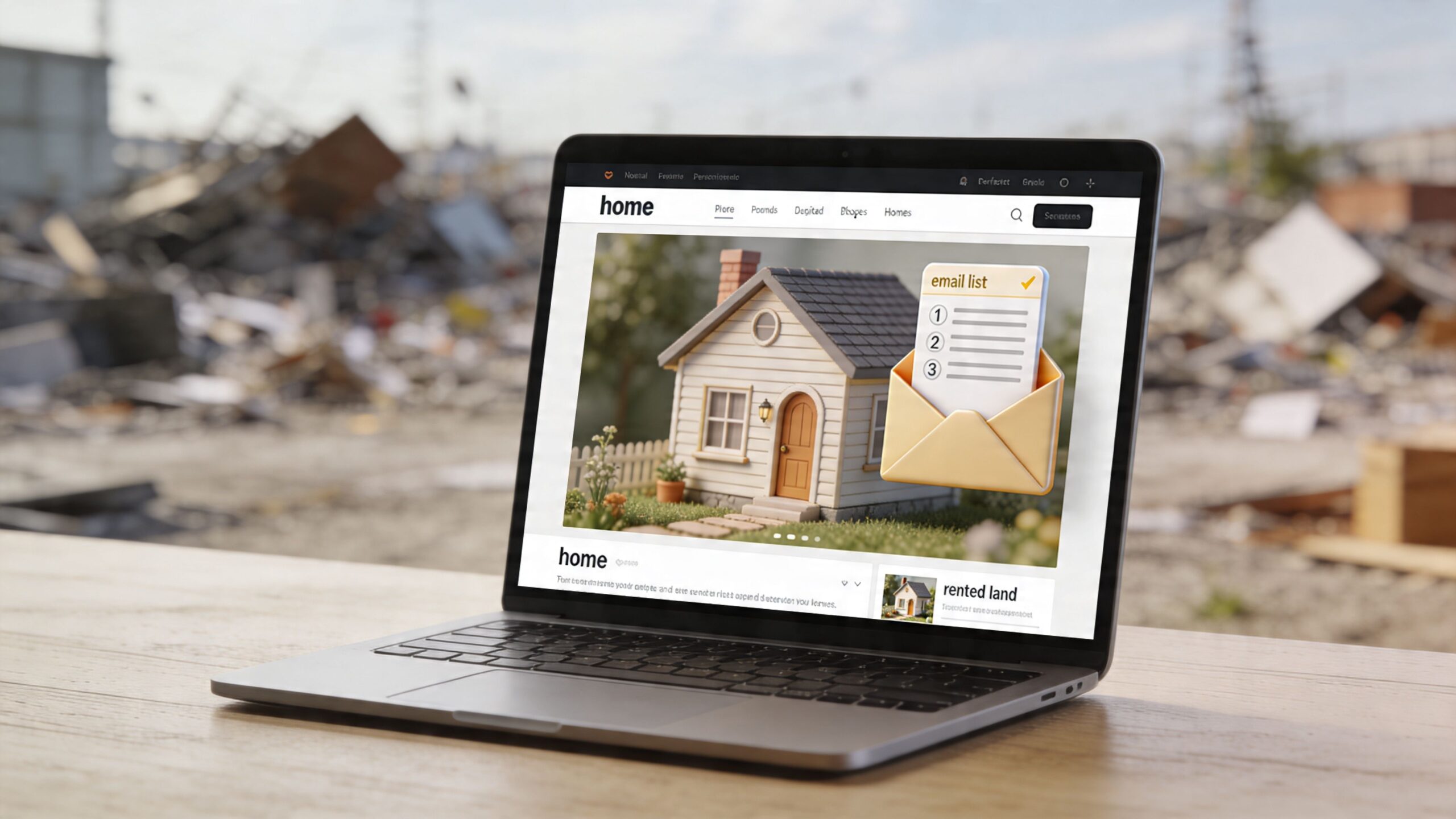
That is what your blog and email list give you. They give you a space that is yours, where your work does not disappear because an app changes its rules or a platform decides who sees your posts. For women in midlife who want more security and less noise, that matters. You are not chasing attention. You are building something steady.
Your blog works like your home on the internet. Your email list is your address book. The blog helps new readers find you. The list lets you stay in touch with the people who want more help.
 email list icon." />
Why a blog still matters
A blog gives your ideas a place to stay.
Social posts come and go quickly. A blog post can keep helping people for months or even years if it answers a real question clearly. That makes blogging a good fit for Affiliate Marketing without social media. You write once, improve it over time, and let it do quiet work in the background.
This also removes a lot of pressure. You do not need to be witty on camera or available all day. You need to be helpful.
What belongs on your blog
Your blog does not need a glossy brand or a perfect design. A simple, clean site is enough. What matters is that each article solves one problem for one type of reader.
A beginner-friendly blog often includes:
- Reviews: honest notes on products, tools, books, or services you know well
- How-to guides: step-by-step help for a specific task
- Comparison posts: articles that help a reader choose between options
- Roundups: a list of useful resources for one clear need
- Beginner explanations: plain-English posts for readers who feel intimidated
Here is an easy way to check if a blog idea is strong enough. Ask, "Would this help a woman like me make a decision, save time, or feel less confused?" If the answer is yes, it is worth writing.
For example, a woman writing about wellness after 50 could publish an article about the best walking shoes for sore knees, a simple meal-planning notebook, or a gentle habit tracker. A woman writing about life admin could share Retirement binders, caregiving planners, or bill-paying systems.
Why your email list matters just as much
Many beginners assume the blog is the whole business. It is only half.
Your email list is where trust grows. When someone gives you her email address, she is saying, "I would like to hear from you again." That is a much warmer connection than a quick visit to one article. It also gives you more peace of mind, because you are not depending on an outside platform to reach the people who value your work.
An email list helps you:
- build familiarity over time
- share new posts directly with interested readers
- recommend affiliate products in a more personal way
- notice which questions keep coming up
If you want writing help for this part, how to start a newsletter profitably offers a useful overview without making newsletters sound more complicated than they are.
The easiest setup for a beginner
Keep your setup small at first. A simple system is easier to maintain, and easier to trust.
You only need five basic pieces:
A blog platform
WordPress is a common choice because it gives you room to grow. If the dashboard looks unfamiliar at first, that is normal. You do not need to master everything at once.An email service
Choose one that lets you collect email addresses and send a basic welcome email. Plain emails work well. Fancy templates are optional.One free gift for subscribers
A checklist, worksheet, short guide, or printable is enough. Pick something that solves one small problem fast.A signup form on your site
Add it to your homepage, a few blog posts, and a simple landing page.A short welcome email
Deliver the free gift, introduce yourself, and explain what kind of emails readers will receive.
If you want a practical walkthrough, this guide on building an email list from scratch explains the setup in clear, manageable steps.
What to write in your emails
This part stops many women before they begin. They worry they have nothing to say, or that every email has to sound polished.
It does not.
Write like you are sending a note to one thoughtful reader who wants clarity, not performance. Your emails can be simple and warm. In fact, that tone often builds more trust than a formal marketing style.
A good beginner email might include:
- a short personal note
- one practical tip
- a link to a helpful article
- a gentle product recommendation that fits the topic
A useful rule is this: help first, recommend second. If your reader feels understood, your affiliate suggestions will feel natural instead of pushy.
Your email list is not a crowd to impress. It is a circle of readers who want calm, useful guidance.
You do not need a perfect website or a large list to begin. You need a small home for your ideas, a simple way to stay in touch, and the confidence to help one person at a time.
Attracting Your Audience Calmly and Consistently
You publish a helpful article, close your laptop, and wonder, "Now what?" If social media drains you, the idea of chasing attention can make online business feel loud and unstable.
It does not have to work that way.
Audience growth can be quiet. It can be steady. It can fit a season of life where you want security and peace of mind more than noise. For many midlife women, that is not a compromise. It is a wiser way to build.
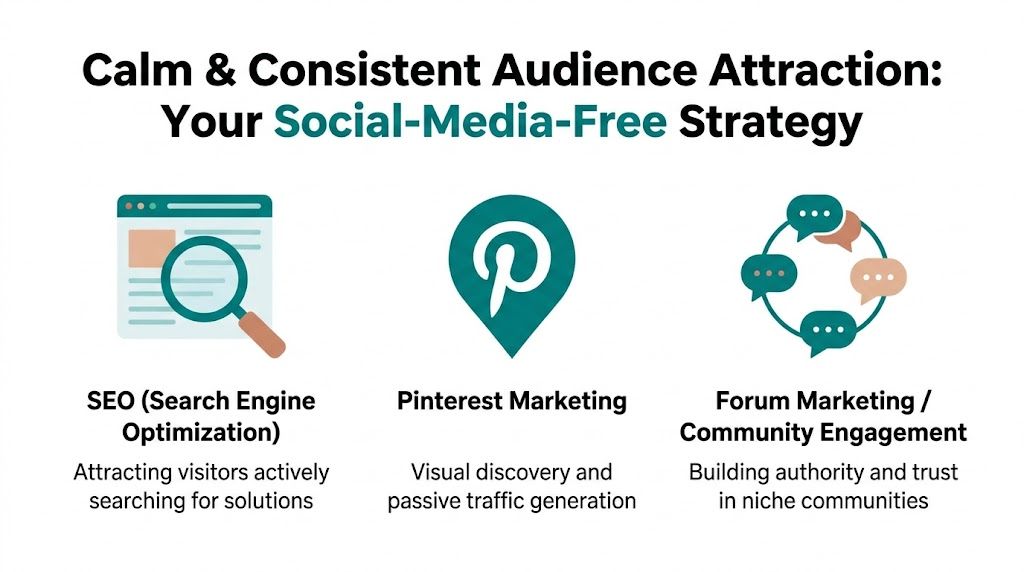
The three clearest traffic paths for Affiliate Marketing without social media are SEO, Pinterest, and community engagement or guest posting. Each one brings people to your work in a different way, and each one asks for a different kind of energy.
Why SEO suits patient beginners
SEO means writing pages that answer questions people are already searching for. A useful article can keep bringing readers to your site long after you publish it, which is part of why this method feels calmer than trying to post every day for attention.
For women who dislike performing online, SEO often feels more dignified. You are not asking strangers to notice you. You are showing up when someone needs help.
Search traffic also tends to bring warmer readers because they are looking for a solution. If someone searches for "best planners for Retirement budgeting," they are much closer to taking action than someone casually scrolling.
A gentle way to begin:
- Choose one real question your audience asks
- Write one clear article that answers it
- Use a plain, specific title
- Break the article into helpful subheadings
- Recommend a product only if it fits the problem naturally
SEO works like putting a well-labeled folder in a library. It may take time for the right person to find it, but once it is there, it can keep helping people without daily effort from you.
Why Pinterest can feel lighter than social media
Pinterest works more like a visual search tool than a conversation-based platform. People go there to look for ideas they can save and return to later, which makes it a better fit for women who want less pressure to be visible all the time.
If you enjoy simple design, Pinterest can become a bridge between your content and new readers. You create a clean image, add a useful title, and send people to a blog post, free resource, or email signup page.
That rhythm is often easier on the nervous system. You are organizing ideas people want, not trying to keep up with a fast-moving feed.
A simple Pinterest routine might look like this:
- Create a few clear pin images in Canva
- Link each pin to a helpful page on your site
- Use words your reader would search for
- Make new pin designs for older articles
Why community engagement builds trust in a human way
Some beginners would rather help real people directly than wait for search traffic to grow. That approach can work well too.
Forums, niche groups, blog comments, and guest posts let you meet readers where they already spend time. The goal is to contribute something useful, not scatter links everywhere. A thoughtful answer to one person can build more trust than a dozen rushed promotions.
If you want more ideas for calm traffic methods, this guide to free traffic strategies for Affiliate Marketing gives a broader look at options that do not rely on paid ads.
Quiet marketing still works. It rewards patience, usefulness, and consistency.
Choosing Your Traffic Source
| Traffic Source | Best For… | Time Investment | Speed of Results |
|---|---|---|---|
| SEO | Writers who like answering questions and building long-term assets | Steady, ongoing | Slower at first, often more durable |
| Visual thinkers who want content to keep circulating | Moderate and repeatable | Can begin sooner, builds over time | |
| Community engagement | Relationship builders who enjoy helping in niche spaces | Flexible but hands-on | Often quicker trust, less passive |
How to choose without getting overwhelmed
You do not need all three.
Choose the one that feels easiest to return to next week. That is a better test than choosing the one that sounds smartest on paper.
If you like writing and explaining, start with SEO. If you enjoy visuals and simple design, start with Pinterest. If you like conversation and helping people directly, start with community engagement.
Then give your choice enough time to teach you something.
Many beginners get discouraged because they switch too fast. They try SEO for a week, Pinterest for a few days, then abandon both because results are slow. That creates more stress than progress.
A steadier rhythm is kinder and more effective:
- pick one path
- practice it consistently
- notice what gets a response
- improve one small piece at a time
You are building a path people can follow back to you. Subtly, steadily, and without turning your life into a performance.
Your Gentle 90-Day Action Plan for Getting Started
Starting feels much easier when you stop thinking in vague terms and begin thinking in weeks. You do not need a perfect business plan. You need a simple rhythm.
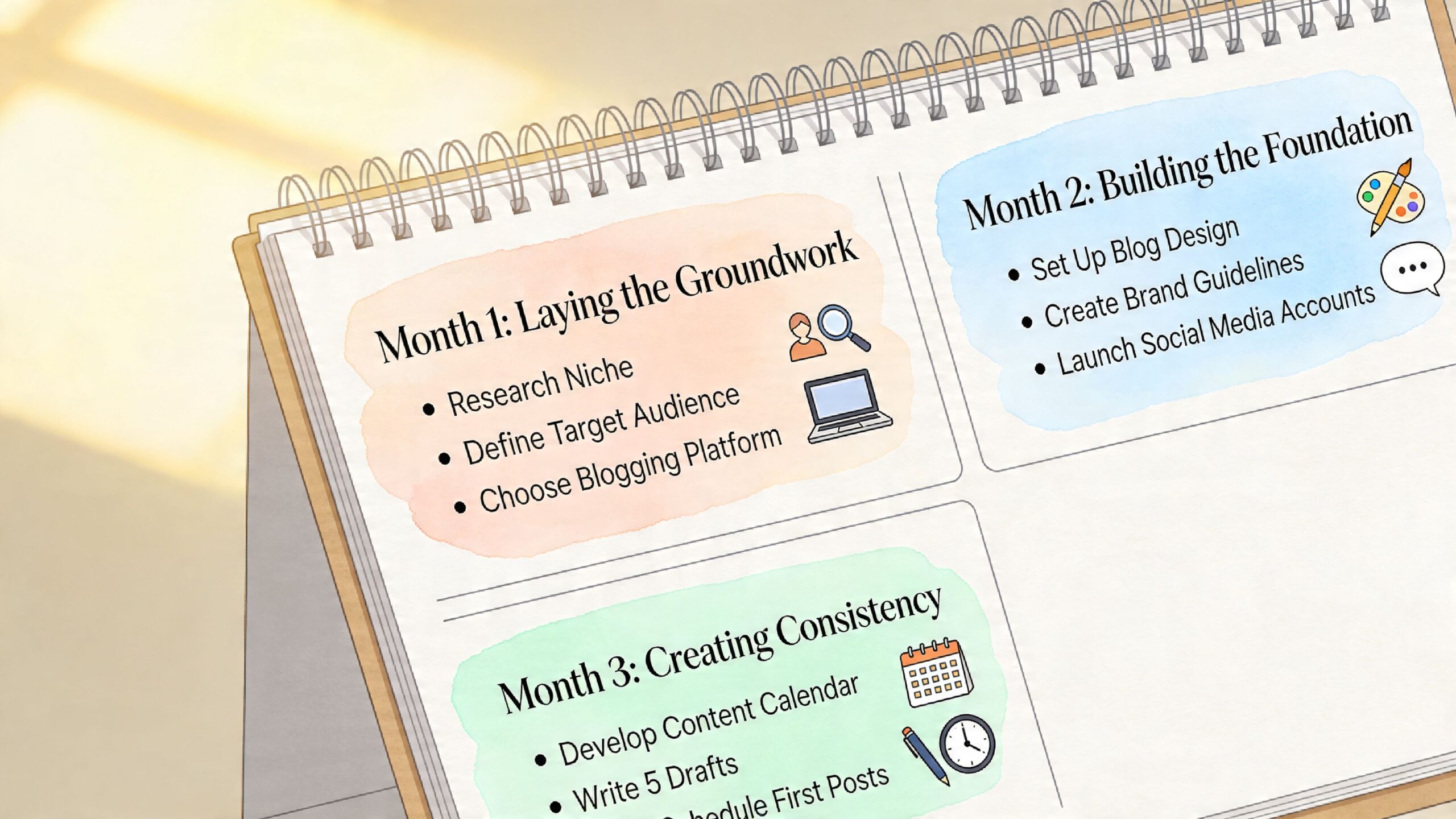
Month one with simple foundations
Your first month is about choosing, not mastering.
Focus on these tasks:
- Pick your niche: Choose one clear audience and one clear problem you want to help with.
- Choose one affiliate program: Start with a product or tool that fits your niche naturally.
- Set up your blog: Keep the design simple and clean.
- Start your email list: Add one signup form and create a basic welcome email.
- Decide on one freebie: A checklist or short guide is enough.
If building a full site feels like too much right now, you may also find this guide on affiliate marketing without a website useful as a lower-pressure way to understand the model.
Month two with your first content
Many women get stuck because they think each article must be brilliant.
It doesn't. It needs to be clear and helpful.
Aim to create:
- One cornerstone article: a strong beginner guide on a core topic
- Two supporting posts: reviews, comparisons, or problem-solving articles
- One email freebie page: a simple landing page for your offer
- A welcome sequence: even one or two emails is enough to start
A good rule for this month is to finish more than you polish. Published and useful beats perfect and hidden.
The first version of your business will feel basic. That's not a sign you're doing it wrong. That's what beginning looks like.
Month three with one traffic method
Choose one traffic source and commit to learning it for the month.
If you choose SEO, write more search-focused articles.
If you choose Pinterest, create pins for the content you already published.
If you choose community engagement, contribute thoughtfully where your audience already asks questions.
Keep your goals small enough to complete:
- Publish consistently
- Send one email each week or every other week
- Track what readers respond to
- Notice what feels sustainable
What matters most over these 90 days
The point is not speed. The point is momentum.
By the end of three months, you may not have a polished brand or a flood of traffic. But you can have something far more important. A niche. A website. An email list. A few useful pieces of content. A clearer sense of what you're building.
That is real progress.
The next three months will pass either way. You can spend them doubting yourself, or you can spend them laying one brick at a time. One path leaves you in the same place. The other begins to build peace of mind.
Common Questions from Women Starting Their Journey
What if I don't have much money to start
You can begin with ease. A basic blog, one email tool, and a short freebie are enough for many beginners. The key is to avoid buying too many tools too early. Start lean. Learn what is essential.
Is it realistic to earn income in the first year
It can be, but it's wiser to think in terms of learning, building, and growing trust. Some people see early signs quickly. Others take longer. This is one reason patience matters so much in Affiliate Marketing without social media. You're building assets, not chasing quick attention.
What if I pick the wrong niche
Then you learn and adjust.
That is not failure. It is part of the process. Individuals typically refine their niche once they begin writing and hearing from readers. Clarity often comes from action, not from endless thinking.
Do I have to show my face
No. Many women prefer a quieter style. You can write, email, create simple visuals, and build trust through your words. If privacy matters to you, that is a valid choice.
What if I'm not good at writing
You do not need to sound like a professional author. You need to sound clear, honest, and useful. If you can explain something to a friend over coffee, you can learn to write content that helps readers.
How do I stay motivated when progress feels slow
Keep your focus small. One article. One email. One useful step.
Looking too far ahead can create panic. Looking at the next task creates movement.
If you'd like calm, beginner-friendly help as you take those next steps, you can visit Victoria OHare. Her content focuses on Affiliate Marketing, List Building, and simple online business strategies for women who want to build something steady without feeling pushed or overwhelmed. The next five years will pass either way. The only question is whether you'll use them to build something that gives you peace of mind.