
If you're over 50 and wondering whether it's too late to build income online, you're not alone. A lot of women feel behind financially, not because they failed, but because life happened, and the rules kept changing. It can feel unsettling to look at social media, see younger creators everywhere, and think, “I missed my chance.”
You didn't miss your chance. You may be in a stronger position than you realize, because lived experience builds judgment, and judgment builds trust. That matters in brand ambassadorship, where people respond more to what feels real than to what feels loud.
If you're trying to figure out how to be a good Brand Ambassador, start by letting go of the pressure to act like a full-time content machine. Good ambassadorship is calm, clear, and rooted in credibility. It's less about chasing attention and more about becoming someone a brand can trust, and an audience can believe.
You Are Not Too Late to Start
Many midlife creators worry their audience is too small, their feed looks too ordinary, or they should've learned all this years ago. I hear that fear in the quiet way people speak about online work, like they're apologizing for showing up late. That feeling is real, but it doesn't mean you're unqualified.
A Brand Ambassador doesn't need to be the loudest person in the room. The role works best when the person behind it brings clear taste, lived experience, and a voice that feels steady. That's especially important in a trust-first field, where 14% of ambassadors generate 80% of brand impact overall, according to a white paper on ambassador marketing, and the pattern stays concentrated across program sizes, with 15.3% in small programs, 15.0% in medium programs, and 12.4% in large programs driving 80% of results (socialladderapp.com).
That means size alone doesn't decide who matters. Fit does. Credibility does. Relevance does.
You're not behind. You're entering with more judgment than you had at 30, and that can be an advantage.
If you've never done this before, that's fine. The next sections will stay simple and practical, so you can take them one by one without feeling rushed or talked down to.
What a Brand Ambassador Actually Does
 Brand Ambassador in business." />
A brand ambassador represents a company online and in public-facing spaces, then helps build awareness and interest through steady, believable promotion. In plain language, she shows the brand in use, talks about it in a way her audience understands, and makes the product feel relevant rather than forced. That's different from tossing out a random post and hoping someone notices.
The role is also different from a one-off influencer mention. A one-off post can be useful, but ambassadorship depends on consistency, recognizable style, and repeated trust. Indeed's career guidance describes a Brand Ambassador as someone who represents companies online and helps increase awareness and sales, while Column Five emphasizes regular posts, honest reviews, a recognizable style, and active engagement in comments and reviews. The point is not noise, it's reliability (Indeed career advice).
What “good” really means
Good doesn't mean busy. It means credible, specific, and consistent.
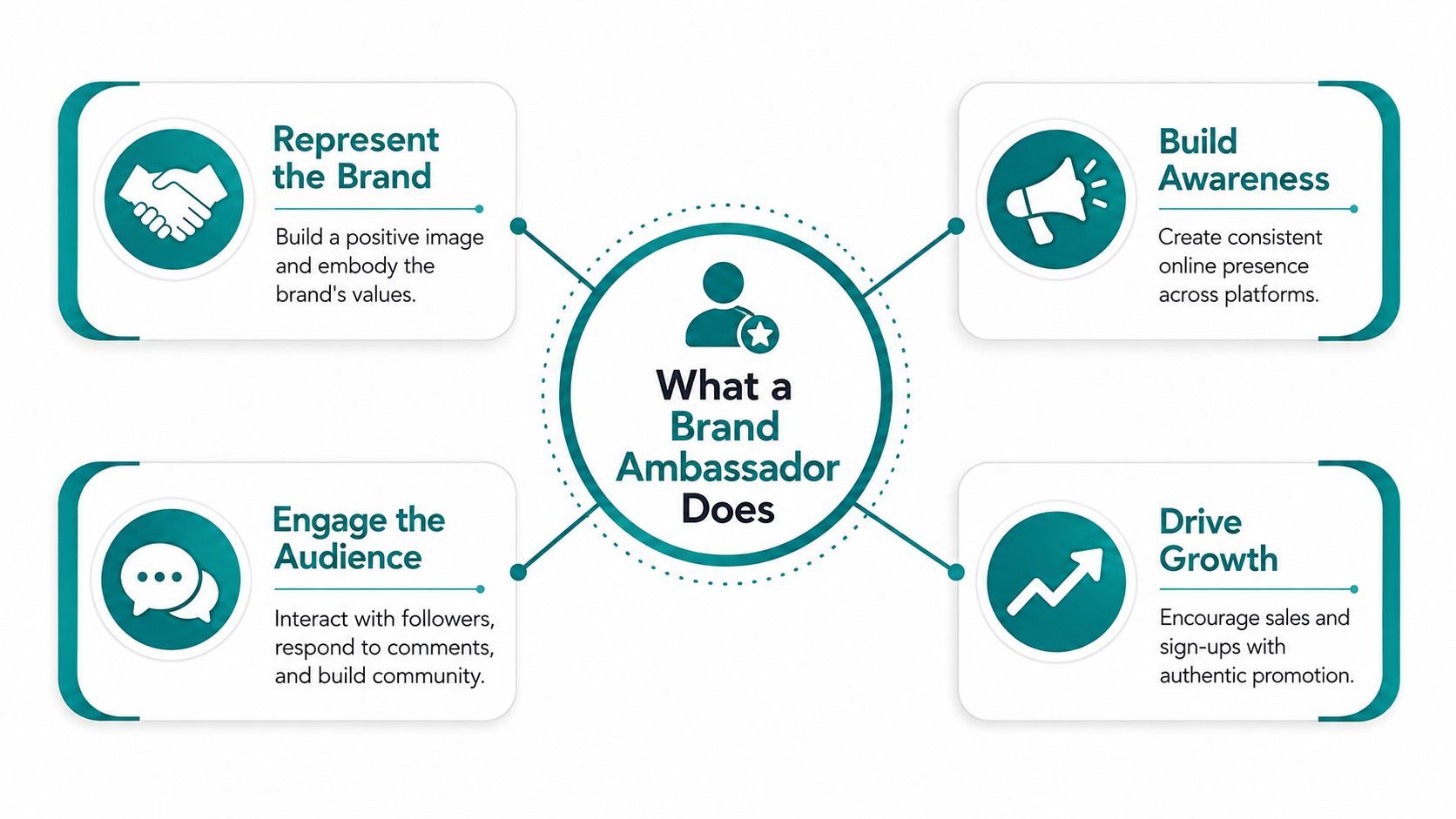
A strong ambassador usually does four things well:
- Represents the brand: She reflects the brand's values without sounding scripted.
- Builds awareness: She keeps the brand visible in normal, useful content.
- Engages people: She replies, listens, and keeps the conversation human.
- Supports growth: She nudges interest toward sign-ups or sales in an honest way.
If you want a simple, plain-English overview of the role, this guide from Freedom Brand Ambassador gives a useful starting point. The main thing to remember is that being good at this job is about trust transfer, not just post frequency.
Pick a Niche and Build Audience-Brand Fit
If you want brands to take you seriously, choose one lane and make it easy for people to understand what you stand for. That lane can come from real life, not just a trendy topic. You might focus on home organization, skincare over 50, simple cooking, caregiving, gardening, travel on a budget, or Retirement-friendly wellness.
The question is whether your audience and the brand belong together. That alignment matters more than a large follower count, because recommendations convert when people already expect that kind of product from you. The practical sequence is simple. Pick one niche, shape your profile around it, and document what your audience seems to care about most.
Signs a partnership fits
Use this quick checklist before you say yes:
- Shared interest: Your followers already ask questions related to the product.
- Shared values: The brand feels compatible with your tone and standards.
- Natural use case: You can show the product in a real setting, not a staged one.
- Audience demand: People have already asked for recommendations like this.
- No awkward stretch: You don't have to explain why this brand belongs with your content.
If you're unsure, pause and ask whether you'd still mention the product without payment. That's a useful filter. It won't answer everything, but it keeps you honest.
The Indeed guide on becoming a Brand Ambassador recommends building a cohesive personal brand, knowing your audience, and only pitching aligned brands. That advice matches what experienced creators learn the hard way. Misfit partnerships can look tempting on paper, but they often create confusion later.
A good fit usually feels almost obvious. If you have to work too hard to justify the connection, the brand may not belong in your feed.
How to say no politely
You don't need a dramatic explanation. A short reply is enough.
- “Thank you for thinking of me. This one doesn't quite match my audience, but I appreciate the reach-out.”
- “I'm focusing on partnerships that fit my current content better, so I'll pass for now.”
That kind of reply protects your audience and keeps your reputation clean.
Create a Simple Media Kit and Pitch
A media kit is just a clean summary of who you are, who you reach, and what kind of content you make. Brands use it to decide whether you're a good fit before they spend time on a call or send a contract. It doesn't need to look fancy. It needs to be clear.
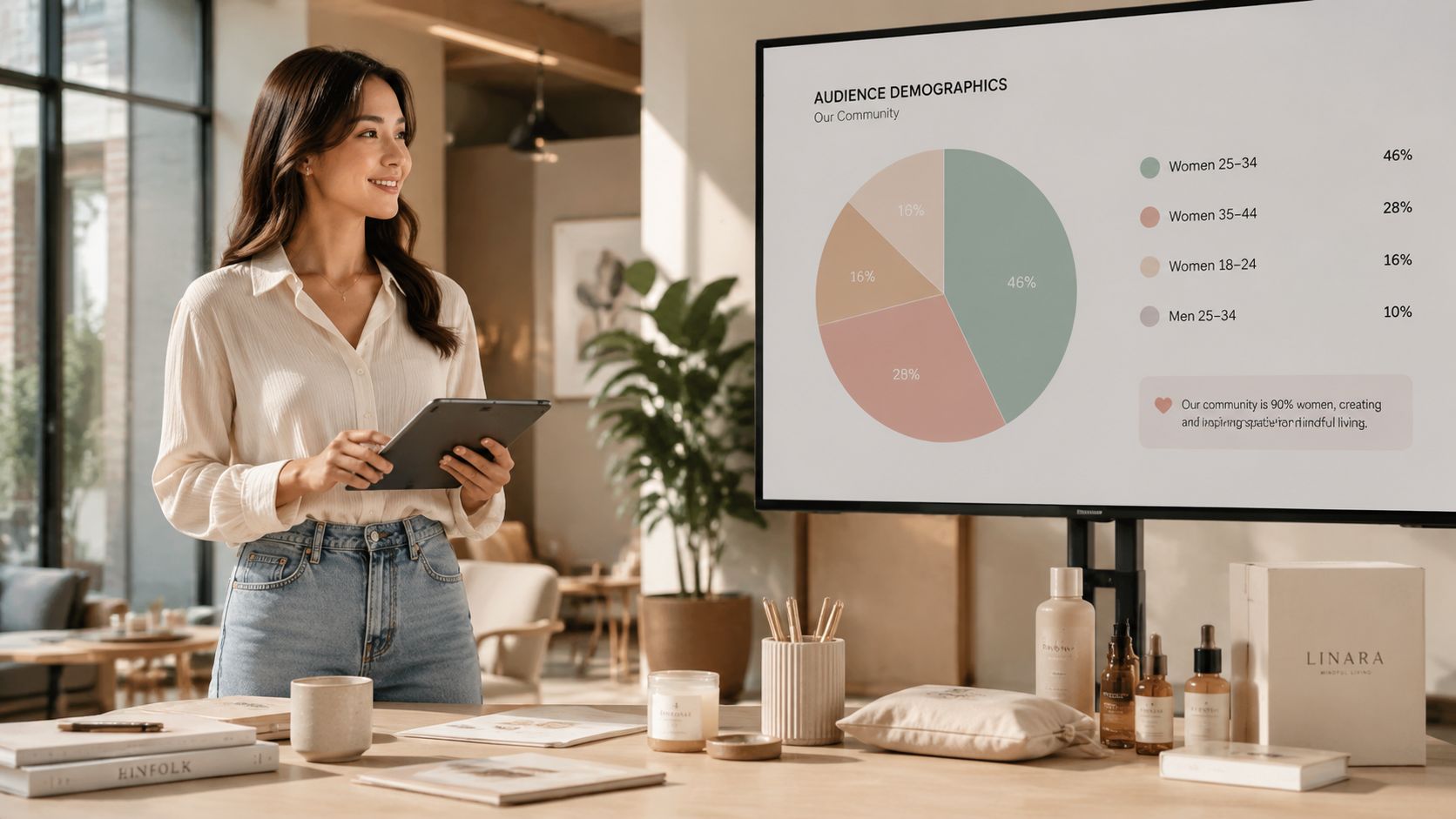
At minimum, include a short bio, audience demographics, engagement rates, a few content examples, any prior partnerships, your contact information, and links to the platforms you use most. Impact's guide on ambassador outreach says to include those elements and apply directly to ambassador programs instead of waiting to be found (Impact's Brand Ambassador guide). If you want a visual reference, these media kit examples for entrepreneurs can help you see how simple the layout can be.
A pitch that sounds like a person
The best outreach message is short. It should say who you are, why you chose that brand, one concrete content idea, and one clear ask.
A simple structure looks like this:
- Who you are: “I create content for women over 50 who want practical online income ideas.”
- Why this brand: “Your product fits the kind of home-and-life content my audience already follows.”
- One idea: “I'd love to create a short demo post showing how I'd use it in daily life.”
- One ask: “Would you be open to sharing your ambassador requirements?”
If you want a ready-made starting point, the influencer outreach email template from Freedom Brand Ambassador can help you shape your first draft without sounding stiff.
I remember the first time I looked at a pitch screen and almost closed the laptop. It felt formal, and I worried I'd say the wrong thing. A simple message, sent to the right brand, is usually better than a polished message sent to the wrong one.
Keep the tone warm, specific, and brief. Brands can tell when a message was written for everyone.
Promote Ethically and Protect Your Audience
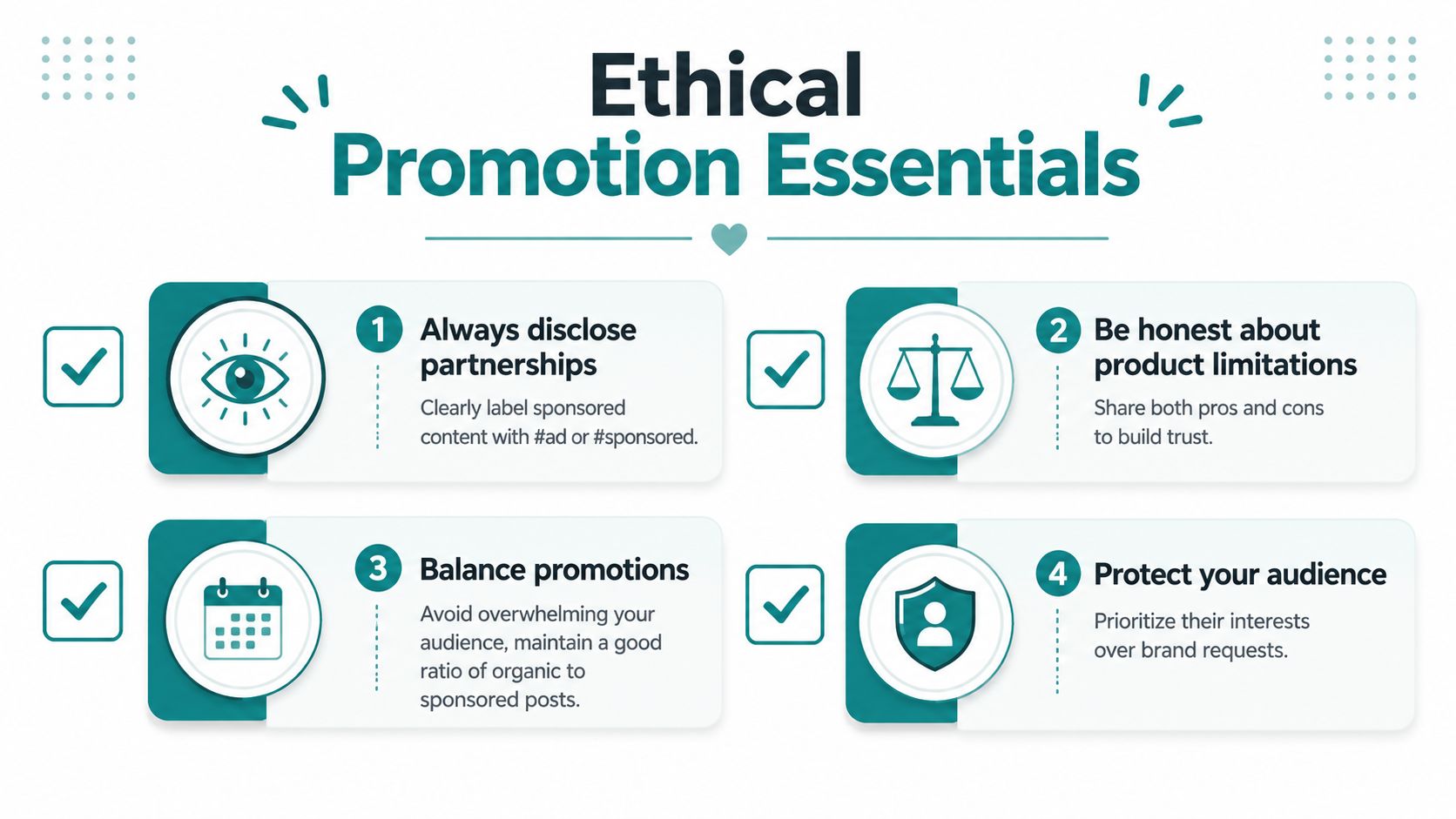
A lot of beginner advice skips the part that matters most, which is protecting trust once you have it. You should disclose every paid partnership clearly, even when the brand is a good fit. That isn't a burden, it's part of being trustworthy.
Honesty also builds more credibility than polished perfection. If a product has limits, say so in a respectful way. People usually trust creators more when they sound like real users and not ad copy. That same principle shows up in current guidance on how to be a good Brand Ambassador without overexposing an audience, because trust drops when every post feels promotional and no one gets a break from the sales pitch (JoinBrands guidance).
Signs your audience is getting tired
You don't need analytics jargon to notice fatigue. People may stop commenting, stop asking questions, or stop responding the way they used to. If every other post is a promotion, the audience can start to feel like they're being sold to instead of supported.
A healthy rhythm includes non-promotional content between sponsored posts. Share useful ideas, stories, and ordinary moments that still serve your audience. That keeps your page from becoming a billboard.
The ethical business standards guide from Freedom Brand Ambassador is a useful companion if you want a simple way to keep your partnerships clean and calm. It helps you think about the long game, not just the next yes.
When to decline a paid deal
Sometimes the money is real, but the fit is wrong. Say no when the product conflicts with your values, when the claims feel exaggerated, or when the brand wants more promotion than your audience can reasonably absorb.
A practical rule is simple.
- Disclose every paid collaboration clearly.
- Only recommend what you'd still stand behind without pay.
- Protect the relationship with your audience first.
- Turn down offers that would make your page feel crowded or off-brand.
That's not being difficult. That's being professional.
Track the Right Metrics and Report Results
Good ambassadors track outcomes, not just activity. If you only count how many times you posted, you can miss whether anything meaningful happened. Start with one primary objective, then line up the metrics that support it.
If the goal is sales, look at click-throughs and conversions. If the goal is sign-ups, watch referral traffic and completed registrations. If the goal is awareness, pay attention to reach, engagement, and brand mentions. For a plain-language guide on how creators should read their analytics, own.page has a helpful breakdown of engagement metrics that can make the numbers less intimidating (own.page analytics guide).
Goal-to-KPI map for brand ambassadors
| Primary Objective | Reach Metric | Engagement Metric | Conversion Metric |
|---|---|---|---|
| Sales | Impressions | Saves and comments | Purchases |
| Sign-ups | Reach | Link clicks | Completed registrations |
| Brand mentions | Views | Shares and replies | Qualified inquiries |
This kind of table keeps your reporting honest. Reach tells you how many people saw the content. Engagement tells you whether they cared enough to react. Conversion tells you whether the post moved them to action.
A simple monthly report
You don't need expensive software to do this well.
- What I promoted: List the brand and content type.
- What happened: Note reach, comments, clicks, or sign-ups.
- What felt strong: Write one line about what worked.
- What needs adjusting: Note one weak point, like timing or wording.
- What to keep or drop: Decide whether the partnership should continue.
If a post gets attention but no action, don't call it a win just because it looked active. Separate visibility from results.
That approach helps you prune low-performing content before you waste more time on it. It also gives brands something useful, which makes you easier to work with next time.
Your First 30 Days as a Good Ambassador
Choose one niche, document your audience, and build a simple media kit. Then identify three aligned brands and send a thoughtful pitch to each one. Pick one metric to watch, and let that number tell you what to adjust.
You do not need to do everything at once. Good ambassadorship grows through trust, fit, and repetition. The next few months are going to pass either way, so the question is whether you'll use them to build something that brings you more control and peace of mind.
Victoria OHare offers practical guidance for women who want to build online income through brand ambassadorship, Affiliate Marketing, and simple, ethical systems. If you're ready for a calm starting point that fits real life, visit Victoria OHare and take the next step at your own pace.