
If you're over 50 and wondering whether it's too late to build income online, you're not alone. A lot of women feel behind financially, not because they failed, but because life happened. Retirement can feel uncertain, tech can feel overwhelming, and the internet can make everything look harder than it really is. You're not behind, and you can learn this.
The good news is that passive income business ideas don't have to mean becoming a full-time influencer or staring at complicated software all day. For many women, the primary goal is simpler, more steady, and more dignified, a second chapter that brings in income, builds confidence, and gives you more control. One useful way to think about this is that many so-called passive ideas are really low-maintenance businesses, which is honest, realistic, and far less intimidating than pretending something is hands-off.
There's also a practical reality behind all the glossy promises. A strong starting point is usually a small, validated product plus a distribution channel, not a giant leap into every platform at once. Revenue Map describes a repeatable path of customer discovery, financial modeling, MVP launch, and retention iteration, and it warns that acquisition alone is just a vanity metric early on, while ideaproof.io's 2026 ranking points to digital products, niche SaaS, online courses, royalty-based assets, and dividend portfolios as the strongest real-revenue categories, with many of them reaching about $1K a month within 6 to 12 months when execution and distribution are in place (passive-income business ideas benchmark).
That does not mean you need to build everything at once. It means you can start with one idea that fits your energy, your strengths, and the life you want next.
1. Affiliate Marketing and email list Monetization
Affiliate marketing is simpler than it sounds. It means recommending products and earning a commission when someone buys through your link, which is why GoDaddy describes it as one of the most accessible ways to start earning passive income online (GoDaddy on passive income ideas). If you already have opinions about books, tools, wellness products, budgeting apps, or courses, you may already be halfway there.
The stronger version of this model is to pair affiliate links with an owned email list. That matters because your list is something you control, unlike a social platform that can change overnight. I remember how overwhelming email felt the first time I opened a dashboard, but once I understood that I only needed to send useful notes to people who wanted them, it became much less scary.
Start with trust, not volume
You do not need a huge audience to begin. You need a clear topic, a simple lead magnet, and a promise you can keep. A checklist, mini guide, or template can be enough to start collecting subscribers, and beginner-friendly tools like ConvertKit, Substack, and MailerLite keep the process manageable.
Practical rule: only recommend products you've actually used, and disclose affiliate relationships clearly. That keeps the relationship honest and protects your credibility.
A midlife blogger might recommend meal-planning tools, a newsletter writer might share books and software, and a career-focused creator might point readers to training she has tested herself. If you want a step-by-step walkthrough for turning an email list into income, this guide on how to monetize an email list is a helpful place to begin. You can also look at a faceless video affiliate program if you prefer to stay off camera.
2. Digital Products and Online Courses
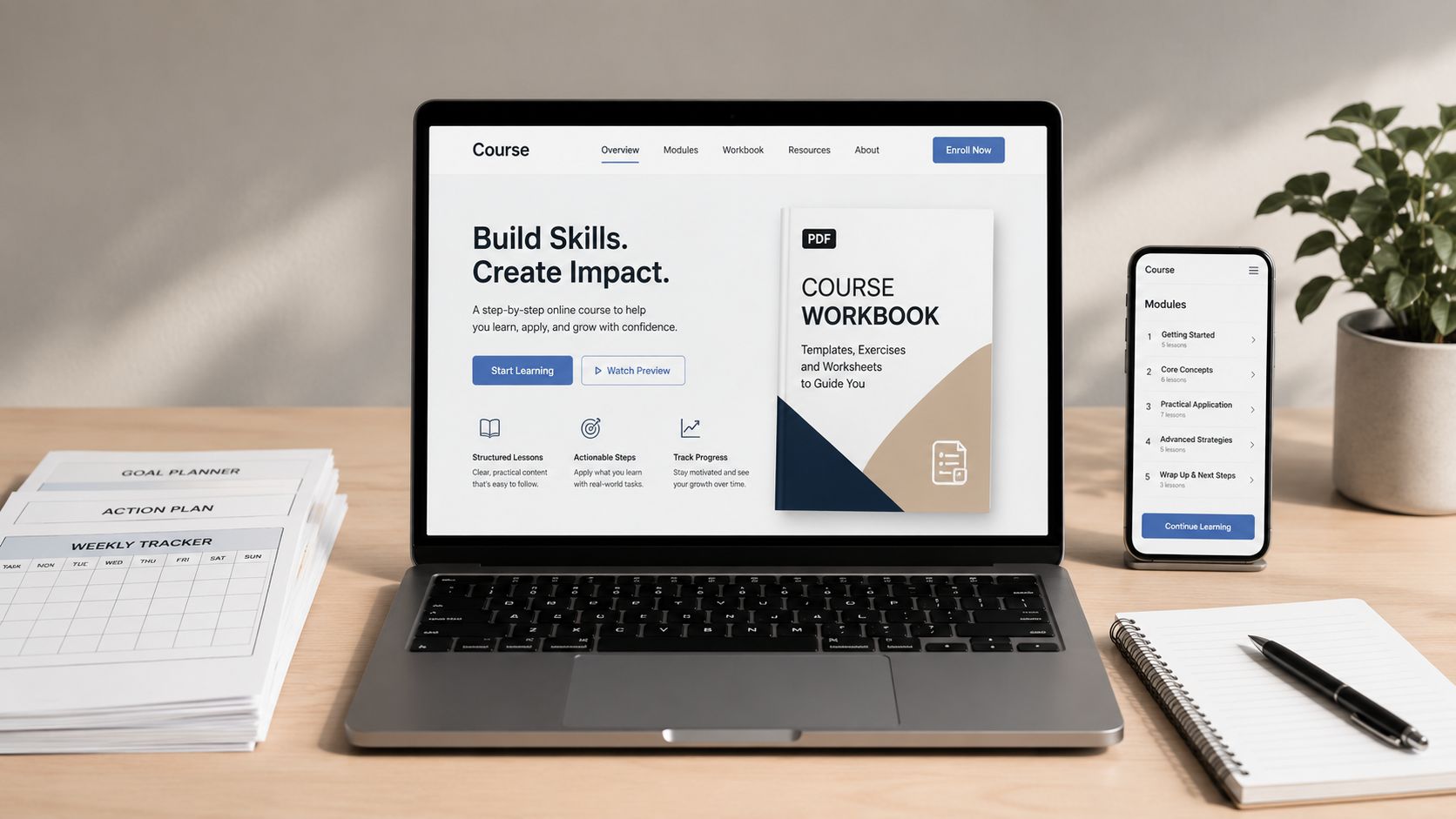
Digital products are one of the most reassuring ideas for women who want an asset that can keep working after the first round of effort. You create it once, then you can sell it again and again. That might be a course, a workbook, a set of templates, a guide, or a bundle that solves one specific problem.
The best digital products usually solve a narrow problem instead of trying to teach everything. A course on negotiating salary after 50 is easier to sell than a vague career course, because the buyer instantly knows what result she wants. A template bundle for a specific workflow can also feel far more useful than a giant product collection that no one knows how to use.
A good example is the kind of product that helps someone save time, reduce confusion, or make a decision with more confidence. The point is not to impress people with complexity. The point is to make something useful enough that it feels worth paying for.
Keep the first version small
You do not need a giant course library. You need a clear promise, a few worksheets, and a simple way to deliver the result. Many creators do better when the course stays under about 10 hours and includes action steps people can use right away, because that makes the product feel doable instead of overwhelming.
A useful pricing mindset: price around the value of the transformation, not the number of pages. A workbook that helps someone take a hard next step can be more valuable than a long, unfocused course.
If you've ever thought, “I'm too late to become a creator,” remember that life experience is often the asset. Women with decades of work, caregiving, organizing, leading, and problem-solving already know how to make things simpler for other people. If you want help thinking through how people perceive numbers and price points, this piece on the psychology of numbers in pricing can help you think more clearly about offers.
3. Niche YouTube Channel or Video Content
You do not need to be a natural performer to use video. A niche YouTube channel can be a quiet, practical way to build an asset around teaching, reviewing, or explaining one topic you already understand. Over time, videos can keep attracting viewers long after you upload them, which is why creators often treat video as a long-term content library rather than a one-time effort.
For midlife women, the best niches are often specific and experience-based. Think photography basics, simple home organization, Retirement planning for women 50+, or honest product reviews from a real-life perspective. You do not need to speak to everyone. You only need to speak clearly to one audience that feels seen by you.
Simple channels work better than broad ones
A focused channel is easier to sustain because you can make many videos from the same theme. If you can think of 100 questions your audience asks, you probably have a workable niche. That sounds like a lot, but many topics naturally branch into smaller, useful answers.
Here's the part that helps the most:
- Teach one problem at a time. A short video on one question is easier to make than a polished masterclass.
- Use searchable titles. People often find useful videos through search, not by chance.
- Add affiliate links where they fit. Early income often comes from helpful recommendations before ad revenue becomes meaningful.
- Stay consistent. Repetition builds familiarity, and familiarity builds trust.
If you prefer to stay practical and grounded, the best video channels often feel like a conversation with a knowledgeable friend, not a performance. A creator who teaches photography to beginners, for example, can review a camera, demonstrate a setting, and link the gear in the description. For more ideas on pairing video with affiliate income, see video marketing for affiliates.
4. Brand Partnerships and Sponsored Content
Sponsored content is not the same as Affiliate Marketing. With affiliates, you earn a commission when someone buys. With sponsorships, a brand pays you upfront to feature its product or service. That difference matters because sponsorships can feel more predictable, but they also require you to protect your voice and your standards.
This can work well for midlife women who already have a small but engaged audience. A fashion creator over 50, a wellness blogger, or a woman writing about caregiving, home life, or career reinvention may find that brands value her perspective because it feels relatable and trustworthy. You do not need a celebrity-sized following to start a conversation.
The key is authenticity. If a product does not fit your audience, you can say no. That might sound simple, but it's one of the clearest signs of an experienced creator. Brands are not just buying attention, they're buying relevance and trust.
A media kit makes this easier
A simple media kit can help you explain who you reach and what kind of content you create. Keep it clear and honest. Show your niche, your engagement style, and the topics your audience already cares about.
Practical rule: do not accept a sponsored deal just because it is offered. If the product feels off, your audience will feel that too.
This model is especially useful if you enjoy writing honest reviews, product roundups, or style guides. It can also pair nicely with affiliate links, because one piece of content can earn in more than one way if it stays useful and transparent. Disclosure matters here, so use the proper labels when content is sponsored, and keep your relationships clean. That protects both your reputation and your peace of mind.
5. Membership Communities and Subscription Models
A membership model can feel steady in a way that many other income ideas do not. You are not starting from scratch with every sale. You are building a place people return to for guidance, routines, and a sense that someone understands what they are working through. For many midlife women, that feeling of being known matters as much as the income itself.
This model can take a few forms. A paid Substack tier works for writers who already share useful ideas in a regular way. A membership site fits creators who want to organize lessons, prompts, or tools in one place. A private community on Circle or Mighty Networks can suit women who want discussion, accountability, and a clear home for their audience. The format does not need to look polished from the start. It needs to feel dependable, clear, and personal enough that members want to stay.
The strongest memberships usually solve one ongoing problem. A women-over-50 community, a career transition circle, or a parenting support group for women in a new stage of life can all fit that pattern if they answer a need people keep returning to. The topic should be something members want help with month after month, not only once and then never again.
A simple way to judge the idea is to ask whether it would still matter after the first burst of interest fades. That question helps separate a passing topic from a real community need. If the answer is yes, you may have something worth building.
Retention matters more than sign-ups
It is easy to focus on getting new members. The quieter work is keeping the members you already have. That means answering questions, offering useful material, and making the space feel welcoming enough that people want to come back.
- Offer something members cannot get for free. A monthly call, templates, or direct support can give the membership a clear reason to exist.
- Keep the promise small and clear. If people are unsure what they are joining, they are less likely to stay.
- Use tiered pricing only if it helps clarity. Simple offers are often easier to understand and join.
- Stay present. Community grows through repeated contact, not one big launch and then silence.
One woman I spoke with described her early membership as “just a small room with familiar faces,” and that image is useful. You do not need a huge platform to make this work. You need a dependable place where people feel comfortable showing up, asking questions, and being seen.
6. Blogging and SEO-Driven Content
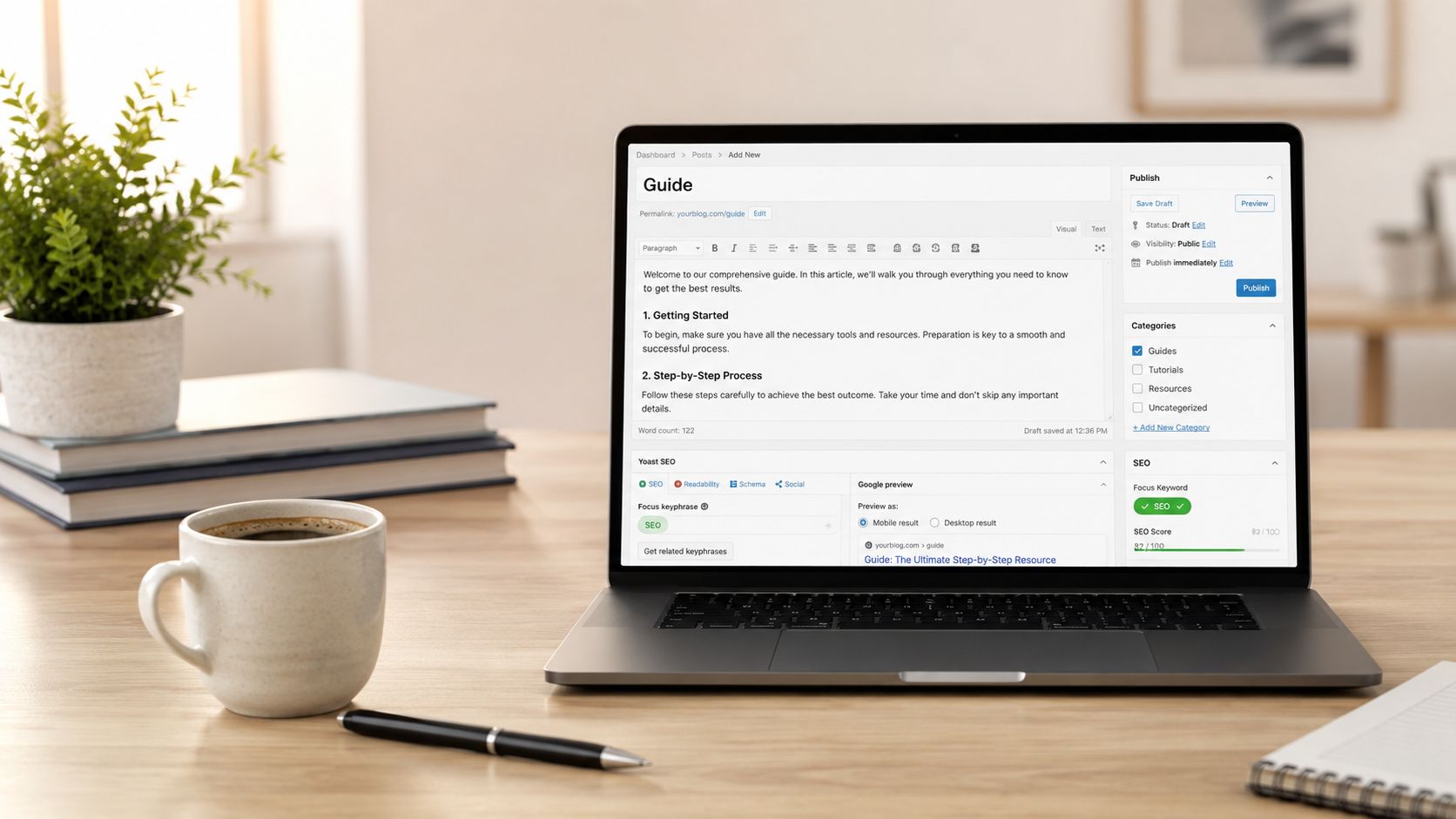
A blog can keep working long after you publish the post. For a woman who has spent years collecting experience, that matters. Each helpful article becomes a small, usable asset that can bring in income through ads, affiliate links, and sponsored posts. The payoff is not fast, but it can be steady if you keep publishing with purpose.
The best blogs usually have a clear focus. A midlife career blog, a women's business blog, or a practical home-and-finance blog usually gives readers a clearer reason to stay than a site that tries to cover everything. Narrow topics help people feel they are in the right place, and they help search engines understand what the site offers.
A blog also fits women who feel behind on tech. The tools may look intimidating at first, yet the basics are learnable, one step at a time. You do not need to master everything before you begin. You only need a simple setup, a clear topic, and the patience to keep going.
Write for the reader's real question
The easiest way to make a post useful is to answer one real question clearly and completely. A search like “how to make money online after 50,” “is Affiliate Marketing legit,” or “how to earn income before Retirement” is more helpful than a vague topic like “how to live your best life.” People usually search when they want relief, clarity, or a next step.
A few habits make blogging feel more manageable:
- Use free keyword tools. Google Trends and Ubersuggest can show what people are already searching for.
- Write in-depth posts. Clear, thorough posts often perform better because they give readers enough detail to trust the advice.
- Add an email signup. Your blog should help you build an audience you can reach directly, not only depend on passing visits.
- Publish consistently. A few solid posts each month can build momentum over time.
A blog also gives you space to speak in a calm, honest voice. You can explain what worked, what did not, and what a beginner should avoid without pretending to have all the answers. That kind of steady, practical writing often builds trust because it sounds like lived experience, not a sales pitch.
7. Print-on-Demand Products
A woman with a notebook full of design ideas can test them without turning her home into a stockroom. Print-on-demand keeps the process simple. You create a design, upload it, and the provider prints and ships it after a customer places an order. For women who like making things but do not want boxes, inventory, or post office runs, that lower-stress setup can feel like a relief.
The strongest products usually speak to a very specific person. A generic quote on a mug is easy to scroll past, but a shirt, tote, or notebook that speaks to women over 50, book lovers, gardeners, caregivers, or a particular hobby group feels familiar in a way broad slogans do not. That match between the design and the buyer's identity makes the product easier to notice, easier to remember, and easier to market.
Getting started does not require fancy software. Canva and Printful's design tools are enough for many simple products. If you can make a clean, readable design and you have a sense of what your audience enjoys, you already have the main ingredients. Tech can feel intimidating at first, especially if you have spent years hearing that online business is only for younger people, but this part is learnable step by step.
Keep the product line tight
A crowded shop can become tiring fast. A few well-chosen designs are easier to manage, easier to describe, and easier to improve. Start small, watch what gets attention, and give less energy to the pieces that do not connect. That keeps the business calmer and gives you clearer feedback.
A focused approach can look like this:
- Choose one audience. A specific group helps your designs feel relevant.
- Start with a few products. T-shirts, mugs, and notebooks are often enough.
- Price with margin in mind. Leave room to profit after production costs.
- Promote to your email list first. People who already know you are often the first to buy.
- Retire slow sellers quickly. Let customer response guide what stays.
A print-on-demand shop works best when it sounds like you, not like a random side project. If you have spent years noticing what your community laughs about, worries about, or celebrates, that experience is not a liability. It is useful design insight, and it can give your products a voice that feels real.
8. Webinars, Online Workshops, and Group Coaching
Webinars can be a gentle bridge between teaching and selling. You show up, teach something practical, and offer a next step for the people who want more support. That makes the format especially useful for women who want to share knowledge without building an enormous product suite first.
The best webinars solve one problem. A career coach might teach interview confidence, a money educator might explain a simple Retirement planning step, and an affiliate educator might walk people through a beginner-friendly setup. The value comes from clarity, not from sounding polished.
This model can also be reused. You can record a live session, edit it, and use it as an evergreen asset later. That gives a one-time event more staying power than many expect.
A useful standard: teach something people can use right away, then invite them into the next layer of help.
Promotion matters here, but it doesn't need to be loud. A simple email announcement, a few social posts, and about two weeks of notice can be enough. Follow-up is where many sales happen, so a short email sequence after the event helps people remember what they learned and what to do next.
Webinars can feel intimidating at first, especially if you're shy on camera. Start with one topic, one slide deck, and one clear offer. That is enough to begin.
9. Amazon KDP Self-Publishing
A notebook, a guided workbook, or a short practical book can become a steady passive income business idea through Amazon KDP. For many midlife women, that matters because the goal is not to become a celebrity author. The goal is to share useful guidance in a form readers can buy, use, and return to later. Life experience counts here. If you have spent years solving problems, organizing a home, helping a family, or guiding other people through change, you already have material that can shape a helpful book.
KDP works well for topics that benefit from structure. A workbook on reinvention, a journaling prompt book, or a planner for busy seasons can all support the same outcome, helping readers take action one page at a time. The book becomes an asset that keeps carrying your ideas after the writing is done. That can feel especially meaningful when you want your effort to keep working in the background.
Clarity matters more than cleverness. Readers usually want to know who the book is for, what problem it solves, and what they will get from it before they decide to buy. A title that is specific and honest is easier to understand, and that often makes it easier to sell.
Make the first book easy to understand
Before you write, it helps to think like a reader who is already looking for help. Keyword research can show you what people want to find, and good cover design helps the book look credible at a glance. If the topic matches a real search need, the book has a better chance of being found by someone who is ready for that exact kind of help.
The first book does not need to carry your whole idea by itself. A focused niche, a related follow-up title, and a simple series structure can build recognition without making the process feel overwhelming. Start with a price that feels approachable, then use your email list to let people know the book exists. Owned attention is still one of the most reliable ways to reach readers who already trust you.
If you want a practical starting point, you can launch your book on Amazon. It is a reminder that the first version does not need to be perfect. It only needs to be clear, useful, and polished enough to help a reader take the next step.
10. Dividend Stocks, REITs, and Investment Income
This idea starts with capital, not content. Dividend stocks, index funds, and REITs can produce income through regular distributions, which may appeal to women who want a steadier asset to sit beside their online business work. Fidelity explains that passive income can come from investments such as dividend-paying stocks and real estate investment trusts, where the cash flow is tied to the asset itself and not to your daily labor (Fidelity on passive income ideas).
For investing, the basic rhythm is simple. You buy assets, hold them, and let time do part of the work. That does not remove risk, and it does not replace judgment, but it can support long-term stability when you approach it carefully.
A midlife investor might begin with low-cost index funds, use tax-advantaged accounts first, and reinvest dividends so compounding has time to do its quiet work. Some people also use REITs to gain exposure to real estate without directly managing tenants or property repairs. The key is to stay grounded and avoid chasing excitement.
Steady habits matter more than perfect timing
Trying to catch the market usually pulls attention away from what helps. Consistent contributions, diversification, and patience usually serve ordinary investors better than dramatic moves.
- Start with what you can sustain. Small, regular investing often works better than waiting for a perfect entry point.
- Use tax-advantaged accounts when possible. 401(k)s and IRAs can be helpful starting points.
- Prefer clarity over hype. If a yield sounds too exciting, pause and study it.
- Think long-term. This is about dignity and peace of mind, not quick thrills.
If you want both a creator business and a capital-based income stream, this category can fit alongside your other efforts well. It is not either-or. For many women, the strongest plan is a mix of assets, skills, and patient accumulation.
10 Passive Income Ideas: Side-by-Side Comparison
| Approach | Implementation Complexity 🔄 | Resource Requirements ⚡ | Expected Outcomes 📊⭐ | Ideal Use Cases 💡 | Key Advantages ⭐ |
|---|---|---|---|---|---|
| Affiliate Marketing & email list Monetization | Low–Medium, email funnels + content consistency required | Minimal capital; email platform, content time, affiliate accounts | Moderate recurring income; scalable with list growth; 2–6 months to initial income | Bloggers, newsletter writers, creators wanting passive commissions | High ROI from email; multiple monetization channels; strong automation |
| Digital Products & Online Courses | Medium, planning, content production, course structure | Time to create content; LMS fees; possible marketing budget | High-margin scalable income; 4–12 weeks to first sales | Experts, coaches, consultants solving specific problems | High profit margins; authority building; evergreen sales |
| Niche YouTube Channel or Video Content | Medium, filming, editing, consistent publishing | Low hardware cost; time for editing; optional outsourcing | Long-term ad/affiliate revenue; slow growth (6–12 months) | Educators, entertainers, creators comfortable on camera | Strong discoverability/SEO; evergreen views; personal branding |
| Brand Partnerships & Sponsored Content | Medium, negotiation, contracts, campaign delivery | Requires engaged audience (often 5k+); media kit; outreach time | High per-campaign income but inconsistent monthly | Influencers and niche creators with engaged followings | Guaranteed upfront payments; potential recurring deals |
| Membership Communities & Subscription Models | Medium, platform setup, content cadence, moderation | Platform fees; ongoing engagement time; content production | Predictable recurring revenue; retention-dependent; 2–6+ months to scale | Coaches, educators, community builders seeking steady income | Stable monthly income; deep member relationships; feedback loop |
| Blogging & SEO-Driven Content | Medium–High, consistent writing, keyword research, SEO | Time for content; hosting/SEO tools; possible freelance help | Slow-building passive income; 3–12+ months to meaningful traffic | Writers, niche experts preferring written content | High-intent organic traffic; content compounds over time |
| Print-on-Demand Products | Low, design + store setup; fulfillment handled by provider | Design tools, storefront, marketing time; minimal upfront cost | Quick to first sale; modest per-sale profits; 1–4 months to traction | Creatives, community merch sellers, niche audiences | No inventory risk; scalable; tangible audience connection |
| Webinars, Online Workshops & Group Coaching | Medium, presentation prep, live delivery, promotion | Webinar platform, audience or ads, presentation materials | Immediate sales potential; strong conversion to higher-ticket offers | Coaches, consultants, service providers selling premium programs | High conversion rates; live trust-building; repurposable recordings |
| Amazon KDP Self-Publishing (Books, Journals, Workbooks) | Medium, writing, editing, formatting, publishing | Time for writing; editing/cover services; low platform fees | Long-term royalties; slow growth; 2–6 months to early sales | Writers, educators, coaches building authority | Author branding; low barrier to entry; backlist compounds |
| Dividend Stocks, REITs & Investment Income | Low, setup and ongoing portfolio management | Requires significant capital; brokerage account; financial planning | Stable passive distributions; compounding over years; immediate dividends possible | Long-term savers, those near Retirement seeking passive income | Hands-off after setup; reliable income; tax-advantaged accounts possible |
Your Next Chapter Starts with a Single Step
The next five years will pass whether you start something new or not. The only question is what you'll build in that time. You don't need to crush it, and you don't need to become a tech genius. You just need to take one small, consistent step toward creating an asset that gives you more control, more dignity, and more peace of mind.
If one of these passive income business ideas kept coming back to your mind while you read, trust that reaction. That's usually where the next right step starts. Maybe it's opening an email account for your list, outlining a simple workbook, or writing down ten questions your future audience would ask. Small action is still action, and it counts.
I also want to say this plainly. You are not too old, and you are not too late. Your life experience is not a disadvantage here, it's often the exact thing that makes your ideas trustworthy and useful. A calm second chapter can be built one decision at a time.
Victoria OHare's site fits this kind of work because it focuses on step-by-step income building through Affiliate Marketing, brand ambassadorships, List Building, and simple automation. If you want a beginner-friendly place to keep learning, Victoria OHare is worth a visit.
Victoria OHare offers practical guidance for women who want to build online income without hype or overwhelm. If you're ready to explore Affiliate Marketing, List Building, and simple digital assets as a path toward more security, visit Victoria OHare and take the next step at your own pace.