
If you're over 50 and wondering whether it's too late to build income online, you're not alone. Many women feel behind financially, not because they failed, but because life happened. Retirement can feel less certain than it once did, and the idea of learning new tech at this stage can make your shoulders tense before you even begin.
I remember the first time I opened a landing page builder. I stared at the screen, clicked around for a few minutes, and thought, “I might be too late for this.” I wasn't too late, and you aren't either.
An Affiliate Marketing landing page isn't a flashy sales trick. It's a simple digital front door. It helps people understand what you recommend, why it matters, and what to do next. Its main advantage is that it gives you a calm place online that you control.
Starting Your Next Chapter with Confidence
A lot of people arrive here with the same quiet worry. They want more security, but they don't want another stressful job. They want extra income, but they don't want to spend months untangling tech language that feels written for someone half their age.
That tension is real.
You may be thinking about Retirement, rising bills, or the uncomfortable feeling that a paycheck has been doing too much heavy lifting for too long. You may also be wondering whether online business is only for younger people who grew up posting videos and building websites.
It isn't.

When feeling behind makes everything look harder
When you're already carrying financial stress, every new tool can feel heavier than it is. A simple page builder can seem intimidating. A signup form can look like something only a “tech person” should touch. That doesn't mean you're incapable. It means your nervous system is trying to protect you from one more thing that feels uncertain.
You don't need to master the whole internet. You only need to learn one useful step at a time.
That's why I like to frame this as a second chapter, not a scramble. You're not trying to become a marketing genius overnight. You're learning how to build a small, useful asset that supports peace of mind.
A quieter way to begin
Affiliate marketing, at its heart, is simple. You recommend a product or service. If someone buys through your link, you may earn a commission. The landing page is the place that gently introduces that recommendation.
Think of it as a welcome mat, not a megaphone.
A good page doesn't pressure people. It helps them feel oriented. It says, “This is what it is, here's who it's for, and here's the next simple step if you'd like to continue.”
If you've doubted yourself because of your age, your background, or your comfort with technology, take a breath. None of those things disqualify you. In many cases, your life experience makes you better at this because trust grows faster when people feel they're being spoken to by a real person.
Why a Simple Page Is Your First Digital Asset
Affiliate marketing can sound abstract until you strip it down. You're sharing products you believe can help someone. That's all. The Affiliate Marketing landing page gives that recommendation a home.

Social media can help people find you, but it isn't your home base. Your posts get buried. Algorithms change. Attention moves fast. A landing page is different because it gives you one quiet place to direct people when they're ready to learn more.
Your digital front door
A homepage tries to do many jobs at once. It may talk about your story, your blog, your social links, and several offers. That can be fine for an established business. It's not always ideal for a beginner who wants one clear result.
A landing page works better when its purpose is narrow.
Published benchmarks show that dedicated landing pages convert 160% better than other signup methods, with a global median conversion rate of 6.6%, according to landing page benchmark data from SellersCommerce. That matters because a focused page removes distractions and guides a visitor to one next step.
If you're building slowly and carefully, that focus is your friend.
Why beginners often do better with less
Many people think they need a full website before they can start. Often, they don't. One page with one offer is easier to write, easier to understand, and easier to improve later.
That page might invite someone to:
- Join your email list in exchange for a simple checklist
- Watch a short video that explains a product category
- Click through to a product page after reading a clear introduction
- Request more information if your niche is trust-based and educational
Notice how calm those actions are. None of them require hype.
Practical rule: If your page has one goal, your visitor feels less confused.
A landing page is also an asset because it helps you build an email list. That list becomes a direct line to people who said yes to hearing from you. Over time, that can feel far more stable than hoping strangers see a social post.
A short video can help you picture how this works in practice.
This is about control, not pressure
For many beginners, especially women who want dignity and flexibility in this season of life, control matters. A landing page gives you a place where your message stays put. It doesn't vanish by tomorrow morning. It doesn't compete with a hundred unrelated updates.
You can send a blog reader there. You can mention it in a Facebook post. You can place it in your email signature. Each time, you're guiding people to the same clear front door.
That kind of simplicity isn't small. It's sturdy.
Planning Your Page with Purpose and Clarity
Before you choose colors, buttons, or templates, pause. The strongest Affiliate Marketing landing page usually begins with a simple question.
What is this page asking one person to do?
If the answer is fuzzy, the page will feel fuzzy too. If the answer is clear, writing becomes much easier.
Start with one person and one outcome
You don't need to serve everyone. In fact, trying to speak to everyone usually creates bland copy that connects with no one.
Try filling in these blanks:
- Who is this for? A beginner? A busy caregiver? A woman approaching Retirement who wants a second income stream?
- What problem are they trying to solve? Saving time, learning a tool, building an email list, organizing finances, earning from home
- What is the next step? Subscribe, download, watch, or click through
If you're still choosing your audience, this beginner-friendly niche guide for Affiliate Marketing can help you narrow your focus without overcomplicating it.
Pick a gentle offer
A lot of beginners think the landing page must sell immediately. It doesn't have to. Often, the wiser first step is an invitation into your world.
That offer might be:
A simple checklist tied to the product you recommend
If you're promoting an email tool, your checklist could help someone set up their first welcome sequence.A short guide that explains what to look for
If your audience is cautious, education builds trust better than pressure.A bridge page
This is a simple page that explains why you're recommending a product before sending someone to the company site.
A helpful guide to effective landing pages can give you extra examples if you want to see how different page types are structured.
Keep your message matched
One common point of confusion is this. People often create a page that says one thing, then send traffic from a post or ad that promises something else. That mismatch creates friction.
If your Facebook post says, “Here's the simple tool I use to organize my email list,” your page should continue that same conversation. It shouldn't suddenly sound corporate, vague, or overly polished.
The more your page feels like a natural continuation of where the visitor came from, the easier trust forms.
Write your plan in one sentence before you build anything.
A good example would be: “This page helps beginner women over 50 join my email list to get a simple checklist about starting Affiliate Marketing with less tech stress.”
That's enough to guide your decisions. You don't need a giant strategy document. You need clarity.
Designing a Calm and Welcoming Page Structure
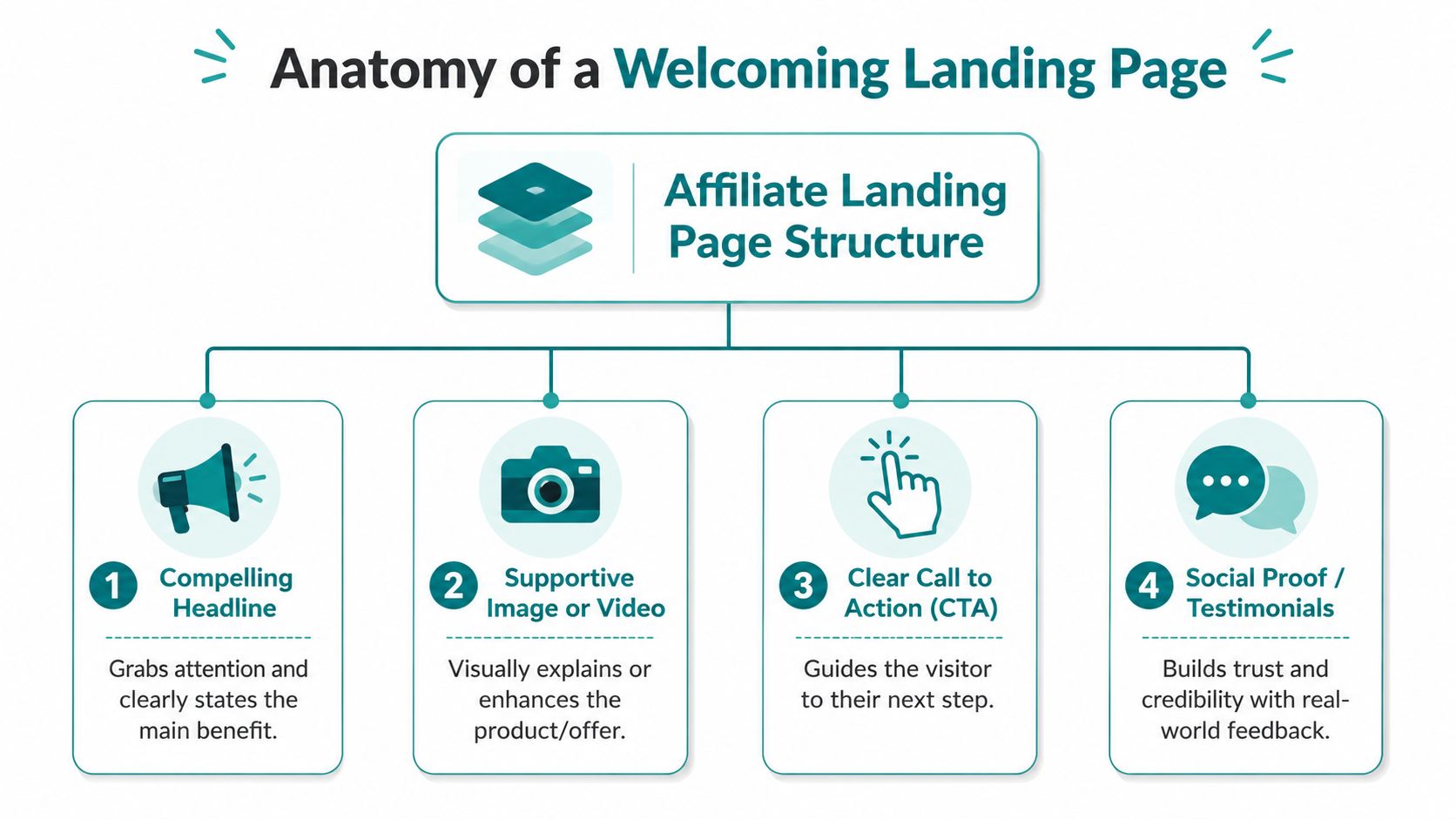
Good design doesn't mean fancy design. For an Affiliate Marketing landing page, calm usually converts better than clutter because your visitor can tell where to look and what to do.
Think of the page like a tidy room. When the room is full of piles, people feel unsettled. When the room is clear, they relax.
 Affiliate Marketing landing page structure." />
The basic layout that works for beginners
You don't need ten sections. You need a few essentials placed in the right order.
A welcoming page often includes:
- A headline that says what the page is about in plain language
- A short supporting line that explains the benefit or result
- A visual such as a product image, mockup, or short video
- A few bullet points that show why the offer matters
- One clear button that invites the next step
- A trust element like a note about your experience, a disclosure, or simple feedback
The most important part is the focus. The median conversion rate for landing pages is around 6.6%, and pages with a single, clear call to action consistently outperform pages with multiple offers or distracting navigation, according to landing page conversion guidance from Genesys Growth.
What to leave out
Beginners often assume more information creates more trust. Sometimes the opposite is true. Too many choices can make a visitor hesitate.
Consider removing:
- Top navigation menus that pull people away
- Several buttons with different goals
- Long life stories before you've explained the offer
- Too many colors or fonts that make the page feel busy
A page can still feel warm and personal without becoming crowded.
Honest structure builds credibility
I understand being cautious. There are scams online. That's why education and honesty matter.
An ethical landing page doesn't hide what it is. If you're recommending an affiliate product, say so directly. If the page is collecting emails, explain what the reader will receive. If the offer is only right for certain people, say that too.
Clear pages feel safer because visitors don't have to guess your intentions.
Here is a simple flow you can borrow:
- Headline
- One sentence that explains the value
- Three short benefits
- One invitation button
- A note that sets expectations
That structure is enough for many first pages. You can refine later. Your first goal isn't perfection. It's clarity.
Writing Words That Connect and Invite
This is the part many people fear most. They think copywriting is some secret talent. Usually, it's just empathy organized on a page.
If you can explain something kindly to a friend over coffee, you already have the core skill.
Start with the feeling your reader wants
People don't usually want “funnels” or “systems.” They want relief. They want confidence. They want a way forward that doesn't feel chaotic.
So instead of writing about features first, write about what changes for the reader.
You can use simple headline patterns like these.
| Framework | Example |
|---|---|
| A calm result | Build your first email list without feeling buried in tech |
| A beginner promise | A simple way to start Affiliate Marketing when you're new |
| A second-chapter angle | Create a steady online asset for your next chapter |
| A trust-based invitation | Learn the tool I use and decide if it's right for you |
| A problem-to-peace line | Stop sending people to confusing pages and give them one clear next step |
Before and after examples
Generic copy often sounds distant. Gentle copy sounds human.
Try this shift:
Before: “Optimize your online conversions with our advanced system.”
After: “Use one simple page to guide visitors toward a clear next step.”
Before: “Unlock the power of affiliate monetization.”
After: “Recommend a product you trust and make it easier for people to understand why.”
Before: “Act now before you miss out.”
After: “If this feels helpful, you can take the next step here.”
That last one matters. Pressure can damage trust. Invitation supports it.
A simple writing recipe
When you're stuck, write these four lines first:
- What is this page offering?
- Who is it for?
- Why might it help?
- What should the reader do next?
That becomes the skeleton of your page.
For example:
- This page offers a simple checklist for starting an email list.
- It's for beginners who want less tech overwhelm.
- It helps by breaking the process into manageable steps.
- If you'd like it, enter your email below.
Write to one person, not a crowd. The page will feel warmer immediately.
Calls to action that sound like a real person
Your button text doesn't need to sound clever. It needs to feel clear.
Try phrases like:
- Send me the checklist
- Show me the next step
- I'd like the guide
- Watch the short training
- See the tool
Each one feels like an invitation, not a shove.
If you want more practice writing honest recommendation content, this guide on how to write affiliate product reviews can help you find your voice without sounding salesy.
Keep your copy short enough to breathe
Shorter often feels safer online. People want to understand the offer quickly.
You don't have to fill every inch of the page. White space helps. Short paragraphs help. Bullet points help. Calm language helps. If a sentence sounds like something you'd never say aloud, rewrite it until it sounds like you.
That alone will put you ahead of a lot of noisy marketing.
Bringing Your Page to Life The Simple Way
The build step often feels bigger than it is. A beginner opens a page builder, sees blocks, buttons, and settings, and assumes they need to get everything right on day one. You do not.
An Affiliate Marketing landing page can start as a very simple digital front door. Its job is to welcome the right person, explain what they will get, and make the next step easy. For many beginners, that next step is joining your email list, not making an instant sale.
A simple tool is usually the best place to begin. Many email platforms include landing page builders, and basic website builders also offer ready-made templates. The useful choice is the one you can set up without dread and return to without confusion.
Let the template carry the structure
A good template works like training wheels. It gives you spacing, layout, and mobile formatting so you can focus on the message instead of wrestling with design decisions.
Keep your eye on a few practical details:
- Choose a clean layout with one main goal
- Check the mobile preview before publishing
- Remove extra sections that distract from the opt-in
- Use one clear button instead of several competing choices
That is enough for a first version.
If your page loads clearly, reads easily, and feels calm on a phone, you are already building something useful.
Add trust before you ask for action
Trust grows from small signals. A short affiliate disclosure helps. Clear expectations help too. If someone joins your list, tell them what happens next. They might get a checklist right away, a welcome email later that day, and a few helpful notes after that.
That kind of clarity lowers tension. People relax when they know what they are agreeing to.
If your free offer still feels fuzzy, this guide on how to create a lead magnet can help you shape something simple and useful.
Some beginners also use tools such as the ShortGenius AI ad generator to create short promotional content that sends people back to their page. That can be helpful if you want a simple way to talk about your offer without writing everything from scratch.
Test gently, not obsessively
Testing does not need to become a science project. You are just noticing where people hesitate.
If visitors arrive but few people sign up, try a clearer headline. If the page makes sense but the button gets ignored, rewrite the button text. If the page feels flat, swap the image for one that feels warmer or more specific.
Change one thing. Wait. See what happens.
That slow approach fits the kind of business many beginners want to build. Steady, understandable, and low drama.
Your first page does not need polish. It needs honesty, clarity, and a working path into your email list. That is how a simple page becomes a real asset over time.