
If you're over 50 and wondering whether it's too late to build income online, you're not alone. Many women feel behind financially, not because they failed, but because life happened. And if Retirement feels less secure than it used to, it makes sense to want a second stream of income that doesn't take over your whole life.
The good news is that you don't need to become a tech expert overnight. You don't need to quit your job first. You can build something small, steady, and sensible while still protecting your paycheck, your energy, and your dignity.
You're Not Behind and It's Not Too Late
I've heard this worry from women again and again. “I should have started years ago.” “I'm too old for this.” “I don't even know where to begin.” Those thoughts can feel heavy, especially when you are already balancing work, family, and the quiet pressure that comes with Retirement feeling less certain than it once did.
A side hustle while working full time signals awareness rather than lateness. More people are looking for side income because it has become a mainstream response to financial pressure and the need for flexibility, not a fringe habit. Survey data shows 36% of adults had a side hustle in 2024, 37% either already had one or were considering one in 2025, and another survey found 72% of Americans were already side hustling or thinking about it, which shows this is no longer unusual behavior.
A second chapter can be calm
A woman in midlife often does not need a dramatic leap. She needs a plan that respects reality. That means keeping the full-time job, building slowly, and choosing an income path that fits the life she already has.
Practical rule: If a side hustle would wreck your sleep, strain your job, or make you dread every evening, it is too big for this season.
The strongest mindset shift is simple. You are not trying to prove anything. You are building peace of mind, control, and eventually an asset you can rely on.
That asset might be a client list, an email list, a useful library of content, or a service you can repeat without reinventing it every week. The point is not speed. The point is stability.
What Side Hustle Income Looks Like
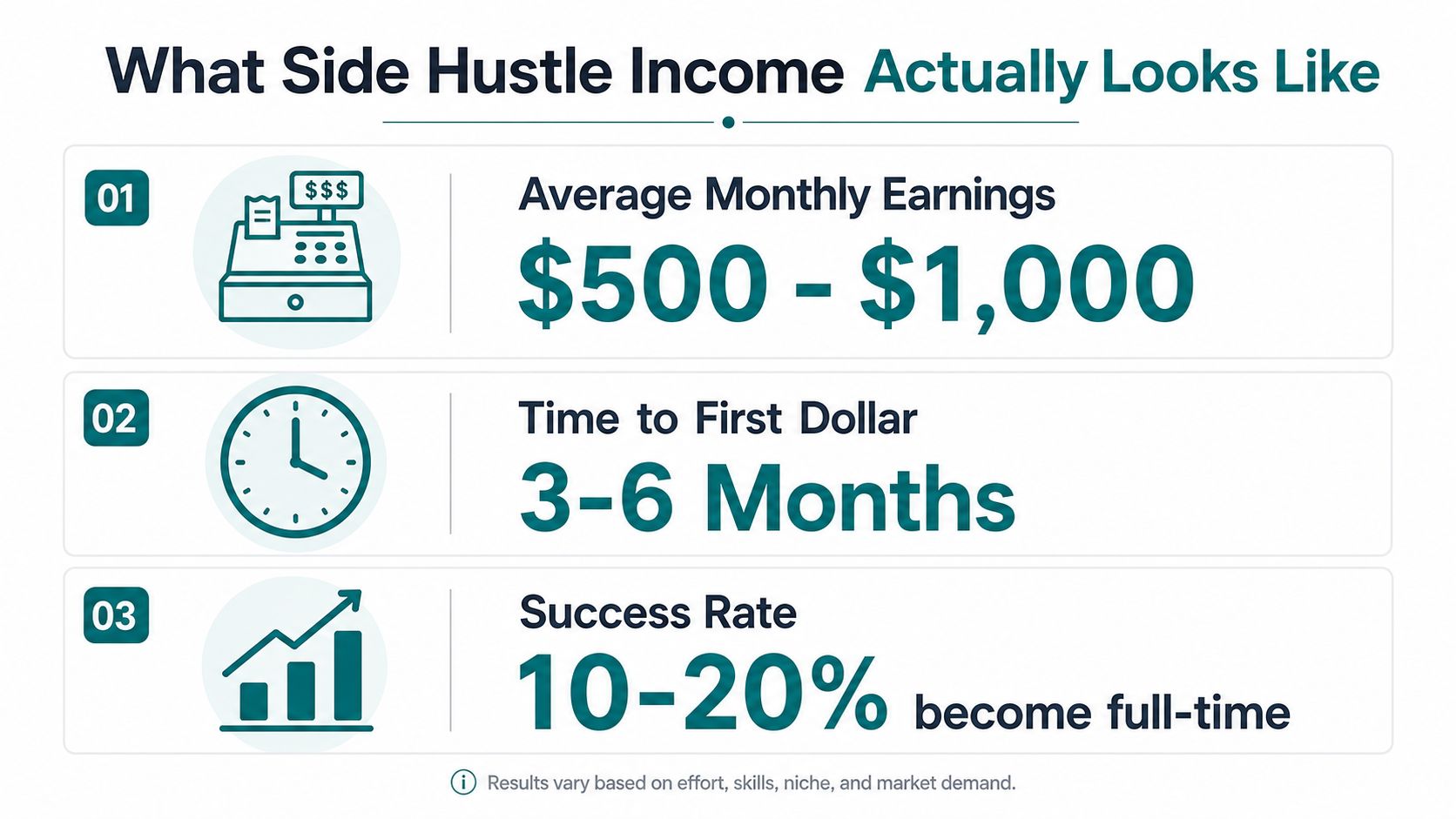
The first month can feel small. That is normal. Side hustle income usually starts as extra grocery money, not a full second salary, and that is why the early numbers need a clear reading. Survey data from 2024 showed 36% of adults had a side hustle, and other surveys found similar interest in side income, which helps explain why the topic keeps coming up in ordinary households, not just business circles.
Averages can mislead
A single average can make side income look more generous than it is for most people. SurveyMonkey reported an average of $885 per month but a median of just $200, which means a smaller group of higher earners lifts the average up (SurveyMonkey). If you only glance at the average, you may assume steady money arrives faster than it usually does.
For a full-time worker, time is the more useful measure. Self Financial found that the largest share of side hustlers, 36.2%, spend 5–10 hours per week on their side business, and 63.6% of respondents in that survey were also working a full-time job (Self Financial). That is a realistic rhythm for someone fitting work into evenings, lunch breaks, or a quiet weekend block. It is more like tending a garden than running a sprint.
A small, repeatable schedule beats a big burst that disappears after two weeks.
The long view matters too. A Hiscox study found the average side hustle took 1 year and 7 months to become a full-time business, and about 3 years to replace the founder's last full-time job income (Hiscox). That does not mean you should wait that long before you feel progress. It means income replacement tends to grow in stages, the way a tree starts with roots before it shows height.
If you want a niche that fits that slower build, start with a guide that helps you choose a niche with less competition and then narrow it further with this realistic guide for women over 50.
Once you see the pattern, the goal becomes easier to handle. You are not trying to force a miracle. You are building supplemental income while keeping your current life steady.
The First Gate You Should Clear Before Choosing an Idea
Most lists of side hustles start with ideas. That's backward. Before you decide what to do, you need to know what your job allows, what your contract says, and where the legal and employer risks sit. That's especially important if you're thinking about consulting, content, affiliate work, or anything that overlaps with your day job skills.
Read the contract before you build
Look for moonlighting policies, non-compete clauses, IP assignment language, and conflict-of-interest rules. A moonlighting policy may limit outside work. A non-compete can restrict what you do after leaving. IP assignment language can affect who owns content or systems you create. Conflict rules matter when your side hustle touches the same clients, products, or market as your employer.
A newer practical guide on side hustles while working points people to exactly these issues, including non-competes, moonlighting rules, IP assignment, and conflicts of interest. It's one of the clearest reminders that the safest idea is often the one with the lowest policy risk, not the one that looks flashiest on social media. You can see that perspective in this guide to choosing a niche with less competition, and the larger point fits the same cautious approach.
Ask simple questions, not alarming ones
If you need to talk to HR, keep it factual. Ask whether outside business activity is allowed, whether you need written approval, and whether there are restrictions on using company time, equipment, or information. You don't need to announce a full business plan. You're just checking the rules.
For women whose side hustle may overlap with their day-job expertise, this step is especially important. If you're considering content creation, consulting, or brand partnerships, also take a look at a realistic niche-finding guide for women over 50.
Practical rule: If a side hustle depends on your employer's resources, your work hours, or your company's client list, slow down and get clarity first.
The most sustainable start is boring in the best way. Clear rules. Low risk. No surprises later.
Side Hustle Archetypes That Fit a Full-Time Schedule
Once the legal gate is clear, the next question is fit. A side hustle has to work inside the life you already have, not only in the version of life you hope to have later. The best choice depends on how many hours you can protect, how much direct contact you can handle, and how quickly you need money to start showing up.
Compare the three broad paths
| Archetype | Weekly Hours | Time to First Dollar | Risk to Day Job | Best Fit |
|---|---|---|---|---|
| Affiliate and content-based income | Low to moderate | Slower at first | Lower if kept separate | Writers, teachers, and patient builders |
| Service-based freelancing | Moderate | Faster | Moderate if client work overlaps with your job | Skilled workers who want quicker cash flow |
| Product-based hustles | Moderate to high | Varies | Lower if unrelated to employer work | Makers and planners who like repeatable offers |
Affiliate marketing is recommending products and earning a commission. It usually fits people who can explain things clearly, write in a steady voice, and build trust over time. Service work, like virtual assistance or freelance editing, usually brings money in faster because you are selling your time and skill directly. Product-based work can include digital downloads, templates, or physical goods, but it usually asks for more setup before it starts to feel easier.
The time budget matters more than the idea itself. Many side hustlers keep their business within a small weekly window, and that is a helpful reality check for anyone balancing work, family, and energy. If your current schedule only leaves a few protected hours, the model has to match that limit.
Match the model to your energy
If you already feel worn down after work, a service that depends on long live calls may drain you fast. If you prefer quiet work and can write in batches, content-based income may suit you better. If you want faster cash and do not mind selling a skill directly, freelancing can be a cleaner entry point.
Some women do better with a step-by-step path that sits beside a full-time job, not on top of it. A useful example is building a business with a full-time job, which fits the reality of a week that is already full.
The better question is which hustle you can sustain without resentment. That answer usually points to the model that fits your hours, your energy, and the kind of work you can repeat without feeling boxed in.
For a strong first impression online, professional headshot guidance from Secta Labs can help your profile look clear and trustworthy without turning the process into a big production.
Validating Your Idea in Two Weeks Instead of Two Months
A lot of people spend too long perfecting an idea in private. They buy a domain, design a logo, and keep building. Then they discover no one wants to pay for it. A faster validation loop protects your time and your confidence.
Start small and visible
Pick one idea. Then put it in front of a few real people in a simple way. That might mean a basic post, a short email, a direct message, or a landing page with one clear offer. You're not trying to be polished. You're trying to learn whether people respond.
Look for comments, direct messages, email sign-ups, and especially small pre-sales. Those are stronger signals than compliments. Silence is also a signal. If people say “that's interesting” but never ask a question, click, or buy, they may be being polite.
Practical rule: Interest without action is not validation.
Watch for fake encouragement
Some feedback sounds nice but doesn't help you make a decision. “My friend says it's great” doesn't tell you much. “I would use it myself” is also weak, because people say that when they're trying to be kind. The better test is whether anyone will take a tiny step, like joining a list, booking a call, or paying a small deposit.
If you want a professional first impression, your profile photo matters more than people think. A useful reference for that is professional headshot guidance from Secta Labs. A clear photo won't validate the business by itself, but it can make your outreach feel more credible.

A two-week test is enough to tell you whether to keep going, adjust, or let the idea go. That's a gift, not a failure. It saves you from building in the dark.
Your First 90 Days on the Calendar
A calm start needs a calendar. Without one, the side hustle gets squeezed out by work, family, and fatigue. With one, you can move in small steps without pretending you have unlimited time.
Days 1 to 30
Use these first weeks to confirm the rules, pick a narrow idea, and set up the basics. This is your setup and legal confirmation phase. Your time budget can stay small, about a few focused blocks each week.
Do this:
- Confirm job rules: Check your contract, moonlighting policy, and any conflict language.
- Choose one lane: Keep the offer narrow so you can test it quickly.
- Set up simple systems: A basic email account, note system, and accounting method are enough for now.
Days 31 to 60
This is your launch window. Start publishing, outreach, or serving your first small clients. Keep the work focused and repetitive.
A simple rhythm works well here:
- Create first content or offer: One clear page, one post, or one service description.
- Make direct outreach: Talk to real people instead of waiting for the internet to notice.
- Track what gets response: Views matter less than replies, clicks, and conversations.
If you want a practical planning framework, an entrepreneur time management system can help you think in blocks instead of chaos. That mindset matters when you only have a few hours to spare.
Days 61 to 90
Now you refine. Tighten the offer. Drop anything that wastes time. Protect your main job by keeping the side hustle inside its time blocks.
Practical rule: Do not add more hours before the current hours are producing evidence.
A short video can also help you think through the early structure of a side income plan.
The point of the first 90 days is not perfection. It's proof. Proof that you can start, stay organized, and keep your life stable while you build.
Protecting Your Energy and Scaling Without Burning Out
Side hustle work gets risky when it starts leaking into every part of life. Late-night computer time turns into poor sleep. Weekend work steals family time. The day job suffers because your attention is split. That's where many good ideas fall apart.
Use boundaries like a business tool
Research on side-hustle thriving points to a double effect on primary-job performance. A side hustle can improve full-time performance by increasing psychological detachment and well-being, but it can also hurt performance through attention residue and resource depletion. The practical takeaway is simple. Time-block your side hustle, reduce task switching, and avoid demanding side work right before or during your main job (managementstudiesinsights.com).
That means batching. Write content on one day. Do admin on another. Keep creative work away from the most mentally demanding hours of your day job.
Scale assets, not exhaustion
Real scaling is not just more hours. It's a better structure. A growing email list, a reusable content library, or a repeatable service can become assets that keep working after you stop for the day. That's especially relevant if you're building an online business for older women who want control without chaos.
I've seen how much relief comes from a simple system. The first time a woman stops rebuilding everything from scratch and starts using a repeatable process, her confidence usually changes fast. If you want help thinking about time in a calmer way, this simple guide to managing your time while working from home fits this stage well.
A small dashboard helps too. Track your hours, your responses, and your energy, not just revenue. If the numbers look fine but you feel drained, the plan needs adjusting.
You're not trying to become someone else. You're building a second chapter that leaves room for the life you already have.
Victoria OHare helps women build simple online income through Affiliate Marketing, brand ambassadorship, List Building, and basic automation, which fits this kind of slow, steady start. If you want a beginner-friendly path that respects your time and helps you build an asset instead of chasing trends, visit Victoria OHare and take the next step when you're ready.