
If you're over 50 and trying to build something useful online, it can feel quiet in a way that gets under your skin. You post, you share, you recommend, and then you wait for a sign that people noticed. That silence can make you doubt yourself, even when you're doing real work.
You're not behind. You're learning a skill that many people skip for years, and it starts with asking better questions instead of guessing in the dark. Customer feedback collection is one of the simplest ways to do that, and it can also help you grow an email list you actually own.
Why Customer Feedback Collection Matters When You Build Alone
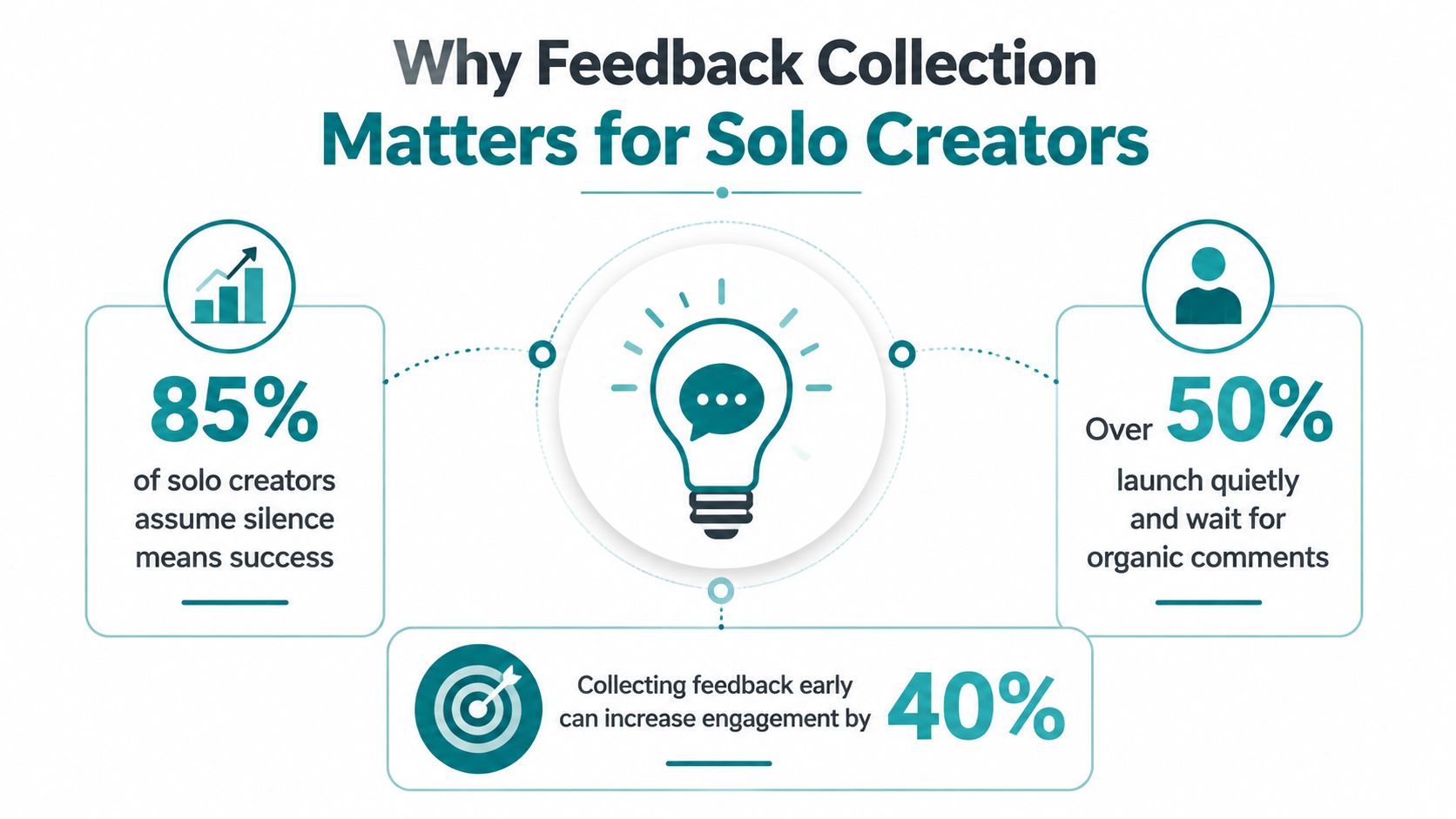
When you build alone, silence can feel like approval. A new freebie goes out, a recommendation link gets shared, or a small product goes live, and nobody complains. It's easy to tell yourself that no news means everything is fine.
That assumption is risky. Customer experience research has long pointed to a 26:1 silence ratio, which means for every customer who complains directly, 26 other dissatisfied customers do not voice their issue to the business. The same benchmark says the average business hears from just 4% of dissatisfied customers, while 95% of customers share bad experiences with others (customer experience research benchmark). Silence, then, is not proof that people are happy. It may just mean they moved on without a word.
For a solo creator, that matters because your list is small, your time is limited, and every good relationship counts. A simple feedback habit turns guessing into conversation. It helps you protect trust, improve your offers, and spot small friction points before they become churn or quiet unsubscribes. If you're also building community, the same habit supports deeper connection, which is why many creators pair feedback with community-building efforts like building a community around your brand.
Practical rule: if you only hear from the loudest people, you're not hearing the whole audience.
A helpful place to start is a lightweight tool that helps you collect user feedback effectively without turning your business into a research project. The goal is not volume. It's clarity.
Choosing the Right Channel for Your Audience
The easiest way to waste feedback requests is to ask in the wrong place. A good customer feedback collection setup starts with one decision, what do you want to learn right now? If you can answer that clearly, the channel becomes much easier to choose.
A feedback request should have one job. It might check satisfaction after a purchase. It might find out which content resonated. It might ask what got in the way of a download, checkout, or sign-up. When you mix those goals together, the signal gets fuzzy and people answer politely instead of truthfully.
| Channel | Best for | Typical effort | Signal quality |
|---|---|---|---|
| Email survey | List subscribers, readers, past buyers | Low to moderate | Good for thoughtful replies if kept short |
| In-product or post-purchase prompt | Digital offers, downloads, paid resources | Low | Strong, because the moment is still fresh |
| DM or community chat | Small audience, trusted relationships | Low to moderate | Rich, but less structured |
A solo creator often starts with email because it's already part of the relationship. But if someone has just bought a digital product, an in-context prompt can be more natural. And if you run a small group or private community, a direct question in conversation can surface details a form would miss.
Ask in the same place where the experience happened whenever you can. The answer is usually clearer.
If you want a deeper comparison of methods, how to gather audience feedback is a useful companion read. It helps you think through which channel fits which moment.
For creators who use Facebook groups to stay close to their audience, that can also be a simple place to ask one focused question, which connects neatly with how to use Facebook groups to build your list.
Crafting Questions and Templates You Can Copy
Good questions are calm and specific. They don't push people toward the answer you hope to hear. They invite the truth, even when the truth is messy.
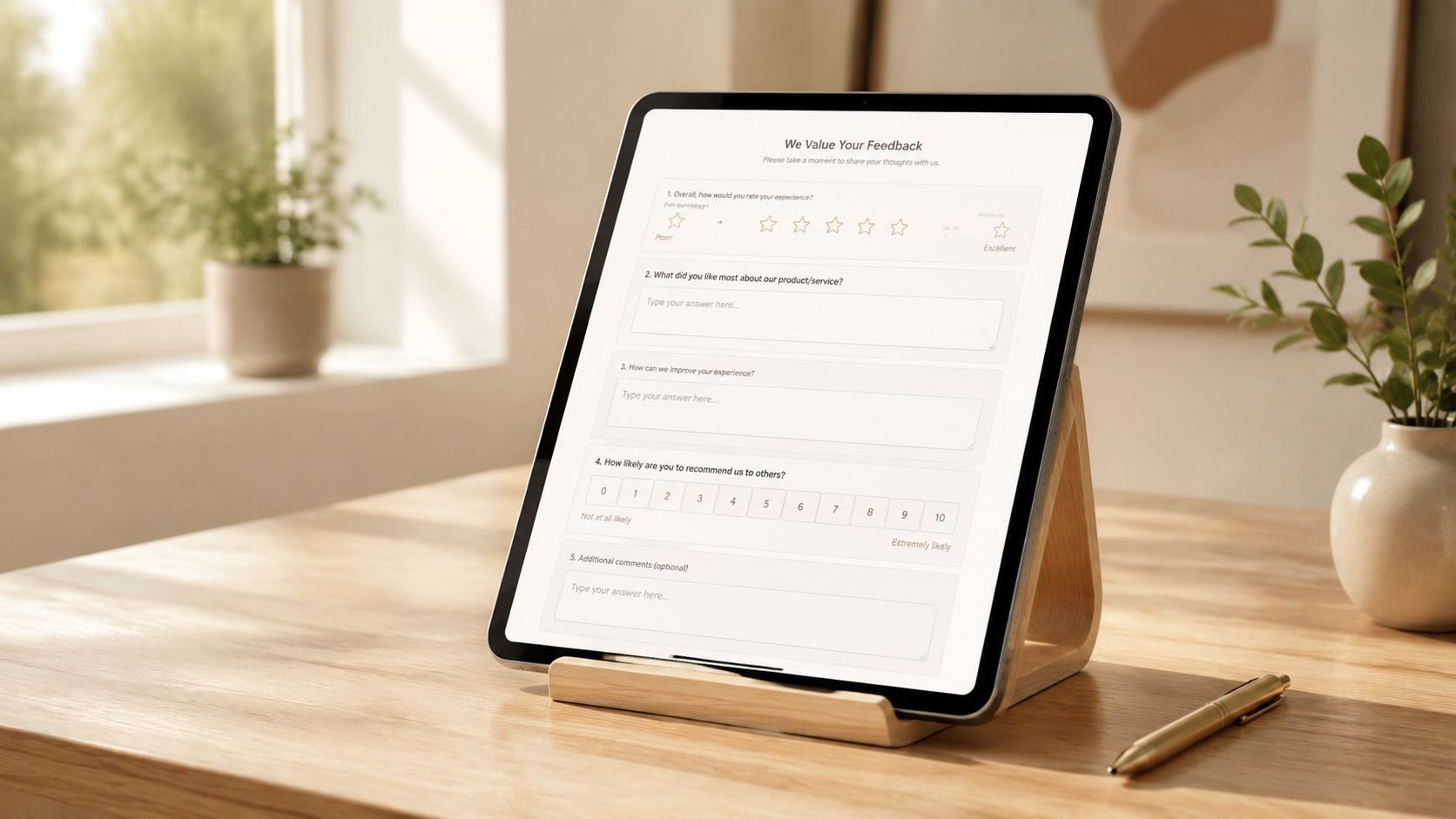
A useful rule from survey design is to keep the survey short, use neutral wording, and include at least one open-text question so people can explain the reason behind their answer (Fullstory feedback guidance). That matters because a rating alone tells you very little. A sentence tells you what happened.
Three templates you can adapt today
- Post-purchase check-in: “Thanks again for buying [product]. What part was most useful, and what felt unclear?” Send this within a day or two of purchase.
- Content resonance question: “I'm trying to make future posts more helpful. Which topic should I explain more clearly next?” Use this after a newsletter or blog post.
- Gentle testimonial ask: “If this resource helped you, I'd love a sentence about what changed for you. You can also tell me what didn't land yet.” Use this after a positive result or completed purchase.
Those prompts work because they ask about experience, not fantasy. “What do you want?” often gets polite guesses. “What felt useful?” usually gets something you can act on.
If you'd like a starting point for the layout, you can browse feedback form templates and adapt the wording to match your voice. A few small edits are enough. You don't need a complicated system to ask a good question.
When I first started using simple prompts like this, I was surprised by how much easier it felt to improve one thing at a time. I didn't need a giant survey. I needed one honest reply I could use.
Timing, Frequency, and Avoiding Feedback Fatigue
Timing changes the quality of the answer. One guidance source says the best moment to ask is immediately after an interaction, while another warns that email surveys can feel less timely because they pull people out of the experience (Help Scout on customer feedback timing). That fits what most creators notice in practice. People answer more clearly when the moment is still fresh.
The other side of timing is restraint. If you ask too often, people get tired of being queried. If you ask too rarely, you end up guessing again. The best rhythm is usually tied to a meaningful event, such as a purchase, a support exchange, or the moment someone finishes using a resource.
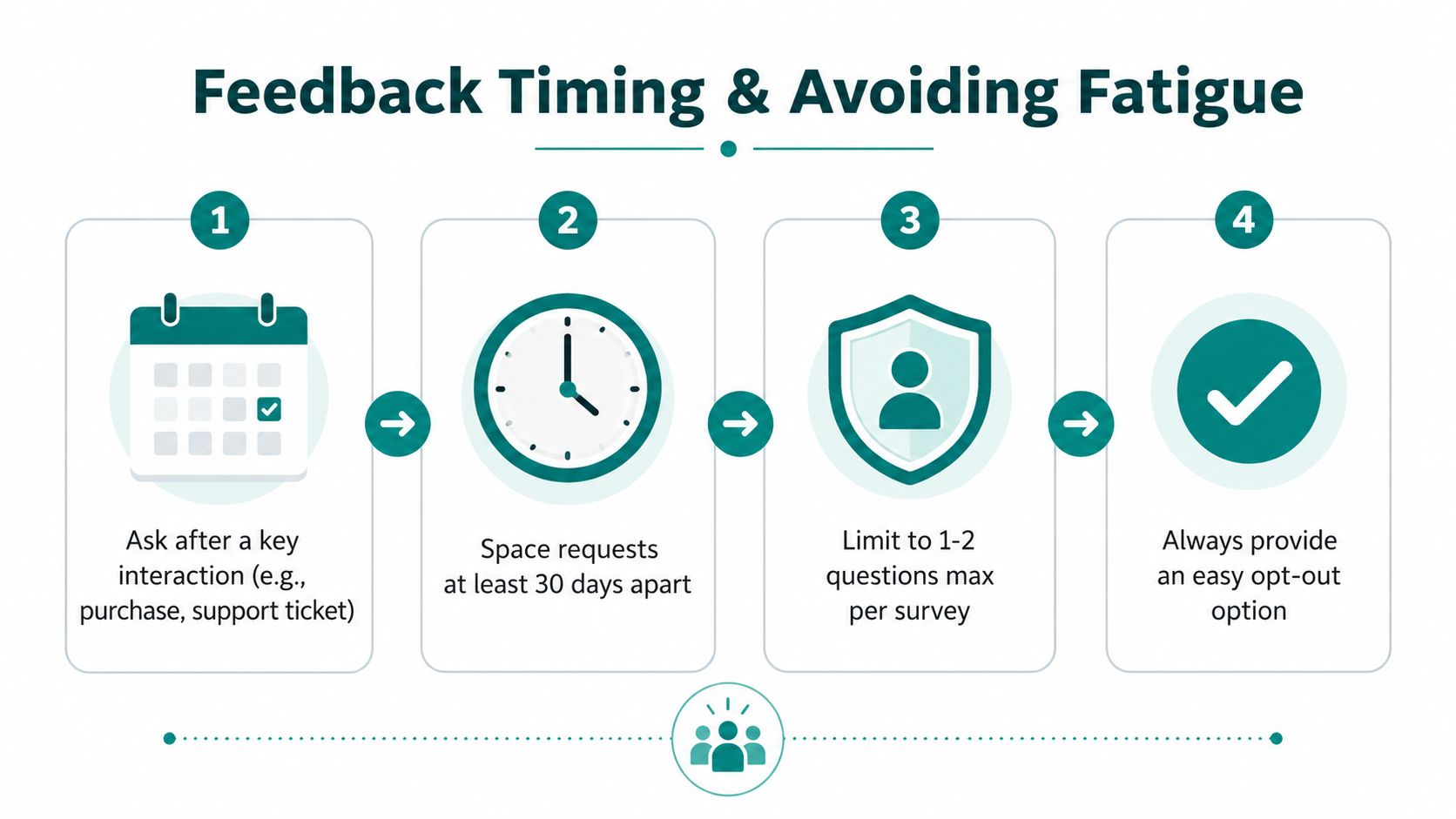
The simplest way to keep it gentle is to set a few rules.
- Ask after something real: Tie the request to a purchase, download, reply, or support interaction.
- Keep the request narrow: One or two questions is enough for most creator use cases.
- Space out repeat asks: Don't keep returning to the same person with the same question.
- Offer an exit: Let people skip, ignore, or opt out without friction.
Quiet systems work better than noisy ones. A small list doesn't need more pressure, it needs better pacing.
If you're collecting a mix of replies, tag them by product, content type, and issue theme so you can spot patterns without re-reading everything from scratch. That's the part many people miss. A handful of thoughtful tags turns a small inbox into something you can learn from instead of something you dread.
A warm, low-pressure cadence protects the relationship you've already built. For a solo creator, that relationship is the asset.
Turning Responses Into Improvements and List Growth
Feedback only matters when it changes something. If you collect replies and never act on them, people notice that too. The trust you build from asking can disappear if the loop stops there.
A simple way to handle responses is to group them by theme, match each theme to the part of your business it affects, and choose one improvement you can make soon. That might be a clearer subject line, a shorter welcome email, a better product explanation, or a smoother checkout step. One focused fix is more valuable than a long list you never touch.
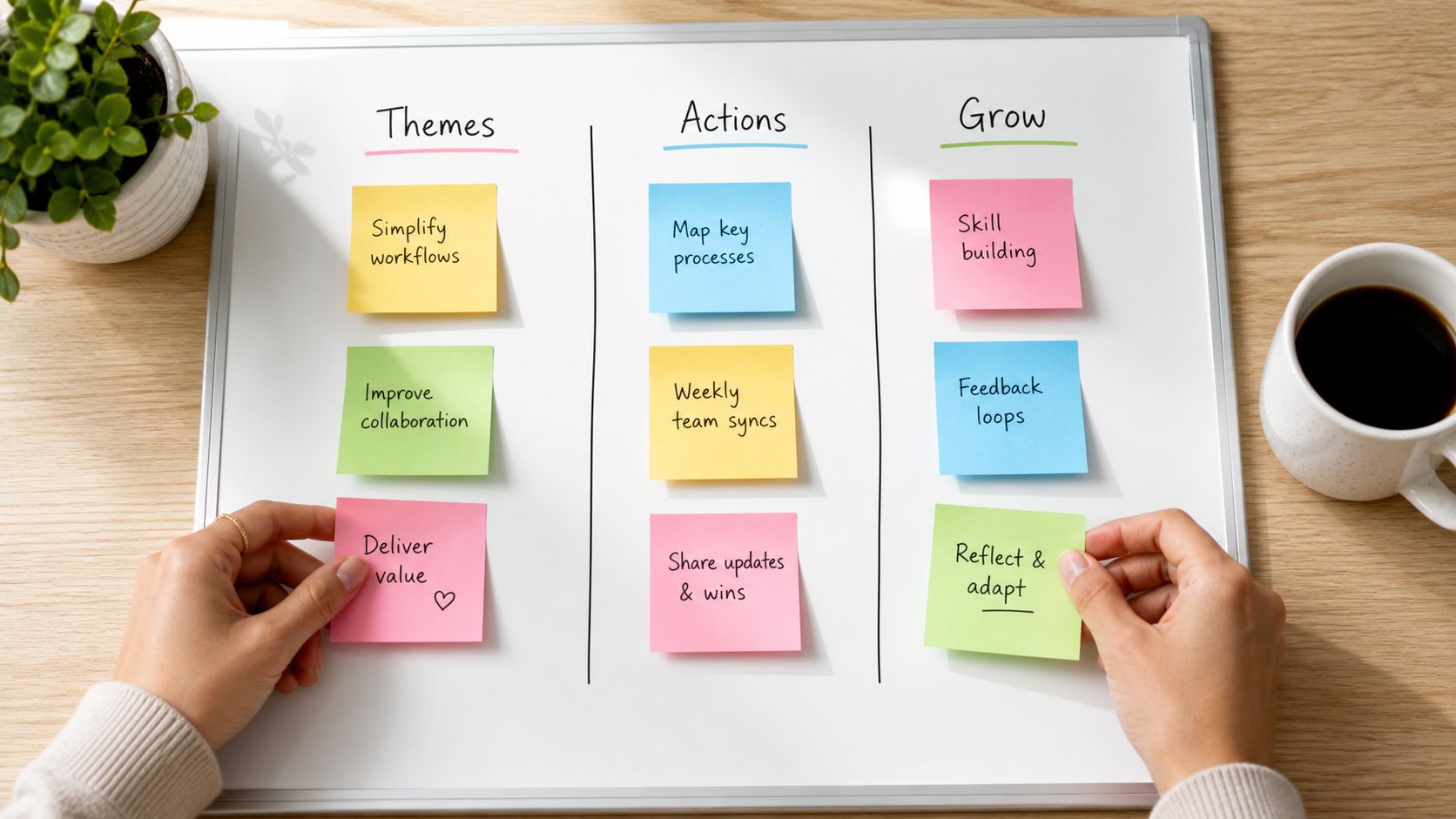
The follow-up matters just as much as the change. When you tell someone what you learned and what you adjusted, you show that their time counted. That's how a feedback request becomes a relationship moment instead of a one-way data grab.
For creators building an owned audience, that same follow-up can support list growth. A thoughtful reply can invite the person to stay on your email list, join a small community, or share the resource with someone else who might need it. It doesn't need to sound salesy. It just needs to sound human.
Here's a simple way to think about it. A response gives you insight. A thank-you gives you dignity. A follow-up gives you continuity.
If you want a broader view of building audience ownership alongside feedback, how to build an email list connects naturally with this process. One person's reply can become the start of a longer relationship.
I remember feeling oddly nervous the first time I sent a short feedback note. I expected silence. Instead, I got a clear answer I could use the same day. That kind of small win builds confidence fast.
Your Simple One-Week Feedback Plan
A one-week plan keeps this manageable. You don't need to redesign your whole business. You just need one calm cycle you can repeat.
Day 1. Pick one objective. Choose a single thing you want to learn, such as whether a lead magnet was clear or whether a product page answered the right question. Keep it narrow.
Day 2. Choose one channel. Pick the place your audience already pays attention to, email, a post-purchase prompt, or a small community space. Don't open five channels at once.
Day 3. Send one short template. Use one open question and one optional follow-up line. Keep it easy to finish on a busy day.
Day 4. Review the replies. Group comments by theme, not by personality. You're looking for repeated patterns, not perfect wording.
Day 5. Act on one insight. Make one fix you can complete quickly. Small improvements create momentum.
Day 6. Send a warm follow-up. Thank the people who replied and tell them what changed or what you're testing next. That closes the loop and keeps the relationship alive.
Day 7. Rest. Let the process settle. You don't need to chase more data before you've used what you already have.
If you keep this simple, customer feedback collection becomes less intimidating and more useful. It helps you build with your audience instead of guessing around them.
Victoria OHare helps midlife creators build sustainable income with step-by-step guidance on List Building, Affiliate Marketing, and simple automation. If you want practical support for turning small audience moments into owned relationships, visit Victoria OHare and explore the resources there when you're ready.