
If you're over 50 and wondering whether it's too late to build income online, you're not alone. Many women carry a quiet fear about Retirement, rising costs, and whether the money they set aside will stretch as far as they hoped. It doesn't mean you failed. It usually means life happened. Caregiving happened. Career pivots happened. Divorce, burnout, Health issues, and helping everyone else happened.
I remember feeling that strange mix of urgency and overwhelm when I first looked at online income ideas. Every page seemed full of jargon, shiny promises, and complicated funnels. It can make you feel like the digital world moved on without you. It didn't.
You are not behind. You can still build something meaningful.
One helpful reality check is this. Passive income usually isn't money that appears from nowhere. In the modern tax and business sense, passive income is tied to income from activities where you don't materially participate. A commonly cited benchmark is spending more than 500 hours a year in a business, which generally counts as material participation, and more than 100 hours can also qualify depending on your role, as explained in this overview of how passive income is defined. That's why many passive income strategies are better understood as front-loaded. You do the work first. Then the asset can keep earning later.
That idea matters, especially if you're trying to achieve financial freedom with eCommerce or any other online business. You're not chasing a paycheck. You're building assets. An email list is an asset. A course is an asset. A blog post that keeps bringing in readers is an asset. That shift changes everything.
1. Affiliate Marketing
Affiliate marketing is one of the simplest places to begin because you don't need to create your own product first. You recommend something useful, someone buys through your unique link, and you earn a commission. In plain English, it's referral income.
For many women over 50, this feels more natural than "selling." You're not pushing random products. You're sharing tools, books, software, skincare, kitchen items, or training you already trust. If a friend asked what you use, you'd tell her. Affiliate Marketing just adds a trackable link to that conversation.
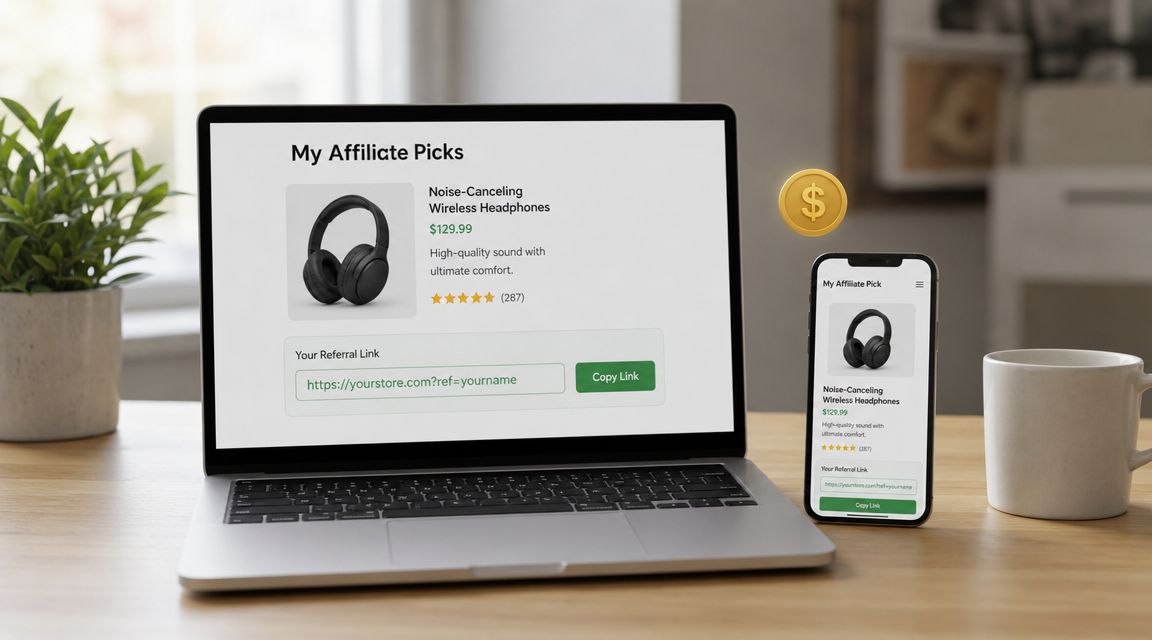 Affiliate Marketing interface for promoting noise-canceling wireless headphones online." />
Why it fits beginners
You can start small. A blog post. A simple email. A short Pinterest pin. A Facebook post inside the rules of the program. That's what makes this one of the more approachable passive income strategies for beginners.
If you want a gentle walkthrough, this guide to passive income with Affiliate Marketing explains the model in beginner-friendly language.
Practical rule: Only recommend products you'd feel comfortable suggesting to your sister, your best friend, or your grown daughter.
That trust piece matters more now than ever. Search and platform changes have made fast, shallow content less dependable. The models often described as more durable for creators in 2026 include digital products, niche SaaS, dividend ETFs, and content sites with ads, according to this list of passive income ideas for 2026. Affiliate income still works best when it's connected to an owned audience, especially an email list.
A few honest pros and cons:
- Good fit: You can begin without inventory, shipping, or customer support.
- Hard part: It takes time to build trust and an audience.
- Calmer path: You can grow it alongside a job, caregiving, or Retirement planning.
I understand the skepticism here. Yes, there are scams online. But Affiliate Marketing itself isn't a scam. It's a business model. The difference is whether you learn it ethically and build it slowly.
2. email list Monetization and Newsletter Sponsorships
If Affiliate Marketing is the recommendation engine, an email list is the home you own.
That matters because social platforms can change overnight. Your reach can shrink. Your account can get less visibility. But if someone gives you permission to email her, that's a direct relationship. No algorithm standing in the doorway.
I remember the first time I understood this. I had been posting content and hoping people would see it. It felt like setting little paper boats into a river and praying one came back. An email list felt different. More grounded. More steady.
Why email is such a valuable asset
A newsletter can earn in several ways. You can include affiliate recommendations. You can mention your own product. You can later accept sponsorships from brands that fit your readers.
It also supports the kind of calm business many women want now. You write one thoughtful message. It lands in inboxes while you're making dinner, walking the dog, or sitting at the doctor's office with a parent.
For practical help, these email newsletter best practices are a good place to start if tech feels intimidating.
Here are the basic moving parts:
- Lead magnet: A helpful freebie people get when they subscribe.
- Welcome email: A simple first note that says hello and builds trust.
- Regular rhythm: A consistent newsletter, even if it's short.
- Monetization: Affiliate links, product mentions, or sponsor placements later.
Regarding timing, this article on when to send your email marketing can help you think through your sending rhythm.
A small email list that trusts you is often more useful than a large audience that barely remembers your name.
This is one of the strongest passive income strategies because the list becomes the bridge to almost everything else on this page.
3. Digital Product Creation and Sales
You wake up early, make tea, and open your laptop before the house gets noisy. You are not trying to become an influencer. You just want one steady thing that could keep helping people, and keep selling, while you live your life. That is the quiet appeal of a digital product.
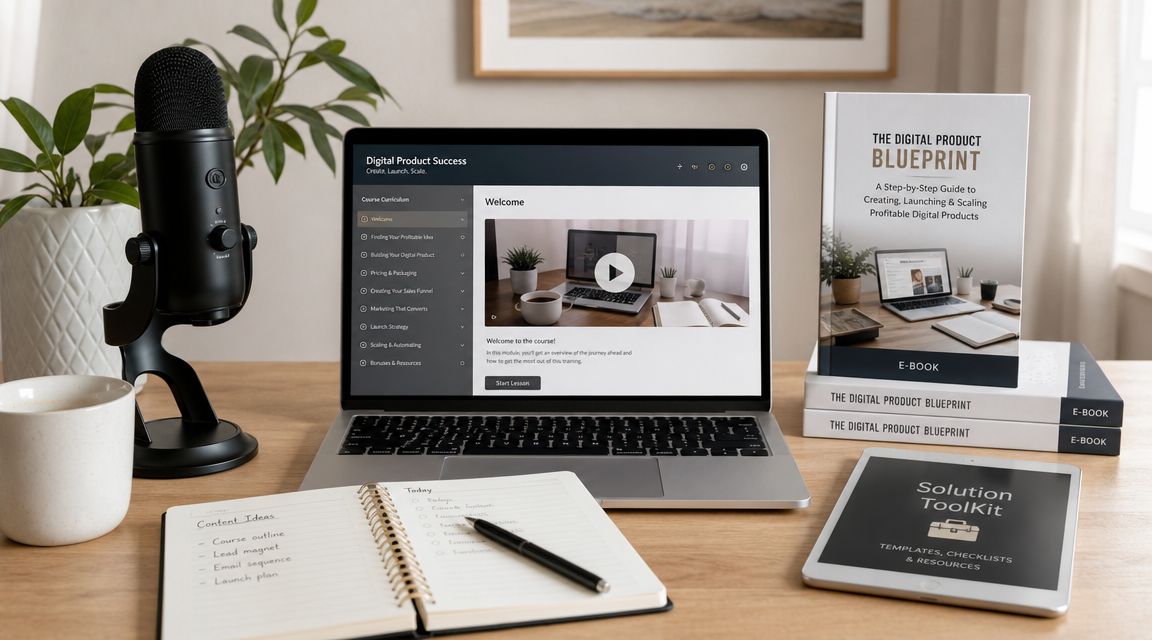
A digital product is your knowledge turned into something useful. It could be a short guide, a workbook, a meal planner, a Canva template, a mini course, or an e-book. You create it once, then it can keep earning without needing your full attention every day.
For many women over 50, this option feels more realistic than people expect. You do not need to be flashy. You do not need to know every app on the internet. You need one clear problem you can help solve.
Years of life experience often turn into the best products. You may know how to organize a home after downsizing, plan simple weekly meals, care for aging parents, decorate on a budget, write stronger resumes, grow herbs, sew, garden, journal, or create routines that make menopause feel less chaotic. Those are not small skills. They are shortcuts people will gladly pay for because they save time, stress, and second-guessing.
What makes this model strong is ownership. You choose the topic. You choose the format. You choose the price. You are building an asset with your name on it, not waiting for someone else to approve you first.
That matters if you have ever felt behind with tech or unsure where to begin. I remember feeling pressure to build something huge, with videos, worksheets, bonuses, and a fancy sales page. That usually creates delay, not income. A simple product that solves one problem is often the better first step.
If you want to connect your product idea to a broader online business, this guide on building a content creator side hustle can help you see how the pieces fit together.
A helpful way to choose your format is to match it to the kind of help you give:
- Template: Good for saving people time
- Workbook: Good for helping people get clarity
- Mini course: Good for showing a process step by step
- E-book: Good for teaching through writing
Digital products work like a recipe card. Nobody needs a 200-page cookbook to make dinner tonight. They need the one recipe that solves tonight's problem.
Keep it simple: Your first digital product does not need to impress strangers. It needs to help one real person solve one real problem.
4. Brand Ambassadorships and Sponsorships
Brand ambassadorships sit somewhere between Affiliate Marketing and content partnerships. A company chooses creators who fit its values and audience, then the creator promotes the product over time.
This can work well if you like consistency. Instead of constantly hunting for the next offer, you build a relationship with a few companies that make sense for your niche. That could be wellness, home organization, beauty, books, kitchen products, crafts, or lifestyle tools.
When this works best
It works best when your audience knows what you stand for. Not when you're trying to be everything to everyone.
For example, if your content revolves around simple living after 50, a steady partnership with a planner brand or home product company may feel natural. If you focus on online business, a software or training brand might fit better. The point is alignment.
A few strengths stand out:
- Steadier rhythm: Ongoing partnerships can feel more stable than one-off promos.
- Less guesswork: Brands often give messaging guidance and campaign ideas.
- Trust matters most: A smaller but loyal audience can be more appealing than broad attention.
The caution is simple. Don't let free products cloud your judgment. If you don't like the item, your audience will feel that hesitation immediately.
I remember saying yes too quickly to opportunities when I felt behind. That usually creates clutter, not peace. A calm business grows better when each partnership fits your values.
5. Webinars and Virtual Events
A webinar is just an online workshop. That's all. The word sounds technical, but the format is familiar. You teach something useful live or in a recorded session, answer questions, and invite people to the next step.
For women who have years of experience but don't think of themselves as "content creators," this can be surprisingly freeing. You're not trying to dance on camera or post every day. You're teaching one focused topic in a clear, helpful way.
Why this can become semi-passive
The first time you host it, it's active. You prepare. You present. You troubleshoot.
But once the teaching is solid, the recording can become an asset. You can use it to build your email list, introduce a course, recommend affiliate tools, or lead into a membership. One lesson. Many uses.
Here are a few practical examples:
- Educational webinar: Teach a beginner topic and recommend tools you use.
- Workshop plus offer: Teach for most of the session, then invite people into a paid next step.
- Sponsored event: Partner with a relevant brand if the fit is natural.
This is also a gentle way to test ideas before building a full course. If people ask the same questions during a webinar, you've found a topic worth turning into a product.
I used to think webinars were only for polished experts. Then I realized people don't need perfection. They need clarity. A calm teacher with a helpful slide deck often beats a flashy presenter with no substance.
6. Content Syndication and Repurposing Revenue Streams
If creating content sounds tiring, repurposing is your friend. One idea can become many assets.
A blog post can turn into an email. That email can turn into a short video. That video can become a Pinterest graphic. The same teaching can become a podcast episode outline or a downloadable guide. You are not starting from scratch each time. You're reusing the bones.
Think of it like leftovers, but the good kind
When I first understood repurposing, it felt like learning I didn't have to cook a new dinner every night. I could make one solid meal and use it in different ways. That's how this works.
Content repurposing supports several passive income strategies at once because each version can point to an affiliate link, a digital product, a newsletter signup, or a future offer.
A simple workflow might look like this:
- Start with one anchor piece: A blog post or video teaching one topic.
- Pull out smaller pieces: Tips, quotes, questions, or steps.
- Match the format to the platform: Shorter for social, deeper for email, evergreen for blog.
- Link back to your asset: Your list, product, or recommended tool.
This approach also reduces pressure. You don't need endless new ideas. You need one useful idea, well reused.
The warning here is platform dependence. As noted in current commentary on passive income paths after recent search and platform changes, many creators are looking for more resilient models that lean on owned audiences instead of borrowed traffic, a point discussed in this article on passive income ideas and platform durability. Repurposing works best when it keeps leading people back to something you own.
7. Niche Membership Communities and Subscription Platforms
Some people don't just want information. They want company while they apply it.
That's where a membership community can shine. Members pay regularly for access to exclusive content, conversation, live sessions, templates, or support. It's less about one big sale and more about ongoing value.

Why community can be powerful after 50
Midlife can feel lonely in business. A membership offers more than content. It offers belonging, rhythm, and accountability.
That can work especially well in niches where people want encouragement over time. Think decluttering, healthy routines, writing, online business basics, caregiving support, budgeting, or confidence with technology.
You don't need a giant audience to imagine this path. You need a clear reason people would want to stay. That's different from a one-time product. A membership asks, "Why would someone keep coming back next month?"
A few healthy questions to ask yourself:
- Can I guide an ongoing conversation?
- Do people need support, not just information?
- Would I enjoy showing up regularly?
If you want to think more about community monetization, this expert guide for community managers gives useful context.
Community income can look passive from the outside, but the best memberships are cared for. People stay because they feel seen.
This is why I call memberships recurring income more than passive income. Still, for the right person, they create calm predictability.
8. Print on Demand and Merchandise Sales
Print on demand means you design a product and a fulfillment company prints and ships it when someone orders. No boxes in your garage. No bulk inventory. No post office runs every afternoon.
If you have a phrase, message, niche identity, or small community people connect with, this can work nicely alongside your content. Think mugs, journals, tote bags, shirts, or simple home items.
Who this is best for
This one fits best when you already have audience connection or a message people want to wear, carry, or gift. It's usually not the first passive income strategy I'd suggest for a total beginner unless you already have a strong idea or creative background.
But it can be lovely as an add-on. A newsletter creator can sell branded notebooks. A gardening creator can sell seasonal planners. A faith-based or encouragement-focused brand can offer quote merchandise.
The upside is emotional. Merchandise can deepen loyalty. People like feeling part of something.
The downside is practical. Profit per item is often smaller than with digital products, and quality matters. If the print is poor or shipping is slow, your reputation takes the hit.
I like this model most when it supports a bigger brand, not when it's expected to carry the whole business alone.
9. Coaching, Consulting and High-Ticket Services
This one isn't fully passive, but I still include it because many women need a bridge strategy. They want income sooner while they build long-term assets.
Coaching and consulting use what you already know. Maybe you help people with resumes, organization, confidence, Health routines, small business basics, caregiving systems, or content planning. At first, you're trading time for money. Then you slowly make it more scalable.
How it becomes more asset-based
You notice repeated questions. You build templates. You create a framework. You run small groups instead of only one-on-one sessions. Those materials later become a course, a workshop, or a membership.
That's why coaching can be a very smart second-chapter move. It gives you cash flow and clarity. It also tells you what your audience needs.
Here are the parts that matter most:
- Start with a clear problem: Vague offers confuse people.
- Use repeatable frameworks: Don't reinvent your process every time.
- Document what works: Your notes become future products.
- Protect your energy: Boundaries matter, especially in midlife.
I remember wanting passive income immediately. But sometimes the calmest route is to begin with a service, learn fast, and turn that experience into something more passive later. There is dignity in building step by step.
10. Dividend Investing and Financial Asset Income
Not all passive income strategies live online. Some are financial assets.
Dividend investing is the clearest example. You buy income-producing investments, and they can pay you without you creating content, answering emails, or launching anything. For women nearing Retirement, this can bring a different kind of peace because it's not tied to algorithms or audience growth.
Why offline assets still matter
One of the clearest examples of asset-based passive income is the vending machine business. A new machine typically costs about 3,000 to 5,000 dollars upfront, and average revenue is about 525 dollars per machine per month, according to Fidelity's summary citing the National Automatic Merchandising Association. That example is useful because it shows the basic pattern. You buy or build an asset first. Then it may earn later, with maintenance and costs still involved.
The same logic applies to dividend-focused investing. You're building ownership in an asset instead of trading hours for income.
This category often appeals to women over 50 because:
- It can feel calmer: No posting schedule required.
- It adds diversification: Your income isn't all tied to online work.
- It supports peace of mind: Assets can keep working in the background.
Of course, investing requires caution, education, and often professional advice. It's not the same as launching a blog. But it belongs in this conversation because security often comes from blending business assets with financial assets.
Passive Income Strategies: 10-Point Comparison
| Strategy | 🔄 Implementation Complexity | ⚡ Resource Requirements | 📊 Expected Outcomes | 💡 Ideal Use Cases | ⭐ Key Advantages |
|---|---|---|---|---|---|
| Affiliate Marketing | Low → Medium, audience + trust required | Minimal: website/social, tracking, time | Variable commissions; passive as traffic grows | Bloggers, content creators with an audience | Low startup cost; no product creation; scalable |
| Email List Monetization & Newsletter Sponsorships | Medium, consistent list growth & metrics | Email platform, lead magnets, content cadence | Predictable sponsorship fees; high conversion | Personal brands, niche newsletters, consultants | Owned audience; high ROI for sponsors; repeatable |
| Digital Product Creation & Sales (Courses, e‑books) | High, research, creation, launch work | Time, production tools, hosting/marketing budget | High-margin, scalable passive sales long‑term | Experts, coaches, consultants scaling expertise | 100% revenue control; high profit per sale; evergreen |
| Brand Ambassadorships & Sponsorships | Medium, relationship building & contracts | Social following, media kit, negotiation time | Recurring or flat fees; variable month-to-month | Influencers, lifestyle creators with engagement | Stable partnerships; product perks; better rates |
| Webinars & Virtual Events | Medium, content + funnel setup | Webinar platform, promotion, presentation skills | Immediate sales/sponsorships; strong conversion rates | Coaches, course creators, product launches | Positions authority; high-converting live funnel |
| Content Syndication & Repurposing | Low → Medium, systems for multi-format reuse | Repurposing tools, editing, platform accounts | Multiple small-to-medium revenue streams from one asset | Bloggers, podcasters, video creators | Maximizes ROI per content piece; diversifies income |
| Niche Membership Communities & Subscriptions | Medium → High, ongoing delivery & engagement | Community platform, content schedule, moderation | Predictable recurring revenue; higher LTV per member | Coaches, niche experts, engaged audiences | Recurring predictable income; strong member loyalty |
| Print‑on‑Demand & Merchandise Sales | Low, design and platform setup | Design skills or budget, POD integration, promo | Modest per-item profit; scales with fanbase size | Creators with loyal followings (YouTubers, podcasts) | Low risk (no inventory); brand-building physical products |
| Coaching, Consulting & High‑Ticket Services | Medium, client work and sales process | Deep expertise, scheduling/payment systems, marketing | High immediate income per client; semi‑scalable | Experts, consultants, career changers | Highest income per hour; builds credibility for products |
| Dividend Investing & Financial Assets | Low, research and portfolio setup | Capital, brokerage/retirement accounts, time horizon | Truly passive dividends/rental income; compounding | People 50+, Retirement planners, long‑term savers | Diversification; recession‑resistant; hands‑off income |
Your Next Five Years Start Today
It is 7:30 on a Tuesday night. The dishes are done. Your phone is finally quiet. You open an article like this and feel two things at once. Relief that there may still be time, and a knot in your stomach because it all sounds technical.
If that sounds familiar, you are in very good company.
I remember feeling that way too. I thought I needed to choose the perfect plan, learn every tool, and somehow catch up fast. What actually helped was much smaller. I picked one path. I learned one piece at a time. That is often how real progress starts, especially for women over 50 who have a lot of wisdom but no interest in turning life into a frantic hustle.
The goal here is not to build ten income streams by next month. The goal is to create one steady stream that grows into more security over time. A passive income plan works a lot like planting a fruit tree. At first, it looks slow. You water it, protect it, and wait. Later, it gives back with much less effort than it took to start.
That is why ownership matters so much. An email list is something you own. A digital product is something you own. A body of content, a community, or a portfolio of dividend-paying assets can keep working long after the first setup. A paycheck stops when your hours stop. Assets keep helping.
Caution still matters. The internet has plenty of noise, and some of it is expensive noise. But there are also quiet, honest businesses built by ordinary women who once worried they were too late, too tired, or too confused by the tech. They did not begin as experts. They began as beginners who stayed with the process.
Keep today simple.
Choose one path that feels manageable enough to learn without dread. You might start with Affiliate Marketing if you enjoy recommending useful tools. You might build a small email list if you like writing. You might turn years of experience into a workbook, template, or mini course. You might begin with coaching, then use that income to build more passive assets in the background.
Then pick one next action.
Read one guide. Watch one training. Draft one welcome email. Write down three problems you know how to help solve. That is a real day of progress.
If you want a calm starting point, the resources at Victoria OHare cover Affiliate Marketing, list-building, brand ambassadorship, and simple automation in a way that feels approachable for newer online entrepreneurs.
Five years will pass whether you start or not. You can spend that time worrying that it is too late, or you can spend it building something that gives you more dignity, more control, and more peace of mind.