

A friend once told me she opened an affiliate dashboard, stared at the screen for thirty seconds, and closed the laptop. I remember doing something similar the first time I tried to learn this too.
If you're over 50 and wondering whether it's too late to build income online, you're not alone. Many women feel behind financially, not because they failed, but because life happened. Careers changed, caregiving took time, Health issues appeared, or Retirement no longer feels as secure as it once did.
That quiet worry matters.
For many people, extra income isn't about luxury. It's about dignity, breathing room, and knowing a surprise bill won't knock everything off balance. Building a simple online income stream can help create that sense of steadiness, even if you start small.
One of the gentlest ways to begin is Affiliate Marketing. In plain language, it's recommending a product or service you like. If someone buys through your unique link, you earn a commission. You don't need to make your own product, store inventory, or handle shipping and customer service.
I understand the hesitation. Is Affiliate Marketing legit? Do you need tech skills? Are you too old to start?
Those are fair questions. There are scams online, and caution is wise. But Affiliate Marketing itself is a real business model when it's done ethically, with honest recommendations and patient learning. You don't need to be a tech expert. You need a simple plan, a willingness to learn, and a platform that doesn't make the first steps harder than they need to be.
If you're also building on social media, learning how to use Instagram story links as a creator can make your promotions feel much simpler.
Below are the best Affiliate Marketing platforms for beginners, with a special eye toward ease, trust, and peace of mind.
1. Amazon Associates
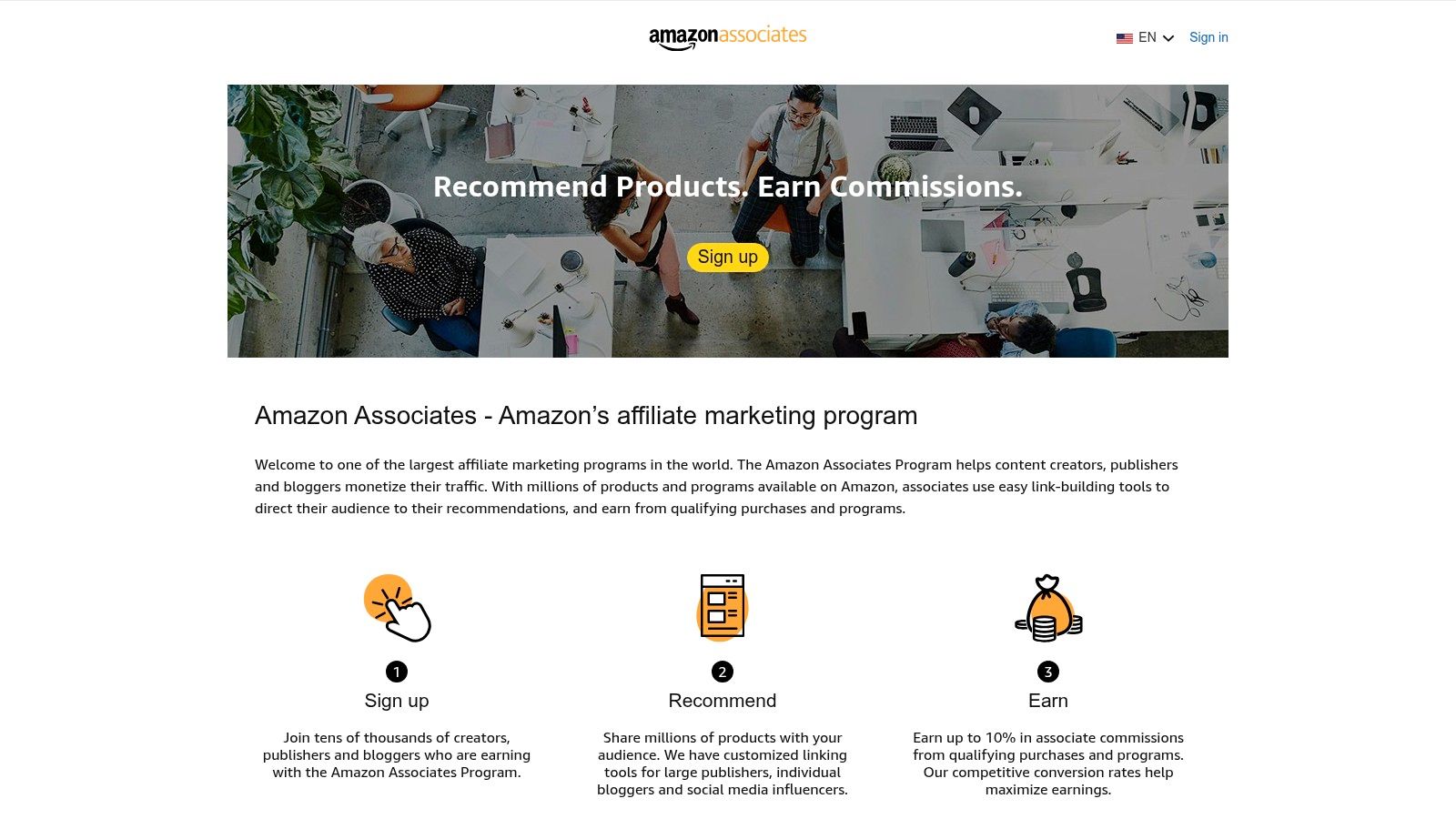
Amazon Associates is often the least intimidating first step. Many consumers already shop on Amazon, which means you don't have to spend time explaining what the store is or whether it's trustworthy. That matters when you're new and still learning how to write recommendations naturally.
According to this beginner platform overview, Amazon Associates launched in 1996, has no minimum traffic requirement, and lets beginners promote millions of products across many categories. That same source notes commission rates range from 1% in electronics to 10% in fashion and beauty.
Why beginners often start here
Amazon can feel manageable because the product research is familiar. If you already tell friends which kitchen gadget you like, which walking shoes held up well, or which skincare item you reordered, you're already thinking like an affiliate marketer.
It also helps that Amazon's brand trust tends to make the buying decision easier for readers. The same source above says the program remains the largest by volume in 2025, with an average commission rate of 2.4%.
Practical rule: If tech feels overwhelming, start with a platform your audience already knows.
One more useful detail from that same source is the 24-hour cookie window, which means you can earn on items bought in that period, not only the exact product you linked. For a beginner, that can make early wins feel more realistic.
- Best for simple product recommendations: Think gift guides, home essentials, books, beauty, or hobby tools.
- Best for trust-first content: Amazon works well when your audience wants convenience and familiarity.
- Best for learning the basics: Links are straightforward, and the product range is enormous.
If you need a gentle explanation of how this all works, Victoria's guide to affiliate marketing for beginners is a good next read.
You can explore the platform at Amazon Associates.
2. Awin
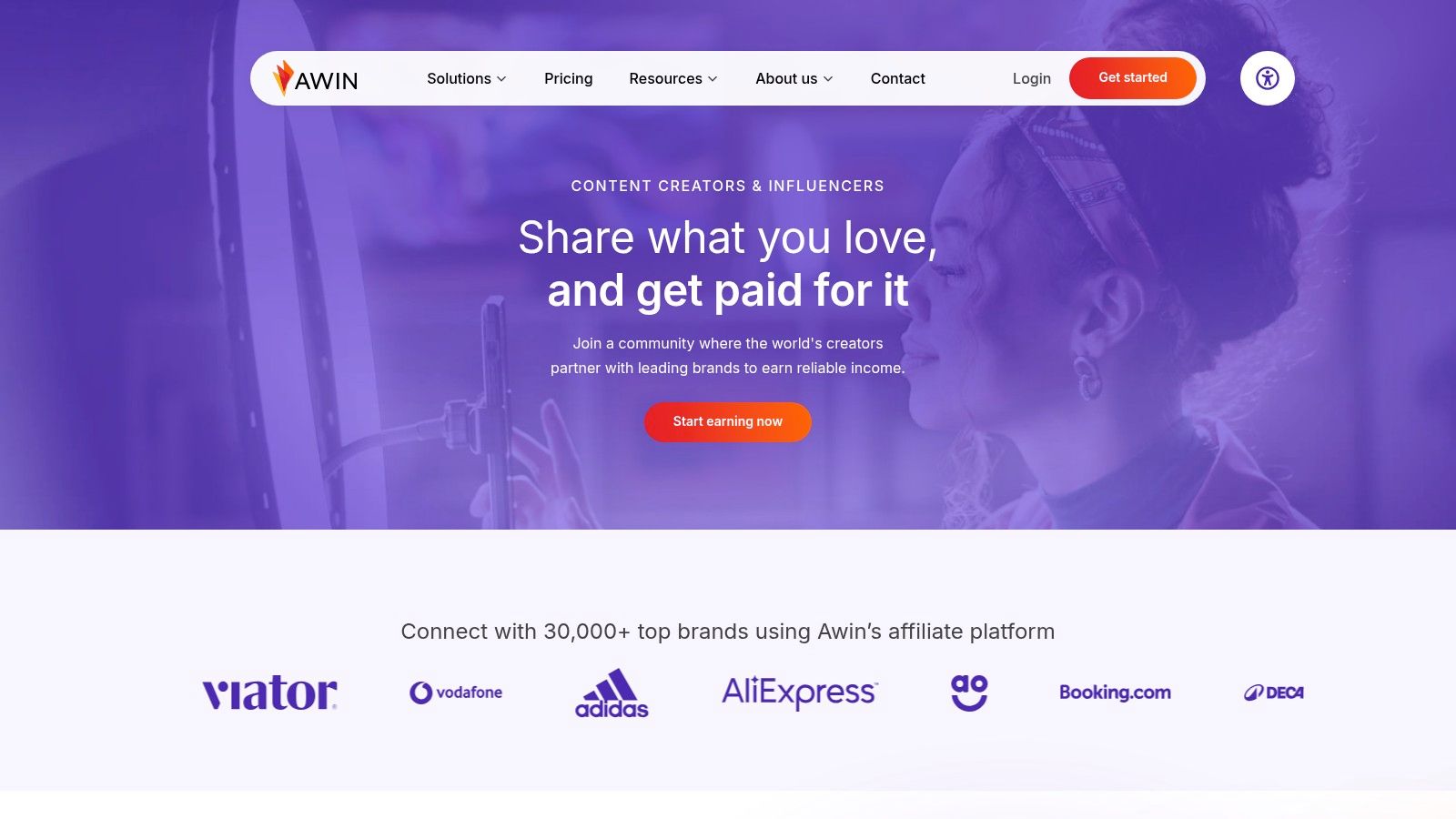
Awin is a better fit when you know you don't want to stay with just one retailer. Instead of promoting products from a single company, you can apply to many brands through one network.
That can save mental energy. You create one account, learn one dashboard, and then browse offers in areas like retail, travel, finance, and lifestyle.
Where Awin feels useful
Awin suits the beginner who wants options. Maybe you aren't sure yet whether your content will focus on fashion, home, wellness, or money-saving tips. A broader network gives you room to test what feels natural without rebuilding your whole setup.
The tradeoff is that the dashboard can feel busy at first. If you're someone who gets flustered by too many tabs and menus, this may not feel as immediately calm as Amazon.
Some platforms are simple because they do less. Others are useful because they let you grow without switching later.
Awin can also be a solid step after your first few pieces of content are live. Once you have a blog, newsletter, or social presence that shows what you talk about, brand applications usually make more sense.
- Good for variety: You can look across many merchants without joining separate systems one by one.
- Good for long-term growth: If you plan to expand into different product types, a network can grow with you.
- Less ideal for the very cautious beginner: The interface breadth may feel like a lot on day one.
I wouldn't call Awin the gentlest place to start if you're nervous around tech. I would call it a smart second step, or a first step for someone who likes having lots of choices in one place.
You can browse it at Awin for publishers.
3. CJ
CJ has been around a long time, and that history shows in the way many established brands use it. If you're the kind of person who values stability and recognizable companies, CJ often feels more professional than flashy.
This is a strong choice for content-driven beginners. If you want to write helpful articles, send thoughtful newsletters, or create reviews that feel editorial rather than salesy, CJ can fit that style well.
Best fit for thoughtful content creators
I especially like CJ for beginners who want to build slowly and responsibly. Not every advertiser will approve a brand-new site, but that isn't always a bad thing. It can encourage you to create a few useful pieces of content first, which is what builds trust anyway.
I remember feeling disappointed the first time I wasn't approved for something online. Later, I realized it helped me focus on building a real foundation instead of chasing every opportunity at once.
CJ offers tools like deep linking and reliable reporting, which become more helpful as your content library grows. If that sounds technical, don't worry. At the beginning, all you really need to know is this: it helps you connect a specific product or page to the content you've already made.
- Strong choice for blogs and newsletters: Especially if you prefer writing over constant posting on social media.
- Helpful for recognizable brands: Many publishers like CJ because the advertiser base often feels established.
- Less forgiving for brand-new creators: Some companies may want to review your site before approving you.
If you're still figuring out what kind of articles to write, Victoria's guide on creating content for Affiliate Marketing can help you make that part feel much less confusing.
You can learn more at CJ for publishers.
4. impact.com
impact.com is useful when your online presence doesn't fit neatly into one box. Maybe you have a blog, but you're also building an email list. Maybe you post on social media and want brand partnerships later too.
That mix is where impact.com makes sense.
A platform for blended creators
Some beginners don't want to be only bloggers or only influencers. They want a simple business that combines content, links, email, and occasional partnerships. impact.com supports that kind of blended approach.
The upside is flexibility. The downside is that some brand applications can take time, and top programs may be competitive.
If you're someone who likes structure, this platform may feel like something to grow into rather than master in a single afternoon. That's okay. You don't need to master everything at once.
The right platform doesn't have to feel easy forever. It just has to feel learnable.
I wouldn't recommend impact.com to a beginner who wants the fastest possible first commission. I would recommend it to someone who wants room to build a more rounded creator business over time.
- Best for mixed channels: Blog, email, social, and creator partnerships can live under one roof.
- Best for patient builders: You may need time for approvals and exploration.
- Not always best for immediate simplicity: The opportunity is broad, which can also mean more to sort through.
This is a good reminder that the best Affiliate Marketing platforms for beginners aren't all "easy" in the same way. Some are easy to start. Others are easy to grow with.
You can explore the partner side at impact.com for partners.
5. Rakuten Advertising

Rakuten Advertising often appeals to beginners who care about brand quality. It has a long-standing reputation in the affiliate space, and many people like it because the network tends to feel established and retailer-focused.
If you've ever felt skeptical of online business because it all seems noisy, Rakuten may feel refreshingly grown-up.
Where it shines
Rakuten works well for creators who want to promote known brands instead of hunting for hidden offers. That can be especially comforting when you're just starting and want your recommendations to feel dependable.
The onboarding materials also help. When a platform takes documentation seriously, it lowers anxiety for new users who don't want to guess their way through setup.
That said, some advertiser programs may be selective. If your content is brand new, you may need to build a little before every application goes your way.
- Helpful for trust-focused recommendations: Good if you want recognized merchants.
- Comforting for cautious beginners: The network has a more established feel than many hype-heavy alternatives.
- Potential drawback: Some brands may prefer creators who already show clear content direction.
One underserved issue in this space is age-specific usability. As noted in GetResponse's discussion of beginner programs and older users, most reviews focus on commissions and cookies, but rarely on accessibility, onboarding clarity, or how comfortable a platform feels for people over 50. That gap is real, and it's one reason I think calm documentation matters more than flashy promises.
You can visit Rakuten Advertising for publishers.
6. ClickBank
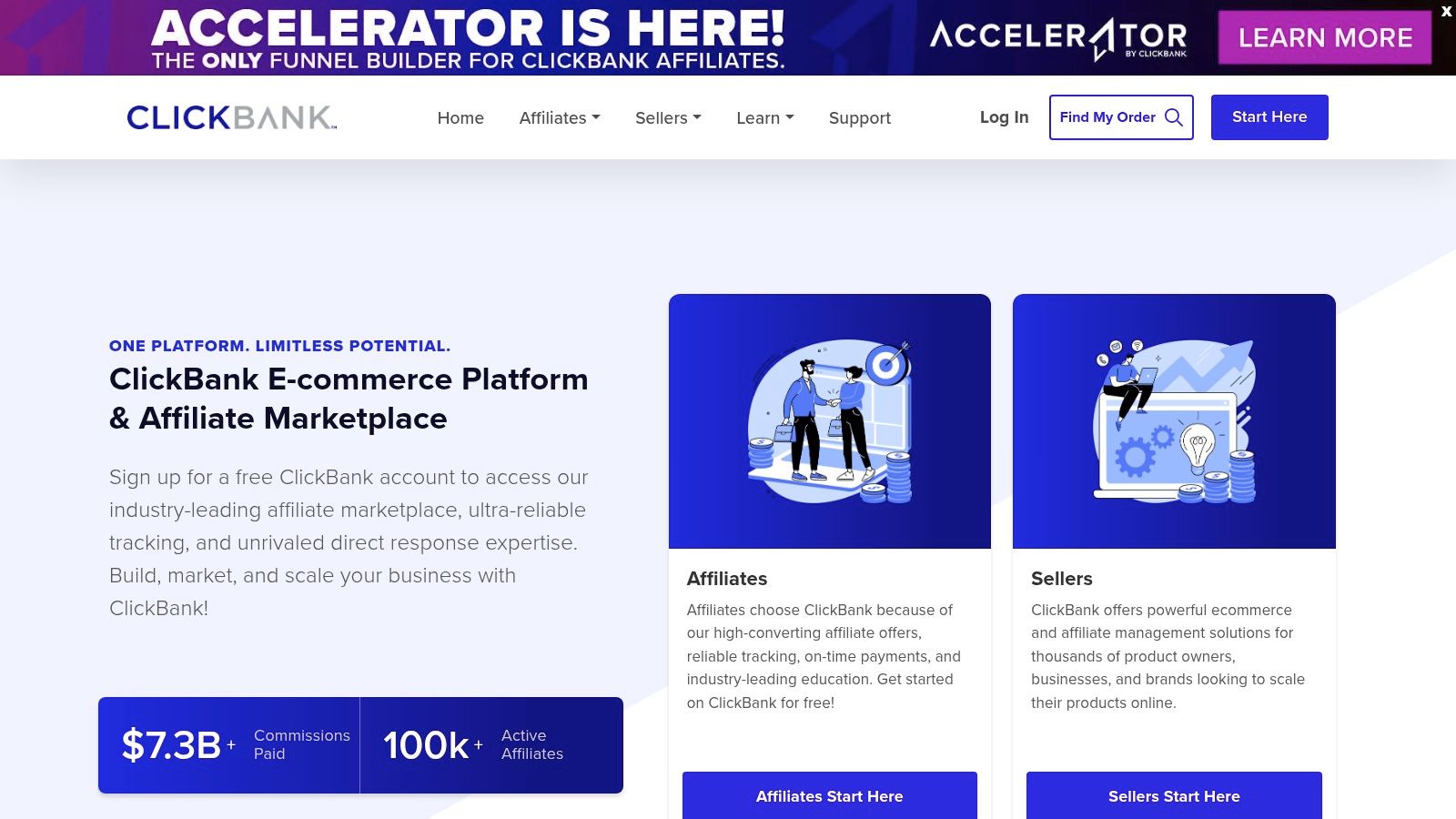
ClickBank is very different from Amazon or Rakuten. It leans heavily toward digital products, and that changes the experience. Instead of household goods or retail purchases, you're often looking at courses, education offers, wellness products, and niche solutions.
For some beginners, that's exciting. For others, it's where caution should increase.
Good opportunity, but vet carefully
ClickBank can be quick to get started with, and many people like it because link creation is simple and there are plenty of offers to browse. But quality can vary from vendor to vendor, so your judgment matters a lot here.
I understand being cautious. Some offers online look polished but don't feel aligned with your values. That's why I always suggest promoting only what you'd feel comfortable recommending to a friend over coffee.
Before picking a ClickBank offer, slow down and look at the sales page. Read it carefully. Ask whether it feels honest, useful, and respectful.
Don't choose an offer because the commission sounds appealing. Choose it because you'd feel good attaching your name to it.
- Best for digital niches: Education, self-improvement, wellness, and information products.
- Useful for testing ideas: You can explore many offers without applying one by one to separate merchants.
- Requires more discernment: Product quality and refund patterns matter.
ClickBank may also help you discover what themes interest you most. If you're still deciding what audience you want to serve, Victoria's guide to the best Affiliate Marketing niches can make that decision clearer.
You can browse offers at ClickBank.
7. PartnerStack
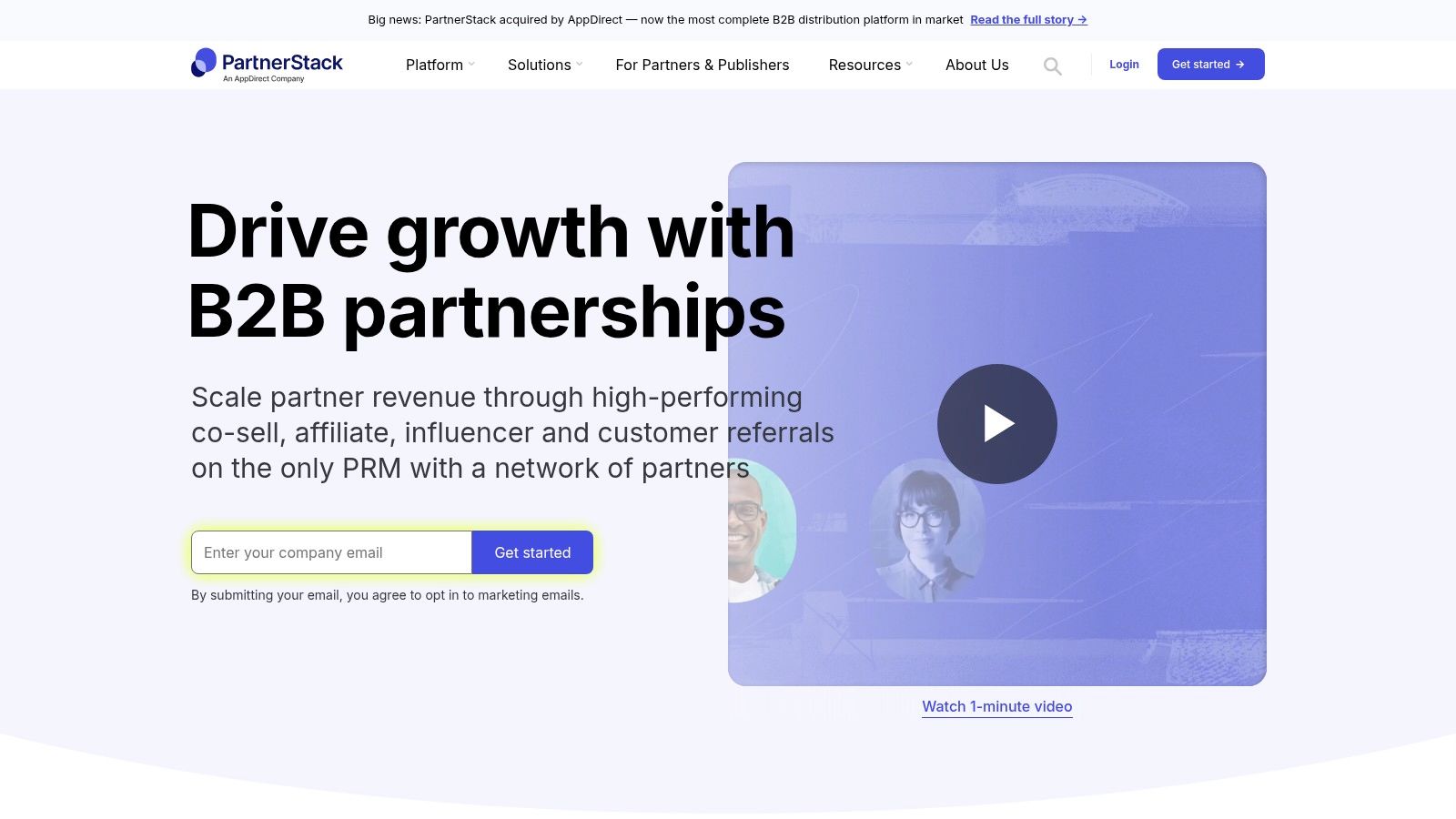
PartnerStack is a very good option if you talk about software, online tools, or business systems. It has a strong SaaS focus, which means many of the programs involve subscriptions rather than one-time retail purchases.
That matters because recurring commissions can support steadier income over time.
Why software affiliates can be attractive
In the verified data provided for this article, Vibrant Performance's roundup of beginner-friendly platforms notes that recurring models are especially attractive for people building passive-style income, and it highlights examples such as GetResponse offering 40% to 60% recurring commissions for 12 months with a 90-day cookie duration, while SocialPilot offers 20% recurring commissions. PartnerStack itself is known for this general category of software-focused, recurring programs.
Now, that doesn't mean software is best for everyone. If your audience isn't interested in tools, tech, email marketing, or online business systems, it may feel forced.
But if you already like recommending apps that simplify life or business, PartnerStack can be a very natural home.
- Best for tool-focused creators: Great for newsletters, tutorials, and software recommendations.
- Appealing for recurring income models: Subscription products can support longer-term earnings.
- Less useful for everyday retail content: You won't find the same kind of broad household catalog as Amazon.
I often tell beginners this. Don't pick a platform based only on payout style. Pick one that matches what you can explain with sincerity.
You can learn more at PartnerStack.
8. FlexOffers
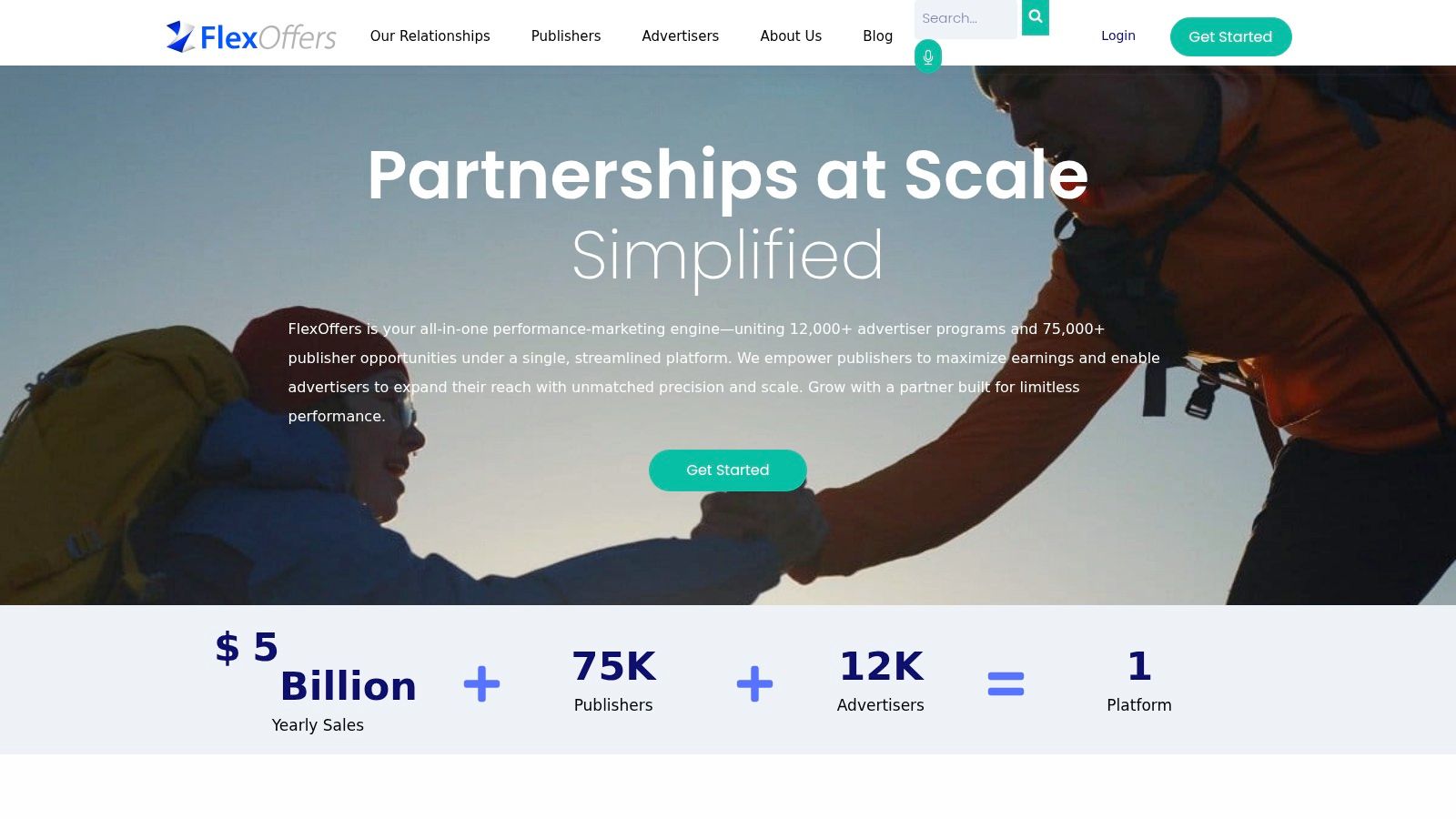
FlexOffers is another broad affiliate network, and its main appeal is range. If you want a lot of merchant categories in one place, it gives you that.
For a beginner, the advantage is obvious. You don't have to keep opening new accounts all over the internet to test different niches.
A practical network for experimentation
According to the plan details for this article, FlexOffers includes more than 12,000 advertiser programs across multiple verticals. That's a large enough catalog to let you try different content angles without changing networks.
The challenge is patience. Its payout timing may feel slow for someone eager to see early progress, and slow payments can be discouraging when you're in the bootstrapping stage.
That emotional side matters more than many reviews admit. Early wins aren't only financial. They're psychological. They help you believe you can do this.
- Strong for niche testing: You can explore retail, finance, travel, and more under one account.
- Useful for organized creators: Centralized applications and link management save admin time.
- Harder for the impatient beginner: Slower payout cycles can feel discouraging.
The same verified source cited earlier explains why lower payout thresholds and faster payment cycles matter so much to beginners. It points to examples like Everflow using a $10 minimum cashout threshold with net 30 payout terms, showing how smaller and faster payouts can help new affiliates keep going. That doesn't make FlexOffers bad. It just means your personality and season of life matter when choosing.
You can visit FlexOffers.
9. eBay Partner Network
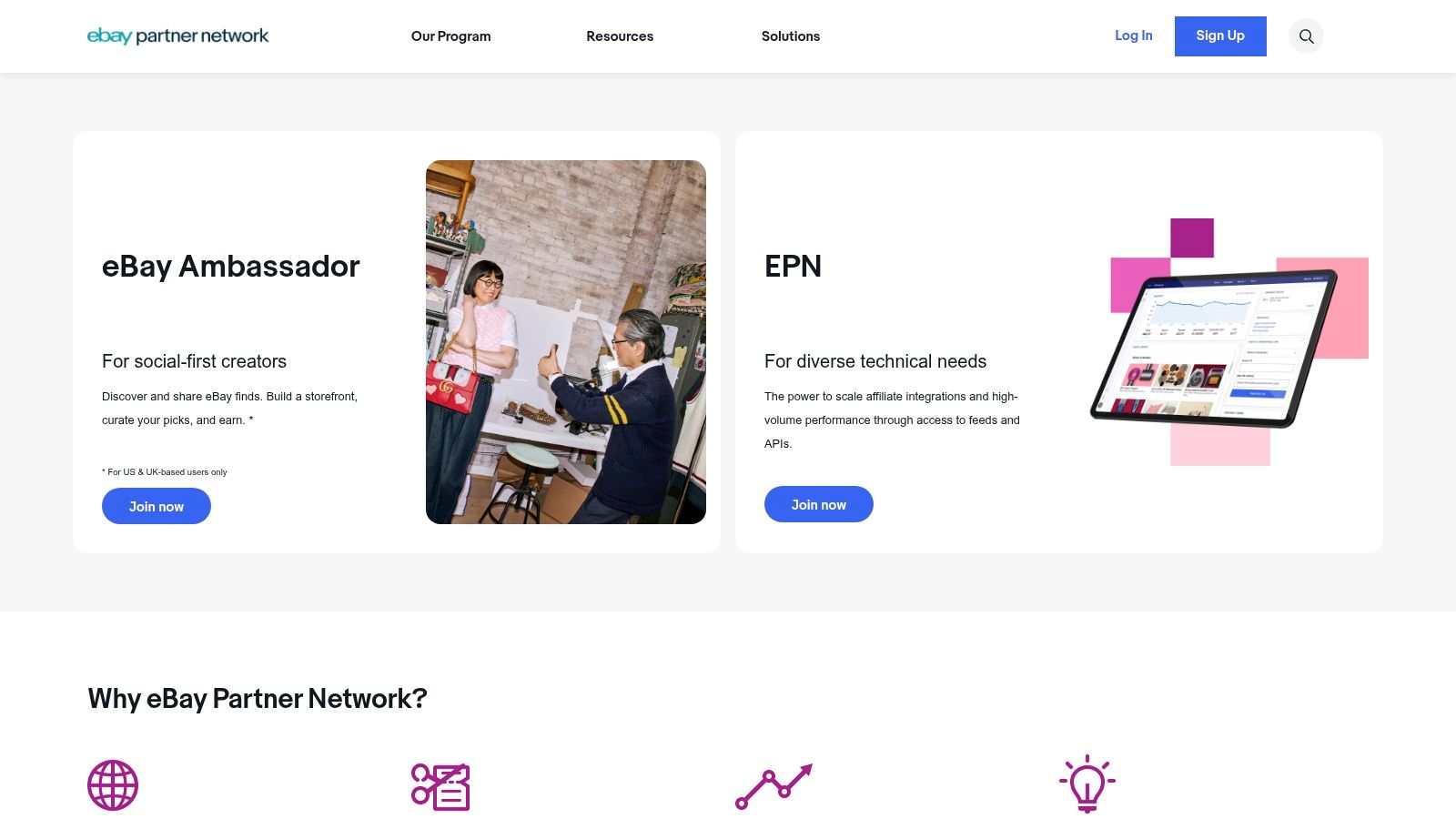
eBay Partner Network is one of the more overlooked beginner options, especially if your content naturally leans toward bargains, collectibles, refurbished goods, or secondhand finds.
That gives it a unique place on this list.
Best for deal hunters and practical recommenders
If you enjoy helping people save money, find discontinued items, or shop more carefully, eBay can be a very natural fit. Some audiences trust used and refurbished marketplaces more than they trust expensive new-product recommendations.
There is one important limitation. The cookie window is short. In the item notes for this article, eBay Partner Network is described as using a 24-hour cookie with last-click attribution and cross-device tracking. That means your content works best when readers already have buying intent.
This isn't the platform I'd choose for slow-burn educational content where someone may think for weeks before purchasing. It is better for timely recommendations, deal roundups, rare item finds, and content where the reader is close to buying now.
If your audience wants convenience, Amazon may win. If your audience wants value, rarity, or resale, eBay can make more sense.
- Great for budget-conscious audiences: Useful for used, collectible, and hard-to-find products.
- Simple for direct product linking: Especially if you're sharing actual listings.
- Less forgiving for slower buying decisions: Shorter decision windows matter here.
You can check it out at eBay Partner Network.
10. Sovrn Commerce
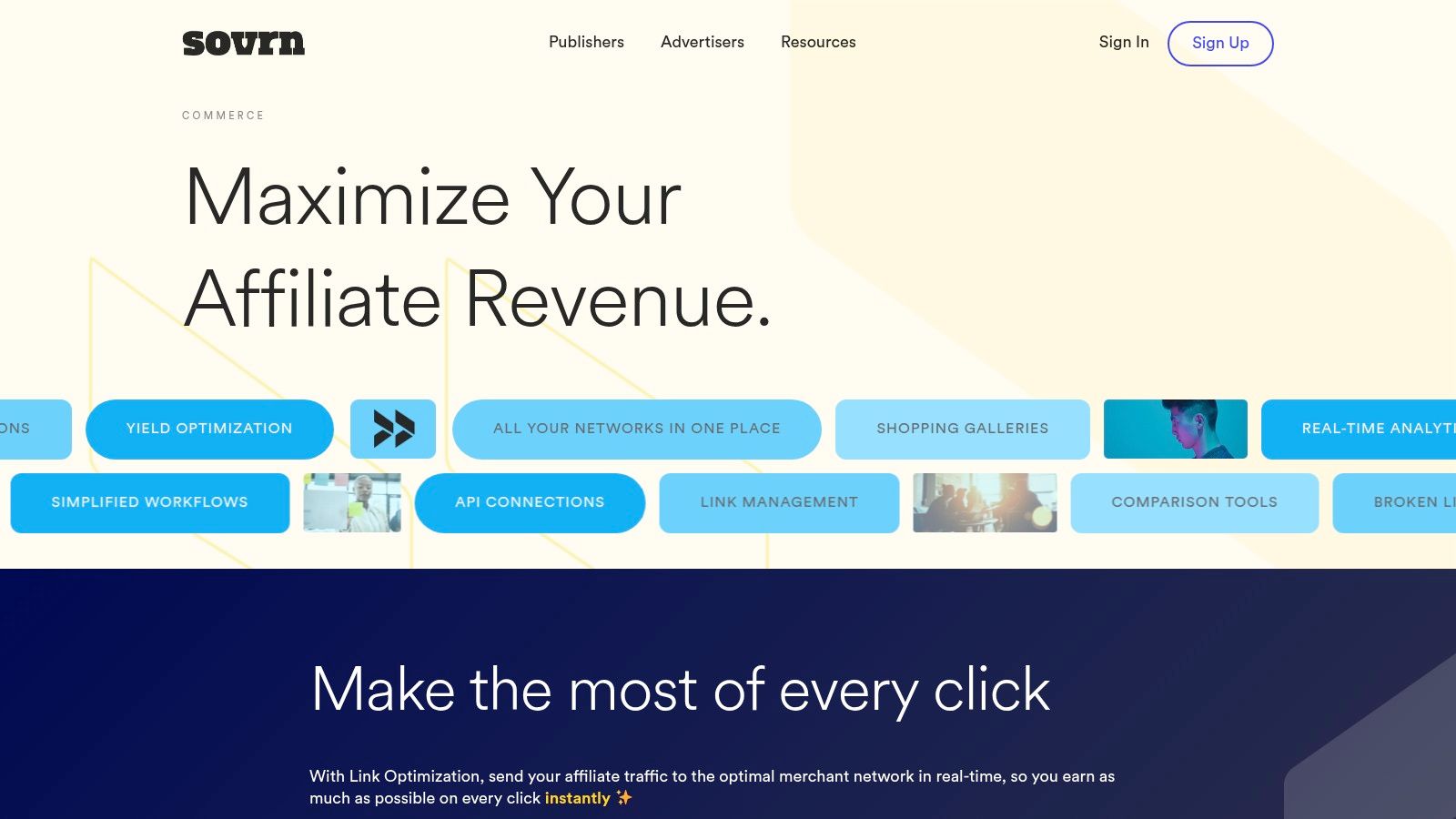
Sovrn Commerce is helpful for a very specific kind of beginner. Not the one starting from scratch, but the one who already has content with product mentions and hasn't monetized it yet.
In that situation, automation can feel like a relief.
A simpler path for content-first beginners
Instead of joining many separate affiliate programs, Sovrn Commerce can help affiliate outgoing product links and optimize merchant routing. For someone with older blog posts, gift guides, or resource pages, that can reduce a lot of administrative work.
This is appealing if you want less dashboard management. It's less appealing if you want full control over every merchant relationship.
I think of Sovrn as a convenience tool. It can simplify the back end, especially for a content-heavy site, but simplicity sometimes comes with tradeoffs in control and custom partnership terms.
- Best for existing content libraries: Helpful when you've already mentioned products across many articles.
- Best for reducing admin: Fewer direct merchant relationships to manage.
- Less ideal for hands-on optimizers: You may want more control as your business grows.
For some beginners, that tradeoff is worth it. Especially if the biggest obstacle isn't strategy, but energy. If you're balancing family, work, Health, or caregiving, removing friction matters.
You can explore it at Sovrn Commerce.
Top 10 Affiliate Platforms for Beginners, Comparison
| Platform | ✨ Key features | 👥 Best for | ★ Ease & trust | 💰 Pricing / value notes | 🏆 Standout |
|---|---|---|---|---|---|
| Amazon Associates | Millions of products, browser extension, dashboard deep links | New bloggers & creators (roundups, newsletters) | ★★★★☆, easy onboarding, high consumer trust | 💰 Modest %; no signup fee; 3-sales/180 days rule | 🏆 Brand familiarity & conversion |
| Awin | Thousands of merchants, real-time tracking, robust reporting | Publishers testing niches & scaling merchants | ★★★★☆, powerful tools, steeper learning curve | 💰 $5 refundable verification; wide merchant choice | 🏆 Merchant variety for testing |
| CJ (Commission Junction) | Deep Link Generator, multi-channel tracking, brand discovery | Editorial sites & newsletters prioritizing trust | ★★★★☆, reliable reporting; some manual approvals | 💰 Variable rates per advertiser | 🏆 High-quality advertiser base |
| impact.com | Partner marketplace, creator features, flexible contracts | Creators blending affiliate + influencer workflows | ★★★★☆, modern platform; competitive approvals | 💰 Free for creators; brand tiers paid | 🏆 Unified partnership management |
| Rakuten Advertising | Brand discovery, onboarding, managed-service support | Newer publishers seeking established brands | ★★★★☆, established network; curated programs | 💰 Free to join; selective advertiser requirements | 🏆 Managed-service support & brand access |
| ClickBank | Digital marketplace, quick links, weekly payouts | Info-product affiliates (courses, webinars) | ★★★☆☆, fast start; vendor quality varies | 💰 High commissions; vet for refunds/quality | 🏆 High-commission digital offers |
| PartnerStack | SaaS marketplace, recurring commissions, centralized payouts | SaaS/tool recommenders & newsletter creators | ★★★★☆, predictable recurring revenue; approval needed | 💰 Recurring payouts; account approval required | 🏆 Recurring-commission focus |
| FlexOffers | 12,000+ advertisers, centralized link management | Publishers wanting broad merchant coverage | ★★★☆☆, solid tools; NET 60 payouts feel slow | 💰 NET 60 terms; payout thresholds apply | 🏆 Breadth of advertiser catalog |
| eBay Partner Network (EPN) | Smart Links, auctions/used goods, 24h cookie | Deal-focused content, decluttering & collectibles | ★★★☆☆, official tools; short cookie window | 💰 Free to join; short cookie limits conversions | 🏆 Strong for rare/used item monetization |
| Sovrn Commerce (VigLink) | Automatic link affiliation, real-time optimization | Content-first blogs with many product mentions | ★★★☆☆, fastest path to monetization; less control | 💰 Hands-off setup; less negotiation power | 🏆 Auto-affiliate monetization |
| PartnerStack | SaaS marketplace, recurring commissions, centralized payouts | SaaS/tool recommenders & newsletter creators | ★★★★☆, predictable recurring revenue; approval needed | 💰 Recurring payouts; account approval required | 🏆 Recurring-commission focus |
Your Next Gentle Step Choosing with Confidence
Seeing a list like this can feel encouraging and overwhelming at the same time. That's normal. When you're already worried about money, Retirement, or learning new technology, too many options can make you freeze.
So make this easier on yourself.
You do not need to join all ten platforms. You probably shouldn't. The wiser move is to pick one platform that feels manageable and relevant to the kinds of products or services you could honestly recommend.
If you want the simplest first step, Amazon Associates is often the easiest place to begin because it feels familiar and low-pressure. If you want access to many brands in one place, a network like Awin, CJ, Rakuten, or FlexOffers may suit you better. If you already talk about software and tools, PartnerStack could feel more aligned. If you have older content with product mentions, Sovrn Commerce may reduce the technical burden.
The best Affiliate Marketing platforms for beginners aren't just the ones with appealing commission structures. They're the ones you can use without shutting down from overwhelm.
That's especially important if you're over 50 and trying to make money online after 50 in a way that feels steady, not frantic. Many reviews focus only on payout mechanics. They don't talk enough about confidence, clarity, or how much mental energy a platform requires. Those things matter. A lot.
I remember the first time I logged into a training dashboard and felt instantly behind. Too many tabs. Too many terms. Too many people acting like everything should be obvious. It wasn't obvious, and I nearly quit.
You may feel that way too sometimes. Please don't mistake unfamiliarity for inability.
Tech can be learned. Slowly counts. Repetition counts. Starting small counts.
Your next step is simple. Choose one platform from this list and click through to its website. Look around. Read the publisher page. Notice whether it feels clear or confusing. You don't even have to sign up yet. Familiarity is progress.
And if you're asking bigger questions like "Is Affiliate Marketing legit?" or "Can I really build an online business as an older woman?" my honest answer is yes, when you approach it with patience, education, and integrity. This isn't about hype. It's about building assets that can support peace of mind over time.
If you'd like to see the step-by-step training and community I used to learn this with confidence, you can check out the Victoria OHare resources here. The focus is on long-term assets, owned audience growth, and ethical online income, not quick wins.
You are not behind. It is not too late. And you do not need to become a different person to learn this. You only need to keep taking the next small step.
The next five years will pass either way. The only question is whether you'll use them to build something that gives you security, purpose, and more control over your next chapter.
If you'd like calm, beginner-friendly help from Victoria OHare, you'll find practical guidance there on Affiliate Marketing, content creation, List Building, and building online income without tech overwhelm.