
I remember the first time I tried to understand Affiliate Marketing. I had too many tabs open, too many acronyms in my face, and one quiet thought in the back of my mind: maybe I'm too late for this.
If you're over 50 and wondering whether you've missed your chance to build income online, you're not alone. Many women feel behind financially, not because they did anything wrong, but because life took the front seat for a long time. Careers, caregiving, marriage, divorce, Health changes, helping adult children, aging parents. It all adds up.
Then one day you look at Retirement and realize it may not feel as secure as you hoped. That can be frightening. It can also make every new idea feel risky, especially when the words “online business” sound technical and impersonal.
Here's the reassuring truth. You do not need to become a tech wizard to begin. You do not need to be young, trendy, or glued to social media all day. Affiliate Marketing means recommending a product or service through a special link and earning a commission if someone buys through that link.
That's why so many beginners start here. You're not creating a product from scratch. You're learning how to share useful recommendations in a helpful, ethical way.
If you want a broader picture of how the pieces fit together, NameSnag's roadmap for affiliate marketers is a helpful companion. For now, let's keep this simple and practical. Below are 10 Affiliate Marketing programs for beginners, explained in plain English, with a special eye toward women over 50 who want security, simplicity, and a calmer path forward.
1. Victoria OHare
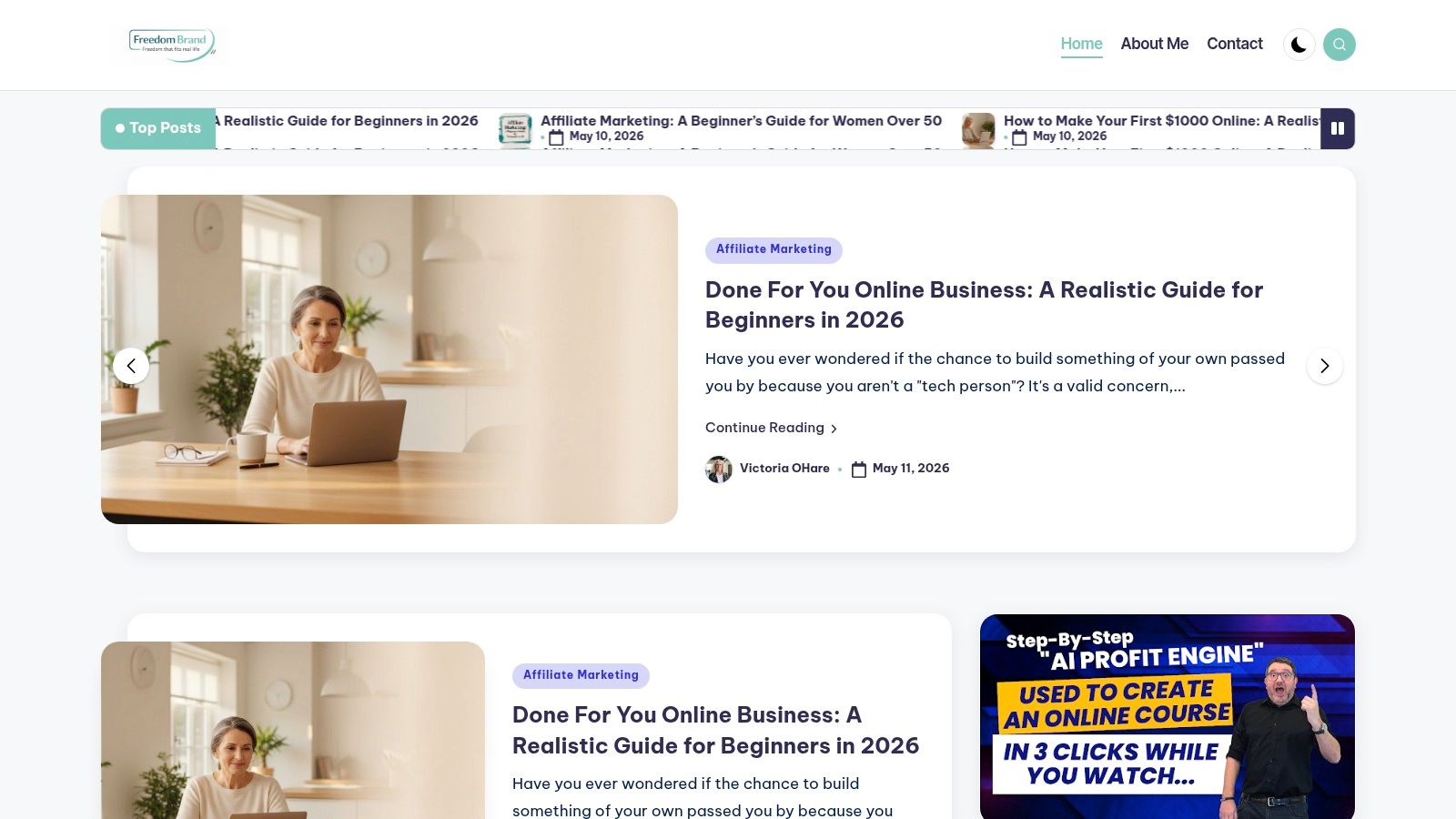
A lot of beginners do not need another list of programs first. They need a calm teacher.
That is why Victoria OHare belongs at the top of this guide for women over 50 who feel late to technology, worried about Retirement, or unsure whom to trust online. Victoria OHare is not a traditional affiliate network. It is an education hub that explains how online income works in plain English, with a strong focus on email, audience-building, and choosing a business model you can sustainably maintain.
That difference matters more than it may seem. Joining affiliate programs without understanding the system is a little like buying knitting needles before learning how stitches work. You can own the tools and still feel stuck. A teaching-first resource helps you learn the pattern before you try to make something with it.
Why it stands out for women over 50
The site focuses on practical topics such as Affiliate Marketing, List Building, niches, webinars, and passive income. The tone is steady. If you are tired of hype, urgency, and flashy promises, that alone can feel like a relief.
It also respects the value of life experience.
If you have spent years solving family problems, keeping track of details, helping friends make decisions, or explaining things clearly, you already have useful skills for Affiliate Marketing. The missing piece is usually the online format, not your ability. You are learning a new way to share what you know.
One of the smartest themes here is the email-first approach. Social media can feel loud and fast, especially if you do not want to film videos every day or chase trends that change by the week. Email is slower, more personal, and more stable. You are building a list of people who asked to hear from you. That gives you a stronger foundation than relying only on an algorithm.
If you want a simple explanation of how that business model works, this beginner guide to Affiliate Marketing helps connect the dots.
Best for learning before you apply anywhere
Beginners often assume the first step is signing up for as many programs as possible. Usually, it is not. A better first step is learning what you want to recommend, who you want to help, and how you will stay in touch with readers after they visit your website once.
That is where Victoria OHare is useful. The content helps you slow down, sort through the noise, and make decisions with more confidence. If scams are one of your fears, that caution is reasonable. A careful pace can save you time, money, and discouragement.
A few strengths stand out:
- Plain-language teaching: Concepts are explained for beginners, without jargon piled on top of jargon.
- Clear early steps: You can learn how niches, content, email lists, and affiliate offers fit together.
- Strong audience fit: The content speaks to midlife women, retirees, mothers, and solo creators who want flexible income without constant online performance.
- Long-term thinking: The advice points toward trust, consistency, and owned audiences instead of quick-win tactics.
There are limits. It is mostly self-guided, so it will not feel like private coaching or a done-for-you setup service. But for the woman who wants to understand the basics before spending money or choosing platforms, that can be a strength. It gives you room to learn at your own pace.
One practical next step is to pair that learning with keyword research, especially if you plan to recommend physical products later through Amazon. Tools that uncover profitable long-tail Amazon queries can help you spot the exact questions buyers are already typing into search.
For many beginners, Victoria OHare works well as the starting table where the pieces finally make sense. You are not behind. You are building carefully, and careful is often what lasts.
2. Amazon Associates
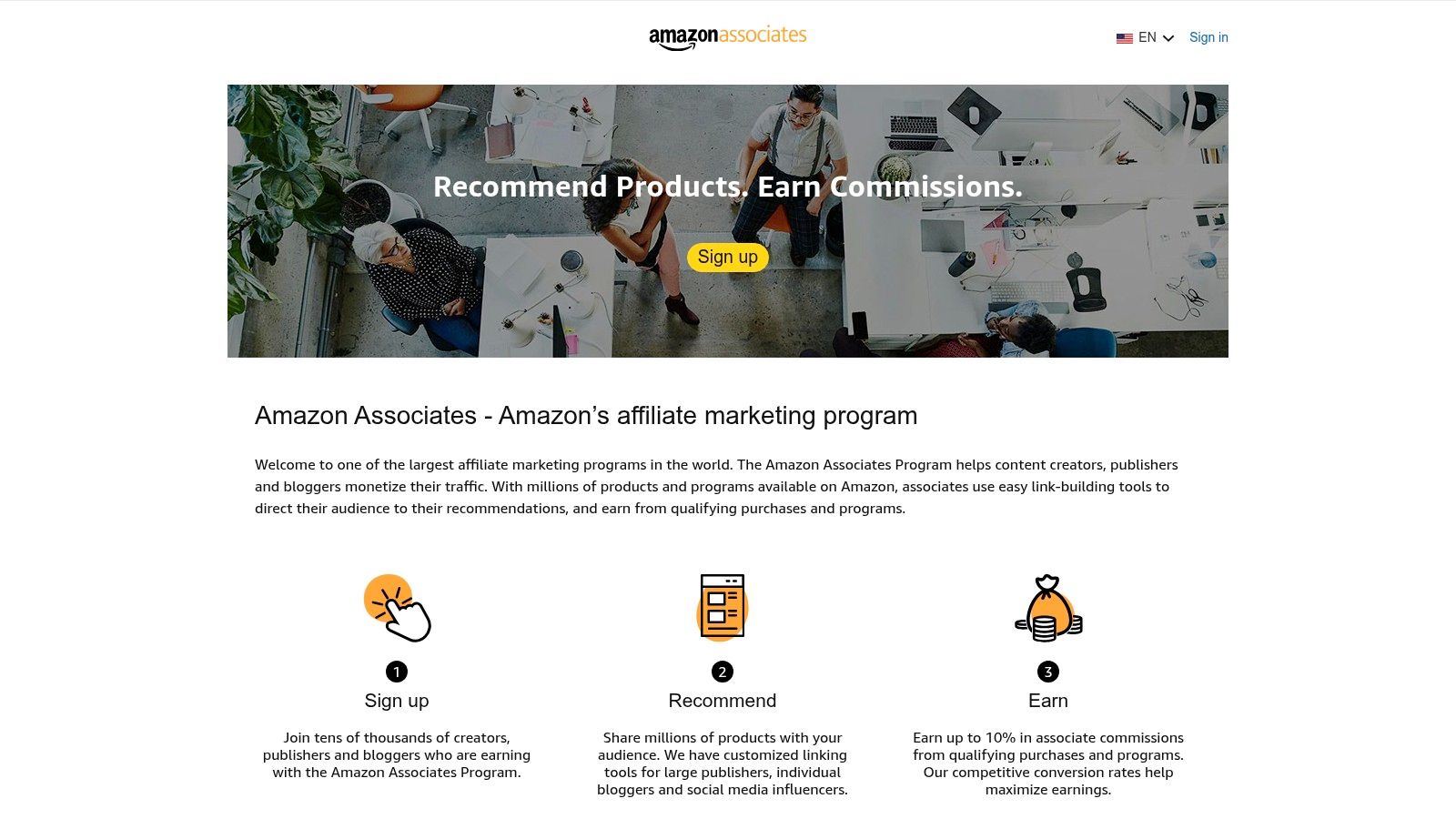
If you want the easiest starting point, Amazon Associates is hard to ignore. It launched in 1996 and offers more than 12 million products across nearly every niche, according to Work From Your Laptop's beginner program roundup.
That matters because beginners often don't know their perfect niche yet. With Amazon, you don't have to.
Why beginners start here
Amazon is described in that same roundup as having zero entry barriers and instant approval for a 180-day trial period, with three sales needed to maintain membership. That's a very manageable first goal when you're learning how links, content, and commissions work together.
There's another reason it's popular. The same source says Amazon Associates is used by 58.5% of affiliate marketers, largely because people already know and trust Amazon. For a beginner, trust removes friction. If a reader already shops there, clicking your recommendation feels natural.
If you're still learning the basics, this beginner overview of Affiliate Marketing can help you understand how a program like Amazon fits into the bigger picture.
What makes Amazon useful in real life
One beginner-friendly feature is the broad shopping behavior it captures. The same verified source notes that Amazon's “generalist” cookie can credit commissions on the promoted item and other items added to the cart within 24 hours. That's helpful if you recommend something small and the customer ends up buying several things.
A few reasons Amazon works well for beginners:
- Huge catalog: You can recommend books, kitchen tools, wellness items, office products, and home basics from one place.
- Simple link creation: SiteStripe makes it easy to create links while browsing product pages.
- Built-in trust: Many buyers already have accounts and payment details saved.
- Low pressure start: It's a practical place to learn link placement and product selection.
You do not need to build a giant brand before using Amazon. You need a useful recommendation and a clear reason someone would trust it.
The downside is that commissions are often lower than niche or digital offers. Still, for women over 50 who want a gentle entry point, Amazon is often the least intimidating way to make that first sale and prove to yourself this is real.
If you create content around homemaking, caregiving, books, organization, gifts, or lifestyle, Amazon can be a very solid first step. And if you later branch into higher-paying programs, the skills still transfer.
For product research, this Amazon keyword tool from ShuttleSEO can help you spot long-tail phrases people search.
3. ShareASale
ShareASale has been a comfortable middle ground for beginners for years. It gives you access to many brands in one network, which means you don't have to hunt all over the internet for separate affiliate dashboards.
If Amazon feels broad, ShareASale often feels more curated. It's a good fit for bloggers, newsletter writers, and niche content creators who want more variety.
A practical next step after Amazon
One reason beginners like ShareASale is flexibility. You can browse merchants in categories like home, fashion, lifestyle, business tools, and direct-to-consumer brands, then apply to the ones that make sense for your audience.
That does mean one extra step. You usually need approval from individual merchants, not just the network itself. That can feel discouraging at first, but it's normal. Rejection doesn't mean you aren't capable. It usually means the merchant is looking for a close fit.
If you want help sorting through which offers match your audience, Victoria OHare's Affiliate Marketing reviews can help you think more critically about quality and fit.
Why it works well for list builders
ShareASale suits beginners who are starting to move from “I can share links” to “I can build a simple strategy.” Instead of recommending random products, you can choose brands that support your niche more intentionally.
That's especially helpful if you're using an email-first approach.
- Broad merchant variety: Good for lifestyle, home, beauty, wellness, and creator-focused content.
- Straightforward tools: Deep links and simple reporting make the system easier to learn.
- Cleaner niche building: You can pick merchants that reflect your values and audience needs.
- Good bridge platform: It helps you move from beginner experiments into more focused recommendations.
Practical rule: Choose one or two merchants you genuinely understand before applying to a dozen. Beginners often create confusion by joining too many programs too early.
The main drawback is patience. Some merchant approvals take time, and some brands want to see content already published. That's not a reason to quit. It's a reason to start building useful content now, even if it's just a simple blog or newsletter with a clear focus.
For women over 50, ShareASale is often a strong second-step platform. It gives you room to grow without forcing you into advanced tactics before you're ready.
4. CJ
CJ, formerly Commission Junction, is one of those platforms many affiliates graduate into as they get more intentional. It's a large network with well-known brands, stronger analytics, and useful deep-linking tools.
That said, I wouldn't call it the softest place to begin. I'd call it a solid place to grow into.
Best for beginners who already have a direction
CJ makes more sense once you know your niche, your audience, and the kinds of products or services you want to recommend. If you've already started thinking carefully about subject matter, Victoria OHare's guide to Affiliate Marketing niches is a good way to sharpen that focus.
CJ's structure is advertiser-by-advertiser. You join the platform, then apply to individual brands. That can sound tedious, but there's an upside. It pushes you to think strategically instead of casually grabbing links for everything.
Where CJ can shine
If your content serves buyers with a clear need, CJ can be powerful. Maybe your audience wants financial tools, home services, travel products, or retail brands they already recognize. CJ gives you access to many of those options in one place.
A few things beginners often appreciate once they settle in:
- Deeper reporting: You can learn which links and partnerships perform.
- Brand variety: Many established companies use CJ.
- Flexible linking tools: Deep Link Generator helps you create direct product or page links.
- More professional feel: It supports affiliates who want to build this seriously over time.
The challenge is selectivity. Some advertisers reject smaller sites or brand-new creators. That can sting, especially if you're already doubting yourself.
I understand that feeling. When people get rejected, they often turn the rejection into a story about age or ability. Please don't do that to yourself. A rejection from one advertiser is not a verdict on your future.
Some programs are beginner-friendly. Some are growth-stage programs. Knowing the difference helps you stay encouraged.
CJ is best viewed as a platform you keep in your toolkit as your confidence grows. You don't have to master it on day one. You only need to know it's there when you're ready for more established brand partnerships.
5. Awin
Awin is a global affiliate network with a wide advertiser marketplace and strong retail coverage. If you want access to many merchants in one account, Awin can give you that breadth while still feeling more organized than trying to manage separate programs one by one.
It's especially useful if your audience spans everyday consumer interests like home, shopping, lifestyle, or practical online services.
A good fit for broad consumer content
Awin can work well for women building content around real life. Things like family budgeting, home routines, Retirement lifestyle, simple fashion, wellness, and useful tools for daily living often fit naturally with the kinds of brands found in large retail-focused networks.
One thing beginners should know up front is that Awin uses a small refundable sign-up deposit for publishers. That's not unusual in this space, but it can surprise people if they weren't expecting it.
That alone doesn't make it a bad option. It just means you want to read the setup details carefully and go in with clear expectations.
What makes it practical
Awin complements programs like ShareASale because it widens your merchant options. If one network doesn't have a merchant you want, another might. That matters once you begin building a more intentional mix of offers for your audience.
Here's where Awin tends to be useful:
- Large advertiser marketplace: Helpful if you want options without opening many separate accounts.
- International reach: Useful if your audience isn't limited to one country.
- Retail and consumer brand depth: Strong fit for lifestyle and shopping-oriented content.
- Cross-device tracking support: Helpful when people click on one device and buy on another.
The tradeoff is similar to other networks. Individual merchants still set their own terms and approvals. Some will welcome beginners. Others will want to see a more developed platform.
If you're over 50 and feel uneasy about the setup side, take it slowly. Open the account, browse the merchants, and study how brands describe their programs. You don't have to promote anything right away. Sometimes confidence grows by becoming familiar with the environment.
Awin is less about flashy promises and more about building access to a wide range of offers you can grow into over time.
6. Rakuten Advertising
Rakuten Advertising often gets overlooked by brand-new affiliates, but it's worth considering if you want a long-established network with mainstream retailers and clear onboarding resources.
What I like here is that the platform openly supports different kinds of publishers, including websites, social channels, and newsletters. That matters if you're using an email-first strategy and not leaning only on a blog.
Strong for trust-focused beginners
If your biggest worry is legitimacy, Rakuten's long-standing reputation can be reassuring. This is not the kind of setup that feels thrown together overnight. It has the structure and documentation many cautious beginners appreciate.
That can make your first steps feel less chaotic.
- Free publisher registration: A simple way to explore the platform without a large upfront commitment.
- Support for newsletters and social channels: Helpful if your content home is still evolving.
- Quick-start materials: Good for people who need help understanding setup and tracking.
- Mainstream merchant roster: Useful when your audience prefers recognizable brands.
Why it can suit an email-first approach
Many beginners assume they must become full-time content machines to succeed. That isn't always true. If you're building a newsletter around a focused topic, Rakuten can be relevant because email publishers can still participate.
That matters more than many people realize. Not everyone wants to dance on video or post every day. Some people would rather write thoughtful emails, share practical recommendations, and build trust in a low-key way.
Email gives you a calmer rhythm. You can serve people directly without relying on an algorithm to decide whether your work gets seen.
The main caution is the usual one with networks. Merchant terms vary. Some advertisers are very open. Some are selective. Commissions, cookie durations, and acceptance standards depend on the brand.
Still, for a woman over 50 who values stability and straightforward systems, Rakuten can feel like a more grounded option than some of the louder names in the affiliate space.
7. impact.com
impact.com feels more modern than some older networks. It brings together brand discovery, applications, tracking, contracts, and payments in one platform. For a beginner, that can reduce some of the clutter that makes Affiliate Marketing feel more complicated than it really is.
It's often a good option for creators who want access to direct-to-consumer brands, retail names, and software companies in one place.
A cleaner platform for growing up your process
If you've reached the point where you want better organization, impact.com starts to make a lot of sense. You can browse brand campaigns, apply, track your partnerships, and manage payments without piecing together several systems.
That helps if your brain already feels full. Fewer moving parts can mean less overwhelm.
A few strengths stand out:
- Centralized management: Contracts, links, and payouts live in one environment.
- Strong brand marketplace: Helpful for discovering premium programs you may not find elsewhere.
- Education resources: The platform offers training through its own academy.
- Room to scale: It's useful not only for beginners, but also as your affiliate work matures.
Where beginners should be realistic
Impact.com isn't necessarily the softest first step if you have no content and no audience yet. Some brands on the platform may expect established traffic or a more developed creator presence.
That doesn't mean you should avoid it. It just means your expectations should match your stage.
If you're still new, use impact.com as a learning and growth platform. Browse offers. Watch how brands present partnership opportunities. Study what kinds of publishers they're looking for.
You don't have to be fully ready before opening the door.
I think this is an important mindset shift for women who feel behind. Readiness usually doesn't come first. Familiarity does. The more often you log in, read terms, compare programs, and observe how real platforms work, the less scary the whole world becomes.
Impact.com can be a smart platform for that next phase, when you're moving from “I'm trying this” into “I'm building this.”
8. ClickBank
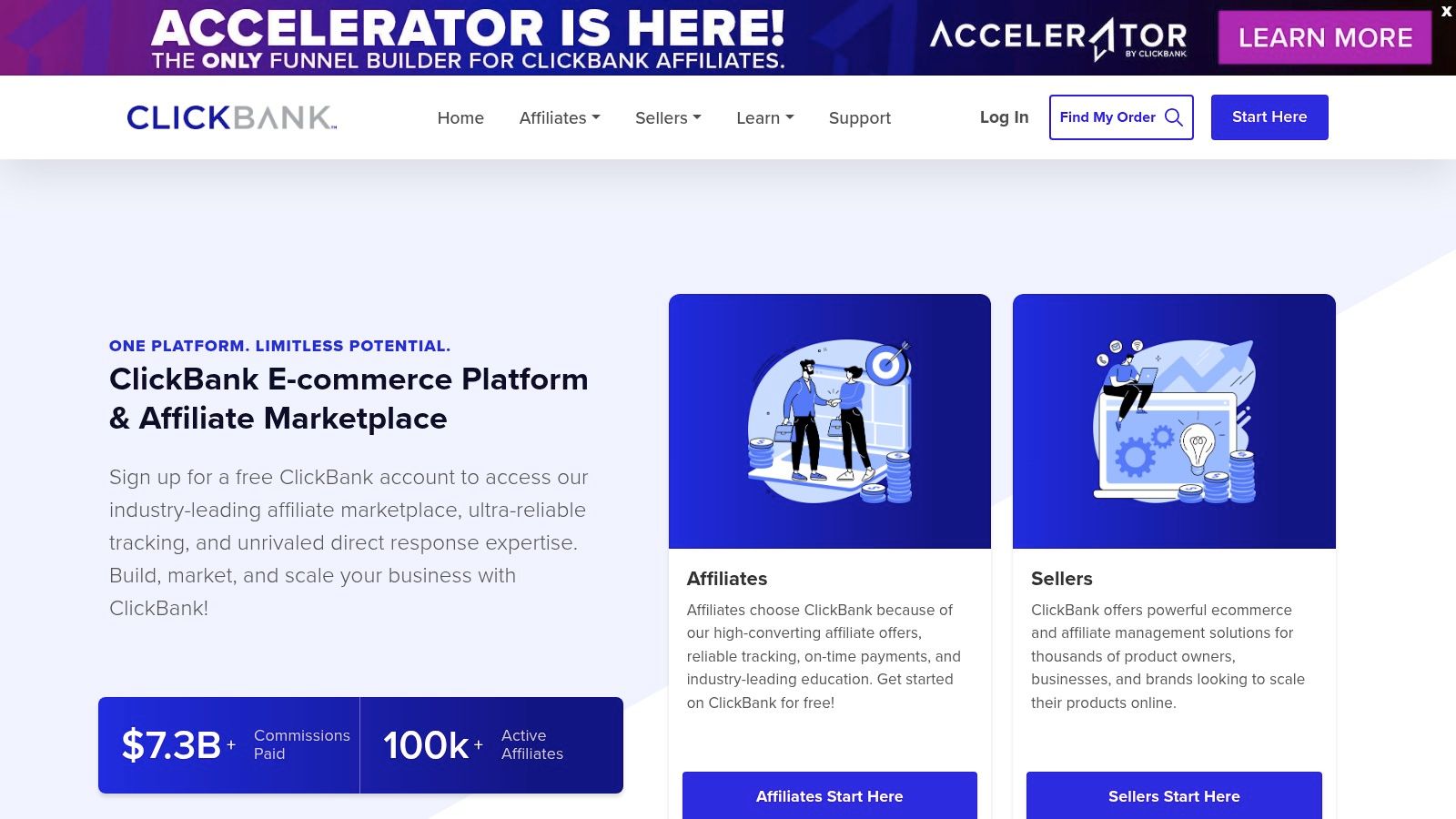
ClickBank is very different from Amazon. Instead of mostly physical products, it's known for digital offers such as courses, software, and information products. That alone can make it attractive because digital programs often pay higher commissions than retail products.
The verified data for this article notes that beginner affiliates rate networks like ClickBank and ShareASale as highly effective for digital products, and that those offers often come with 50% to 75% commissions and longer cookies through Post Affiliate Pro's beginner FAQ.
Best for education, wellness, and niche digital offers
If you enjoy writing emails, creating simple content, or teaching around a topic, ClickBank can be worth exploring. It fits especially well when your audience wants transformation, guidance, or a specialized solution.
The same verified source says ClickBank's marketplace sees 1.2 million products promoted by more than 150,000 affiliates annually. It also notes that beginners can use gravity scores, with a benchmark above 50 for stronger converters, to gauge which offers may already be performing.
That gives beginners a practical way to sort through a large marketplace.
Important caution with ClickBank
Not every offer is created equal. This is one of those places where your judgment matters. Some landing pages are polished and useful. Some feel pushy or outdated. If you wouldn't feel comfortable sending a close friend there, don't promote it.
Here's how I'd approach ClickBank carefully:
- Check the sales page: Read it slowly and ask whether it feels honest.
- Review refund language: A generous policy can indicate a more customer-friendly offer.
- Match the offer to real needs: Don't choose something only because the commission looks tempting.
- Use email thoughtfully: ClickBank can work well in newsletters and simple funnels when the recommendation is relevant.
The same source also mentions Wealthy Affiliate, FanFuel, and Jotform as examples of programs with recurring or tiered structures and supportive tracking features. Those details point to a bigger lesson. Digital and niche offers can be powerful when they align with a focused audience and a trust-based approach.
ClickBank is not a place to be careless. It is a place to become discerning. And that's a skill worth developing.
9. PartnerStack
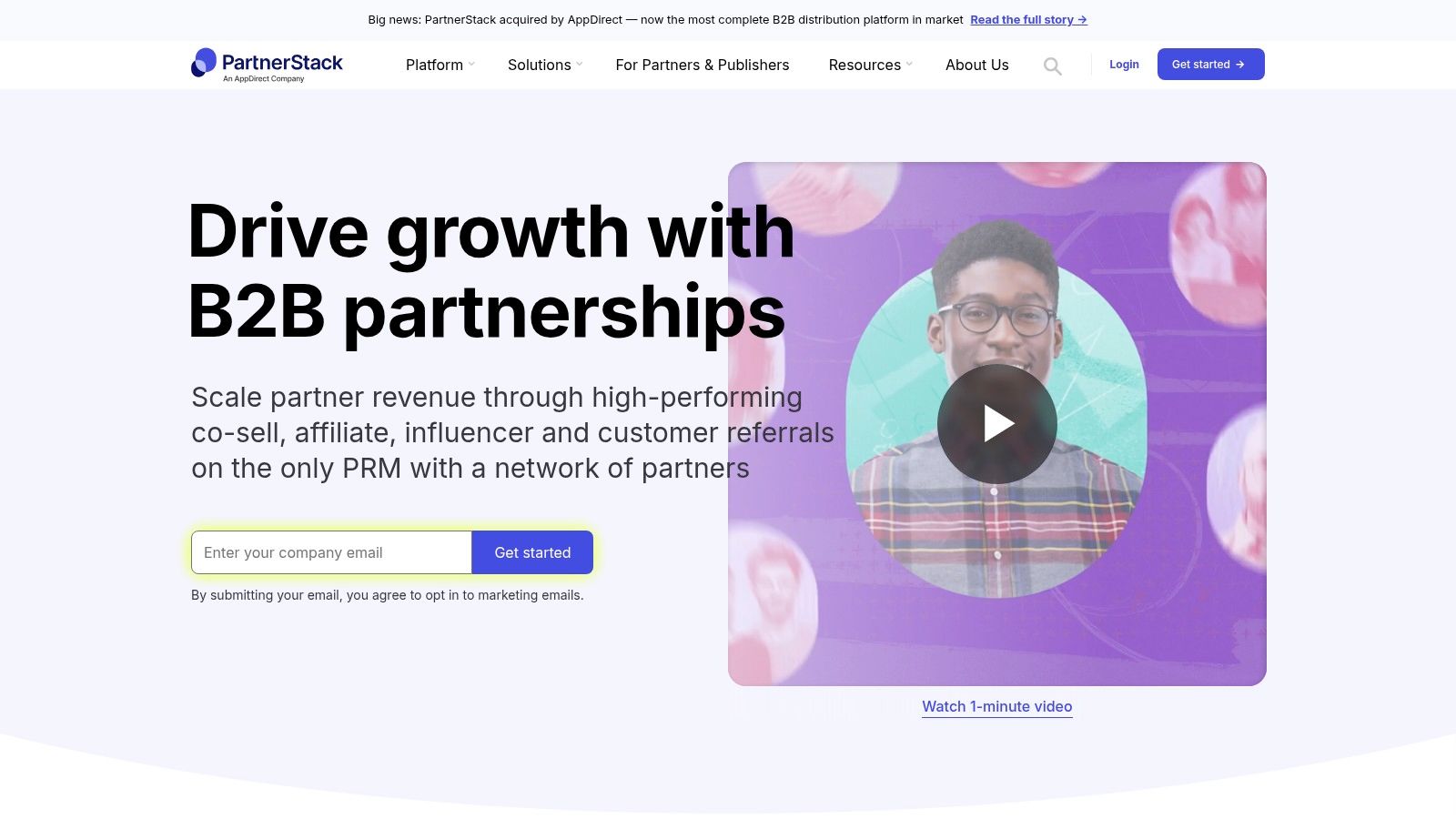
PartnerStack fits a different kind of beginner. If you enjoy recommending useful tools instead of physical products, this platform is worth a close look.
Many offers on PartnerStack are software subscriptions. SaaS means software people pay for monthly or yearly, much like a magazine subscription used to arrive at your mailbox on a schedule. The difference is that the tool lives online.
That subscription model matters because some programs pay you more than once. If a reader signs up through your link and keeps using the tool, you may keep earning for a set period. For a woman over 50 who wants steadier, simpler income building blocks, that can feel more practical than chasing one-time purchases all day.
PartnerStack works especially well for an email-first strategy. You do not need flashy social media or a complicated funnel. You can write a helpful newsletter that says, "Here is the calendar tool that keeps me organized," or, "Here is the email service that made my weekly newsletter less confusing." That kind of recommendation feels natural because it comes from lived experience, not hype.
Why it can be a good fit for beginners
This platform makes sense if your strength is clear explanation.
You may already have this skill and not give yourself credit for it. If you have ever helped a friend choose a doctor, compare insurance options, organize family paperwork, or pick the easiest app for a grandchild's photos, you already know how to sort through choices and explain them in plain English. Affiliate Marketing needs more of that.
PartnerStack is often a better match for problem-solving content than trend-driven content, such as:
- Email and newsletter tools
- Scheduling and organization software
- Website and course platforms
- Design, accounting, or workflow apps
- Creator and small business tools
One thing that surprises beginners
Software commissions are not always instant.
A company may wait until a free trial ends, a billing period passes, or the customer stays active long enough to count as a real paid account. If you are new, that delay can make you wonder whether you did something wrong. Usually, you did not. It is just how many software programs protect themselves from paying on cancellations and short-term trial users.
That is why PartnerStack rewards patience and record-keeping. Keep a simple spreadsheet, watch each program's rules, and choose products you would feel comfortable recommending in a personal email.
If your readers trust you to save them time, reduce confusion, and point them toward dependable tools, PartnerStack can be a strong lane. You do not need to be highly technical. You need curiosity, honesty, and the willingness to learn one tool at a time.
10. Skimlinks
Skimlinks is a very different kind of affiliate tool. Instead of applying to lots of individual programs and manually building links one by one, Skimlinks can automatically turn normal merchant links into affiliate links through its technology.
For beginners who publish content regularly and mention many products, that can save time.
Best for writers who want simpler monetization
If you run a blog, content site, or resource-heavy newsletter, Skimlinks can help you monetize existing content without managing dozens of separate dashboards. It acts as a layer between your content and many merchant programs.
That simplicity can be a relief if the admin side of Affiliate Marketing is what makes you want to quit.
A few reasons it appeals to beginners:
- Automation: It can convert standard product links into monetized ones.
- Large merchant access: The platform connects with thousands of programs.
- Good for content libraries: Especially useful if you already have many posts with product mentions.
- Less manual link management: Helpful if you don't want to babysit every partnership.
The tradeoff
The convenience comes at a cost. In some cases, direct merchant relationships may pay better or provide more detailed reporting than an intermediary platform.
That doesn't make Skimlinks a poor choice. It just makes it a tradeoff.
If your priority is control and maximum detail, direct programs may suit you better. If your priority is simplicity and getting started without a lot of management overhead, Skimlinks can be a very practical option.
For women over 50 who are building slowly and want less technical friction, that matters. A system you'll use is better than a theoretically perfect setup that overwhelms you into inaction.
And that's something I wish more beginners heard. The best Affiliate Marketing programs for beginners are not just the ones with the biggest claims. They're the ones you can understand, trust, and use consistently.
Top 10 Affiliate Programs for Beginners, Quick Comparison
| Product | Core features ✨ | Quality/UX ★ | Value/Price 💰 | Target audience 👥 | USP |
|---|---|---|---|---|---|
| Victoria OHare 🏆 | Step-by-step guides, list-building frameworks, affiliate reviews, low-tech automation | Practical, calm tone; engaged readership ★★★★☆ | Mostly free resources; high value for beginners 💰 | Midlife women 50+, new creators, retirees, side-hustlers 👥 | Audience-first, ethical long-term strategies; beginner-friendly frameworks 🏆 |
| Amazon Associates | Huge product catalog, SiteStripe links, automated approval | Strong conversion via Amazon UX ★★★★ | Free to join; lower commission rates on many categories 💰 | Lifestyle, home, book and general shopping content creators 👥 | Brand recognition + easy start for beginners ✨ |
| ShareASale (Awin) | Thousands of merchants, deep-link tools, creatives | Beginner-friendly tools and onboarding ★★★★ | Free sign-up; moderate payout thresholds 💰 | Lifestyle & niche publishers, non-technical creators 👥 | Simple onboarding and broad lifestyle catalog ✨ |
| CJ (Commission Junction) | Large global brand marketplace; deep-link & analytics | Robust reporting and discovery ★★★★ | Free; advertiser approvals can limit access 💰 | Growing publishers with meaningful traffic 👥 | Enterprise advertisers + advanced linking/analytics ✨ |
| Awin | Global advertiser marketplace; refundable sign-up deposit | Wide international reach ★★★★ | Small refundable deposit; broad merchant options 💰 | International retailers, broad consumer content 👥 | Large global catalog; complements other networks ✨ |
| Rakuten Advertising | Retailer roster, publisher onboarding, tracking docs | Trusted, long-established network ★★★★ | Free registration for web/news/social publishers 💰 | Website owners, newsletters, social publishers 👥 | Strong retailer relationships & clear onboarding ✨ |
| impact.com | Unified contracting, tracking, payouts; 1,000+ campaigns | Enterprise-grade partnership tools ★★★★ | Free to join; selective brand requirements 💰 | Creators aiming for DTC, retail & SaaS partnerships 👥 | Consolidates contracting, tracking & payments ✨ |
| ClickBank | Digital products marketplace; transparent offer pages | High commission potential; variable quality ★★★ | High headline commissions; vet offers carefully 💰 | Email builders, funnel creators, info-product promoters 👥 | Great for digital/info products & webinar funnels ✨ |
| PartnerStack | Centralized SaaS partner programs; recurring payouts | Strong for SaaS affiliates ★★★★ | Low payout minimums; recurring commission potential 💰 | B2B software audiences, starter SaaS affiliates 👥 | Recurring revenue focus + one-wallet payouts ✨ |
| Skimlinks (Taboola) | Auto-monetization via JS snippet; 24k+ merchants | Set-and-forget monetization; reporting less granular ★★★ | Fast path to earnings; sometimes lower take rates 💰 | High-volume content publishers linking many retailers 👥 | Automates affiliate linking across thousands of merchants ✨ |
Your Next Chapter Starts With a Single Step
A woman reads through a long list like this, reaches the end, and suddenly feels tired instead of excited.
She may be interested. She may even feel a small spark of hope. Then another thought slips in. "I should know this already." "Other people started sooner." "I am too old for all this tech." If that sounds like you, you are not failing. You are standing at the normal starting line.
Learning Affiliate Marketing later in life can feel a lot like opening the control panel on a new oven. You do not need to master every button on day one. You only need to learn the few settings that help you cook dinner tonight. The same idea applies here. You do not need ten programs, five social platforms, and a stack of tools. You need one clear first move.
For some beginners, Amazon Associates feels easiest because the store is already familiar. For others, a network like ShareASale, CJ, or Rakuten feels safer because it gives you several merchant options in one place. And for many women over 50, the smartest first move is even simpler than that. Choose a group of people you understand, start an email list, and build from there.
Email deserves extra attention because it gives you a steadier foundation.
Social media can help, but it often asks for speed, constant visibility, and a willingness to keep up with trends that change by the week. That can feel exhausting, especially if your goal is to build something calm and dependable for Retirement income. Email works more like writing a thoughtful letter to someone who asked to hear from you. You can explain a product slowly, tell the truth about who it helps, and build trust one message at a time. Life experience matters here. So does patience.
It also makes sense to be cautious. Many beginners, especially women worried about savings or Retirement, have seen enough online hype to know that flashy promises usually hide messy details. A safer path is slower. You choose reputable programs. You learn one skill at a time. You write to help a real person, not to impress the internet.
That is often where confidence starts to grow.
Age helps more than many women realize. If you have spent decades solving family problems, comparing purchases carefully, listening closely, or explaining things in plain English, you already have skills that transfer well to Affiliate Marketing. Those are trust-building skills. Trust is what turns a recommendation into income.
Keep the first goal small enough to finish. Pick one program. Start one email list. Write one useful email or one helpful article. Help one person make one good decision.
That is a real beginning.
If you want a calm, beginner-focused place to keep learning, Victoria OHare is one option to explore. It is geared toward women over 50 who want a simpler, more secure way to learn Affiliate Marketing without pressure or tech overload.