
If you're nearing Retirement and worrying that it might not be enough, you're not alone. Many women feel behind financially, not because they failed, but because life happened. Careers shifted, caregiving took time, savings didn't always grow the way we hoped, and now the internet can feel like one more world everyone else understands except you.
You're not behind. And you're not too old to learn this.
Relying on one paycheck, one pension, or one Retirement account doesn't always create the peace of mind people imagine. A lot of women want something steadier and more flexible. Not hustle culture. Not a second full-time job. Just a simple way to start building an asset that could support them over time.
Affiliate marketing is one of the gentlest ways to begin. It means recommending a product or service and earning a commission when someone buys through your link. It's like recommending a good book to a friend, but online.
I understand the skepticism. Some things online are absolutely scams, and that caution is healthy. That's why choosing reputable programs matters so much, and why it helps to browse trusted directories like Toolradar's Affiliate Marketing categories when you're learning the field.
You also don't need to be a tech genius. You need one topic, one honest recommendation, and the willingness to learn one step at a time. I remember how overwhelming the first affiliate dashboard felt to me. So many tabs, strange terms, tiny buttons. But once I realized I only needed to learn the next click, not the whole industry, it got much easier.
And no, you're not too old. In many niches, your life experience is the reason people will trust you.
1. Amazon Associates
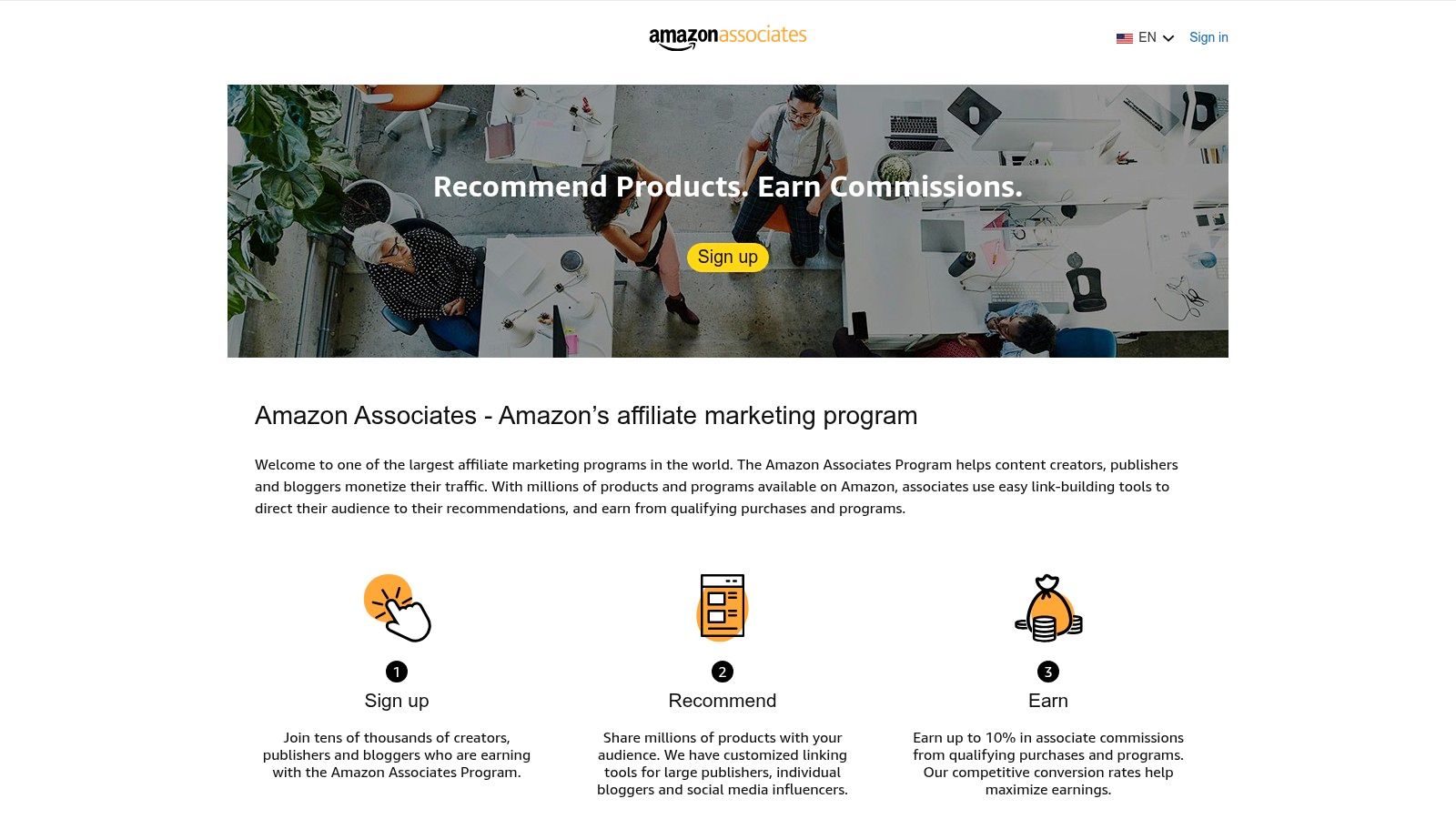
You write a helpful post about the walking shoes that finally stopped your feet from aching, or the reading lamp that made late-night book time easier. A reader clicks because she wants the exact item, not a lesson in Affiliate Marketing. That is why Amazon Associates is often the least intimidating place to start.
For midlife bloggers, that simplicity matters. Amazon is familiar, the checkout process feels safe to readers, and you can recommend everyday products without learning a complicated sales system first. If your blog covers homemaking, wellness, caregiving, books, simple tech, gifts, or kitchen tools, Amazon usually fits without much friction.
Amazon also gives affiliates access to a very large catalog across many categories through the official Amazon Associates site. You do not have to hunt for separate programs just to recommend a cookbook, a pill organizer, and a desk lamp in the same month.
Why it works for beginners
The biggest advantage is ease of use. Site Stripe lets you create a product link while browsing Amazon, which is helpful if dashboards still make your shoulders tense up a little.
A few practical strengths stand out:
- Easy first wins: You can start with products you already use and know well, which makes the writing more natural.
- Good fit for life-experience niches: Amazon works well for blogs about home, Health routines, aging parents, hobbies, budgeting, and day-to-day problem solving.
- Flexible content options: Product roundups, gift guides, resource pages, and tutorials can all include Amazon links. If you want a simple framework, this guide on how to write affiliate product reviews that feel honest and useful is a strong next step.
- Reader trust: Many people feel comfortable buying from Amazon, so there is less resistance at checkout.
One caution matters here. Amazon is best for products people can decide on quickly.
The trade-offs to know
The cookie window is short, so Amazon tends to work better for lower-cost, familiar products than for expensive items people research for days. Commission rates also vary by category, which means a product that feels perfect for your audience may still pay modestly. That is frustrating, but it is manageable if your goal at the beginning is confidence and consistency, not squeezing every possible dollar out of each click.
Amazon also has strict rules. Read them. Follow them. This is not the program to treat casually with missing disclosures, messy link placement, or copied product language.
My usual advice is simple: use Amazon first if you want a gentle learning curve and your readers need practical product recommendations they can act on today. Once you get comfortable, you can keep Amazon for everyday items and add other programs for higher-paying offers. For creator collaborations beyond classic affiliate links, you can also explore JoinBrands platform.
2. CJ formerly Commission Junction
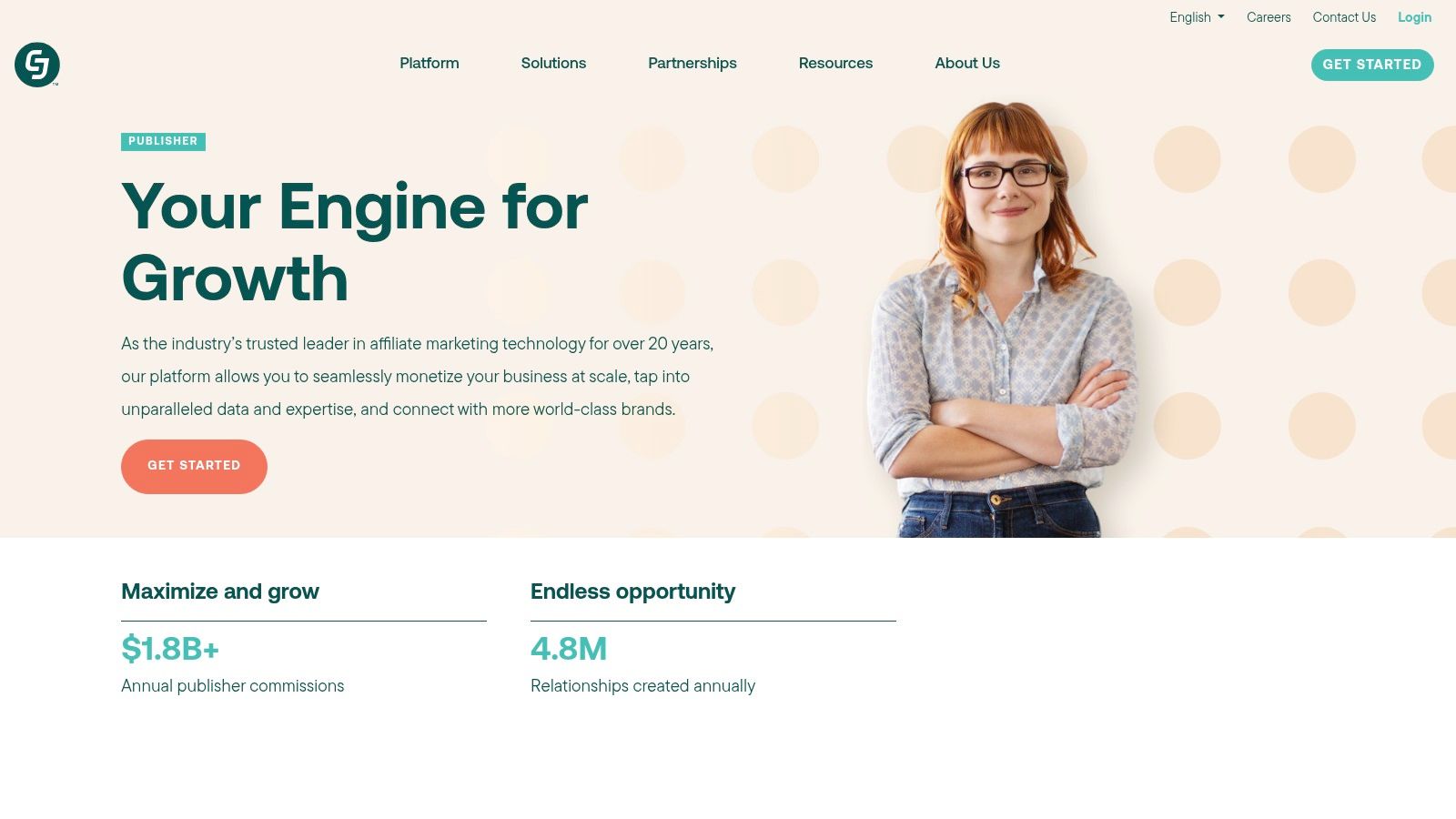
CJ is a better choice when your blog covers more than one topic and you want access to established brands under one roof. Think lifestyle mixed with travel, finance, home, or wellness. Instead of joining separate direct programs one by one, you can manage relationships in a central network.
For beginners, CJ can feel a little more corporate than Amazon. That's not always a bad thing. The tracking is mature, the advertiser selection is serious, and the dashboard gives you enough control to grow into it.
Where CJ shines
If you like structure, CJ rewards patience. You apply to individual advertisers, and some are selective, but that process often leads to stronger brand alignment than joining random offers just because they're available.
What tends to work well on CJ:
- Multi-niche publishing: Useful if your site blends midlife lifestyle, travel, family budgeting, and home recommendations.
- Recognizable brands: Readers often respond better when they already know the merchant name.
- Editorial content: CJ fits blogs that publish thoughtful recommendations instead of hard-sell promotions.
I usually don't suggest CJ as the very first platform for someone who still feels nervous logging into dashboards. But I do suggest it early, once you've published a few solid posts and understand how affiliate links fit into your writing.
Some affiliate networks feel simple but limiting. CJ is the opposite. It asks a little more from you, then gives you room to grow.
What doesn't work as well
The main drawback is complexity. The interface can feel busy, and each advertiser has its own approval rules, terms, and creatives. If you already feel overwhelmed, start with one or two merchants instead of trying to browse everything in a single sitting.
CJ makes the most sense for bloggers who are ready to think beyond one merchant and build a more stable recommendation library over time. If your goal is calm, steady monetization across several content categories, it deserves a place on your shortlist.
You can learn more at the CJ publisher platform.
3. Awin
Awin is one of the strongest networks for bloggers in lifestyle-friendly categories. If you write about fashion, home, beauty, travel, wellness, or online business tools, you'll likely find merchants that feel relevant without having to force the fit.
Fashion was identified as the highest-earning affiliate vertical in Skimlinks' publisher network analysis, with home and technology trailing behind in that analysis. For midlife bloggers, that points to something encouraging. You don't have to build a tech-heavy brand to find good affiliate opportunities.
Best fit for lifestyle blogs
Awin feels especially useful when your content reflects real life experience. Outfit roundups for women over 50, comfortable home upgrades, travel essentials, beauty routines, or wellness habits can all fit naturally.
A few reasons people stay with Awin:
- Large merchant variety: Good for bloggers who want options beyond one giant retailer.
- Lifestyle relevance: Helpful if your niche is more personal and less technical.
- International reach: Awin is often a smart choice when your audience isn't only in one country.
The one small friction point is the refundable verification deposit during setup. It isn't a huge obstacle, but it's worth knowing upfront so it doesn't surprise you.
The real trade-off
Awin still requires individual advertiser approvals, and some merchants are picky. That can sting when you're new. Try not to read a decline as a judgment on your worth or your future. Often it means the brand wants more content history first.
If your blog is growing around lifestyle topics and you want more flexibility than Amazon alone can offer, Awin is one of the best affiliate programs for bloggers who want breadth without going fully technical.
You can apply through the Awin publisher platform.
4. impact.com
You publish a few solid posts, join one affiliate program, then another, and before long your passwords, links, and approvals are scattered across too many tabs. That is the point where impact.com starts to feel useful.
impact.com gives you one place to find affiliate programs, apply to brands, create links, and keep track of partnerships. For midlife bloggers who want a calmer system and less tech clutter, that matters. The platform can feel more organized than managing every brand relationship separately.
It tends to fit bloggers who recommend a mix of products and services instead of sticking to one narrow category. If your blog covers practical tools, home and lifestyle products, wellness resources, or services you have used yourself, having those partnerships under one roof can save time and mental energy.
A few strengths stand out:
- Centralized account management: Fewer logins and less hunting for the right dashboard.
- Clear tracking tools: Easier to see which posts and links are getting clicks and sales.
- Wide advertiser mix: Helpful if your niche sits between lifestyle content and business or creator tools.
That said, this platform asks a little more of you. The dashboard is not hard forever, but it can feel busy on day one. Some advertisers also review applications closely, so newer bloggers may hear "not yet" from a few brands before getting approved.
That is normal.
The main trade-off is that impact.com works best once your blog already has some direction. If you have published a helpful batch of posts and can explain who you serve, the platform becomes much easier to use well. If you are still choosing your niche or have not written much yet, a simpler network may feel less stressful.
I usually see impact.com as a good next-step platform, not a first-step platform. It rewards a little patience, and that can be reassuring in its own way. You do not need to master everything at once. You just need enough content and clarity for the right brands to say yes.
You can explore it through the impact.com partner marketplace.
5. PartnerStack
A lot of midlife bloggers reach a point where physical products stop feeling like the right fit. They start writing about the tools they use to run a blog, organize client work, send emails, or simplify the business side of life. PartnerStack fits that stage well.
It focuses heavily on software and online tools, which makes it more niche than broad affiliate networks. That narrower focus is helpful if your readers want practical recommendations instead of a giant catalog to sort through.
One reason bloggers stick with PartnerStack is the chance to earn recurring commissions on some software offers. That matters for anyone who wants steadier income from a smaller, trust-based audience. A reader who signs up for a tool they keep using can be more valuable than a quick one-time sale, especially if your blog teaches systems, routines, or online business basics.
I like PartnerStack best for content such as:
- Tool walkthroughs: Clear tutorials for email platforms, scheduling tools, or blogging software.
- Workflow posts: Recommendations that help readers save time, stay organized, or reduce tech stress.
- Newsletter and creator education: A natural fit if your content supports bloggers, freelancers, coaches, or second-career business owners.
There is a trade-off, and it is worth being honest about it. PartnerStack usually works better once you already know your topic and can explain who your content helps. If your blog is still broad or you have only a few posts published, some programs may feel out of reach at first.
That is not a sign you are behind. It usually means your foundation comes first.
If you are still shaping that foundation, this guide on how to start a blog for Affiliate Marketing can help you choose a direction before you add software offers.
I see PartnerStack as a good fit for bloggers who are ready to recommend tools with care, not bloggers who want to paste links everywhere and hope for clicks. Used that way, it can feel calmer and more aligned than chasing random products.
You can browse options at PartnerStack.
6. Shopify Affiliate Program
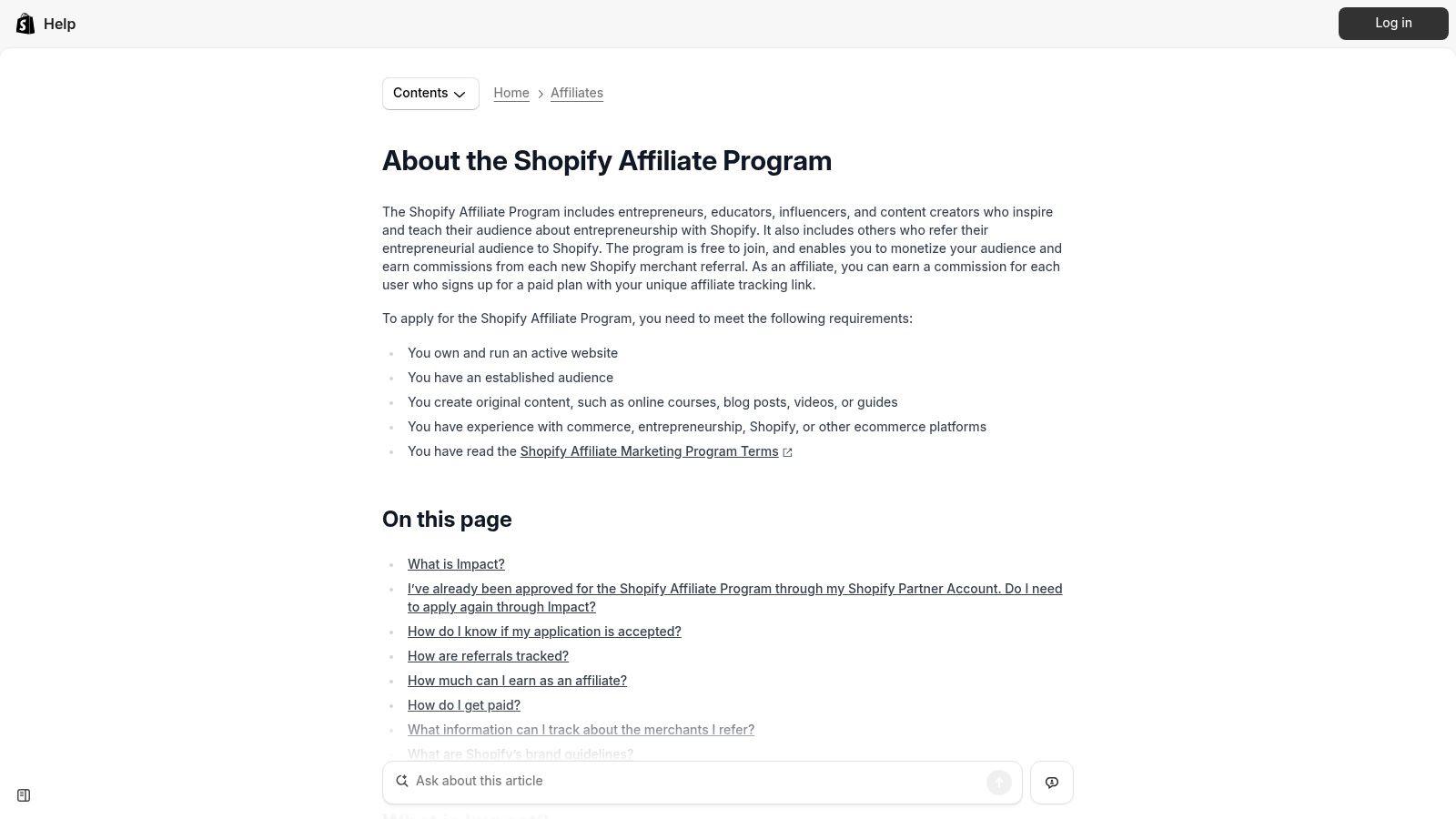
Some affiliate programs are broad. Shopify is specific. It works best when your reader wants to start selling something online, whether that's handmade goods, digital products, or a simple ecommerce shop.
That specificity is a strength. When a reader already has store-building on their mind, Shopify can be a natural recommendation rather than a random pitch dropped into a post.
Best use cases
I like Shopify for bloggers who teach practical business-building content. If you publish beginner guides on starting a side business, opening a shop, or setting up an online brand, the fit is clear.
A few strong content angles include:
- Blog posts for beginners: How to start selling online without a lot of tech stress.
- Step-by-step tutorials: Platform setup guides tend to align well with this offer.
- Second-chapter business content: Especially relevant for women building something after a career shift or approaching Retirement.
If you're laying the foundation for that kind of content, this guide on starting a blog for Affiliate Marketing can help you think through your topic path first.
The Shopify affiliate information page explains that the program is managed through Impact, which means you get that more centralized tracking environment rather than a completely separate setup.
What to watch for
Shopify isn't a fit for every audience. If your readers mainly want product recommendations, lifestyle inspiration, or everyday shopping links, this is too niche. It also has eligibility details tied to merchant location and plan type, so not every referral will qualify the same way.
That doesn't make it complicated. It just means you want to read the terms before building content around it.
For bloggers serving aspiring shop owners or creative entrepreneurs, Shopify is one of the best affiliate programs for bloggers because it solves a very clear problem. Clarity often converts better than breadth.
7. Kit formerly ConvertKit Affiliate Program
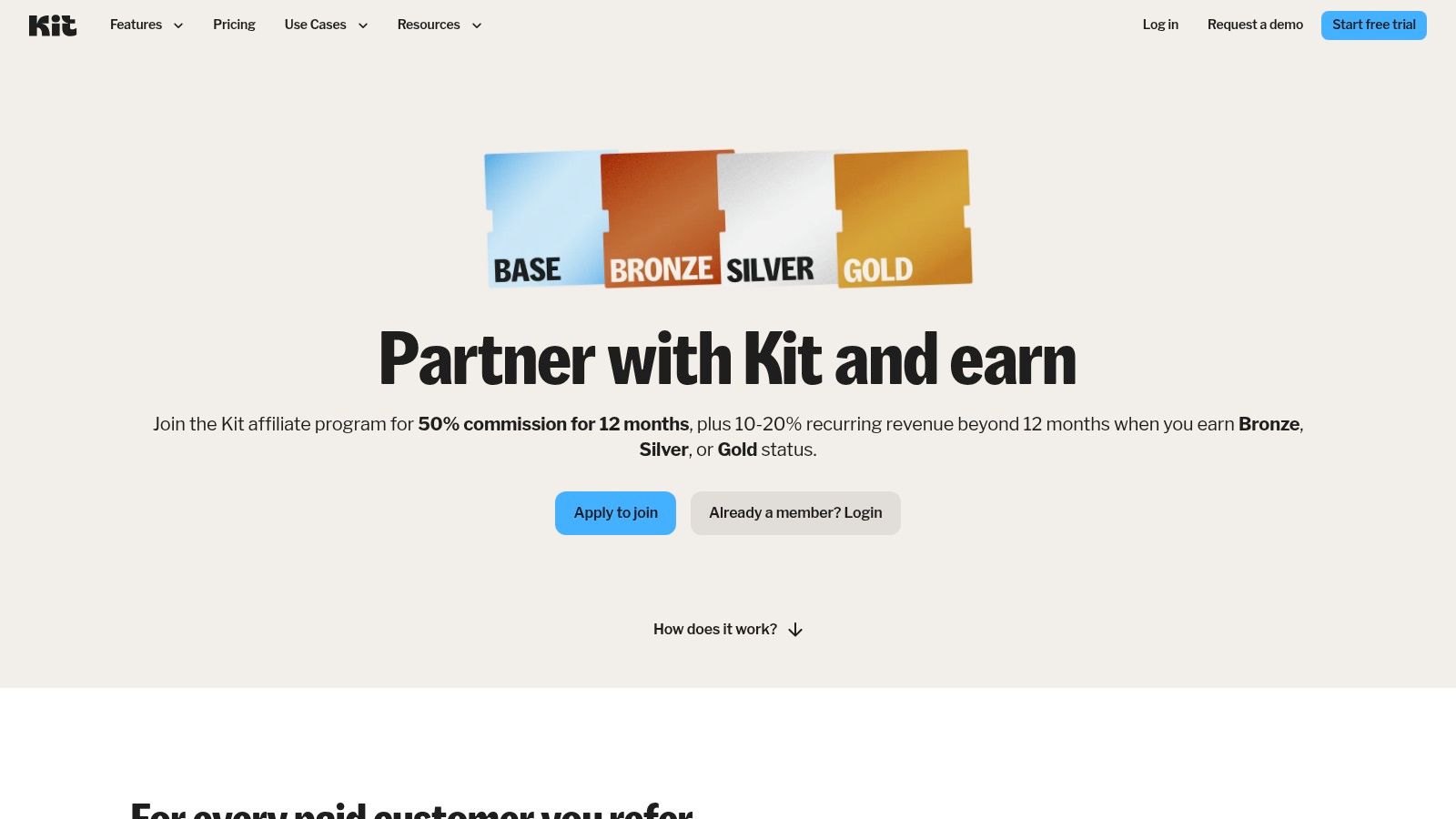
A lot of midlife bloggers reach the same point. The blog is up, a few posts are published, and then someone says, "You need an email list." That can feel like one more technical thing to learn.
Kit is one of the easier affiliate programs to recommend if your readers are at that stage. It fits bloggers who teach audience building, simple funnels, newsletters, or digital offers without making everything feel overly technical.
Why Kit works for the right audience
The appeal here is straightforward. Kit is tied to a tool many bloggers already use to collect subscribers, send emails, and set up basic automations. If your content helps readers move from "I post when I can" to "I have a simple system," the recommendation makes sense.
Kit also tends to suit bloggers in experience-based niches, especially those teaching business after 40, coaching, creative work, online education, or personal reinvention. If you are still refining that direction, this guide to affiliate-friendly blog niches that match your experience can help you choose a topic that supports offers like this naturally.
Good content angles usually include:
- Beginner email setup guides: How to create a signup form and start collecting subscribers.
- Welcome sequence tutorials: Showing readers how to send a simple first series without getting lost.
- Audience ownership content: Explaining why relying only on social media can feel risky.
I remember how confusing email marketing sounded at first. Once I saw it as a calm, repeatable way to stay in touch with readers, it stopped feeling intimidating.
Teach the problem first, then show the tool that solves it.
Where bloggers get stuck
Kit works best when your readers already understand why email matters. If your audience only wants product recommendations, crafts, recipes, or general lifestyle inspiration, this offer may feel like a jump.
It also asks more from you than a quick affiliate link in a roundup post. Readers usually need a walkthrough, a personal example, or a clear reason to care about List Building before they sign up. That is the trade-off. The fit can be strong, but the recommendation needs context.
For bloggers who want a trustworthy program connected to a practical tool, Kit is a solid long-term option. You can learn more through the Kit affiliate program.
8. Semrush Affiliate Program
Semrush is a more advanced recommendation, but it earns its place because blogging and search visibility are closely connected. If your content teaches keyword research, SEO basics, blogging growth, or content strategy, Semrush is highly relevant.
This isn't the first tool I'd hand to a frightened beginner. But it is a strong option once your audience starts asking, "How do I get people to find my blog?"
The Kit resource on affiliate programs for bloggers notes that Semrush offers $200+ per sale, up to 40% recurring, and a 120-day cookie window. The same source also frames it as a strong fit for SEO-focused niches.
Best for educational bloggers
Semrush does best in content that teaches, not content that casually mentions. Readers usually need context before they buy an SEO tool.
Good fits include:
- Keyword tutorials: Showing how blog topics get discovered.
- Growth-focused content: Helping readers understand visibility without sounding technical.
- Niche strategy posts: If you're helping people choose a blog topic, this guide to the best niches for Affiliate Marketing pairs naturally with that conversation.
The honest downside
SEO tools are a competitive affiliate category. A shallow post won't do much. Readers need help deciding whether they need the tool, what problem it solves, and whether it's too much for where they are right now.
That's the key trade-off. Higher payouts often come with a longer trust-building path.
If your audience is still learning the basics of blogging, save Semrush for later. If they're ready to grow deliberately, it can be one of the best affiliate programs for bloggers in the education and SEO space.
You can review the program at the Semrush affiliate page.
9. ClickBank
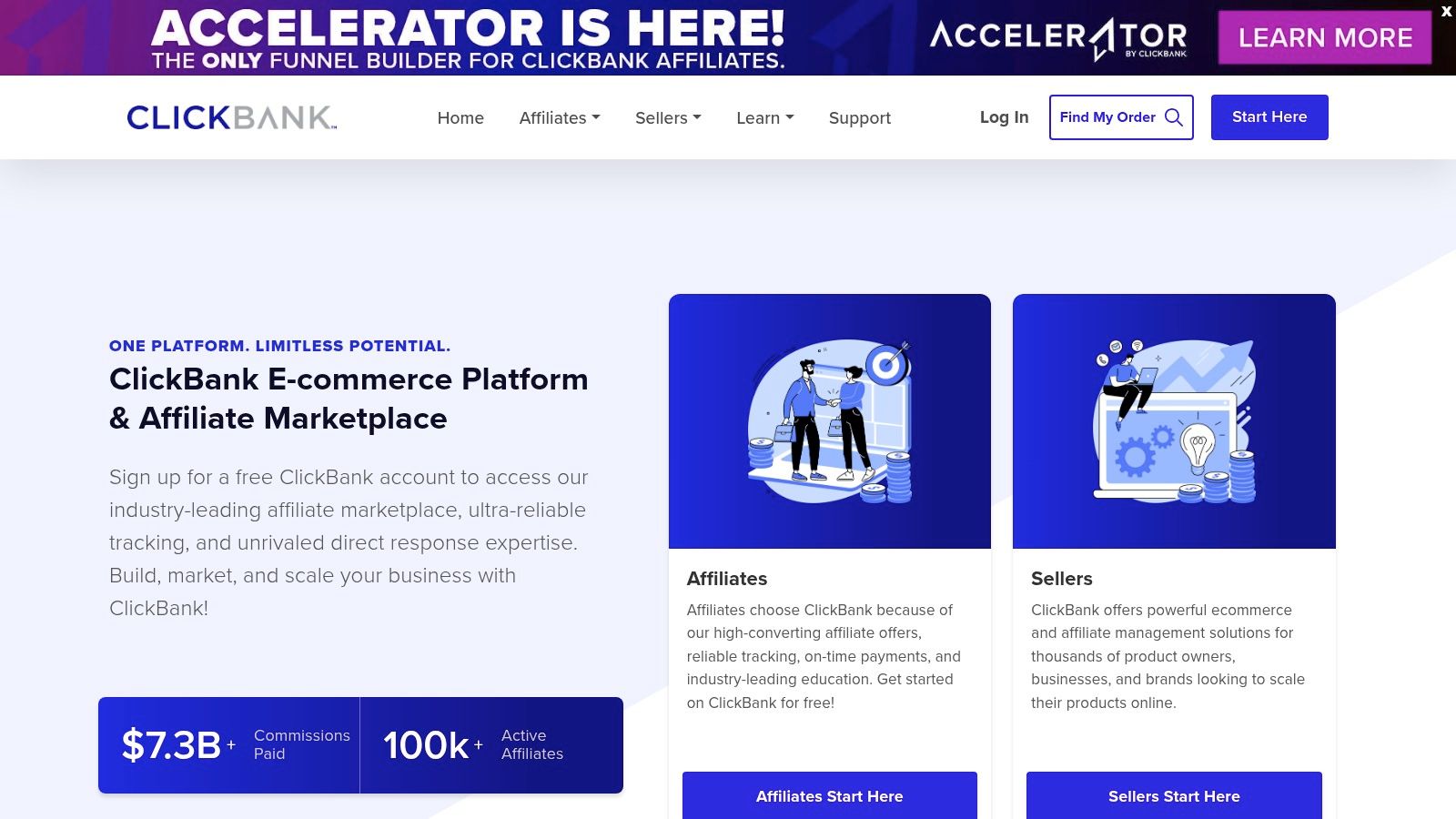
ClickBank has been around a long time, and it sits in a different lane than many of the other options on this list. Instead of mostly physical products or major brand services, it gives you access to digital offers like courses, guides, and downloadable products.
That can be useful. It can also be risky.
Why bloggers use it
The upside is flexibility. If your audience responds well to educational products, challenges, or niche digital solutions, ClickBank gives you a lot to browse in one place. It can also work well for themed email promotions when the offer closely matches a problem your readers already want solved.
What makes it attractive:
- Fast offer access: You can explore and generate links quickly.
- Digital product variety: Good for information-heavy niches.
- Email campaign potential: Works best when you understand your audience's specific interests.
Why caution matters here
Offer quality varies a lot. That's the biggest issue.
I understand being cautious. There are scams online. That's why education and mentorship matter, and why I wouldn't tell a beginner to grab the highest-looking payout and start promoting blindly. With ClickBank, trust comes first. If an offer feels exaggerated, vague, or too slick, move on.
Protect your reader before you protect your commission. That one habit will save you from a lot of regret.
ClickBank can work, especially for bloggers who know their audience well and are comfortable reviewing digital offers carefully. But if you're still building confidence, start slow and choose only products you'd feel comfortable discussing over coffee with a friend.
You can browse the marketplace at ClickBank.
10. Rakuten Advertising
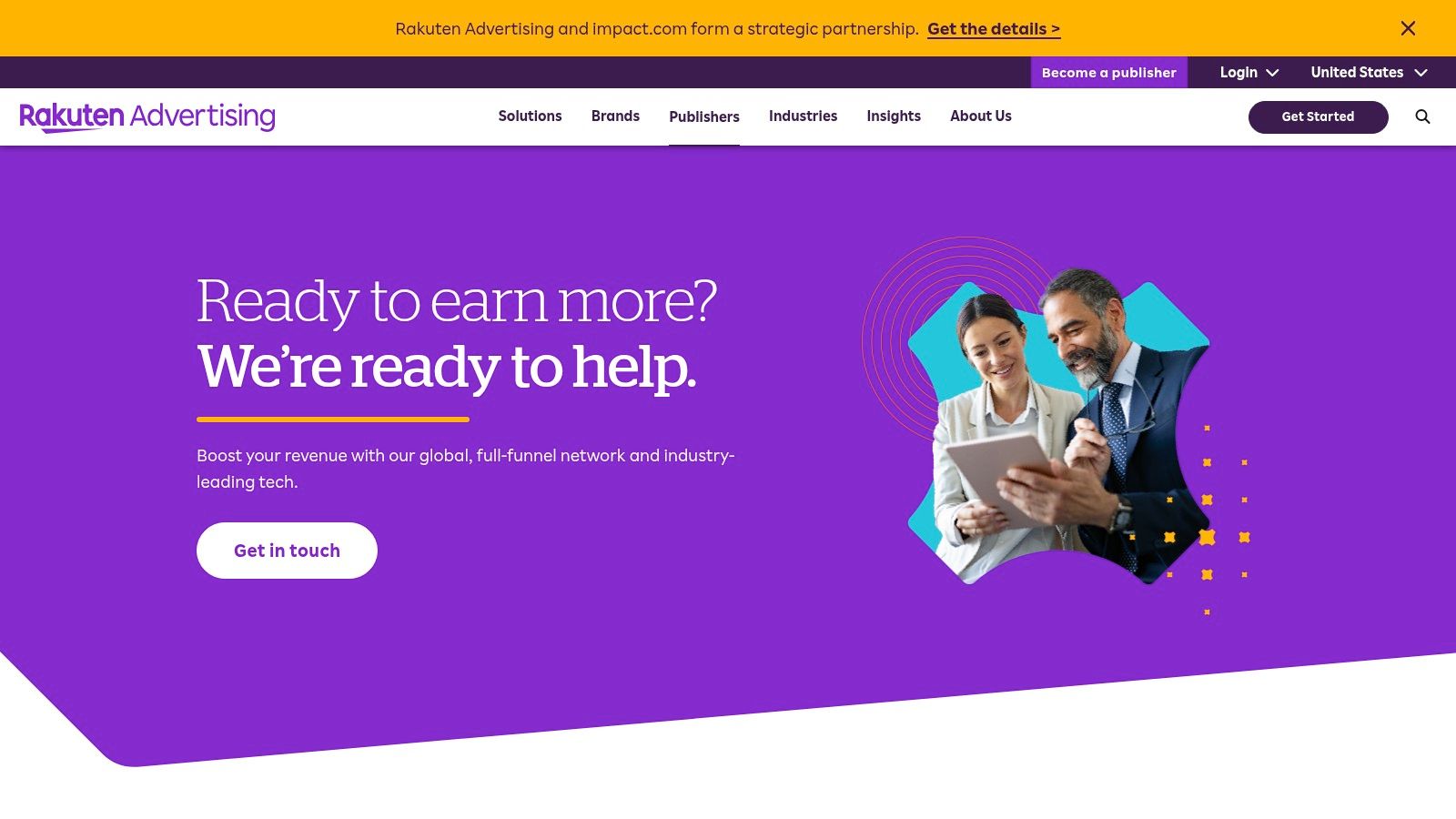
You publish a gift guide, a skincare roundup, or a home update post and want to link to stores your readers already recognize. Rakuten Advertising is often a good fit for that kind of blog. It has been around a long time, and that history matters when you care more about trust and stability than chasing the highest commission on the page.
For midlife bloggers, that can be reassuring.
Rakuten tends to make the most sense for lifestyle content with a shopping angle. Home, fashion, beauty, wellness, gifts, and seasonal buying guides are the clearest matches. If your readers are more likely to buy from a familiar retailer than test a flashy new brand, this network deserves a look.
I also like Rakuten for a simple reason. It can help fill merchant gaps. Sometimes a brand you want is not available through the network you already use, and Rakuten gives you another place to check without sending you into a maze of overly technical software offers.
Where Rakuten fits best
Rakuten usually works better as a second or third network than as your first one. That is not a drawback. It is a practical setup. Many bloggers start with an easier broad program, then add Rakuten once they know which posts bring in steady shopping traffic and which categories their readers trust them to recommend.
Why bloggers keep it in the mix:
- Recognizable retailers: Familiar stores can feel safer to recommend and easier for readers to buy from.
- Good match for seasonal content: Holiday lists, Mother's Day ideas, back-to-school posts, and special-occasion guides often fit naturally.
- Useful for lifestyle niches: It suits blogs built around real-life experience, taste, routines, and household decisions.
The trade-off
Rakuten asks for a little patience. Merchant approvals vary, and each advertiser has its own terms, rules, and commission structure. That means you cannot assume one application covers everything. For beginners, that can feel slower than expected.
Still, slower is not always worse. A network with recognizable brands and clearer merchant relationships can be easier to trust, especially if you are trying to build an affiliate income stream without feeling like you need to become a full-time tech person.
If your blog helps readers make everyday buying decisions, Rakuten can be a steady addition to your toolkit. You can sign up through Rakuten Advertising for publishers.
Top 10 Affiliate Programs for Bloggers Comparison
| Program | Key USP (✨ / 🏆) | Onboarding & UX (★) | Revenue & Value (💰) | Best for (👥) |
|---|---|---|---|---|
| Amazon Associates | ✨ Massive SKU coverage; SiteStripe & Product API; 🏆 shopper trust | ★★★★, easy start; strict compliance rules | 💰 Low–Medium (category rates; cookie limits) | 👥 Beginners, review & gift‑guide posts |
| CJ (Commission Junction) | ✨ Robust analytics, deep linking & multi‑currency; 🏆 premium brand access | ★★, powerful but complex; advertiser approvals | 💰 Medium, brand payouts, scalable | 👥 Growing publishers, multi‑niche sites |
| Awin | ✨ Create‑A‑Link & Opportunity Marketplace; broad retailer mix; 🏆 ShareASale legacy | ★★★, $1 verification; selective approvals | 💰 Medium, retail & DTC strength | 👥 Content, coupon, influencer formats |
| impact.com | ✨ Centralized partner marketplace & reliable attribution; 🏆 enterprise & DTC brands | ★★★, cleaner UX than networks; learning curve | 💰 Medium–High, quality advertisers | 👥 Creators running multiple brand programs |
| PartnerStack | ✨ SaaS‑focused marketplace; unified payouts & dashboards; 🏆 recurring revenue | ★★★, approval standards vary | 💰 High, recurring & high‑ticket SaaS | 👥 Creators recommending business tools |
| Shopify Affiliate Program | ✨ High perceived merchant value; managed via Impact; 🏆 e‑commerce fit | ★★★, clear docs but eligibility varies | 💰 High per merchant (plan‑dependent) | 👥 E‑commerce & store‑startup tutorials |
| Kit (ConvertKit) Affiliate | ✨ Tiered model with recurring commissions; 🏆 aligned to list‑building | ★★★★, creator‑friendly signup & assets | 💰 Medium–High, recurring potential | 👥 Email/list‑building educators & creators |
| Semrush Affiliate | ✨ 120‑day cookie & SEO focus; 🏆 trusted brand for bloggers | ★★★, Impact‑powered, requires quality content | 💰 Medium, fixed commissions & long cookie | 👥 SEO tutorials, blogging growth guides |
| ClickBank | ✨ Large digital‑product marketplace; quick link creation; 🏆 high payouts | ★★★★, fast access; caution on offer quality | 💰 High potential, variable offer quality | 👥 Email promos, info‑product campaigns |
| Rakuten Advertising | ✨ Premium retail & lifestyle brands; centralized dashboard; 🏆 seasonal strength | ★★★, selective approvals; different tooling | 💰 Medium, strong for known merchants | 👥 Fashion, home, lifestyle editorial sites |
Your Next Step Toward Peace of Mind
If you've made it this far, take a breath. You do not need to join all ten programs. You do not need a perfect website before you begin. And you do not need to understand every dashboard, cookie window, and payout model by tonight.
You just need one good starting point.
For most beginners, the best first move is to choose one program that matches a topic you already enjoy talking about. If you naturally recommend books, home products, beauty finds, or helpful everyday tools, Amazon might feel easiest. If your blog is growing around lifestyle brands, Awin or Rakuten may be a better fit. If you want to teach blogging, email lists, or online business tools, Kit, Semrush, PartnerStack, or Shopify may make more sense.
The mistake I see most often is trying to monetize everything at once. That creates confusion fast. A calmer approach works better.
Start small:
- Choose one program: Just one.
- Read the terms slowly: You don't need to memorize them, only understand the basics.
- Pick one post idea: A review, tutorial, or resource page is enough.
- Make the recommendation useful: Explain who it's for, who it's not for, and why you trust it.
- Give yourself room to learn: Your first affiliate post doesn't have to be brilliant. It just needs to be honest.
That honesty matters more than polished marketing language. Readers can feel when someone is trying to help versus trying to squeeze a click out of them.
I remember feeling tempted to delay everything until I understood all of it. That kept me stuck longer than I needed to be. Progress came when I stopped asking, "How do I master Affiliate Marketing?" and started asking, "What's the next simple thing I can learn?"
That's the question I want to leave you with.
Because the next five years will pass either way. The only question is whether you'll use them to build something that gives you more control, more dignity, and more peace of mind. A blog, an email list, and a handful of thoughtful recommendations may look small at first. Over time, they can become an asset.
You are not too late. You are not disqualified because tech feels unfamiliar. You can learn this the same way you learned everything else that mattered in your life. One step at a time.
If you'd like to keep going, choose just one program from this list and explore its website today. No pressure to apply. No pressure to publish immediately. Just get familiar. That small step counts more than you think.
If you'd like gentle, step-by-step help building this kind of income stream, you can explore Victoria OHare. The training and articles there are designed for beginners, especially midlife women who want to build something steady without tech overwhelm.