
If you're over 50 and wondering whether it's too late to build income online, you're not alone. Many women feel behind financially, not because they failed, but because life happened. Retirement can feel less secure than it once did, and the idea of learning “internet business” may sound exhausting, confusing, or risky.
I understand that hesitation. There are scams online. There is noisy advice. And when you're already carrying a full life, the last thing you need is another promise that sounds good and leaves you overwhelmed.
But this part matters. You are not behind. You can learn this. And if you're wondering how to start a side hustle with no money, you do not need to become a different person. You need a simple plan, a trustworthy model, and the willingness to take one small step at a time.
Why Your Experience Is Your Most Valuable Asset
Many beginners assume youth gives people an advantage online. In some corners of the internet, that may look true from the outside. But when real money changes hands, trust matters more than noise.
That is where you already have something valuable.
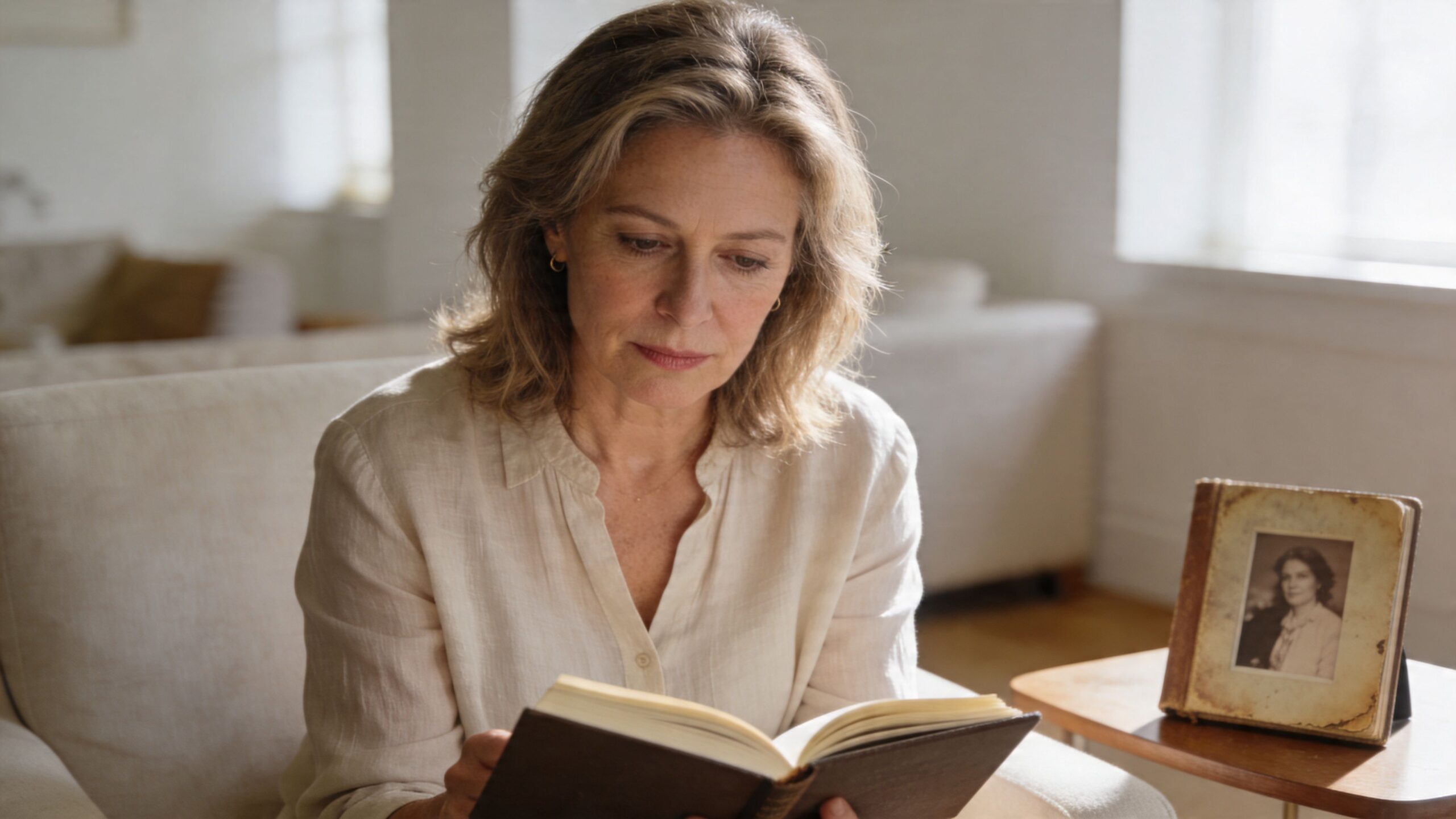
A woman in midlife often brings judgment, perspective, empathy, and lived experience that younger creators haven't had time to build. If you've managed a home, raised children, cared for aging parents, changed careers, supported a spouse, recovered from setbacks, or rebuilt after disappointment, you already understand problems people need help solving.
Trust is a business asset
Online business often looks technical from the outside, but the heart of it is simple. People look for guidance from someone who feels credible, steady, and honest.
That can sound like:
- A reader who trusts your recommendation because you've used the product
- A busy woman who opens your emails because you explain things clearly
- A beginner who follows your advice because you don't make her feel foolish
- A customer who buys through your link because your story feels real, not scripted
This is one reason so many women do well when they stop trying to copy younger creators and start speaking in their own voice.
I remember how easy it is to doubt yourself at the beginning. The first time I logged into an online training platform years ago, I felt like everyone else had received instructions I somehow missed. I almost clicked away and told myself I was too late, too old, or too non-technical.
None of that was true. I needed someone to explain it slowly.
You don't need to reinvent yourself. You need to organize what you already know in a way that helps other people.
Your life is not “off topic”
A lot of women dismiss their own experience because it feels ordinary to them. But ordinary experience is often the most useful kind because other people are living through the same things right now.
Here are examples of experience that can become helpful content and eventually income:
| Life experience | Who it can help | Natural side hustle angle |
|---|---|---|
| Menopause or healthy aging | Women looking for guidance | Product recommendations, blog posts, email tips |
| Budgeting for a household | Families and women nearing Retirement | Affiliate content around planners, tools, books |
| Gardening or home routines | Beginners who want practical advice | Reviews, tutorials, resource lists |
| Career change later in life | Women starting over | Encouragement content, tools, courses, communities |
| Caring for family members | Overwhelmed caregivers | Curated recommendations and support resources |
Why this matters before you pick a business model
If you begin from insecurity, you'll chase trends. If you begin from experience, you'll build something steadier.
That shift matters because your second chapter doesn't need to look flashy. It needs to feel sustainable. The women who build calm online income usually don't win because they know every tool. They win because they know who they can help, and they speak with honesty.
If you've been telling yourself, “I have nothing special to offer,” pause there.
You have perspective. You have pattern recognition. You have stories. You have opinions shaped by real life. In an online world full of borrowed advice, that is rare.
What a No-Cost Side Hustle Really Is
A no-cost side hustle isn't magic. It means you start by using what you already have instead of spending money you don't have.
In practical terms, that usually means your phone, your laptop if you have one, free platforms, and your ability to communicate clearly. You are trading effort and consistency for startup capital.
One of the simplest models for this is affiliate marketing. That means you recommend a product, service, or resource you trust, and if someone buys through your special link, you earn a commission.
What Affiliate Marketing is, in plain English
You are not creating the product.
You are not shipping boxes.
You are not handling returns.
You are not hiring a team.
You're helping someone make a decision.
For example, if you write about comfortable walking shoes for women over 50, and you include an affiliate link to a pair you like, you may earn a small commission if a reader buys. The same idea can apply to books, kitchen tools, digital courses, wellness items, gardening supplies, or software.
That is why this model appeals to many beginners. It is simple to understand and can be started on free platforms.
According to a Hostinger side hustle report, the average side hustler earned $891 per month in 2024. That doesn't mean everyone earns that amount, but it does show that a no-cost side hustle can become meaningful supplemental income over time.
Is this a scam
Caution is healthy here.
Affiliate marketing itself is not a scam. It is a legitimate business model used by brands and publishers across the internet. What turns people off is the way some marketers talk about it. They make it sound instant, effortless, or secret. It isn't.
A legitimate approach looks like this:
- You recommend what fits your audience
- You disclose that you may earn a commission
- You focus on usefulness first
- You build trust slowly
A shady approach looks very different. It relies on hype, pressure, fake income promises, and products the seller doesn't really care about.
Practical rule: If someone tells you online income is easy, automatic, and fast from day one, step back.
What “starting with no money” usually looks like
Many women think they need a website, logo, paid ads, and fancy software before they begin. Most don't.
A no-cost side hustle often starts with:
- A free content platform such as a blog, newsletter, or social profile
- A specific topic you know and care about
- A helpful piece of content that answers a real question
- One affiliate offer that naturally fits the topic
If you want a broader overview of the early setup process, this guide on starting a side business is a useful companion read because it helps frame the practical choices without overcomplicating them.
The important thing is not to confuse “simple” with “small.” A calm, ethical side hustle can become a real asset. It just starts quietly.
Uncovering Your Profitable Idea Using Your Life Wisdom
Individuals often don't get stuck because they lack options. They get stuck because they have too many. They sit there thinking, “Should I do Health, money, relationships, cooking, YouTube, blogging, courses?” and then do nothing.
A better starting point is smaller and more personal.

Start with the overlap
Your best side hustle idea usually lives where three things meet:
- What you've lived through
- What you naturally talk about
- What people already ask you for help with
Take a notebook and make three short lists.
Under the first, write down challenges you've faced. That might be menopause, caring for a parent, paying off debt, downsizing a home, learning technology later in life, or rebuilding confidence after a divorce.
Under the second, write what you enjoy. Gardening, reading, skin care, simple meal planning, travel, journaling, organization, faith, fitness, or home routines all count.
Under the third, write what people come to you for. Advice about resumes, calming anxious people, decorating on a budget, healthy recipes, thrift finds, supplements, scheduling, teaching, or staying motivated.
When the same theme shows up in more than one list, pay attention.
Good niche ideas often sound ordinary
You do not need a dramatic brand idea. You need one that feels useful.
Here are a few examples:
- A woman who loves gardening could share beginner tips and recommend tools, seeds, gloves, books, or pest solutions.
- A former teacher could review planners, literacy resources, educational subscriptions, or study tools for families.
- A woman navigating menopause could build content around wellness routines, books, clothing, or products that made daily life easier.
- A caregiver could share practical resources that save time and reduce stress.
These are not random topics. They are lived categories of trust.
Data shared through SoFi’s roundup of low-cost side hustles notes that creators in the 50+ demographic can earn up to 25% higher affiliate commissions because their recommendations are often seen as more authentic and trustworthy. That fits what many readers already feel. They want guidance from someone grounded, not performative.
Choose a niche you can stay with
A profitable idea is not only something people want. It is also something you won't get tired of talking about after two weeks.
Use this quick filter:
| Question | If yes | If no |
|---|---|---|
| Do I care about this topic enough to write about it regularly? | Keep exploring it | Set it aside |
| Have I used products or systems in this area? | Good sign for affiliate content | You may need more experience first |
| Do people ask questions about this? | Strong potential | Narrow or reshape the idea |
| Would I feel comfortable being known for this topic? | Move forward | Pick something that feels more natural |
If you need more help narrowing your focus, this guide on how to find your niche as a woman over 50 is worth reading because it keeps the process realistic instead of abstract.
You do not have to show your face
Some women want to write. Some prefer audio. Some like simple slides or faceless videos.
If that sounds like you, it may help to explore content formats that don't require being on camera all the time. This resource on Top Faceless YouTube Niches can spark ideas if you want to teach, review, or share stories in a quieter way.
Here’s a useful walkthrough if you learn well by watching rather than reading.
Your niche does not need to impress strangers. It needs to help a specific kind of person feel understood.
That is often the missing piece. The more your idea sounds like real life, the more likely someone will trust you when you recommend a solution.
The Only Free Tools You Need to Get Started
Tech overwhelm stops a lot of good women before they begin. They assume there must be a long list of software, subscriptions, and setup steps hidden behind every article.
There doesn't have to be.
You can begin with a very small toolkit. If you can send an email, type a paragraph, and click a few buttons, you can learn this.
Your simple starter stack
Think in terms of function, not features. You need a place to share, a place to collect contacts, and a way to make basic visuals.
A writing or posting platform
Start where writing feels easiest. That could be WordPress.com, Medium, or even a simple social profile where you post helpful tips consistently. You do not need a custom website on day one.Canva free
Canva helps you make simple graphics, email headers, checklists, quote posts, or printable guides without design training. You can keep everything clean and basic.A free email tool
Mailchimp and ConvertKit both offer beginner-friendly ways to start an email list. Your list matters because social platforms can change, but your email audience is something you own.Google Docs
This is enough for drafting blog posts, planning your ideas, storing affiliate links, and writing your welcome email.
What each tool is for
Many beginners get confused because they download tools before they understand their purpose. Keep it this simple:
| Tool | What it does | Why it matters |
|---|---|---|
| WordPress.com or Medium | Publishes your ideas | Gives people a place to read your content |
| Canva | Creates basic visuals | Helps your content look clear and organized |
| Mailchimp or ConvertKit | Collects email subscribers | Lets you build an audience you can reach directly |
| Google Docs | Holds your writing and plans | Keeps everything in one place |
Keep your setup boring
That may sound strange, but boring is good at the beginning.
You don't need to spend days choosing fonts, colors, taglines, and templates. A plain email sign-up form and a few honest posts are enough to begin. What matters most is clarity.
A lot of new creators get trapped in “tool collecting.” They keep preparing instead of publishing.
The tool is only useful if it helps you speak, teach, or build a relationship with a real person.
If you want one more option in the learning phase, the Victoria OHare site includes beginner-focused articles on Affiliate Marketing, email lists, and simple automation. It can help you understand what each moving part is for before you try to do everything at once.
What you do not need yet
You can safely postpone all of these:
- Paid ads
- Complicated funnel software
- A custom logo
- Expensive web design
- Multiple social platforms at once
That is how to start a side hustle with no money in the most practical sense. You strip away everything nonessential and begin with tools you can use this week.
How to Find Your First Audience Members
Your first audience members usually do not arrive because you posted something “perfect.” They arrive because you were helpful in a place where people were already looking for answers.
Many women associate audience growth with dancing on video, advanced marketing techniques, or pursuing strangers. However, the true beginning is often far less conspicuous.
I remember one of my earliest signs that online content could work. I answered a simple question in an online community about a topic I knew well. I didn't pitch anything. I didn't try to impress anyone. I just gave a thoughtful answer. Later, someone found my profile, joined my email list, and kept reading what I shared.
That experience changed how I saw “marketing.” It felt less like selling and more like being useful in public.
Start where conversations already happen
You don't need a huge following. You need a few places where your kind of reader already spends time.
Good beginner spaces include:
- Facebook groups related to your topic
- LinkedIn if your niche connects to work, consulting, or professional skills
- Quora if people ask beginner questions in your area
- Local groups where trust is built through familiar community ties
- Your existing contacts who may know someone who needs what you share
Freelance platform data discussed in this guide on starting a side hustle with no money found that free outreach on platforms like LinkedIn or in local Facebook groups can produce 80% higher booking rates than waiting for inbound leads. Even if you're building affiliate content rather than offering services, the lesson is the same. Gentle outreach works better than silent waiting.
What to say when you feel awkward
A lot of women freeze here because they don't want to sound pushy.
You can keep it simple:
- “I've been sharing tips on easier meal planning for women in midlife.”
- “I'm writing about beginner gardening and the tools that have helped me most.”
- “I've started a small email list for women learning Affiliate Marketing later in life.”
That is enough. You are not asking for a favor. You are letting people know what you care about.
If building an email list feels new, this beginner guide on how to build an email list from scratch can help you understand the basics without making it technical.
Focus on serving first
A first audience grows when people feel seen.
Try this rhythm:
- Answer one real question
- Share one useful tip
- Mention one helpful resource
- Invite people to hear from you again
That last part can be as simple as, “If you'd like more practical tips like this, you're welcome to join my email list.”
Help first. The right people will remember who made things clearer for them.
That approach is slower than hype. It is also sturdier.
Your 90-Day Plan for Building Calm Momentum
When people feel overwhelmed, they either freeze or overdo it. Neither helps. A steady plan works better because it gives your brain a clear next step.
Many women can finally breathe easy. You do not need to build a full business in a weekend. You need a modest routine you can repeat.
A 2024 Quicken study covered in SurveyMonkey’s side hustle statistics roundup found that 43% of Americans with side hustles earn more money while working fewer hours than in their traditional jobs. The bigger lesson is not that every side hustle is easy. It is that a well-chosen side hustle can create flexibility instead of draining all your energy.
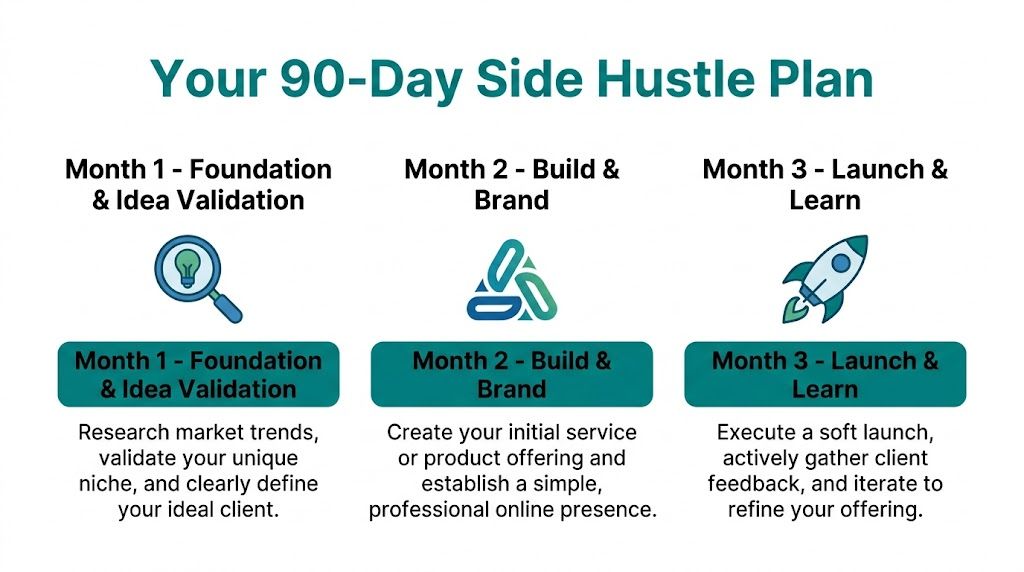
Days 1 to 30
Your first month is for clarity, not perfection.
Use this time to choose your topic, open your basic free accounts, and publish your first few pieces of helpful content. Keep everything small.
Try a checklist like this:
Pick one niche
Choose the topic that fits your experience and feels sustainable.Choose one main platform
A blog, newsletter, or social platform is enough. Don't try to be everywhere.Join one or two affiliate programs
Only after you know what you want to talk about.Create three helpful posts
Think answers, tips, checklists, or simple product roundups.Tell a few people what you're building
Quiet visibility is still visibility.
Days 31 to 60
This month is about building a small system.
By now, you want a way for interested readers to stay connected. That is usually an email list. You also want to get better at creating content that helps someone solve a problem.
Try this next:
| Task | Keep it simple |
|---|---|
| Start your email list | Add one sign-up form and one welcome email |
| Create a free gift | A checklist, short guide, or resource list works well |
| Write regularly | One useful piece each week is enough |
| Add affiliate links thoughtfully | Only where they genuinely fit the content |
If you want more ideas for getting attention without paying for ads, this article on free traffic for Affiliate Marketing can give you beginner-friendly options that don't require technical skills.
Days 61 to 90
Now you begin acting less like someone “trying a thing” and more like someone building an asset.
You are still early. That is fine. At this stage, your job is to notice what gets responses and repeat what works.
Focus on these moves:
Review your early content
Which posts felt easiest to write? Which ones got questions or replies?Improve your profile and bio
Make it clear who you help and what people can expect.Refine your recommendations
Keep only the offers that match your audience and values.Invite conversation
Ask readers what they need help with next.Stay consistent
Calm repetition builds trust.
A side hustle becomes less stressful when you stop measuring it by speed and start measuring it by consistency.
Two time plans that fit real life
A lot of women do not need another demanding schedule. They need a rhythm that fits around work, family, and fatigue.
Here are two gentle models.
The power hour
Use one focused hour, three times a week.
- Day one for writing
- Day two for posting and replying
- Day three for email list tasks and planning
That is enough to create movement.
The batch afternoon
Pick one afternoon each week or every other week.
- Draft two or three short posts
- Make simple Canva graphics
- Queue your emails or notes
- Save your affiliate links in one document
This reduces daily decision-making, which is often the primary energy drain.
What to expect emotionally
Some days you will feel hopeful. Some days you will wonder whether anyone is listening. Both are normal.
The early stage can feel quiet, and quiet can trigger self-doubt. Do not mistake quiet for failure. You are building foundations people cannot yet see.
If you keep asking, “How to start a side hustle with no money without burning out?” this is the answer. Work in small sessions. Keep your tech simple. Build one asset at a time. Let momentum come from repetition, not pressure.
Creating an Income That Gives You Peace of Mind
The point of this work is not to become flashy online. It is to create more security, more dignity, and more choice in your life.
That may mean extra breathing room in your monthly budget. It may mean a way to earn before Retirement, or during Retirement, without depending only on one source of income. It may mean proving to yourself that you can still learn, still adapt, and still build something meaningful in this next chapter.
That is why this kind of business matters. It is not just about money. It is about control.
If you've felt intimidated by age, technology, or the fear of wasting time, I want to leave you with this. You do not have to master everything at once. You only need to begin, choose one path, and keep going long enough to let your efforts compound.
You can do this with simple tools.
You can do this in a quiet way.
You can do this without pretending to be someone you're not.
And if you're cautious, that's not a weakness. It can protect you. Thoughtful women often build better businesses because they care about trust, clarity, and usefulness.
Start with what you know.
Serve one kind of person.
Build an audience you own.
Recommend solutions you believe in.
That is a real business.
The next five years will pass either way. The only question is whether you'll use them to build something that gives you peace of mind.
If you'd like gentle, step-by-step help as you learn, you can explore Victoria OHare. It offers practical guidance for women building affiliate income, email lists, and a calmer online business in their second chapter.