
If you're over 50 and wondering whether it's too late to build income online, you're not alone. Many women feel behind financially, not because they failed, but because life happened. Careers changed, caregiving took time, savings didn't grow the way you hoped, and now the online world can feel like a club you joined too late.
If technology makes your shoulders tense up, I understand that too. The first time many people look at creator platforms, application forms, and social media dashboards, it all feels louder than it needs to be. But this part matters. You are not behind, and you can learn this.
A Brand Ambassador application can be one small, practical step into online income. It isn't about becoming famous. It's about learning how to present yourself clearly, partner with brands you like, and build something steady in your second chapter.
Is It Too Late to Build an Income Online
A woman in her fifties sits at the kitchen table after dinner, glasses on, tabs open on her laptop. One tab shows her Retirement account. Another shows social media. A third shows a brand application asking for links, audience details, and a short bio. She stares at the screen and thinks, "I should have started years ago."
That feeling is more common than is often acknowledged.
For many women, Retirement doesn't feel like a soft landing anymore. It feels uncertain. Prices keep rising, work can feel less secure, and the idea of depending on one income source doesn't bring much peace of mind. That's why so many women start looking for simple ways to make money online after 50, even if they never imagined themselves doing this before.
I remember talking to a friend who said she felt silly even considering it. She thought online business was for young influencers who knew every app and trend. What changed her mind wasn't hype. It was realizing that brands often need trustworthy people who can speak like real humans, not polished celebrities.
If you're curious about different ways creators start finding brand deals and platforms, that can help you see what kinds of opportunities exist without making this feel mysterious. And if you want a broader beginner path into creator income, this guide on how to make money as a content creator can help connect the dots.
The real fear isn't age
For many midlife women, the deeper fear isn't "Am I too old?"
It's this:
- What if I waste time
- What if I look foolish
- What if I can't figure out the tech
- What if everyone else already knows what they're doing
Almost everyone starts awkwardly. The first profile bio feels strange. The first application takes too long. The first email draft gets rewritten five times.
You don't need to be early. You need to be willing.
Why this matters now
A small online income stream can mean more than extra cash. It can mean options. It can mean paying a bill without panic, covering groceries, or proving to yourself that you can still build something new.
That's why a Brand Ambassador application is worth understanding. It gives you a way to turn trust, consistency, and lived experience into something useful online. Those are not small qualities. For many brands, they're exactly what makes someone valuable.
What Is a Brand Ambassador Really
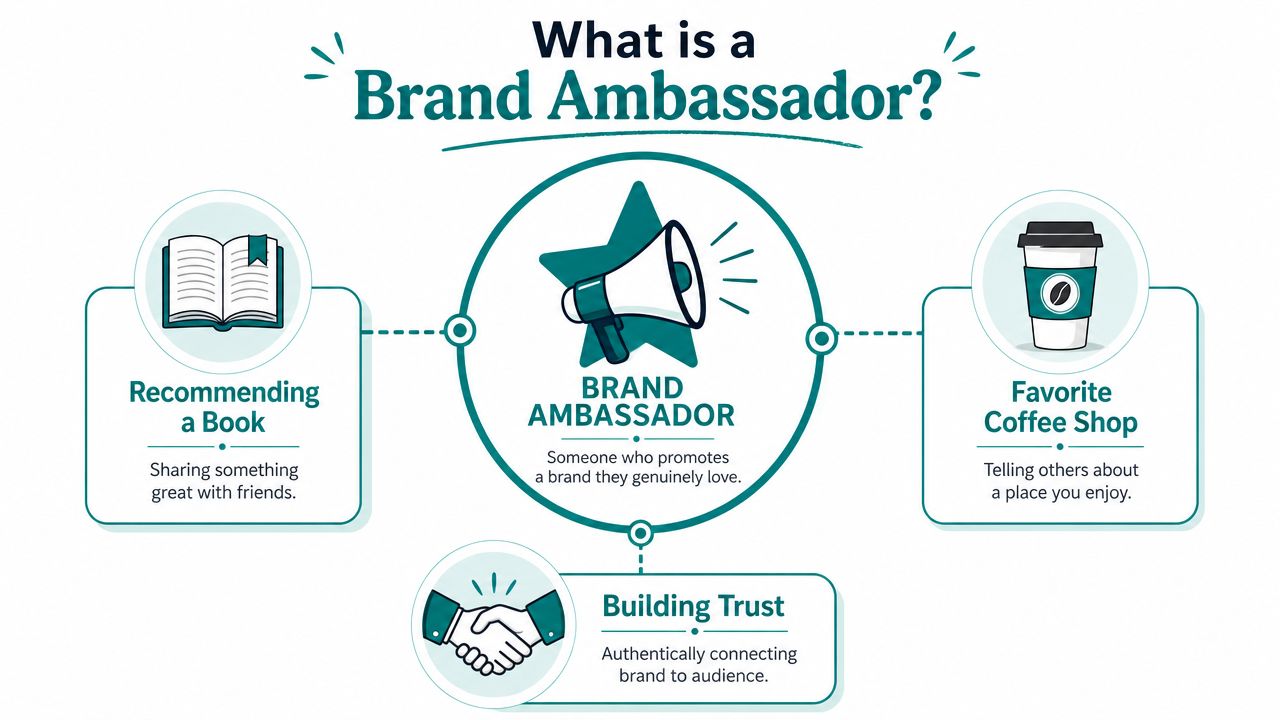
A brand ambassador is someone who talks about a product or company they like. In plain language, it's a trusted recommendation with a business structure around it.
Think of how you tell a friend about a great walking shoe, a skincare product, or the coffee shop with the kind barista who remembers your order. You aren't performing. You're sharing something you believe is worth mentioning. Brand ambassadorship works in a similar way, except the brand may give you a link, a code, or a formal partnership agreement.
 Brand Ambassador as someone who authentically promotes a brand they genuinely love." />
It's not just for celebrities anymore
The role has changed. According to InfluenceFlow's guide to building ambassador programs, Brand Ambassador work has shifted from mainly celebrity endorsement to a structured recruitment process for everyday creators. Modern programs use application forms, clear criteria, and unique links to track performance.
That matters because it means there's a place for regular women with real voices.
If you want a fuller look at how these partnerships work behind the scenes, this guide on what a Brand Ambassador program is can make the terminology feel much less intimidating.
Where Affiliate Marketing fits
You'll often hear affiliate marketing mentioned nearby. That means recommending a product and earning a commission if someone buys through your link. Not every Brand Ambassador role is the same as Affiliate Marketing, but they often overlap.
A simple example looks like this:
- You use a product and like it
- You share it in a post, email, or video
- Someone clicks your link or uses your code
- You may earn a commission or receive perks, depending on the program
At this point, people sometimes get skeptical, and that's healthy.
Practical rule: If a partnership expects you to praise products you don't use or understand, walk away.
Is this a scam
Some online opportunities are not legitimate. That's real. Caution is wise.
A healthy Brand Ambassador opportunity usually feels professional. The brand explains expectations, gives you a clear application path, and tells you how tracking or rewards work. A questionable one often feels vague, rushed, or oddly flattering without saying anything concrete.
If you're worried you're too old or not tech-savvy enough, take a breath. Brands aren't only looking for trendy editing tricks. Many want people who know how to communicate with warmth, honesty, and consistency. Those are strengths many midlife women already have.
Finding Your Perfect Brand Partner
A lot of beginners make the same mistake. They ask, "Who will accept me?" when the better question is, "Who fits me?"
That shift changes everything.
The right brand partner doesn't just match your niche. It should also match your values, your voice, and the kind of audience trust you're trying to build. If you love simple home organization, a practical kitchen brand may fit better than a flashy beauty campaign. If your audience responds to wellness, comfort, and everyday routines, choose brands that live in that world.
Where to look
You don't need insider connections to start.
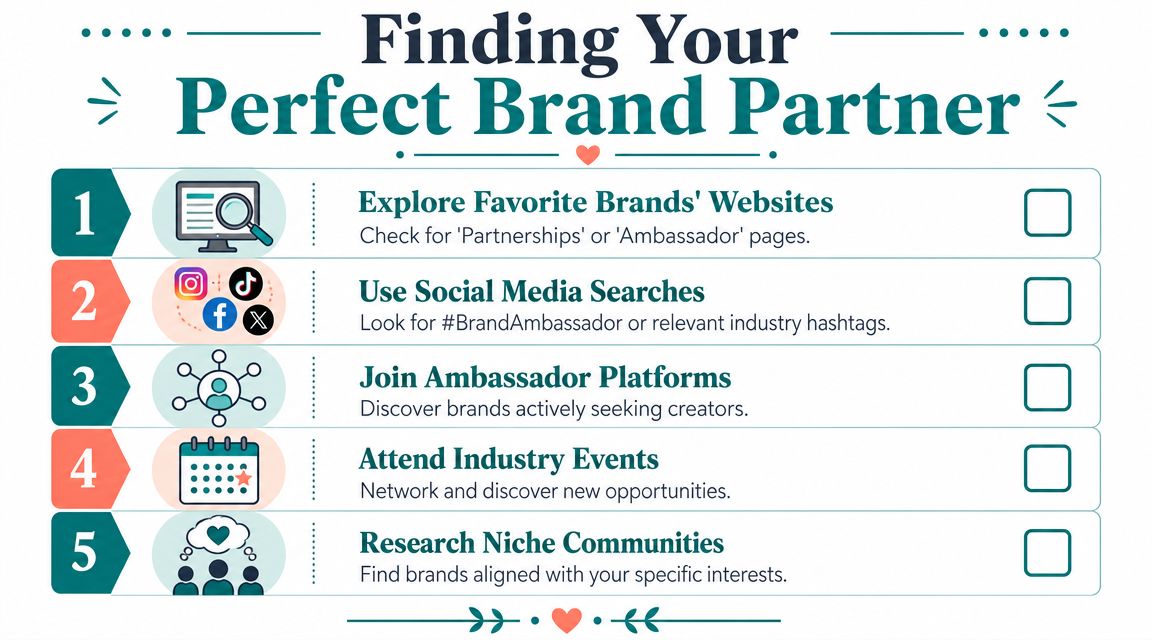
Try a few simple places:
- Brand websites. Look for pages called ambassador program, creator program, partnerships, or affiliates.
- Social media bios and posts. Some brands mention open applications in Instagram or TikTok bios.
- Creator platforms. Some platforms collect active opportunities in one place.
- Communities in your niche. Facebook groups, creator groups, and topic-specific communities often mention open programs.
- Education resources. If you want a practical overview of how creators land brand collaborations, that can help you spot what brands tend to expect.
Payment isn't always simple
Many new creators get confused here.
According to Modash's overview of Brand Ambassador program examples, many programs offer free products or affiliate commissions instead of direct pay. That doesn't automatically make them bad. But it does mean you need to judge whether the opportunity offers real long-term value or is just unpaid promotion dressed up as a privilege.
Here is a simple way to think about it.
| Evaluation Question | What to Look For (Green Flags) |
|---|---|
| Do I already like this brand? | You'd talk about it even without a script |
| Is there a clear benefit for me? | Product, commission, exposure, training, or relationship value is explained plainly |
| Does the brand treat this as ongoing? | The opportunity sounds like a long-term relationship, not a one-off ask for free labor |
| Can I see how results are tracked? | The brand mentions links, codes, dashboards, or another clear process |
| Does this fit my audience? | The product would make sense to the people who already trust you |
| Do the expectations feel realistic? | Posting requirements, timelines, and communication feel manageable |
A small story to keep in mind
One woman I know almost joined a program because she was so relieved that someone seemed interested. Then she looked closer. The brand wanted frequent content, broad rights to reuse her photos, and no clear explanation of compensation. She passed.
That was a smart move.
Sometimes confidence looks like applying. Sometimes it looks like saying no.
A good partnership should leave you feeling respected, not used.
Your Brand Ambassador Application Checklist
The application form is often the part that makes people freeze. The boxes look official. The questions feel loaded. You start wondering if your audience is too small or your experience isn't impressive enough.
Most of the time, the form is simpler than it looks.
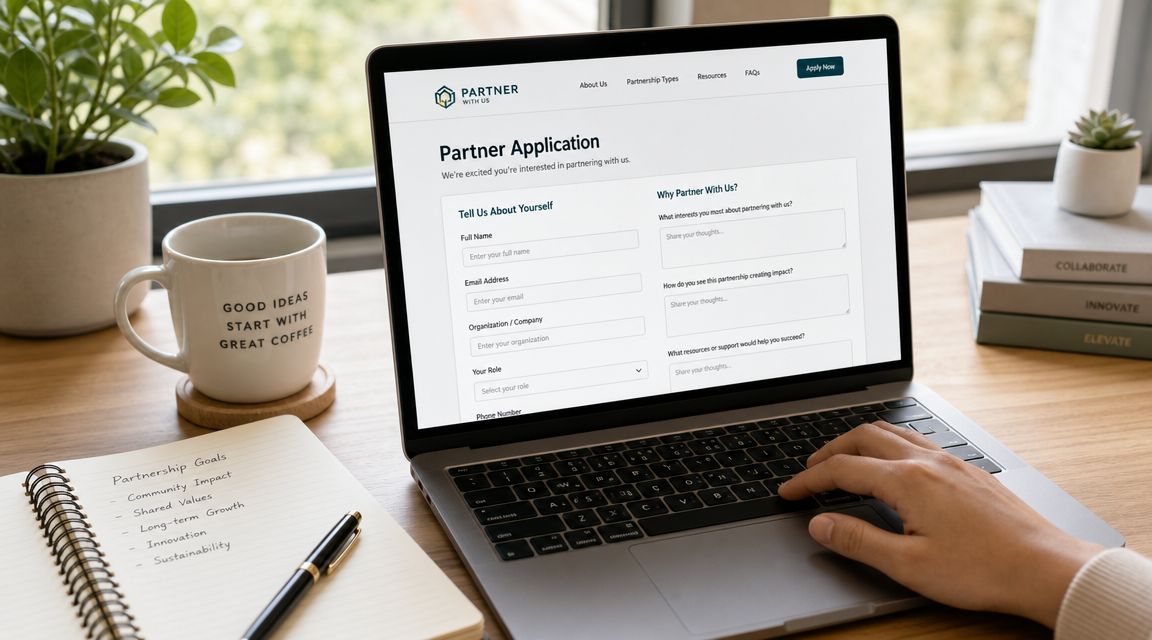 Brand Ambassador application form on a laptop next to coffee and notebooks." />
According to Aspire's glossary on Brand Ambassador programs, brands are moving away from choosing ambassadors by follower count alone. They now prioritize genuine product fit, engagement quality, and authenticity, which gives smaller niche creators an advantage.
That means your job in a Brand Ambassador application is not to sound big. It's to sound clear, credible, and aligned.
Common application fields and how to answer them
Tell us about yourself
This isn't asking for your life story. It's asking who you are, what you create, and who you connect with.
A simple version might look like this:
I'm a midlife lifestyle creator who shares honest content around home routines, wellness, and practical everyday products. My audience is made up of women who value simplicity, trust, and recommendations that feel realistic rather than trendy.
That works because it tells the brand your theme, your audience, and your tone.
Why do you want to partner with us
Don't write what you think sounds impressive. Write what is true.
Try this approach:
- Mention real familiarity with the product or brand
- Connect it to your audience
- Show that you understand the brand's style
Example:
I've followed your brand because your products fit the kind of daily life I share online. I focus on practical recommendations for women who want quality and ease, and I believe your products would feel natural in my content because they already match the routines and values I talk about.
Describe your audience
If your audience is small, don't apologize.
Say something like:
My audience is a close-knit community of women interested in realistic wellness, home life, and building income in midlife. I value conversation and trust, and I tend to get strong responses when I share products that genuinely fit their needs.
That phrase, close-knit community, is far stronger than "I only have a small following."
What brands want to see
A strong application usually communicates these things:
- Audience fit. Your followers make sense for the product.
- Content consistency. You show up regularly.
- Personal credibility. You sound like someone who means what she says.
- Ease of partnership. You seem organized, responsive, and thoughtful.
If seeing the process in action helps, this video gives a useful visual walk-through before you submit your own materials.
A simple pre-submit checklist
Before you press send, check these:
- Your profile links work. Test Instagram, TikTok, blog, YouTube, or newsletter links.
- Your bio matches your niche. Brands should understand what you talk about in seconds.
- Your recent posts reflect your voice. Remove anything confusing or off-brand if needed.
- Your email sounds professional. A simple address with your name works well.
- Your answers sound human. Don't stuff them with buzzwords.
If your content feels honest and your audience trusts you, you're already bringing something many brands need.
Crafting Your Simple Creator Portfolio
If the words "creator portfolio" make you think of graphic design software and a complicated media kit, let me make this easier. You do not need a fancy presentation.
You need a clean one-page introduction.
A simple creator portfolio, sometimes called a one-sheet, helps a brand understand who you are at a glance. You can make it in Canva, Google Docs, or even a neat PDF built from a basic template. The goal isn't to impress with design. The goal is to reduce confusion.
What to include
Think of this as your professional snapshot.
Include these five pieces:
- A short bio. Two or three sentences about who you are, what you create, and who you serve.
- A friendly photo. A clear headshot or lifestyle photo with good light.
- Your audience summary. Describe the kind of people who follow you. Keep it plain and specific.
- Your best links. Add a few strong posts, blog articles, videos, or newsletter examples.
- Your contact details. Email, social handles, and any preferred way to connect.
A simple layout you can copy
You can structure the page like this:
Top section
Your name, photo, and one-line creator description
Middle section
A short bio, audience summary, and content topics
Bottom section
Links to your best work and your contact information
That's enough.
If you want support from a beginner-focused site that teaches brand ambassadorship, Affiliate Marketing, List Building, and simple systems for new creators, Victoria OHare offers that kind of step-by-step education.
What if you feel like you have nothing to show
You probably have more than you think.
Maybe you've written thoughtful captions. Maybe you've shared before-and-after home organization posts. Maybe you've reviewed books, wellness items, or kitchen tools in a way people responded to. Those are assets.
One woman I know delayed applying because she thought she needed a website first. She didn't. She used a one-page PDF, linked to a few Instagram posts she was proud of, and introduced herself clearly. That was enough to begin.
Perfection isn't the standard here. Clarity is.
Reaching Out and Following Up With Confidence
Pressing send can feel oddly personal. Even when it's "just email," it can bring up old fears about rejection, awkwardness, or not sounding professional enough.
I remember drafting an outreach message and staring at it for far too long. What helped was changing the meaning of the moment. I wasn't begging for approval. I was starting a professional conversation.
That small shift makes outreach much easier.
Know what happens after you apply
Some brands reply quickly. Others take longer. Some invite a short call. Some ask for examples of content. According to Aspire's guide to ambassador program tactics, a high-performing application process is often a funnel that includes screening, content review, a short interview, and a trial period.
So if a brand doesn't say yes immediately, that doesn't mean you failed. It may mean you're in a normal review process.
A simple outreach email
Use this if a brand doesn't have a formal Brand Ambassador application page.
Subject: Potential Brand Ambassador partnership
Hi [Brand Name Team],
My name is [Your Name], and I create content around [your niche or topic]. I share practical recommendations with an audience of [brief audience description], and your brand stood out to me because [specific reason].
I already appreciate your [product, message, or brand style], and I believe it aligns well with the kind of content I create. I'd love to explore whether you have a Brand Ambassador, affiliate, or creator partnership opportunity available.
You can view my content here: [social link or portfolio link]
Thank you for your time,
[Your Name]
[Your email]
A gentle follow-up email
Wait a reasonable amount of time, then send something short and calm.
Subject: Following up on my application
Hi [Name or Brand Team],
I wanted to follow up on my recent application for your ambassador program. I know your team may still be reviewing submissions, but I wanted to briefly reiterate my interest in partnering with your brand.
My content focuses on [brief niche], and I believe there's a strong fit between your products and the audience I serve. If you need any additional information, I'd be happy to send it.
Warmly,
[Your Name]
If you'd like more examples you can adapt, this resource on an influencer outreach email template can help you find wording that feels natural.
Three small reminders before you send
- Keep it specific. Mention one real reason the brand fits you.
- Keep it brief. Respect their inbox.
- Keep it human. You don't need corporate language to sound professional.
Confidence in outreach doesn't mean sounding bold. It means sounding clear.
Your First Steps After Saying Yes
Getting accepted can feel exciting and a little unnerving. Suddenly you're not wondering if a brand will work with you. You're wondering what to do next.
Start simple.
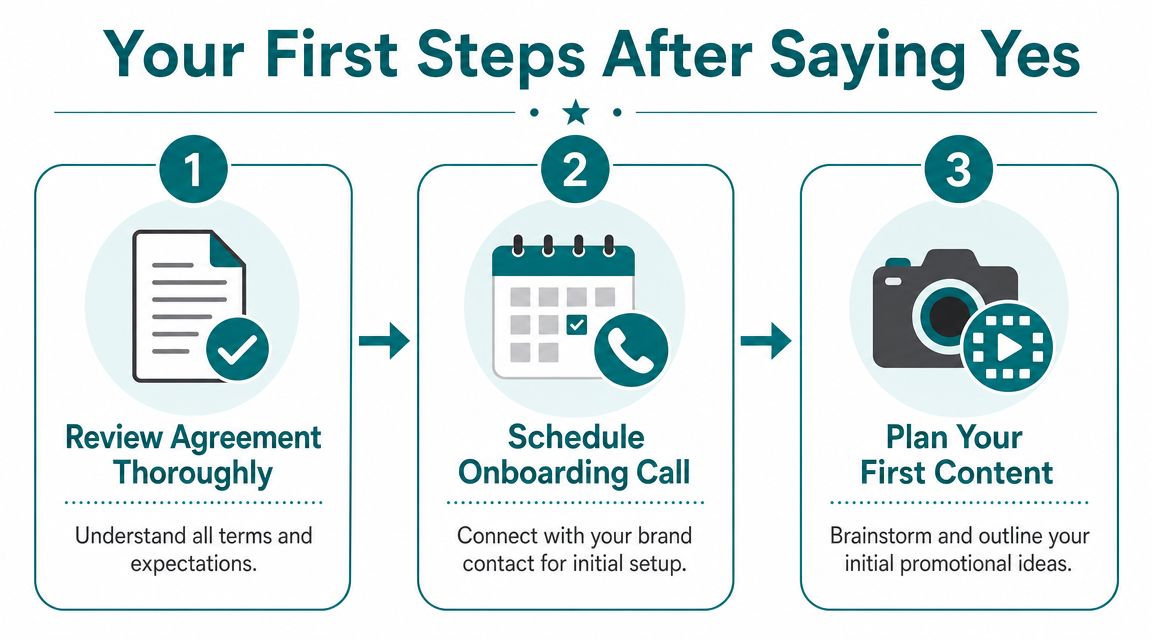 Brand Ambassador after signing an agreement." />
According to the SocialLadder white paper on the 80-20 rule in ambassador marketing, 14% of ambassadors generate 80% of a program's ROI. That tells us something important. Brands care greatly about fit and follow-through because a smaller group of well-matched ambassadors often drives most of the results.
You do not need to be the loudest person online. You need to be the right person for the right audience.
Focus on these first three actions
Learn your tracking link or code
Many programs give you a unique link, a discount code, or both. Make sure you know where to find it, how it works, and where clicks or conversions are tracked. This is part of how the brand measures your contribution.
If you don't understand the dashboard, ask. That isn't bothersome. It's professional.
Plan one honest piece of content
Don't try to create ten posts at once.
Start with one useful piece of content that fits your normal style:
- A short review
- A routine post
- A before-and-after story
- A simple email recommendation
- A video showing how you use the product
The best first post usually feels natural, not forced.
Start building your email list
Social media matters, but an email list is something you own. If someone follows you on a platform, the platform controls the relationship. If someone joins your email list, you have a more direct connection.
That matters for long-term peace of mind.
A brand partnership can bring in income today. An email list can help you build an asset for tomorrow. Together, they create more stability than relying on one paycheck or one platform alone.
You are not too late for this. You are early enough to begin from where you are, with what you know today, and to keep learning as you go.
If you'd like gentle, beginner-friendly help as you learn this path, Victoria OHare shares step-by-step guidance for midlife women and new creators building income through brand ambassadorship, Affiliate Marketing, and List Building. The next five years will pass either way. The only question is whether you'll use them to build something that gives you peace of mind.