
If you're looking at your Retirement savings and feeling a quiet sense of unease, please know you're not alone. So many women in their 50s and 60s feel like they're financially behind, not because they made mistakes, but because life, with all its beautiful and messy turns, happened.
The world of online income can feel like a noisy, complicated place designed for people much younger. You might be doubting yourself, wondering, "Do I have the tech skills for this?" or "Is it too late for me to learn something new?"
Let's take a deep breath and reframe that. Your life experience is your single greatest asset. And there's a calm, quiet corner of the internet where that wisdom is valued. It's called Affiliate Marketing, and it's much simpler than it sounds. At its heart, it's just recommending products you trust and earning a small thank-you commission when someone buys through your link. No inventory, no customer service headaches, just honest recommendations.
I understand your caution. The internet does have its share of scams. That's why we're not talking about "get rich quick" schemes. We're talking about building a small, sustainable asset that provides peace of mind. The tech can be learned, one simple step at a time. I remember feeling completely overwhelmed by all the tools and platforms at first.
Affiliate marketing tools help with the practical side. They track clicks, organize links, show what content is working, and make payments easier to follow. That matters because Affiliate Marketing has become a meaningful part of online commerce, accounting for about 16% of e-commerce sales in the U.S. and Canada according to Rewardful's Affiliate Marketing statistics roundup. For beginners, that tells us something important. This isn't a tiny fringe activity. It's a real business model with real infrastructure behind it.
To help you avoid the usual overwhelm, I've gathered beginner-friendly Affiliate Marketing tools and grouped them by the job they do. You do not need all of them. Most beginners need a small, simple setup, not a giant pile of subscriptions.
You are not behind. You are learning a new skill, and skills can be learned at any age.
1. impact.com
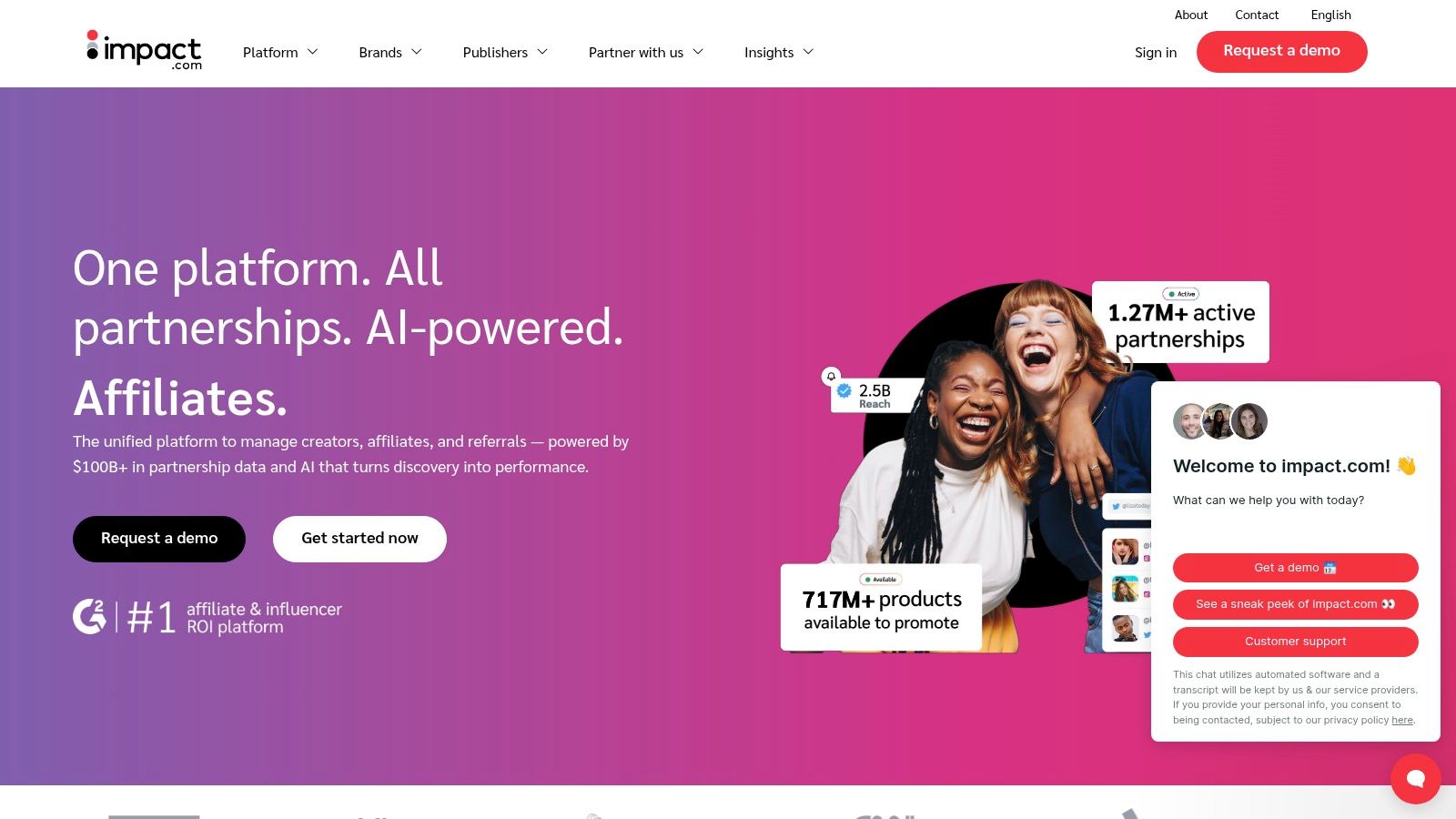
impact.com is best understood as a large partnership platform. Instead of handling only one kind of affiliate relationship, it brings affiliates, creators, ambassadors, and brand partnerships into one system.
If you're a total beginner, that may sound bigger than what you need right now. That's okay. Sometimes it helps to know what the "grown-up version" of affiliate infrastructure looks like, even if you start smaller.
Why someone would choose it
A brand can use impact.com to manage tracking, contracts, commissions, and payouts in one place. On the partner side, the marketplace can help you discover programs across different industries.
That makes it useful for people who want room to grow. If you begin as a solo creator and later build a more serious content business, a platform like this can grow with you.
- All-in-one setup: It combines partner discovery, tracking, commissioning, and payouts.
- Built for many partner types: Helpful if your content eventually includes affiliate links, creator deals, or ambassador work.
- Clear transaction note: The platform says it charges a transaction fee when a partner sale happens.
Where beginners should be careful
impact.com can feel like a lot when you're still figuring out your first affiliate link. Its strength is breadth, but breadth can also feel heavy.
If your goal is to join a few programs and start recommending products you already use, you may prefer a more straightforward network first. If you want a gentle comparison of simpler starting platforms, this guide to best Affiliate Marketing platforms for beginners can help.
Practical rule: If a tool feels too big for your current stage, that doesn't mean you're failing. It just means it's not your first step.
You can explore the platform at impact.com.
2. Awin
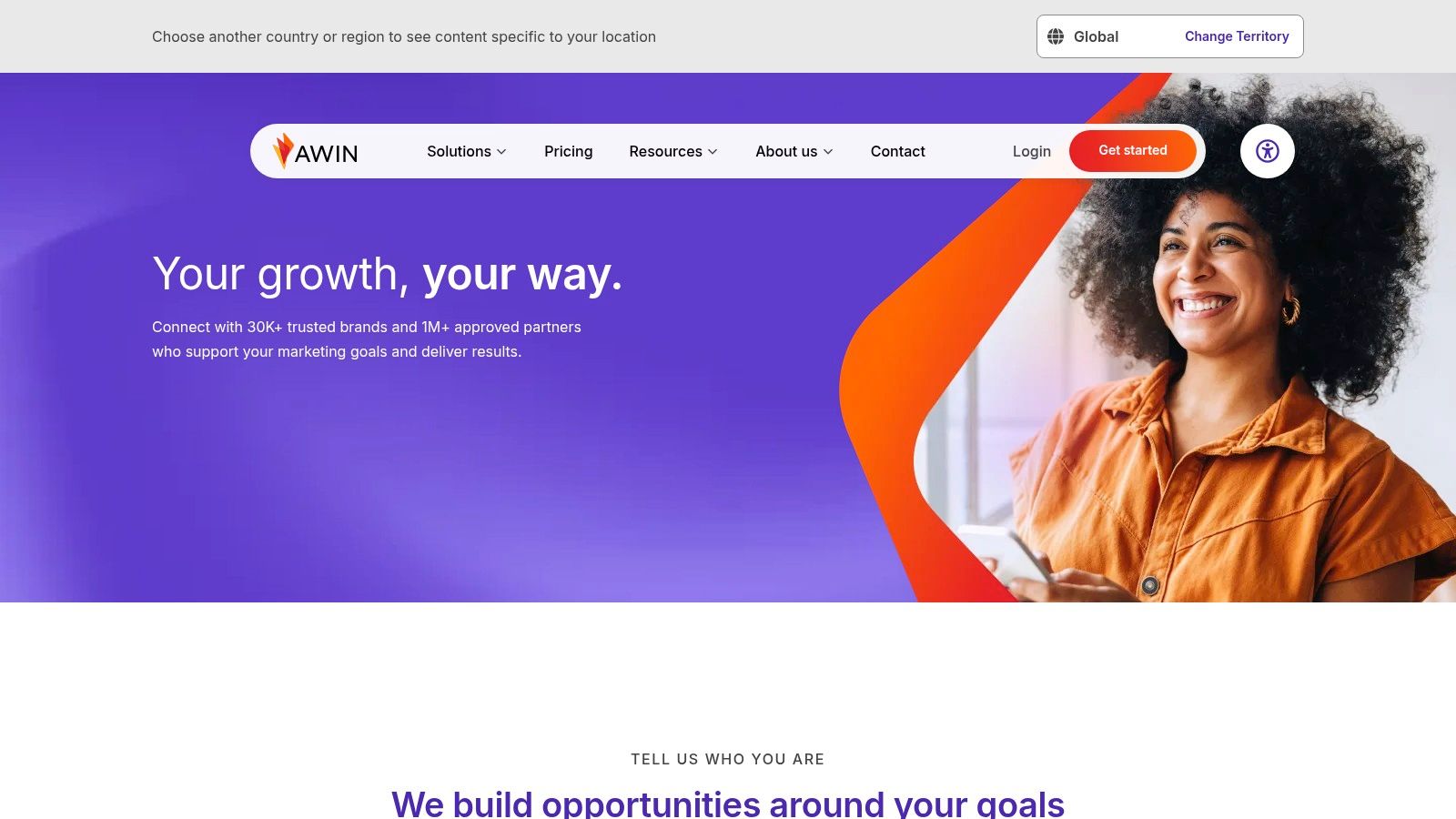
Awin is one of the easiest Affiliate Marketing tools to explain. It's a large affiliate network where publishers and brands meet. You join once, then apply to individual programs inside the network.
That matters because beginners often think they need to chase separate programs all over the internet. A network like Awin keeps things more organized.
What makes it friendly for learners
Awin covers many consumer categories, so it's useful if your niche isn't highly technical. If you write about home life, wellness, hobbies, style, gifts, or practical products, you may find offers that fit naturally.
Its Chrome extension for deep linking is also helpful. If you're browsing a brand's site and want to create a link to a specific product page instead of a homepage, that kind of shortcut can save time.
Awin also gives newer affiliates a clear place to begin with onboarding and documentation. When you're over 50 and feeling uncertain around tech, simple guidance matters more than flashy features.
A realistic downside
Some advertisers approve easily, and others are more selective. If your site is brand new, you might get a few rejections at first.
Please don't make that mean something personal. It usually means the advertiser is cautious, not that you're too late or not capable.
- Good fit for variety: Strong if you want access to many types of brands in one account.
- Useful linking tools: Helpful for creating links to exact product pages.
- Something to note: Publisher signup includes a small refundable deposit.
You can visit Awin.
3. CJ
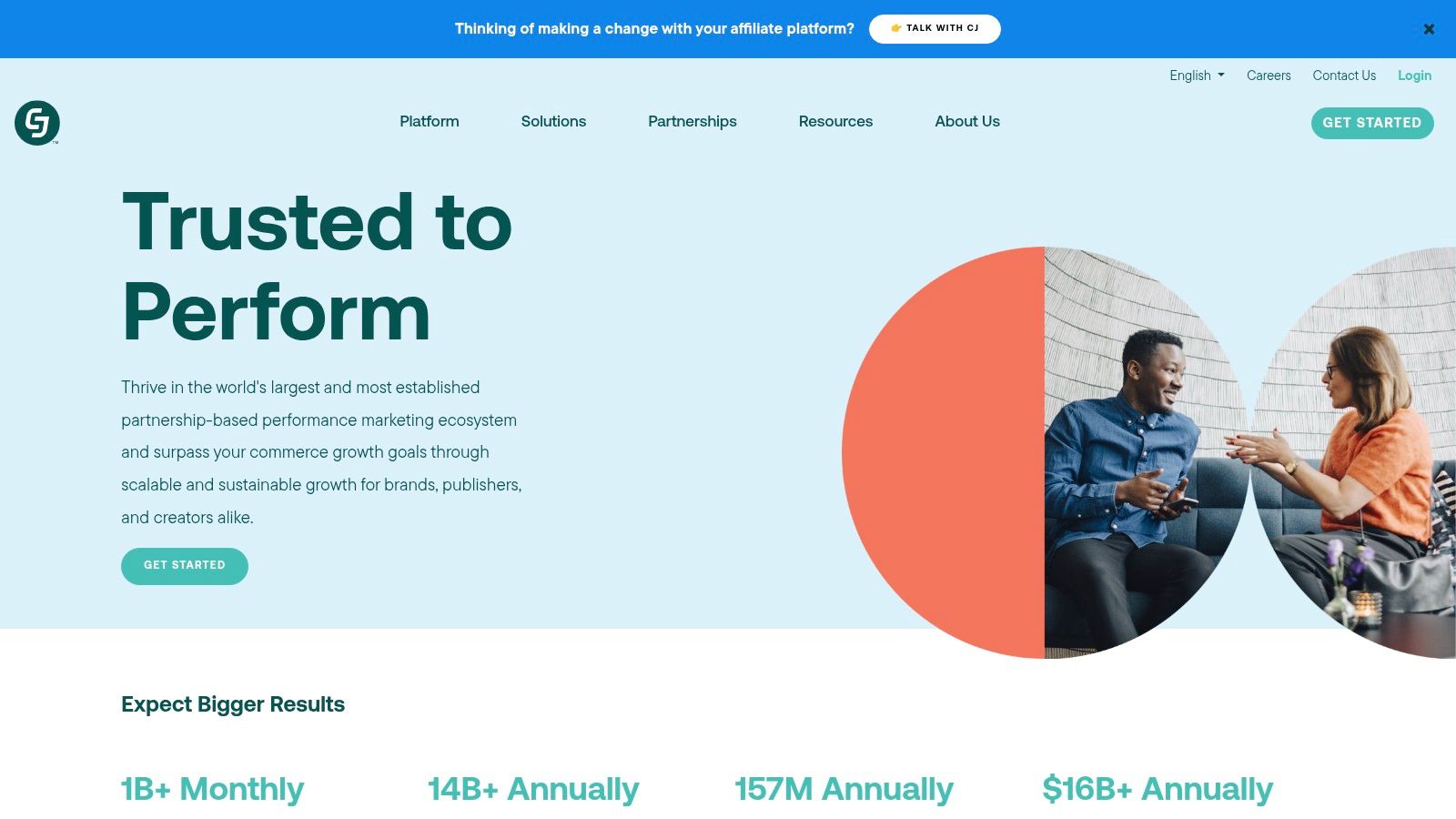
CJ, which many people still call Commission Junction, has been around long enough that it often feels like part of the basic Affiliate Marketing vocabulary. For beginners, the simplest way to think about it is this. CJ is another major network where you can join brand programs and get your tracking links in one central dashboard.
Some people like CJ because it gives them access to recognizable brands. That can make content feel more trustworthy when you're writing product recommendations or reviews.
What it does well
CJ includes deep linking tools and utilities that help you build links more precisely. That means you aren't stuck sending readers to a generic homepage.
It also offers integrated payment options and a global advertiser marketplace. If you're serious about building something steady, reliable tracking and organized payments matter more than a fancy interface.
One reason tools like CJ continue to matter is that affiliate work is no longer just "put a link on a page and hope." Tracking has become more technical. We Can Track's affiliate tracking statistics note that in 2026, Google Analytics is still the most widely used tracking tool among affiliate marketers at 56%, while real-time tracking tools are used by 78% and cross-device tracking by 53%. You don't need to master all that on day one, but it helps explain why established networks still matter.
Where it can feel hard
CJ's dashboard can feel dense the first time you log in. I remember the first time I opened a tool like this and immediately wanted to close the tab and go make tea instead.
That's a normal reaction. Give yourself permission to learn one button at a time.
- Free to join as a publisher: Helpful when you're starting carefully.
- Broad brand mix: Useful if your content spans more than one category.
- Less beginner-friendly visually: The interface may take patience.
You can learn more at CJ.
4. PartnerStack
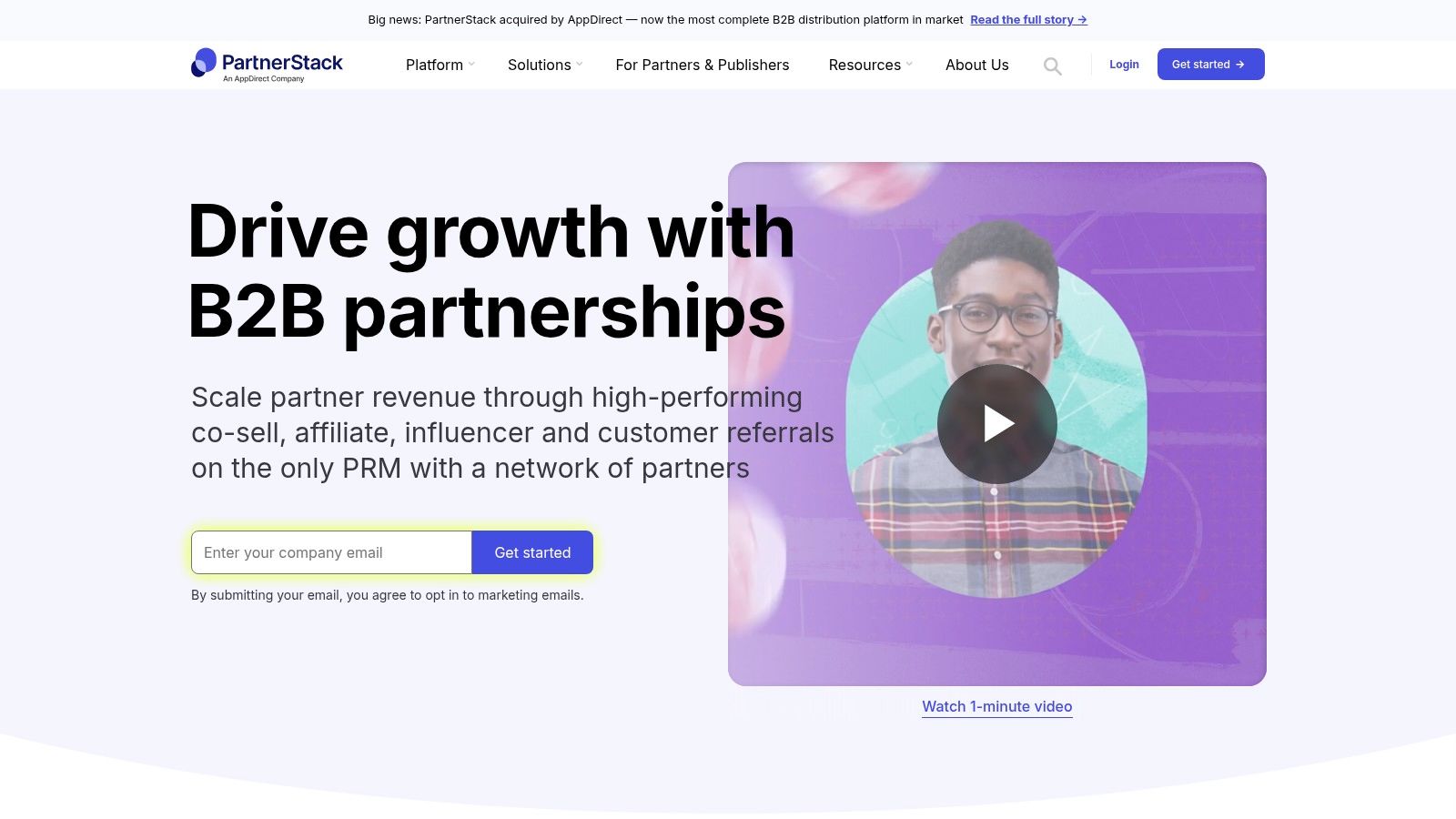
PartnerStack is a very different kind of platform. It leans heavily toward software and business tools, which means it makes more sense if your audience wants digital products, subscriptions, or professional tools rather than household goods.
If you talk about email platforms, online courses, creator tools, website software, or systems that help people work online, PartnerStack may feel like a better fit than a retail-heavy network.
Why it stands out
The central dashboard is one of its most appealing parts. You can manage links, resources, and withdrawals for multiple programs from one account.
That simplicity matters more than people realize. Many Affiliate Marketing tools promise power, but beginners often need calm organization first.
Software affiliate programs can also appeal to people who prefer recommending tools they actively use. If you already rely on a platform in your own business, it's often easier to talk about it authentically.
Where it won't fit
If your content focuses on fashion, gifts, beauty, books, or home products, PartnerStack may feel too narrow. Its strength is SaaS and B2B.
That's not a flaw. It's just a reminder that the right tool depends on the kind of recommendations you want to make.
- Best for software-focused content: Good for tutorials, business blogs, and creator education.
- One dashboard for many programs: Easier to manage than juggling many separate logins.
- Not ideal for general shopping content: Less useful for broad lifestyle niches.
You can browse available programs at PartnerStack.
5. Lasso
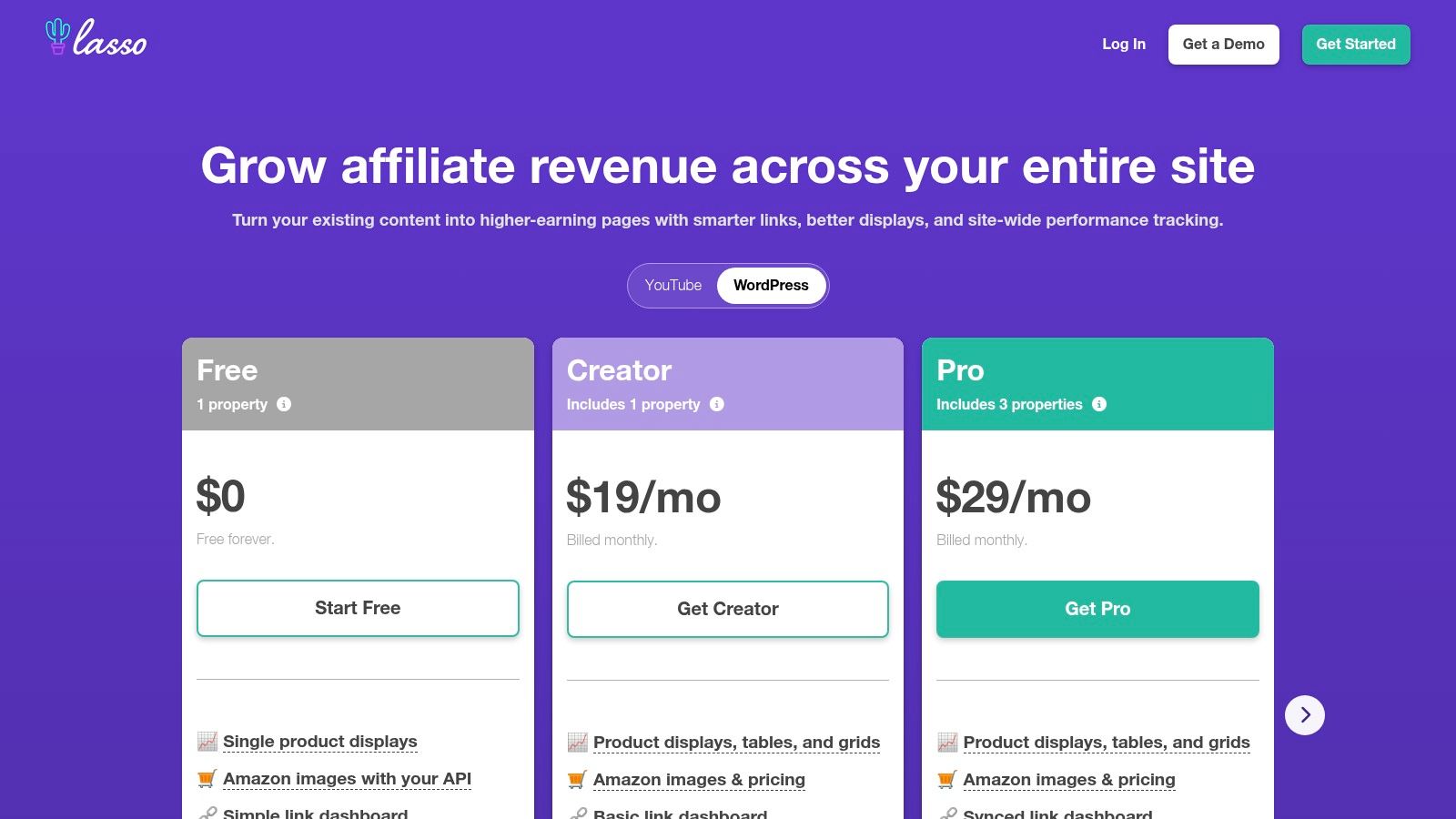
Lasso is for the part of Affiliate Marketing that happens on your own website. Instead of helping you find programs, it helps you present products more clearly and manage your links better.
This is especially useful if you use WordPress and want your recommendations to look clean and easy to trust.
What job it solves
Let's say you write a blog post called "My favorite tools for organizing a small craft room." You don't want a messy page full of raw links. You want neat product boxes, comparison tables, and links that still work later.
Lasso helps with that. It also alerts you to broken links, which is one of those small problems that subtly steals income if nobody catches it.
Affiliate marketing today is also shaped by automation and traffic quality concerns. Electro IQ's Affiliate Marketing statistics report that 79.3% of affiliate marketers use AI to create content, and one 2025 source estimated that 17% of affiliate traffic in 2022 was fraudulent, creating $3.4 billion in losses for companies. That helps explain why modern tools focus on monitoring, attribution, and keeping links healthy, not just making them look pretty.
Why beginners often like it
Lasso feels practical. It improves the part your readers see.
If you want help creating useful blog posts around affiliate offers, this walkthrough on how to create content for Affiliate Marketing pairs well with a tool like Lasso.
- Good for WordPress users: Strongest if your site is built there.
- Helpful visual displays: Product boxes and comparison elements can make content easier to follow.
- Ongoing maintenance support: Broken link alerts are easy to appreciate later.
You can explore it at Lasso.
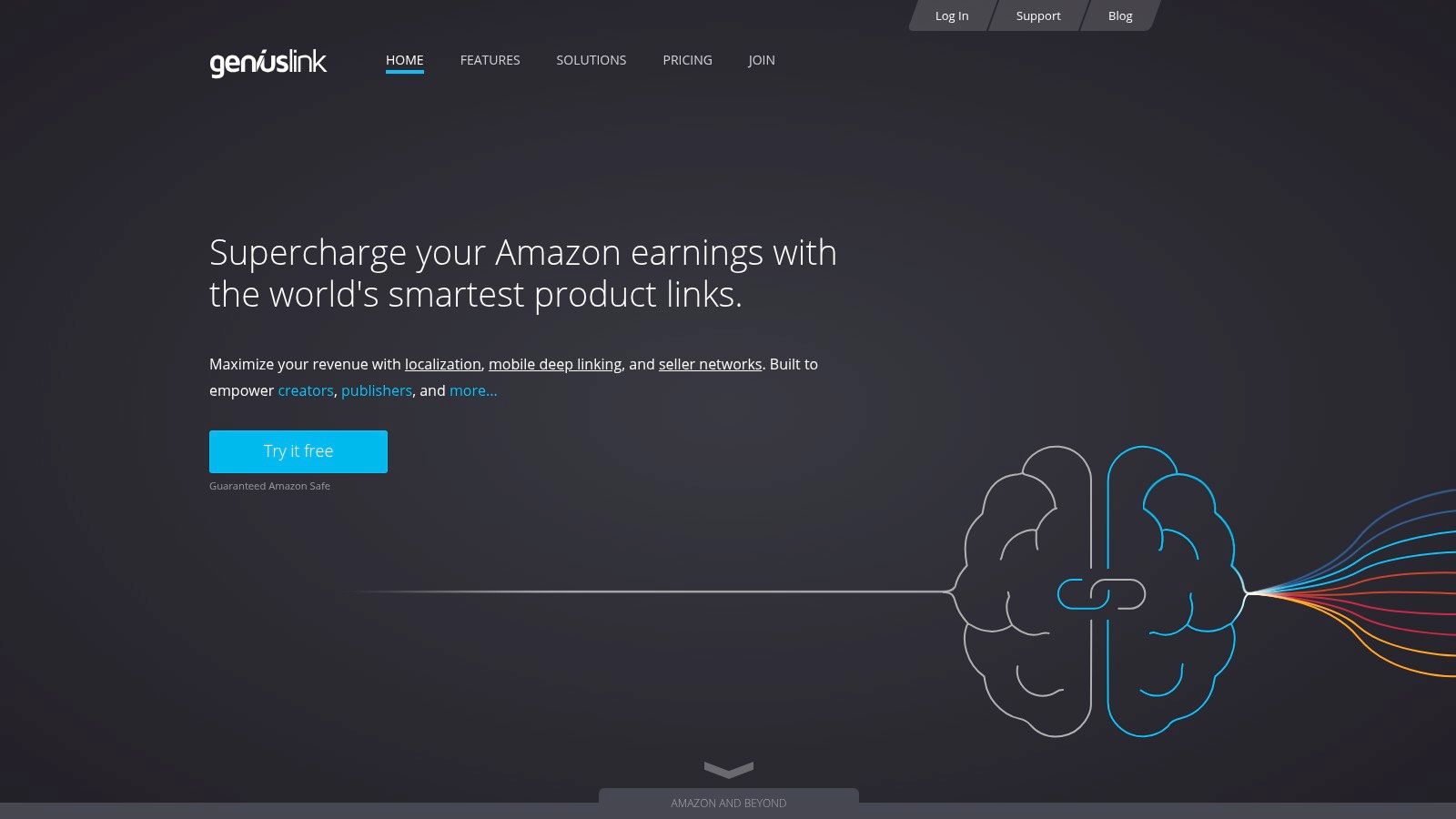
6. Geniuslink
Geniuslink does one thing very well. It makes affiliate links smarter, especially if you use Amazon or have readers in more than one country.
That may sound advanced, but the core idea is simple. Instead of sending everyone to the same place, Geniuslink can route people to the version of a store that makes sense for them.
Why that matters
If someone in another country clicks your Amazon link and lands in the wrong storefront, the buying experience can break down quickly. Geniuslink helps reduce that friction.
It also supports Choice Pages, which let you send people to multiple retailer options. That's useful when you don't want to push one store too hard or when your audience likes to compare where to buy.
For bloggers, YouTubers, and content creators who mention products often, this can save a surprising amount of manual work.
What to think about before buying
Geniuslink uses per-click pricing, so your cost can rise as traffic grows. For a small site, that may be perfectly manageable. For a very large site, you may want to compare the model against a flat-fee option.
This is one of those tools where the value is convenience and better routing, not beginner bragging rights.
If a link tool saves you confusion, missed commissions, and constant manual fixes, that's valuable even if nobody else sees it.
- Strong Amazon support: Great if you recommend products sold there.
- Useful for international audiences: Helps localize links automatically.
- Best when link management is already part of your routine: Probably not your very first purchase.
You can test it at Geniuslink.
7. Skimlinks
Skimlinks appeals to people who don't want to apply to individual affiliate programs one by one. It can automatically turn ordinary merchant links on your site into affiliate links.
For some beginners, that sounds like a relief. And, I understand why. When you're already learning blogging, content, and audience building, one more dashboard can feel like too much.
Where it shines
If you publish editorial content with lots of product mentions, Skimlinks can make monetization feel less manual. You add the setup, publish naturally, and the platform handles much of the affiliation behind the scenes.
It also gives centralized reporting and payouts across many merchants. That can be cleaner than managing many tiny accounts.
This kind of simplification matters because tool stacks can sprawl fast. Elementor points out that beginners don't need every available tool. A website platform, an affiliate network, and Google Analytics are enough to start in many cases, according to Elementor's guide to Affiliate Marketing tools.
The tradeoff
Convenience usually comes with less control. In some cases, joining a merchant directly may be better. In other cases, Skimlinks' simplicity wins.
That doesn't make one path right and the other wrong. It depends on whether you value control or ease more at this stage.
- Fast setup for editorial sites: Helpful if your content mentions many products.
- Centralized reporting: Easier to review in one place.
- Possible downside: Aggregator convenience can mean lower earnings than direct relationships in some cases.
You can check it out at Skimlinks.
8. Sovrn Commerce
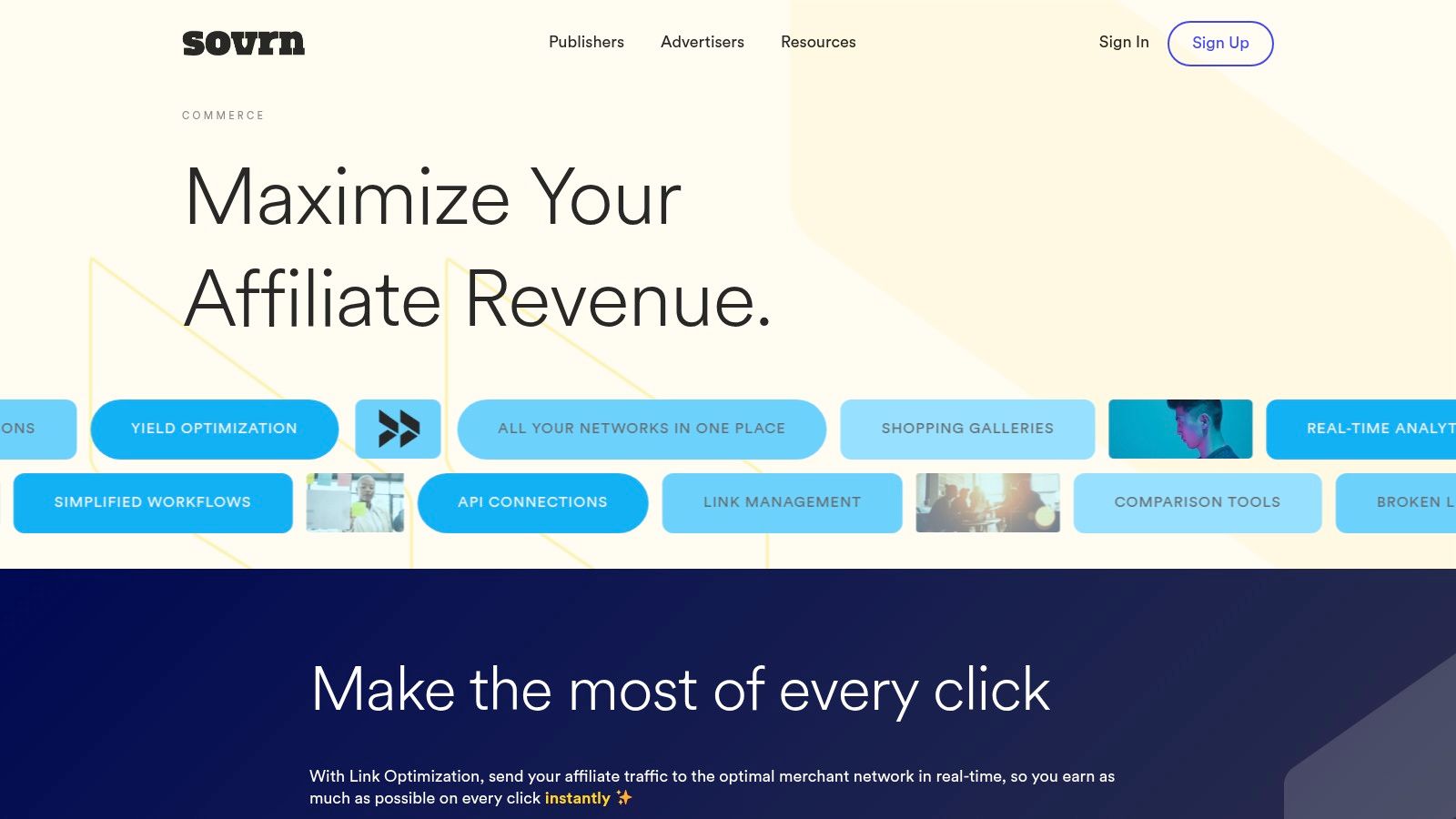
Sovrn Commerce, formerly known as VigLink, lives in a similar neighborhood as Skimlinks. It helps creators monetize links across many merchants without forcing them to manage every merchant relationship separately.
If your heart sinks at the thought of juggling lots of approvals and dashboards, tools like this can feel kinder.
What it's good for
Sovrn Commerce is useful when you want broad merchant coverage and faster onboarding. It also gives link-level and product-level insights, which can help you understand what people are clicking.
That's an important shift in Affiliate Marketing. A lot of success comes from understanding behavior, not guessing. The broader affiliate platform market reflects that steady demand for infrastructure. Grand View Research reports the global Affiliate Marketing platform market was valued at USD 22,577.9 million in 2025 and is projected to reach USD 35,703.2 million by 2033, with a 5.9% CAGR from 2026 to 2033 in the Grand View Affiliate Marketing platform market report.
What to keep in mind
The payout cycle is commonly longer than some beginners expect. If you're hoping for very quick cash flow, that can feel disappointing at first.
This is why I always encourage people to view Affiliate Marketing as an asset-building process, not emergency money next week. It can become meaningful, but patience matters.
- Easy onboarding: Good if you want to begin without too many moving parts.
- Broad retailer coverage: Helpful for creators with wide-ranging content.
- Slower payout rhythm: Worth understanding before you rely on it.
You can learn more at Sovrn Commerce.
9. Affilimate
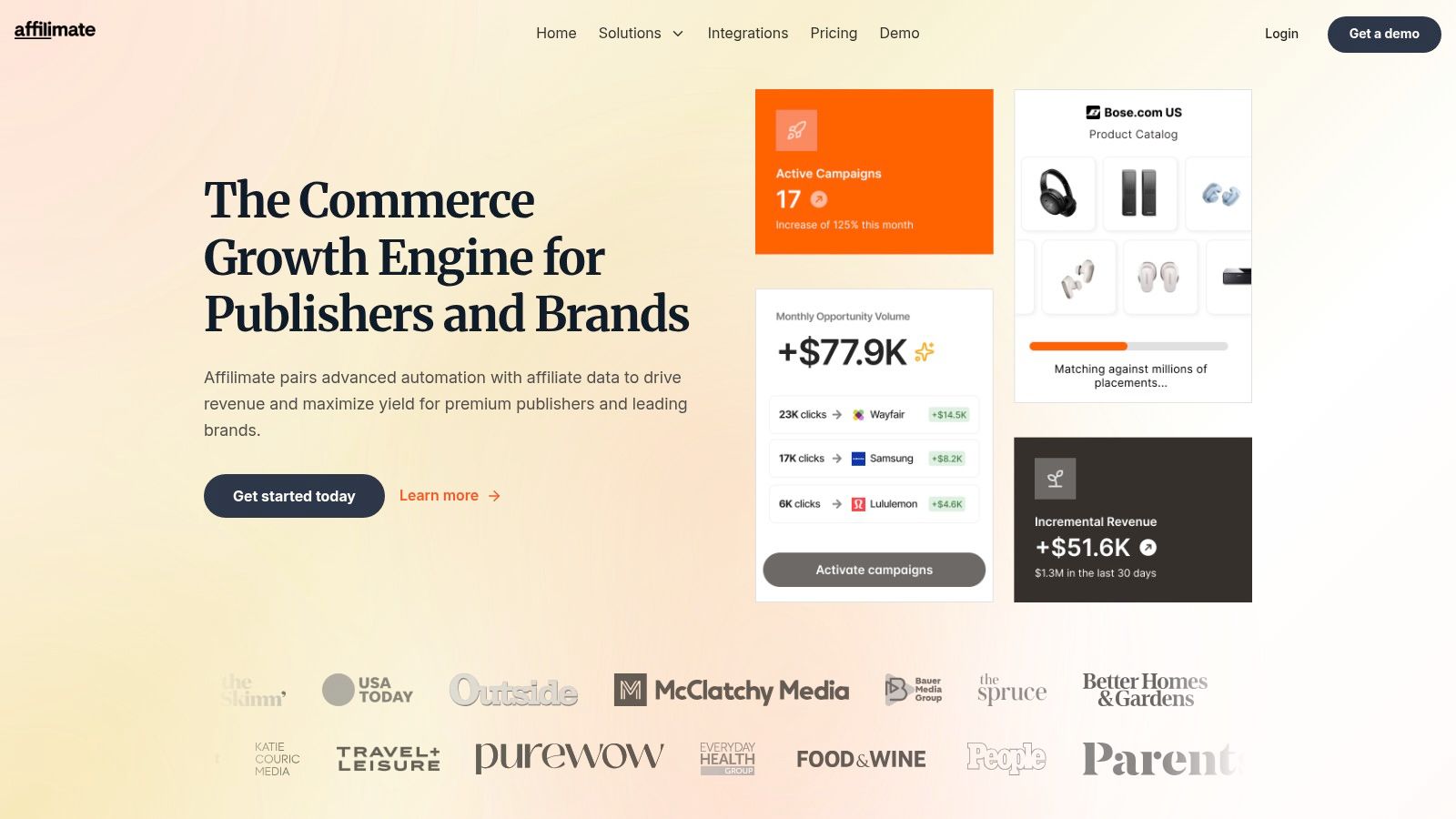
Affilimate is for the moment when you stop asking, "Did I make any money?" and start asking, "Which page, link, or article created that result?"
That's a more mature question, but it's a healthy one. It moves you from hope into clarity.
Why this tool can be powerful
Affilimate pulls reporting together across many networks and shows revenue in a more content-specific way. If you have several articles, several merchants, and several traffic sources, that kind of visibility can replace messy spreadsheets.
It can help you see which article deserves an update, which merchant is underperforming, or which content style is unexpectedly working better than you thought.
If you publish review content, this matters. A thoughtful review site doesn't need more guesswork. It needs better visibility. If that topic is on your mind, these affiliate marketing reviews may help you think more clearly about content quality and trust.
Why it isn't a first-step tool for everyone
Affilimate makes more sense once you already have content live and affiliate links spread across platforms. If you haven't published much yet, this may be a "later" tool.
And that's fine. Not every good tool belongs at the beginning.
A gentle reminder: Your first goal is not advanced reporting. Your first goal is honest content that helps a real person make a decision.
- Best for content publishers: Especially useful for blogs and media-style sites.
- Unified reporting: Helpful if you use several networks at once.
- More advanced setup: Better once your content library starts growing.
You can request access at Affilimate.
10. Rakuten Advertising
Rakuten Advertising often appeals to beginners who want familiar names instead of random offers from companies they have never heard of. If you are over 50 and trying to avoid the feeling that Affiliate Marketing is full of questionable shortcuts, that matters.
Rakuten sits in the more established, retail-focused corner of Affiliate Marketing. For a simple mental model, it works like a department store directory. You log in to one place, browse brands, apply to programs, and manage links without chasing down each company on your own.
That can bring a little peace of mind.
Why it may feel safer for beginners
Some affiliate tools are built for speed, testing, and squeezing out every possible click. Rakuten is easier to view as a helper for one clear job. It helps you find retail brands and manage those partnerships in one dashboard.
If your content is about home products, gifts, beauty, clothing, or everyday recommendations, that setup can feel more familiar than jumping into highly technical platforms first.
The legitimacy piece matters too. Seeing known retailers inside an established network can make the whole process feel more grounded. You are still building trust with your readers, but you are not starting from a blank map.
What to expect before you join
Rakuten is not always the easiest first approval for a brand-new site. Some advertisers want to see that you already have clear content, a real audience focus, and a website that looks cared for.
If you get declined, read it as a timing issue, not a personal failure. A newer blog often needs a little more proof that it is active and useful. That is common in Affiliate Marketing, especially with retail brands that protect their reputation.
- Good match for retail content: Helpful for shopping guides, gift ideas, lifestyle topics, and household recommendations.
- One dashboard for many programs: Easier to handle than contacting individual merchants one by one.
- More selective approvals: Better once your site has a clear purpose and a few solid pieces of content.
You can explore programs at Rakuten Advertising.
Top 10 Affiliate Marketing Tools Comparison
| Tool | Core features | Best for (👥) | Ease/Quality (★) | Value/Pricing (💰) | Standout (✨/🏆) |
|---|---|---|---|---|---|
| impact.com | Marketplace, tracking, payouts, fraud controls | 👥 Brands scaling to enterprise & creators | ★★★★☆ | 💰 SaaS (contact) + 2.5% partner fee on sales | 🏆 All-in-one partner mgmt + marketplace ✨ |
| Awin | Large advertiser base, deep-link tool, publisher directory | 👥 Beginner→pro publishers across consumer categories | ★★★★☆ | 💰 Refundable sign-up deposit (publishers) | ✨ Massive merchant coverage & browser tools |
| CJ (Commission Junction) | Deep links, global advertisers, integrated payouts | 👥 Publishers targeting mid-market & enterprise brands | ★★★★☆ | 💰 Free to join (publisher) | ✨ Longstanding network; reliable payouts |
| PartnerStack | Central partner dashboard, SaaS marketplace, automated payouts | 👥 B2B/SaaS affiliates & referral partners | ★★★★☆ | 💰 Program-dependent commissions (marketplace) | ✨ Best for recurring-revenue SaaS partnerships |
| Lasso | Product boxes, comparison tables, broken-link alerts (WP) | 👥 WordPress creators & product-review bloggers | ★★★★☆ | 💰 Paid plans for analytics/localization | ✨ High-converting product displays & link Health |
| Geniuslink | Amazon geo-routing, Choice Pages, mobile deep linking | 👥 Amazon-focused bloggers & YouTubers | ★★★★☆ | 💰 Per-click pricing; free 14‑day trial | ✨ Superior Amazon localization & mobile UX |
| Skimlinks | Auto-affiliation, centralized reporting, negotiated offers | 👥 Editorial sites wanting fast monetization | ★★★☆☆ | 💰 Takes % of commissions; consolidated payouts | ✨ Auto-monetize at scale without extra approvals |
| Sovrn Commerce | Auto-affiliate links, product-level insights, reports | 👥 Creators seeking quick onboarding & broad merchants | ★★★☆☆ | 💰 Aggregator rates; common net-90 pay | ✨ Fast sign-up + creator-focused analytics |
| Affilimate | Unified revenue attribution, heatmaps, page-level ROI | 👥 Content publishers & editorial teams | ★★★★★ | 💰 Demo/limited public pricing; network setup req. | 🏆 Actionable, publisher-centric revenue analytics ✨ |
| Rakuten Advertising | Central dashboard, retailer focus, program apps | 👥 US retail-focused publishers & bloggers | ★★★★☆ | 💰 Free publisher account; selective approvals | ✨ Trusted legacy network for mainstream retail |
Your Simple Next Step Choose Just One
You have a list of ten tools in front of you, and they can start to blur together fast. That is normal, especially if you are new to Affiliate Marketing and want to avoid getting pulled into complicated tech before you even begin.
The good news is simpler than it may seem. You are not choosing a whole business today. You are choosing one helper for one job.
That shift matters.
A beginner does not need a pile of dashboards, reports, and settings. You need a basic setup that feels trustworthy and manageable. A good way to sort these tools is to ask a simple question first. What job do you need help with right now?
If your first job is finding affiliate programs from established companies, start with a network such as Awin, CJ, or Rakuten Advertising. If your first job is promoting software subscriptions or business tools, PartnerStack is the more natural fit. If your website needs cleaner product boxes and easier link management, Lasso is built for that kind of work.
Some tools solve narrower problems, and that is a good thing. Geniuslink helps when you want links to send visitors to the right store or country, which is especially useful for Amazon-focused content. Skimlinks and Sovrn Commerce reduce setup work by turning merchant links into affiliate links across a wide group of retailers. Affilimate is better saved for later, once you already have content and want clearer reporting on what is earning. impact.com often makes more sense when your business grows and your partnerships become more layered.
You do not need to master all of that at once.
A kitchen analogy helps here. If you are making tea, you do not buy every appliance in the store. You reach for the kettle. Affiliate tools work the same way. Choose the one that fits the task in front of you, then ignore the rest until you need them.
That approach can bring a lot of peace of mind, especially for beginners over 50 who are rightly cautious about scams, hype, and platforms that feel harder than they should. Legitimate Affiliate Marketing usually looks plain at first. You join a real program. You add a tracked link to helpful content. You check whether anyone clicks. Then you improve one small part of the process.
Quiet work builds confidence.
If you feel stuck, make your next step as small as possible:
- Choose one topic you already know well.
- Choose one network or tool that matches that topic.
- Choose one product or service you trust.
- Create one helpful article, email, or video about it.
That is enough for a real start. It is also enough to tell you what you need next.
Many beginners get discouraged because they try to solve future problems before they have current ones. You do not need advanced reporting before you have links. You do not need link routing before you have traffic from more than one country. You do not need a bigger platform before you have a small system that works.
Start with the next clear step. Let the rest wait.
If you want guided, beginner-friendly training on Affiliate Marketing, owned audiences, and simple systems, Victoria OHare is one place to continue learning. You can do this.