
If you're over 50 and wondering whether it's too late to build income online, you're not alone. Many women feel behind financially, not because they failed, but because life happened. Careers changed, family came first, Retirement got closer, and the online world started to look louder and more complicated than ever.
You might already have a blog, or maybe you have notes, ideas, and half-written posts sitting in a folder. You may also be asking quiet questions you haven't said out loud yet. Can this really become something real? Am I too old to learn the tech? Is any of this legitimate?
You are not behind. You can learn this. And how to turn a blog into a business has much less to do with being trendy than it does with being useful, trustworthy, and consistent.
Your Second Chapter Starts Here
A lot of women reach this point carrying two worries at once. One is financial. The other is personal. You want more peace of mind, but you also don't want to feel foolish trying something new in a space that seems built for younger people.
That feeling makes sense.
A 2025 AARP report noted that 28% of women over 50 seek online side hustles, yet many guides still skip over the actual barriers this group faces, especially tech overwhelm. That's why a calm, beginner-friendly approach matters so much.

Your experience is not the problem
The internet often rewards noise. But trust is built differently.
If you've raised children, managed a household, cared for parents, worked through difficult seasons, changed careers, budgeted carefully, or learned to begin again, you already have something valuable. You understand real problems. That matters when you're creating content for real people.
A blog business doesn't start with being impressive. It starts with being helpful.
Practical rule: You do not need to be the top expert on the internet. You only need to be clear, honest, and a few steps ahead of the person you're helping.
I remember how easy it was to look at polished websites and think, "I missed my chance." But most successful online businesses aren't built on polish first. They're built on relevance first.
Why a blog can still matter
A blog gives you a home base. Social posts disappear quickly. Blog posts stay available, keep helping people, and can lead readers toward an email list, a recommendation, or an offer.
That matters if you're thinking about income before Retirement, or if you want to build something that doesn't depend on a paycheck alone. A blog can become an asset. It can hold your ideas, attract the right people, and support gentle income streams over time.
You don't need to know every tool today. You don't need a perfect brand. You don't need to act like a different person online.
You need a steady place to begin, and a willingness to learn one step at a time.
A calmer way to think about this
If the online business world has felt noisy or pushy, set that aside.
You are not trying to become a flashy influencer overnight. You are building something steadier:
- A body of helpful content people can find when they need it
- A trusted relationship with readers who come back
- An owned asset that can support you in your next chapter
- A skill set that gets stronger with practice
This can be your second chapter. Not rushed. Not performative. Just intentional.
From Hobby to Asset The Foundational Mindset Shift
The biggest change happens before you touch design, email software, or monetization. You stop treating your blog like a scrapbook and start treating it like an asset.
That doesn't mean becoming cold or corporate. It means seeing your writing, your audience, and your platform as something that can grow in value over time.
A blog post isn't only a post. It's a front door. It's a search result. It's a trust-builder. It's often the first step in a business relationship.
Businesses that maintain blogs experience a 55% increase in web traffic compared to those that do not. That matters because traffic is how strangers become readers, and readers become subscribers, customers, or clients.
Borrowed land versus owned ground
Social media is useful, but it isn't home.
When you build only on social platforms, you're building on borrowed land. The platform decides what gets seen. The rules can change. Your reach can drop with no warning.
Your blog is different. Your email list is different. Those are assets you control.
Here is the simplest explanation:
| Platform type | What it does well | What you don't control |
|---|---|---|
| Social media | Helps people discover you | Reach, visibility, platform rules |
| Your blog | Houses your content and message | Less dependent on outside algorithms |
| Your email list | Gives direct access to your readers | You still need to earn trust, but you own the relationship |
If you're serious about how to turn a blog into a business, this mindset protects your energy. It helps you stop chasing vanity metrics and start building something steadier.
What an asset looks like in practice
An asset isn't always dramatic. Sometimes it's simple.
It might be:
- One blog post that answers a question clearly and keeps bringing in readers
- One free resource that invites the right people onto your email list
- One welcome email that makes a reader feel understood
- One product recommendation that helps someone solve a problem
Those pieces can work together in the background.
I remember feeling tempted to spend far too much time tweaking colors, fonts, and logos. That work can feel productive because it's visible. But readers don't join your world because your buttons are pretty. They stay because your content helps them.
Your blog becomes a business when every page has a job. One page builds trust. Another captures interest. Another makes a helpful offer.
A better question than How many followers do I have
A lot of beginners assume business growth means getting bigger on social media first. Sometimes it can help, but it can also distract.
A better question is this: am I building direct connection?
That is why content planning matters. If you need help thinking through how your articles support a larger system, these EvergreenFeed content strategy tips offer a useful way to organize your ideas around long-term value instead of short-term posting pressure.
When you think like a business owner, your blog stops being a place where you "just post when you feel like it." It becomes a small library of useful answers. It becomes a trust-building machine. It becomes part of your financial foundation.
That shift is quiet, but it's everything.
Choosing Your Path A Niche and Offer That Feels Right
One of the most common sticking points is this: "I want to build a business, but I don't know what my blog should really be about."
That confusion is normal. Most women starting later in life don't have just one interest. You have layers of experience. You may care about healthy aging, caregiving, downsizing, budgeting, confidence, travel, faith, grief, gardening, simple meals, working from home, or starting over after divorce. The challenge isn't that you have nothing to say. It's that you have too much.
A niche is the group of people you help and the kind of problem you help them solve.

Start with lived experience, not pressure
You don't have to choose a niche based only on what looks profitable. Start where your life has already taught you something.
Ask yourself:
- What do people already ask me about? Maybe they come to you for practical advice, encouragement, recipes, routines, or organization.
- What have I learned the hard way? Those lessons are often the most useful.
- Who do I understand? Women like you. Caregivers. Beginners. People navigating change.
- What could I talk about for a year without forcing it? That matters more than chasing a trend.
A niche should feel narrow enough to be clear, but wide enough to grow with you.
Here are a few examples of simple niche directions:
| Your experience | Possible niche direction | Audience |
|---|---|---|
| Career change later in life | Starting over professionally after 50 | Women in transition |
| Budgeting and simpler living | Frugal living with dignity | Pre-retirement households |
| Learning online income | Affiliate marketing for beginners over 50 | Midlife women building income |
| Caregiving | Practical support for family caregivers | Women balancing responsibility |
You do not need a perfect niche on day one
A niche is not a prison. It is a starting point.
Many beginners get stuck because they think one choice locks them in forever. It doesn't. You can begin with a clear direction and refine it as you learn what your readers respond to.
If you want more help thinking this through, this guide on how to choose a profitable niche is a practical next read.
Pick a niche where your experience meets someone else's need.
That one sentence can save you months of overthinking.
What an offer actually means
Once you know who you want to help, the next question is what you'll offer.
An offer is the helpful thing tied to your content. Sometimes it's a recommendation. Sometimes it's a service. Sometimes it's a digital product. It doesn't need to be complicated.
For many beginners, the easiest place to start is affiliate marketing.
Affiliate marketing means you recommend a product or service you trust. If someone buys through your special link, you earn a commission. You are not inventing a product from scratch. You are connecting the right person to the right solution.
That is one reason Affiliate Marketing for beginners over 50 can be a good starting point. It lets you practice helping before you take on the bigger work of building your own product.
A simple way to match content and offers
Try this gentle framework:
Choose a reader
Pick one person you understand well. For example, a woman nearing Retirement who wants flexible online income.Choose one core problem
She feels overwhelmed by online business and doesn't know where to begin.Write content that helps with that problem
Blog posts might include simple explanations, tool walkthroughs, mindset support, and common mistakes.Recommend one useful next step
That might be a training, a tool, a book, or a resource you believe in.
I remember the first time I understood this, something relaxed in me. I didn't need to become a marketing genius. I needed to become useful on purpose.
That is a much calmer place to build from.
Building Your Owned Audience Your email list Is Everything
If your blog is your home, your email list is the guest list you get to keep.
Many beginners find this step intimidating, as "email marketing" sounds technical. But at its heart, an email list is a way to stay in touch with people who raised their hand and said, "Yes, I'd like to hear from you again."
That is not spam. That is permission.
A benchmarked framework shared at That Travel Blog found that a welcome series with 28% to 35% open rates and proper segmentation can help an email list of 1,000 engaged subscribers yield $2,000 to $5,000 per month, while email outperforms social media in customer value by 3800%. You don't need to memorize those figures. Just notice the direction. Direct connection is often more valuable than public attention.
Why email matters so much
A social media follower can scroll past you and disappear.
An email subscriber has invited you into their inbox. That relationship is quieter, but stronger. It gives you a way to share new posts, offer support, recommend products, and build trust over time.
This is especially important if you're building an online business for older women, or if you're creating content in a trust-based niche. Readers often need time before they buy anything. Email gives them that time.
What you need to start
You do not need a complicated funnel. You need a simple chain of steps.
- An email service such as ConvertKit or Mailchimp
- A signup form on your blog
- A free resource that makes joining feel worthwhile
- A few welcome emails that sound like you
If you want a simple walkthrough, this guide on how to build an email list from scratch can help you picture the setup more clearly.
What makes a good freebie
A freebie doesn't need to be long. It needs to be useful.
Good beginner examples include:
- A checklist for starting Affiliate Marketing
- A simple planner for blog post ideas
- A short guide to choosing a niche
- A resource list of favorite tools for beginners
- A mini email course delivered over a few days
The best freebie solves one small problem well.
Here is a quick comparison:
| Weak freebie idea | Better freebie idea |
|---|---|
| General life advice | A checklist for setting up your first blog signup form |
| Broad motivation PDF | A beginner guide to writing your first three nurture emails |
| Random printable | A worksheet for choosing your niche and first affiliate offer |
What to write in your emails
At this stage, many women freeze. They assume every email must sound polished or salesy.
It doesn't.
A good email often includes three things:
A personal note
Something simple. A lesson you learned. A small struggle. A thought from the week.A useful idea
Teach one thing. Clarify one concept. Point out one mistake to avoid.A gentle next step
Invite them to read a post, reply to your email, or look at a resource.
Write emails the way you'd talk to one thoughtful friend over coffee.
That single shift helps almost everyone.
I still remember staring at an email dashboard the first time and thinking I might quit before I started. It looked more technical than it really was. But once I understood that I was just writing a note to a real person, it became much easier.
Keep the relationship warm
List building isn't only about getting subscribers. It's also about keeping trust.
A few healthy habits help:
- Email regularly so people remember who you are
- Stay relevant to the reason they joined
- Mix value and recommendation so your list doesn't feel used
- Notice what gets replies because replies reveal what your readers care about
You don't need to email daily. You do need to show up often enough that your name feels familiar and welcome.
Simple segmentation without overwhelm
You may hear the word segmentation and think, "That sounds advanced."
It means organizing subscribers by interest or behavior. For example, some readers may want blogging help, while others care more about Affiliate Marketing or email growth. Even basic organization helps you send more useful emails.
You can keep this very simple at first:
- Tag people by freebie
- Tag people by topic interest
- Tag people when they click a specific link
That way, your emails feel more personal and less generic.
The deeper reason this matters is peace of mind. An email list is an owned audience. It is one of the few business assets that grows more valuable as trust grows. If you're learning how to turn a blog into a business, this is the piece worth protecting from the start.
Creating Gentle Pathways to Profit Monetization Models
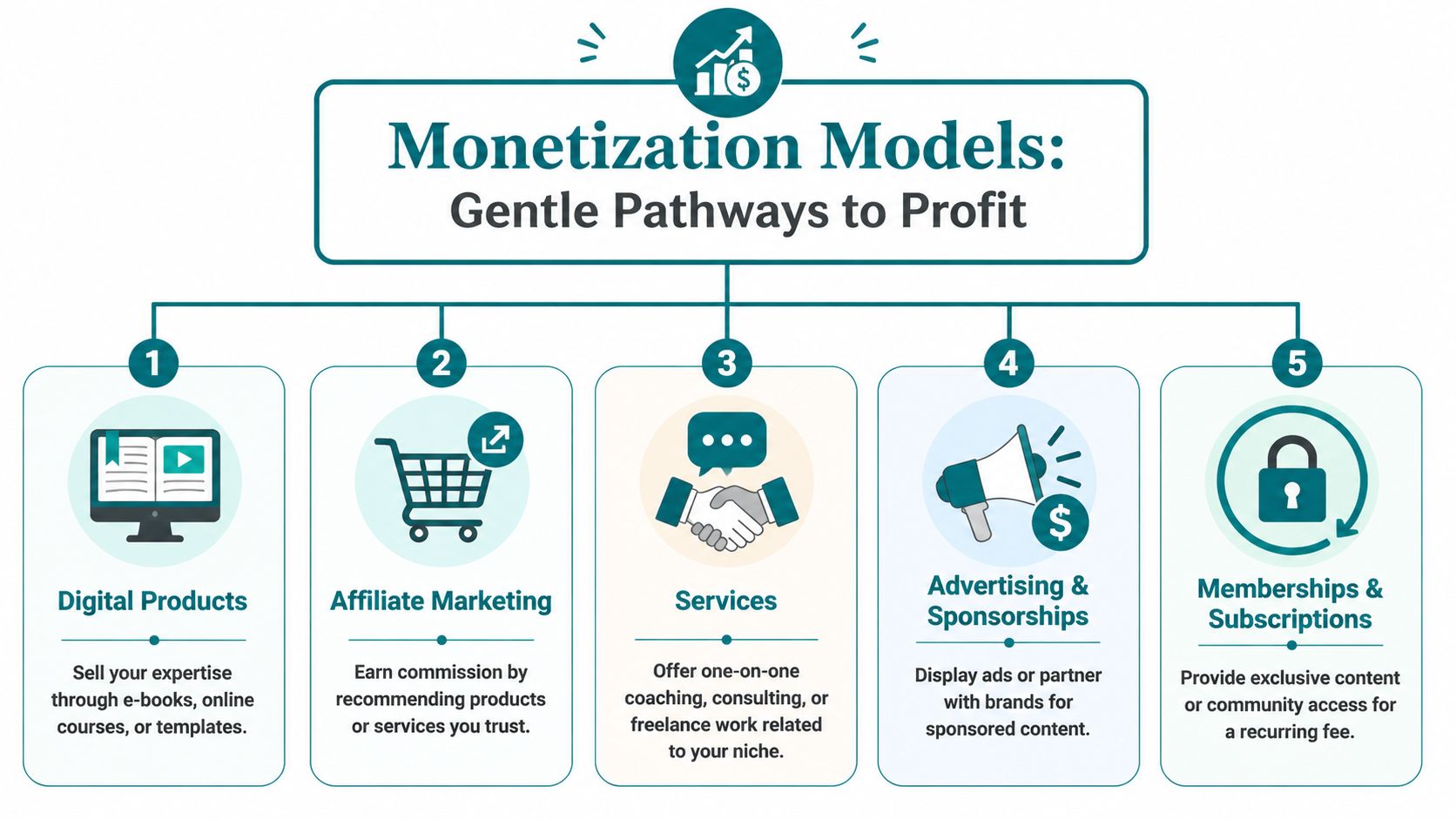
You publish a helpful post. A reader nods along, feels understood, joins your email list, and later buys the small resource that saves her an hour of frustration. That is what healthy monetization looks like. It is not loud or pushy. It is useful, calm, and built on trust.
For midlife women, that matters. Many are building with limited time, a careful budget, and a real desire for security. You do not need to chase every new platform or act like a twenty-something creator to make this work. A blog business gets stronger when you choose income streams that fit your skills and lead back to assets you own.
Start with the easiest yes
For many beginners, affiliate marketing is the least intimidating place to begin.
You do not have to create a product, set up a checkout page, or map out a full course. You help someone solve a problem, then recommend a tool you already know and trust. If the recommendation fits the article, it feels like good guidance. If it appears out of nowhere, it feels like an ad.
A few natural examples:
- a post about starting an email list that recommends your email platform
- a guide to simple webinar setup with a link to the software you use
- a roundup of blogging tools that includes products you have tested yourself
Affiliate income is often best treated as your training ground. It teaches you what readers click, what they ignore, and which problems they will spend money to solve. If you want a broader view of how different income streams can work together, these blog monetization strategies offer helpful examples.
Digital products create an asset you control
Affiliate links are borrowed income. Your own products are owned income.
That difference matters, especially if Retirement feels closer than it used to and you want something more stable than social media attention. A digital product lets you package what you know once and sell it more than once. It works like putting your best advice into a container someone can buy when she is ready.
That product can stay simple:
- A PDF guide
- A template bundle
- A workshop replay
- A short course
- A private training session
You do not need to build a giant course library. Start with the smallest paid solution to one specific problem. If readers keep asking how to write a welcome email, make a template pack. If they need help choosing a niche, offer a short workshop. Small products are easier to finish, easier to improve, and easier to sell.
Ads can add income later. Owned products change the shape of the business because you set the price, control the customer experience, and keep the relationship.
Services can make the early stage feel safer
Passive income gets a lot of attention, but services often give a newer blogger something more useful at first. proof.
If you already know how to do something that saves another woman time or confusion, you can sell that help now. Coaching, audits, setup help, writing support, or one-on-one consulting can bring in income before your traffic is high.
| Monetization model | Best for | What it looks like |
|---|---|---|
| Affiliate marketing | Beginners | Recommending tools, training, or products |
| Digital products | Those who like teaching | Guides, templates, workshops |
| Services | Those who want faster validation | Coaching, consulting, setup help |
| Brand work | Those with audience trust | Sponsored content or ambassadorships |
| Ads | Traffic-heavy blogs | Display advertising on content pages |
Services also give you market research in plain English. Every client question shows you where people get stuck. Every repeated problem can become a future blog post, workshop, checklist, or product.
A woman who helps beginners set up email forms might notice that many of them struggle with welcome emails. That pattern can become a paid swipe file or mini training. One offer often leads naturally to the next.
Brand deals belong later in the sequence
Brand partnerships can work well, but they are usually a later-stage income stream. They depend on trust, clarity, and a body of content that shows what you stand for.
That is especially important if ageism has made you wonder whether brands only want younger creators. Many companies care far more about credibility, audience fit, and buying influence than about age. A clear niche and a trusted voice can make you more attractive, not less. This guide to monetizing content with brand deals explains that process in a practical way.
Here is the embedded video if you'd rather learn visually for a moment.
A calmer sequence usually works better than trying everything at once.
- Publish useful content
- Add affiliate recommendations that fit
- Offer a simple service or small product
- Improve what sells
- Add brand partnerships or ads later if they make sense
That approach protects your energy and builds real business assets over time. You are not throwing content into the internet and hoping for the best. You are building a structure, one steady piece at a time.
Your First 6-12 Months A Simple Action Plan
A year from now, you want more than a nicer-looking blog. You want proof that you built something you own. A small email list. A handful of posts that keep helping people. One offer that brings in your first sales. That is a very good first year.
The goal in these first 6 to 12 months is not speed. It is stability.
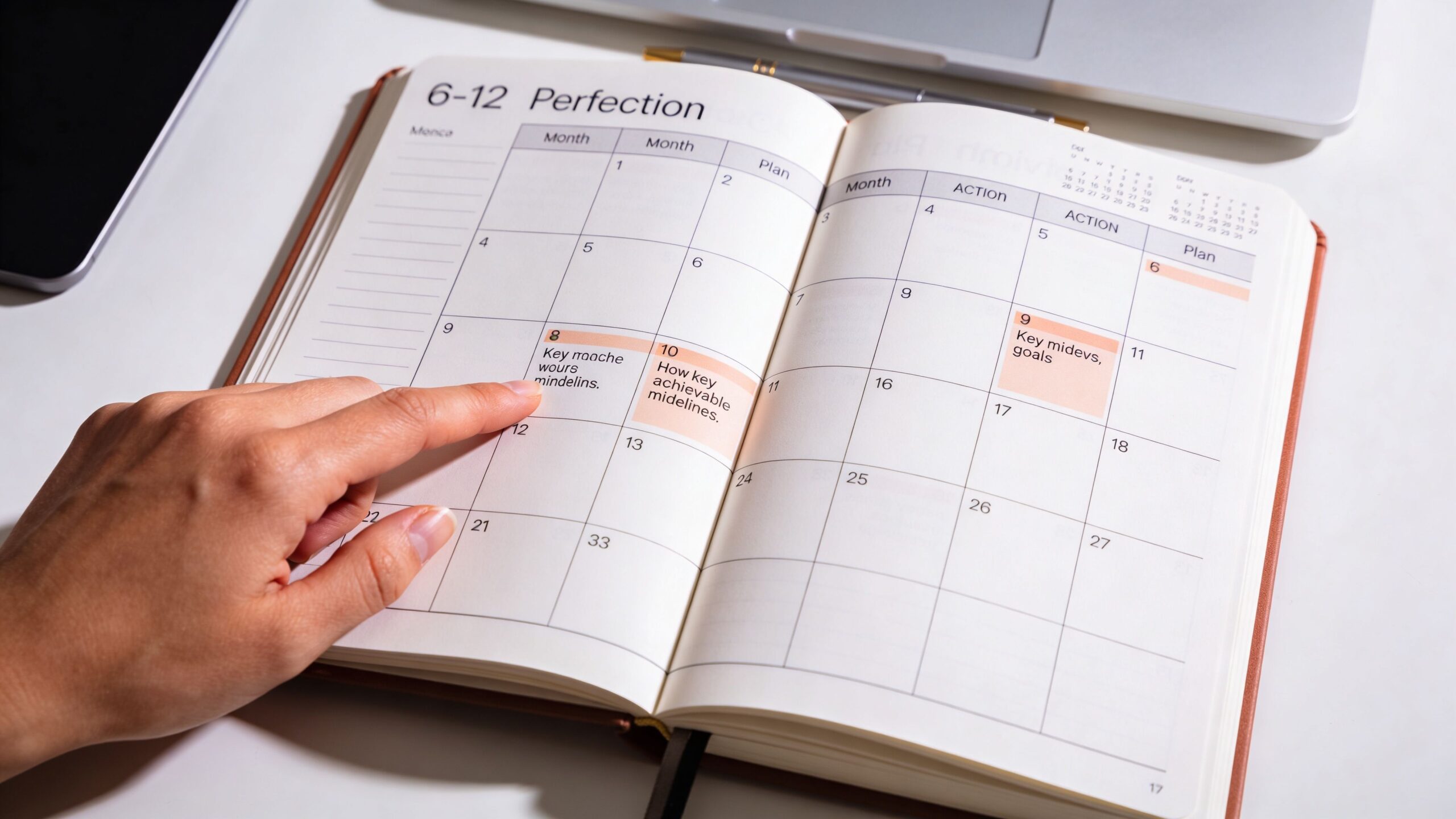
A blog business works a lot like planting a perennial garden. The early months can look quiet from the outside. Under the surface, though, roots are forming. That is what your first year is for. You are setting up the parts that make later growth easier and less stressful, especially if tech already feels heavy or Retirement uncertainty is sitting in the back of your mind.
Months 1 to 3
Use this first season to get your footing.
Focus on:
- Choosing your niche so your blog has a clear direction
- Writing 3 to 5 foundational posts that answer common reader questions
- Cleaning up key pages like your About page and contact page
- Picking an email platform and adding a simple signup form
- Creating a weekly routine you can keep without burning out
One post a week is enough for many women at this stage. So is one post every other week, if that is what your life allows. Consistency matters more than intensity because consistency teaches your readers, and you, that this business is real.
A simple weekly rhythm could look like this:
- One writing session
- One small email list task
- One hour learning a tool or fixing a tech problem
That is plenty.
Months 4 to 6
Now you start turning content into connection.
Your job in this phase is to give readers a clear next step. If someone enjoys a post, where should they go next. Usually, the answer is your email list.
Try to:
- Create one free resource tied to your niche
- Write a short welcome sequence of 3 to 5 emails
- Add email invitations inside your posts
- Watch for patterns in replies, clicks, and comments
- Improve older posts that are already getting attention
This stage often brings a shift in confidence. You stop feeling like you are posting into empty space. You begin to see real people on the other side.
Some weeks the win is publishing. Some weeks the win is figuring out the signup form and staying calm while you do it.
Both are real progress.
Months 7 to 12
Now you can test income in a quiet, sensible way.
Start small enough that you can learn without pressure. A first offer does not need to be fancy. It only needs to solve one clear problem for one clear reader.
That might mean:
- Adding affiliate links to posts where a recommendation helps
- Offering a simple service based on what readers already ask you for
- Creating a low-priced digital resource such as a checklist, template, or guide
- Refreshing your best posts so they keep bringing in readers and subscribers
- Paying attention to what sells before making anything bigger
This is also the point where many midlife women feel an old fear rise up. What if I am behind. What if younger creators are better at this. What if I missed my window.
You did not.
A calm, useful blog with an email list and one good offer is a stronger business than a noisy online presence built on borrowed platforms. Trends change. Algorithms change. Your list and your published content stay yours.
A calm pace is still a real pace
Progress in midlife rarely happens in perfect blocks of free time. It happens between work shifts, caregiving, appointments, family needs, and tired evenings when your brain feels full. That does not disqualify you. It means your plan needs to be gentle enough to survive real life.
If you keep going, the pieces begin to support each other. A post brings a subscriber. A subscriber replies with a question. That question becomes your next post, freebie, or offer. Over time, your blog stops feeling like a hobby with good intentions and starts acting like an asset.
Common Doubts and Gentle Recoveries
Let's say the doubts out loud.
Is this a scam? Sometimes, yes. The online world has plenty of empty promises. That's why caution is wise. A legitimate path usually looks slower, clearer, and less flashy. You're building content, trust, and assets. You're not paying for fantasy.
Do I need tech skills? Not at the beginning. You need basic willingness, not genius. Most tools look confusing right before they become familiar. I remember opening a training dashboard once and feeling my chest tighten. Ten minutes later, I realized I didn't need to understand everything. I only needed the next click.
Am I too old? No. Age can make you more trustworthy, more relatable, and more grounded. Many readers are tired of polished noise. They want honesty, steadiness, and lived experience.
Here are a few good recovery moves when you feel stuck:
- Shrink the task. Don't "build the funnel." Write one welcome email.
- Return to the reader. Ask what problem you're solving today.
- Choose clarity over speed. Slow progress still builds assets.
- Get support. Community shortens the learning curve and softens self-doubt.
If you've been wondering how to turn a blog into a business without becoming someone you're not, this is the answer. Build steadily. Build authentically. Build one useful piece at a time.
The next five years will pass either way. The only question is whether you'll use them to build something that gives you peace of mind.
If you'd like calm, beginner-friendly help as you build your next chapter, Victoria OHare offers practical guidance on Affiliate Marketing, email List Building, and creating income online without tech overwhelm.