
If you're over 50 and wondering whether it's too late to build income online, you're not alone. Many women feel behind financially — not because they failed, but because life happened. The idea of learning new technology can feel overwhelming, and it's easy to doubt if you can really start something new at this stage.
Let me reassure you: it's not too late. You are not behind. And you absolutely can learn this.
This guide is designed to be your calm first step. We'll walk through how to post affiliate links on Pinterest, but more importantly, we'll do it in a way that feels patient, gentle, and empowering.

Why Traditional Retirement Might Not Be Enough
For generations, the promise was simple: work hard, save diligently, and enjoy a secure Retirement. But for many of us, that reality is shifting. Pensions are less common, the cost of living keeps rising, and relying solely on savings can feel precarious.
This isn't meant to cause fear, but to acknowledge a quiet anxiety many feel. The truth is, building a small stream of additional income isn't about luxury; it's about creating peace of mind, dignity, and a sense of control over your financial future. It's about ensuring your "second chapter" is one of independence, not worry.
A Gentle Way to Build Income: Affiliate Marketing
So, how can you create that extra income without starting a stressful, complicated business? One of the calmest ways to begin is with something called Affiliate Marketing.
Don’t let the term intimidate you. It’s simply the process of recommending products you genuinely use and love. When someone makes a purchase through your unique recommendation link, you earn a small commission at no extra cost to them.
It’s like telling a friend about a wonderful gardening tool you discovered or a cookbook you can't put down. The only difference is you're sharing it online.
Addressing the Doubts and Fears
I understand being cautious. When you're new to the online world, it's natural to have questions and doubts. Let's address them head-on.
"Is this some kind of scam?"
Legitimate Affiliate Marketing is not a scam. It's a standard business practice used by major companies like Amazon, Target, and Walmart. The key is transparency. By disclosing your links (with a simple #ad, for example), you operate with integrity. That’s why education and mentorship matter so much—they teach you how to do this the right way.
"Do I need to be a tech expert?"
Absolutely not. I remember feeling completely overwhelmed the first time I looked at a training dashboard; I almost quit right then. But the truth is, the technology needed for this can be learned, step-by-step. If you can send an email or browse a website, you have the foundational skills you need to start.
"Am I too old to learn this?"
Your age and life experience are your greatest assets. You have decades of real-world knowledge about what products are reliable, what makes a house a home, and what truly provides value. Your recommendations carry a weight and authenticity that can't be faked. This isn't about being a young "influencer"; it's about being a trusted resource.
Your First Small, Actionable Step
The journey of building an online income stream starts with a single, manageable step. Before we can post any links, we need to set up your Pinterest account correctly.
To do Affiliate Marketing on Pinterest, you must have a Pinterest Business account. Please don’t let the word "business" scare you. It’s completely free, and it simply unlocks the tools you need, like analytics and the ability to add links to your Pins.
You can either convert an existing personal account or create a brand new one. Pinterest walks you through this simple process.
Once your account is set up, your simple next step is to create 5-10 "boards." Think of these as organized folders for your ideas. Give them simple, searchable names a real person would use, like:
- Cozy Living Room Ideas
- Low-Maintenance Garden Design
- My Favorite Kitchen Gadgets
That’s it. This small action is the foundation for everything that comes next. You can do this.
Why Pinterest Is a Gentle Place for Affiliate Marketing
Unlike other social media platforms that feel fast-paced and demanding, Pinterest is a calmer, more inspirational space. Users aren’t mindlessly scrolling; they are actively looking for ideas and solutions for their homes, hobbies, and lives.
This is what makes Pinterest so perfectly suited for gentle recommendations. Your Pin isn’t seen as a noisy interruption; it’s a welcome answer to a question they’re already asking.
Every Pin you create becomes a small, digital asset that can work for you long-term. This is how you begin to build security beyond a traditional paycheck.
The real beauty of using Pinterest is that you can get started without a big audience or a complicated website. Your helpful, valuable content can be discovered by the people who need it, even if you’re just beginning. You can learn more about getting started in our guide on free traffic methods for Affiliate Marketing.
By 2026, the platform had soared past 600 million monthly active users worldwide. What’s truly game-changing is that an incredible 87% of users have bought something they discovered right on the platform. Your recommendations land in front of an audience that is not just looking, but ready to act. You can discover more insights about Pinterest’s Affiliate Marketing potential on pingenerator.com.
This isn’t about becoming a "tech genius." It’s about patiently sharing what you know on a platform designed to reward helpfulness.
How to Create and Post Your First Affiliate Pin
Alright, let's take a deep breath. We’re going to walk through creating your very first affiliate Pin. We’re not aiming for perfection here. The goal is simply to take one small, empowering step forward.
First, you'll design a simple vertical Pin using a free tool like Canva. The ideal size is 1000 x 1500 pixels.
Remember, the goal of your Pin isn’t to sell. It's to help. Think about the feeling you get when you discover something amazing and can't wait to share it with a friend. That’s the energy we want to bring to this.
The image below gives you a quick visual reminder of how the pieces of your profile—your account, your bio, and your boards—all work together.
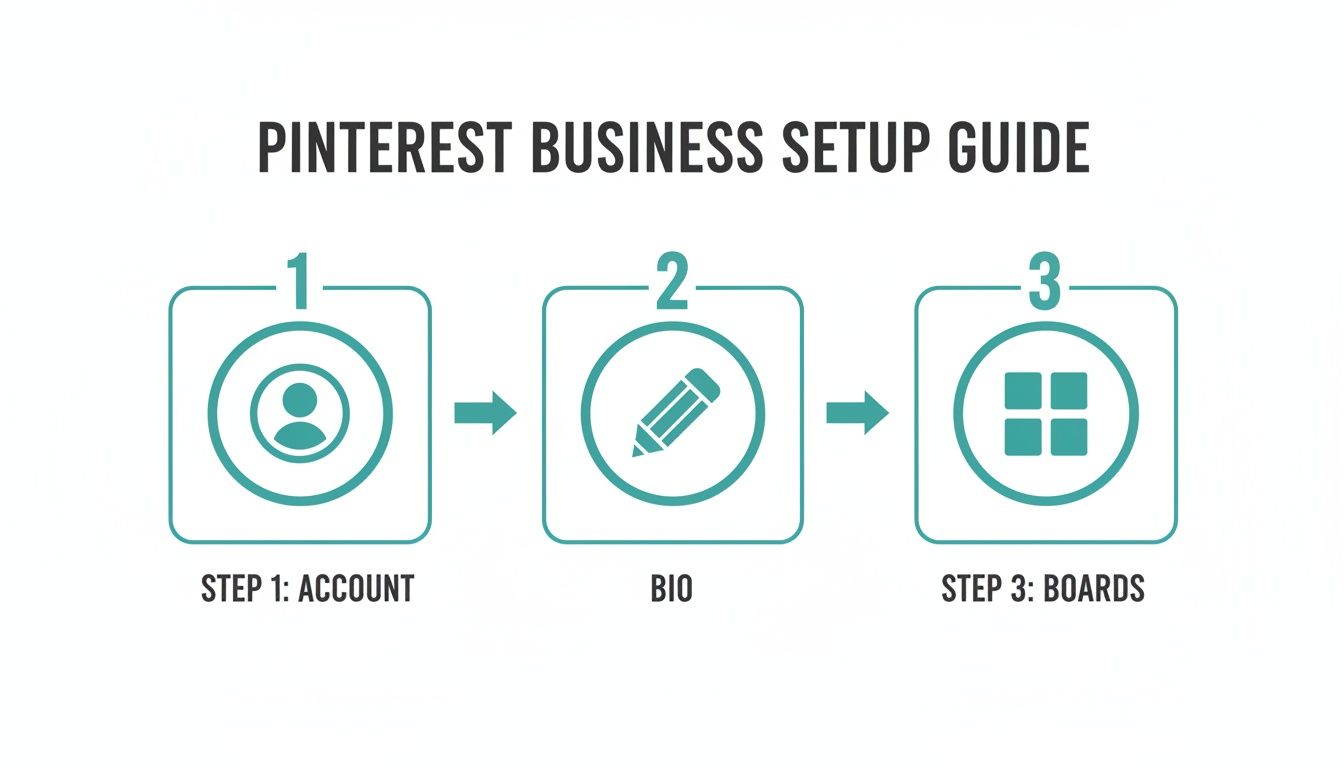
Each element helps create a warm, trustworthy space for your audience.
Writing a Helpful Pin Description
Once you have your Pin image, it’s time to write a description. This is where you connect with your audience and gently guide them. A great description solves a problem or sparks an idea.
For example, instead of a pushy caption like, "Buy this mug now," try something warmer:
My favorite oversized mug for a cozy morning routine. It keeps my coffee hot for ages and feels perfect to wrap my hands around. A little bit of daily comfort makes all the difference. #ad #cozymorning
See the difference? It feels like a genuine recommendation, not a sales pitch.
The Two Most Important Final Steps
Now for the final, crucial actions when you upload your Pin:
- Add Your Affiliate Link: Paste your unique affiliate link into the "Website" field. This special link ensures you get credit for your recommendation.
- Add a Disclosure: You absolutely must include a disclosure right in your Pin’s description. A simple hashtag like #ad or #affiliatelink is perfect. This transparency is what builds trust and keeps you compliant.
I can still feel the butterflies I had when I hovered over the "Publish" button on my very first affiliate Pin. I was filled with self-doubt. But when I saw that first click come through, it was a quiet, thrilling moment of pure possibility. It was proof that this could actually work.
Best Practices for Authentic and Effective Pinning
Now that you know the technical steps, let's talk about the heart behind it. How do you build a presence that feels good—both for you and for your audience?
The key is to focus on being genuinely helpful. The guideline that gave me confidence is something marketers call the "80/20 Rule."
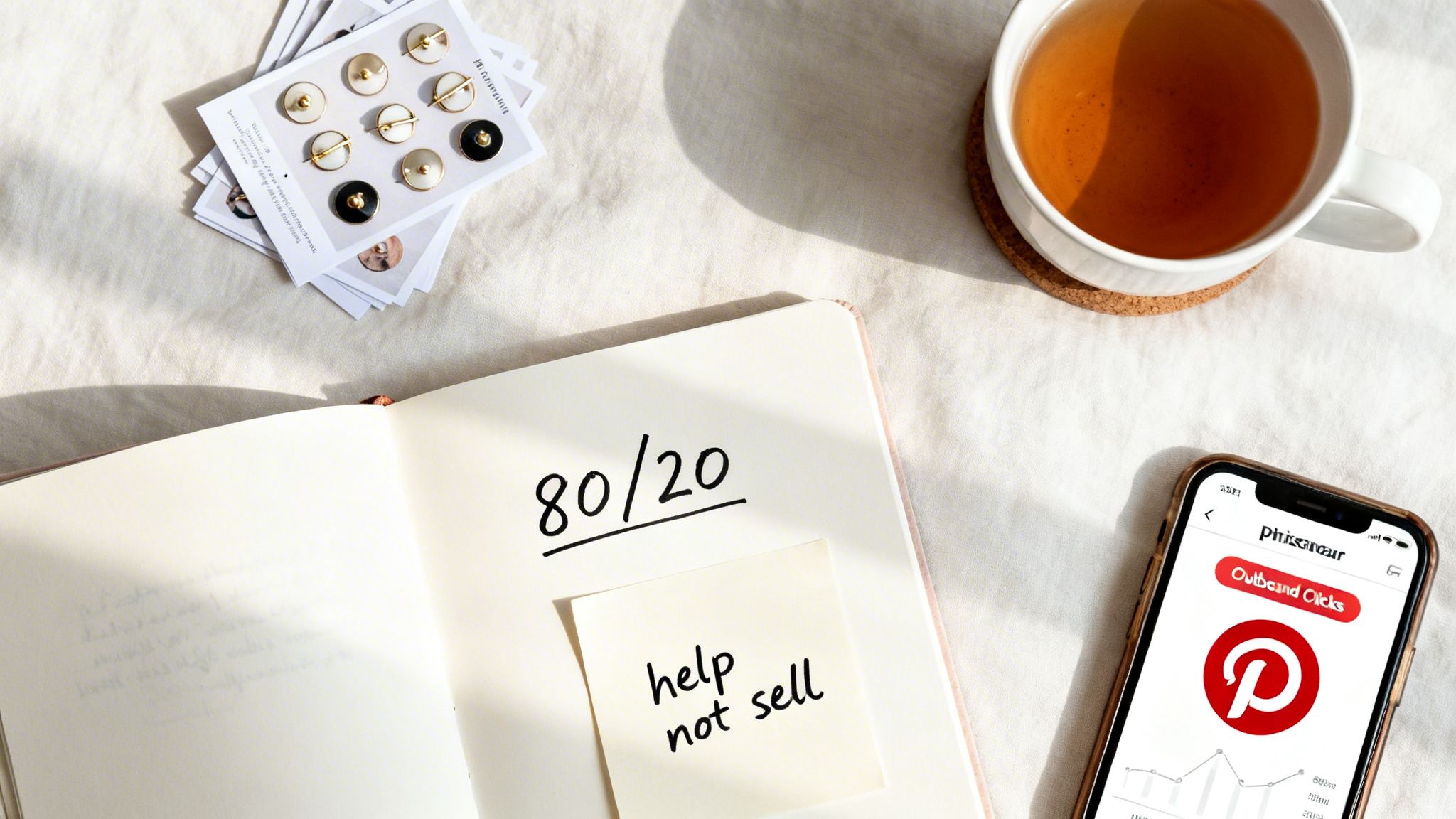
Embrace the 80/20 Rule for Trust
This simple principle is your guide:
- 80% of your Pins should be pure, valuable content with no affiliate links. Share tips, inspiration, and ideas freely.
- Only 20% of your Pins should feature your affiliate links. Because you've already given so much value, your audience will be far more receptive.
This approach shifts your role from a seller to a trusted resource. It's the foundation of how to sell without being pushy and what builds long-term peace of mind.
Consistency Over Volume
It's far more effective to be consistent than to pin a massive volume of content. Set a calm, manageable goal, like creating 3-5 new, helpful Pins each day. This steady pace builds real momentum.
To make sure your Pins get seen, it helps to understand the platform's rhythm. Researching the best time to post on Pinterest can ensure your content reaches people when they're most active.
The data backs this up. With 55% of Pinners using the platform specifically to shop, your gentle recommendations are falling on receptive ears. You can learn more about these powerful Pinterest findings on nealschaffer.com.
Remember, this is a marathon, not a sprint. Every helpful Pin you create is a small digital asset you own, working to provide security for your future.
What to Do Next: Your First Gentle Step
After covering all this ground, it’s completely normal to feel a little overwhelmed. The key is to bring it all back to one small, empowering action. My own husband didn't understand what I was doing at first, and my to-do list felt a mile long. Let's avoid that pressure entirely.
Your One Small Goal This Week
This week, I want you to focus on just two simple things:
- Create one new Pinterest board. Give it a specific, searchable name like "Beginner Sourdough Bread Recipes" or "My Favorite Non-Toxic Cleaning Supplies."
- Find one affiliate product you genuinely love and would recommend to a close friend.
This single, gentle step is the real start. It's the first brick laid in building an asset that is completely your own.
The next five years will pass either way. The only question is whether you’ll use them to build something that gives you peace of mind.
If you feel you could use more step-by-step guidance, you’re welcome to explore the same training I used to learn these skills. It’s the resource that helped me turn confusion into confidence.
Common Questions About Pinterest Affiliate Marketing
When you’re starting something new, it's normal to have questions. Let’s clear the air on some of the most common worries so you can move forward with confidence.
Do I Need a Blog to Use Affiliate Links on Pinterest?
No. While a blog is a wonderful long-term asset, you absolutely do not need one to get started with Affiliate Marketing on Pinterest.
You can begin by linking directly from a Pin to an affiliate product, as long as your specific affiliate program allows it. It’s a perfect way to start learning before you think about a website. For more ideas on getting started, check out our article on using video marketing for affiliates.
How Many Followers Do I Need to Start Earning?
This is where the real power of Pinterest shines—you don't need any. Zero followers.
Remember, Pinterest is a visual search engine. A brand-new Pin can be seen by thousands if you use the right keywords, even if your account is new. Focus on creating helpful content, not chasing follower counts.
Will Pinterest Ban Me for Posting Affiliate Links?
It is 100% safe and allowed to post affiliate links, as long as you are honest about it. Pinterest simply requires that you disclose your relationship.
All you need to do is add a simple hashtag like #ad, #affiliatelink, or #commissionsearned to your Pin description. This honesty builds trust and keeps your account in perfect standing.
While this guide is focused on Pinterest, a well-rounded strategy involves understanding how to promote affiliate links and actually get paid across different platforms.
If you'd like to see the training I used to learn this step-by-step, the same resource that gave me the confidence to move forward, you can check it out at Victoria OHare here: https://freedombrandambassador.com.