
If you're over 50 and the thought of building an income online makes you feel a little overwhelmed, you're not alone. So many women feel like they are financially behind—not because they failed, but because life happened. The idea of learning new technology, like hosting a webinar, can feel like one more mountain to climb, and it's easy to start doubting yourself.
But what if a webinar wasn't a scary technical project? What if it was just a conversation? A way to share what you already know and build something that gives you real peace of mind.
It’s not too late to learn this. You are not behind. You can do this.
Why Retirement Savings Might Not Be Enough
For many of us, the promise of a secure Retirement is starting to feel less like a guarantee and more like a hope. We did everything we were supposed to do, but the world has changed. Relying solely on a pension or a 401(k) can leave you feeling vulnerable, not in control.
Creating your own income stream isn't about getting rich quick. It’s about dignity. It’s about independence. It’s about having options and not having to ask for permission. A webinar is one of the simplest, most powerful ways to start building an asset that you own, one that can provide for you long after the live event is over.
This isn't about hustle culture. It's about creating a calm, stable foundation for your second chapter.
Introducing a Gentle Way to Earn Online: Affiliate Marketing
So, how can a webinar help you earn an income? Often, it’s connected to something called Affiliate Marketing.
If that term sounds technical or confusing, let's simplify it. Affiliate Marketing is just recommending a product or a service you trust. When someone makes a purchase through your unique recommendation link, you earn a commission.
It’s like telling a friend about a great book you read. If she buys it based on your recommendation, the author pays you a small thank you. That’s it. A webinar is simply a wonderful way to share your recommendation with a group of people at once.
Let's Break Down the Fears
I understand if you're feeling cautious. The online world can feel full of scams and complicated tech. That's why having a trusted education and a supportive community is so important. Let's address the doubts that might be holding you back.
"Is this a scam?" Real Affiliate Marketing is not a scam. It's a legitimate business model used by major companies like Amazon, Target, and countless small businesses. The key is to promote products you genuinely believe in from companies you trust. You are sharing value, not pushing a scheme.
"Do I need to be a tech expert?" Absolutely not. I remember the first time I looked at a webinar dashboard, I almost quit. It felt overwhelming. But modern tools are designed for beginners. If you can send an email or post on Facebook, you have all the technical skills you need to get started. You can learn the rest, step by step.
"Am I too old for this?" Your age is your greatest asset. You have a lifetime of experience, wisdom, and patience that younger generations don't. Your audience doesn't want a flashy influencer; they want someone real, someone they can trust. You are not too old. You are perfectly positioned to connect with people who need your guidance.
Your First Small Action Step: Choose Your Topic
Before you worry about platforms or promotion, let's just take one small, simple step.
What is one thing you could happily talk about with a friend over coffee? Something you know, or a problem you’ve solved for yourself?
- Maybe it’s how you finally figured out a simple meal-planning system.
- Perhaps it’s your love for gardening and a few tips for beginners.
- It could even be related to a skill from your career.
Just pick one thing. Write it down. Your first webinar topic doesn’t need to be perfect. It just needs to be something you genuinely want to share. That’s your only homework for today.
A Simple Blueprint for Your First Webinar
Let’s be honest, the idea of hosting a webinar can feel completely overwhelming. When you’re just starting out, it’s easy to get paralyzed by a to-do list that feels a mile long. I’ve been there. I remember feeling like I had to get every single detail perfect before I could even begin, and it kept me stuck.
That’s why I broke the entire process down into a simple, four-part blueprint. This isn’t about needing a big budget or a fancy production team. It’s about having a clear, manageable plan and the willingness to share what you know. You can absolutely do this. It’s not nearly as complicated as it seems.
Now, let’s walk through how you can get started, step by step.
Part 1: Plan Your Topic
First things first, you need to decide what you’ll talk about. This is where so many of us get stuck, but it doesn’t have to be a stumbling block. The key is to choose a topic you are genuinely passionate about—something you could easily chat about with a friend over coffee.
Your topic also needs to solve a real problem for your audience. If you have an affiliate product you believe in, think about the specific problems it helps with. Your webinar can be the first step in solving that problem. For instance, if you're an affiliate for a meal-planning service, a fantastic webinar topic could be “My 5 Secrets to Stress-Free Weeknight Dinners.”
Part 2: Build Your Foundation
With your topic chosen, the next step is to build the simple online "scaffolding" for your event. This might sound technical, but it really only involves two main pieces:
- A Registration Page: This is a single, simple webpage where people sign up for your webinar. It doesn't need to be flashy. All you need is a clear headline, a few bullet points explaining what they'll learn, and a button to register. Most modern webinar platforms make this incredibly easy to create.
- A Few Essential Emails: You’ll also want to set up a short, friendly email sequence. This is how you build anticipation and, more importantly, make sure people remember to show up! A simple three-part sequence is perfect: an immediate confirmation email, a 24-hour reminder, and a final "we're starting soon" email an hour beforehand.
That’s it. You don't need a complex sales funnel or a dozen different pages. Just a place to sign up and a few gentle reminders.
The goal of the building phase isn't to create a marketing masterpiece. It's to create a clear and simple path for someone to say "yes" to learning from you.
Part 3: Promote Your Webinar
Now it’s time to invite people. This is another area where it’s easy to feel overwhelmed, but again, simplicity is your friend. You don’t need to run expensive ads or become a social media guru overnight.
Your primary focus should always be your email list. These are the people who have already raised their hands and said they want to hear from you. An invitation to your subscribers is the warmest and most effective way to get registrants.
Beyond your email list, create a few simple posts for your favorite social media platform. You don’t need to be everywhere. Just share what your webinar is about and who it’s for on the platform where you feel most comfortable and connected.
Part 4: Present with Authenticity
Finally, it's time to host your webinar. The most important thing to remember here is that connection is more important than perfection. You don't need a flawless, word-for-word script. In fact, being a little more conversational and real makes you far more relatable.
Focus on serving your audience and sharing what you know. My husband didn't understand why I was so nervous at first, but presenting live can feel incredibly intimidating. I found it helpful to just be honest. Sometimes I’d start by saying, “I’m a little nervous, but I’m so excited to share this with you today!” It instantly broke the ice and made me feel more connected to my audience.
This four-part blueprint—Plan, Build, Promote, and Present—is your road to hosting a successful first webinar. It breaks the entire process down into manageable pieces, allowing you to move forward with confidence and build an asset that gives you independence and peace of mind.
Choosing Your Topic and Platform Without Tech Overwhelm
If you're feeling a little stuck, you're in the right place. The first two decisions—what to talk about and where to host it—are often the most paralyzing. It’s the point where doubt creeps in, and many women decide it’s all too complicated before they even really begin. Let's make it simple.
I remember staring at a blank page, trying to brainstorm my very first webinar topic. I felt this immense pressure to be a world-renowned expert, and that feeling kept me frozen for weeks. What I’ve learned since is that your best topic isn't the one you think will impress people; it's the one you genuinely enjoy talking about.
How to Find Your Perfect Webinar Topic
The key to hosting webinars that feel authentic is to start with your own experience. Your perfect topic lives right at the intersection of what you know and what your audience truly needs help with.
Think about your affiliate niche or even just your personal interests. What questions do people ask you all the time? What’s a small problem you’ve solved for yourself that others might be wrestling with?
- Look at your passions: If you love gardening, a great topic could be "5 Common Mistakes New Gardeners Make and How to Avoid Them."
- Consider your professional skills: If you have a background in organizing, you could easily host "Declutter Your Home Office in One Weekend."
- Align with an affiliate product: If you recommend a meal-planning app, a perfect topic is "My 5 Favorite Tools for Simple Meal Prep."
You don’t need to teach everything you know in a single hour. In fact, a smaller, more focused topic is almost always more effective. It feels more manageable for you to create and far less overwhelming for your audience to absorb.
The goal is to provide a specific solution to a specific problem. Your webinar is the bridge that shows your audience a clear path from where they are to where they want to be.
Choosing a Platform Without the Headache
Next up is the technology, and this is where so many people get intimidated and want to quit. I get it. The number of webinar platforms out there can feel endless. But you absolutely do not need to become a tech expert to host a successful webinar. You just need one simple, reliable tool.
Instead of getting lost in a sea of features, let's focus on what truly matters for a beginner:
- Ease of Use: How intuitive is the setup process?
- Affordability: Does it offer a free plan or an inexpensive starting tier?
- Core Features: Does it allow for screen sharing and have a chat function?
To help you get started, here is a quick comparison of a few popular, beginner-friendly options.
Beginner-Friendly Webinar Platform Comparison
Choosing your first platform doesn't have to be a major research project. The goal is to find a tool that feels straightforward and lets you focus on your content, not on complex configurations. This table breaks down a few solid choices to get you started.
| Platform | Best For | Starting Price | Key Feature for Beginners |
|---|---|---|---|
| Zoom | Live webinars & meetings | Free plan available | Familiar interface for most audiences. |
| StreamYard | Easy streaming to social media | Free plan available | Professional-looking broadcasts with minimal setup. |
| WebinarKit | Automated (pre-recorded) webinars | One-time payment | "Set it and forget it" automation is simple. |
Each of these platforms is designed to be user-friendly. Your main job is to connect with your audience, not become a software engineer. Don't let the tech hold you back from sharing your message.
Most modern platforms are designed to be incredibly user-friendly. You don't need to know how they work behind the scenes, any more than you need to know how a microwave heats your food. You just need to know which buttons to press.
For a comprehensive guide that delves into strategies to ensure your webinar achieves its desired outcomes, you can explore this excellent article on how to host a webinar that converts. It offers valuable insights that will help as you move forward.
By choosing a simple topic and a beginner-friendly platform, you can bypass the tech overwhelm and take a confident first step toward building a business that gives you both income and peace of mind.
Setting Up Your Registration and Reminder Emails
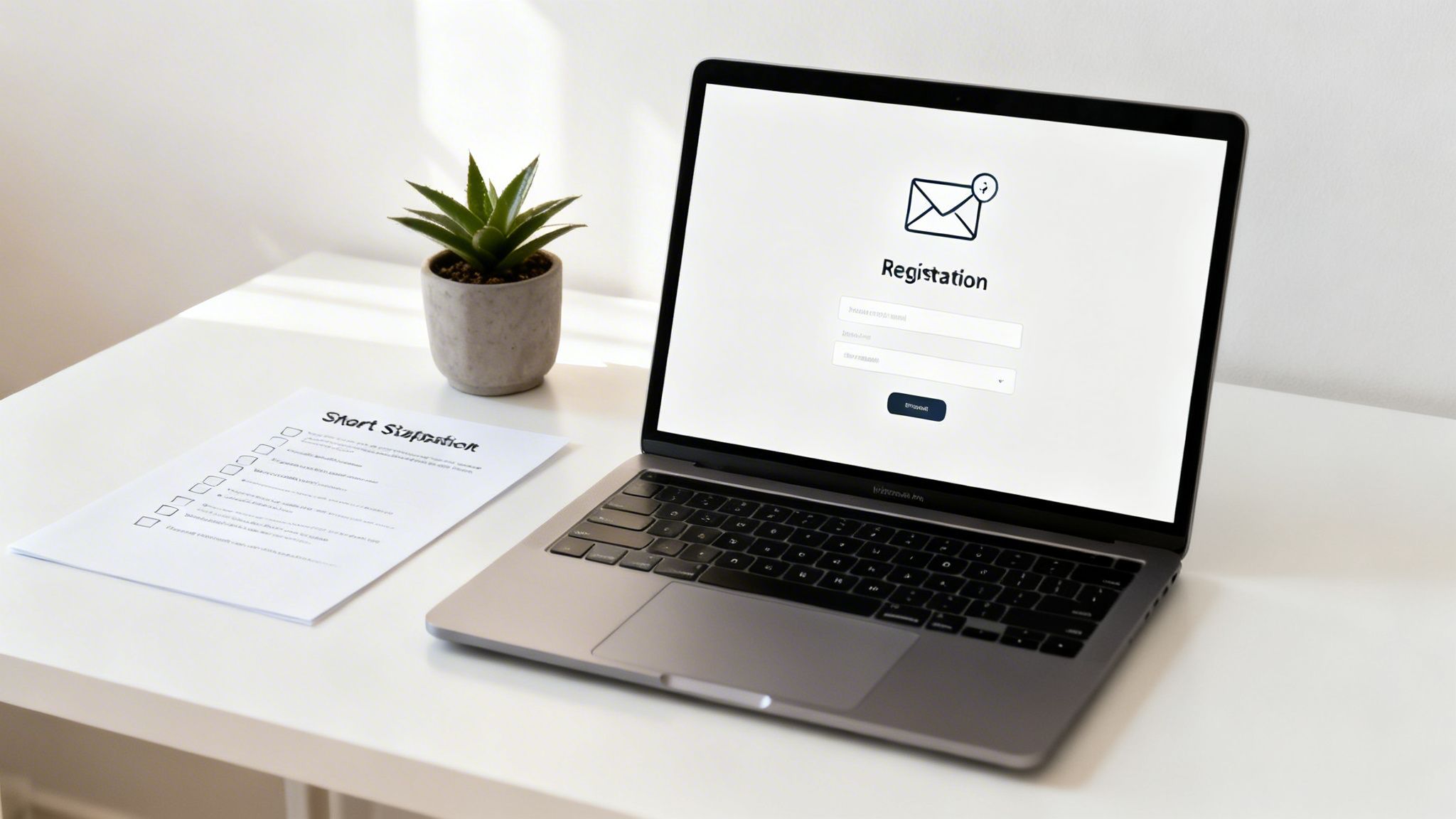
Once your webinar topic is nailed down and you've picked your platform, we get to the fun part—building real anticipation and connection. Setting up your registration page and email sequence might sound technical, but it’s really about creating a warm, welcoming path for people who want to learn from you.
Think of your registration page as the front door to your event. It doesn’t need to be fancy or complicated. In fact, simpler is almost always better. Most webinar platforms have built-in tools to create these pages in just a few minutes, so you definitely don't need to be a designer.
Creating a Simple and Compelling Registration Page
To be effective, your page only needs a few key elements. The goal is to clearly communicate the value you're offering so that signing up feels like an easy and obvious “yes” for your ideal attendee.
Focus on these three simple components:
- A Compelling Headline: Your headline needs to speak directly to a problem or desire your audience is feeling. A generic title like "Webinar on Affiliate Marketing" will get lost. Instead, try something specific and emotional, like "My Simple 3-Step Method for Earning Your First Affiliate Commission After 50."
- Clear Bullet Points: Right below the headline, add three to five bullet points explaining what they'll learn. Frame these as benefits, not just features. For instance: "Discover how to choose a niche you're truly passionate about, even if you don't feel like an 'expert'."
- A Simple Sign-Up Form: Don’t ask for more than you need. A first name and email address is perfect. Keeping it minimal makes it easier for people to register and respects their time.
This straightforward setup is all about clarity. It shows your audience you have a plan and you value their attention, which is the first step in building a community that genuinely trusts you.
Nurturing Your Registrants with Gentle Reminders
Once someone signs up, the relationship-building has just begun. The time between registration and the live event is a golden opportunity to turn a new subscriber into an engaged community member who actually shows up.
Your email list is the single most important tool you have for filling your virtual room. If you’re just starting to build yours, these emails are a wonderful way to begin that relationship.
A simple, three-part email sequence is all you need to nurture this connection. It’s a gentle way to keep your event top-of-mind without being pushy.
- Email 1: The Confirmation (Immediately after signup): This email should land in their inbox the moment they sign up, confirming their spot is saved. Reiterate the date, time, and the core promise of your webinar to give them peace of mind.
- Email 2: The Friendly Reminder (24 hours before): This is a warm, personal note to build excitement. You could share a quick personal story or a question to get them thinking about the topic before they even join.
- Email 3: The "Going Live Soon" Nudge (1 hour before): A final, brief email with the direct link to join is crucial. A simple subject line like, "We're starting in one hour!" works perfectly to get people in the door.
This email sequence isn't just about logistics; it’s about showing your subscribers that you are a reliable, thoughtful guide who is genuinely excited to share something valuable with them.
This process builds trust and dramatically increases the number of people who attend live. Remember, your email list is the foundation of your online business—it gives you a direct line to your audience that you own and control. For more on this, our guide on effective email marketing for beginners can help you get started.
Engaging Your Audience and Making a Confident Offer
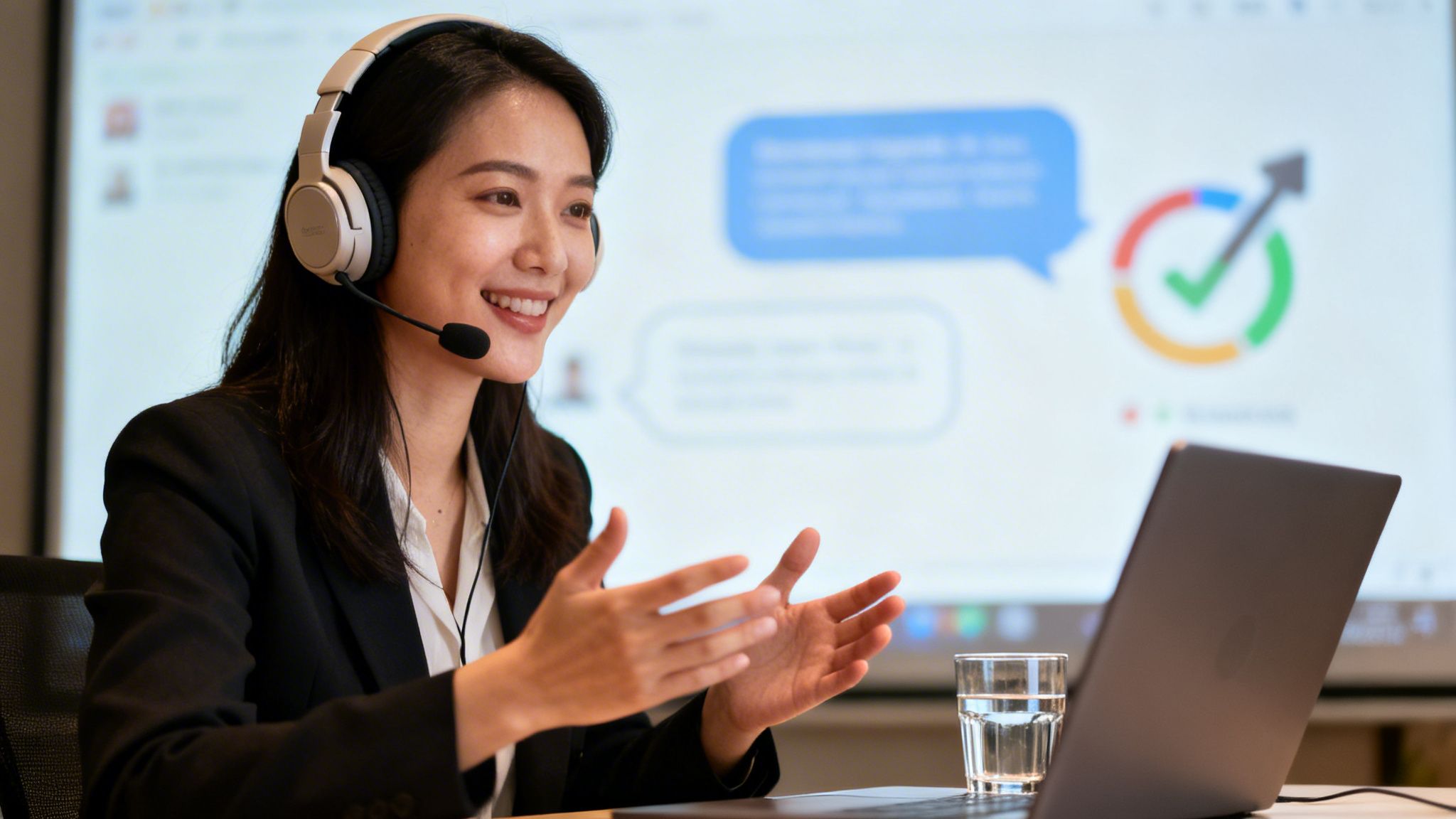
The moment your webinar goes live, it’s completely normal to feel a wave of nerves. Public speaking—even through a screen—can be intimidating. Then there’s the fear of selling, which can feel even more uncomfortable for those of us who value integrity.
Let’s take a moment and reframe this. Your webinar isn’t a performance. It’s a conversation.
I remember my first few times; my hands would shake, and I’d worry about every single word. What finally helped me was just admitting it. Sometimes I’d start by saying, “I’m a little nervous, but I am so excited to be here with you today!” It instantly builds a connection because it’s real and relatable.
The truth is, your audience wants you to succeed. They’re there to learn from you, not to judge you. A few simple tricks, like having a glass of water nearby and keeping a simple outline on your desk, can make all the difference in helping you feel calm and in control.
Shifting from “Selling” to “Serving”
The thought of making an offer can be the most daunting part of the whole process. It often brings up feelings of self-doubt and imposter syndrome. This is where a critical mindset shift needs to happen: you are not "selling," you are "serving."
You've just spent 30-40 minutes generously sharing valuable, helpful information. Your affiliate offer isn't a jarring sales pitch; it's the next logical and helpful step for your audience. They came to you with a problem, and your webinar provided the "what" and the "why." Your offer simply provides the "how."
Think of it this way: if a friend asked you for advice on a topic you knew well, and you knew of a perfect resource that could help them, you’d naturally recommend it. That’s all you’re doing here. You are being a helpful guide, not a pushy salesperson.
This approach is what allows you to create an income with dignity and integrity. It’s about building a business that feels good and aligns with your values, giving you a sense of independence and peace of mind.
Making a Natural Transition to Your Offer
A smooth, natural transition is the key to making your offer feel like a seamless part of the conversation. You want to avoid that abrupt, awkward shift from teaching to selling. Instead, create a bridge that connects the helpful content you just shared with the solution you’re about to recommend.
Here are a few phrases you can practice out loud until they feel comfortable and natural for you:
- "We've covered a lot of the foundational steps today, but if you're looking for the exact, step-by-step training that helped me put all of this into practice, I want to show you what I used."
- "I hope these tips have given you the confidence to get started. For those of you who want to go deeper and get more hands-on support, the program I’m about to share is the best next step."
- "Everything I've shown you today is what I learned inside a larger training. If you'd like to see the full system, let me quickly walk you through it."
I highly recommend practicing this transition out loud. Stand in front of a mirror or record yourself on your phone. It might feel silly at first, but hearing yourself say the words builds the muscle memory you need to deliver it smoothly when you’re live.
Using a Soft, Invitational Call to Action
Your goal is to invite, not to pressure. Aggressive urgency and "buy now or else" tactics might work for some, but they erode the trust you’ve worked so hard to build, especially with an audience that values authenticity. A soft call to action respects your audience's intelligence and empowers them to make their own decision.
Instead of saying, "You have to buy this now!" try a more gentle, invitational approach:
- "If this feels like the right next step for you, you can learn more about it here." This language is invitational and puts them in control of the decision.
- "I'm sharing this because it's the resource that made all the difference for me, and I believe it can help you, too." This connects the offer back to your personal story and genuine belief in its value.
- "Take a look and see if it resonates with you." This simple phrase removes all pressure and encourages thoughtful consideration.
By engaging with your audience authentically and framing your offer as a helpful next step, you transform the entire experience. It becomes less about a scary performance and more about a meaningful connection.
This approach is what makes it possible to earn an income online with dignity and purpose, no matter your age or technical background. To learn more about how this model works, you might be interested in our guide on using Affiliate Marketing webinars to build your income.
Your Questions About Hosting Webinars Answered
It’s perfectly normal to have a few lingering questions, even when you have a plan in your hands. Those little “what-ifs” can start to feel loud, especially when you’re stepping into something new. I know that feeling so well. When I was just starting out, every small doubt felt like a giant roadblock telling me to turn back.
But those doubts don’t have to stop you. They’re just questions waiting for a calm, clear answer. Let's walk through some of the most common fears I hear from women just like you—and I suspect you might be feeling them, too. Think of this as a quiet conversation to bring a little peace and help you move forward with confidence.
What if No One Shows Up to My Webinar?
This is, without a doubt, the number one fear for every new webinar host. The very thought of speaking to an empty digital room can feel paralyzing. But I want to offer you a different way to look at it, one that brought me a lot of peace when I started.
First, remember that even if only a handful of people show up live, those are your most dedicated followers. They are the ones who are truly interested in what you have to say. This actually creates a wonderful opportunity for a much more intimate, conversational event where you can build deep connections.
Second, and this is so important, the recording is an incredible asset you own. A surprising number of people register for a webinar with the full intention of watching the replay on their own schedule. Your webinar is never a waste of time because you are creating a valuable piece of content that you can share with your entire email list, use as a bonus, or feature on your blog for months to come.
Do I Really Need to Be a Tech Expert?
Absolutely not. I can’t say this enough. This is a common myth that holds so many talented women back. Modern webinar platforms are specifically designed to be easy to use for people who are not at all technical.
Think of it like using a new appliance in your kitchen. You don’t need to be an electrical engineer to use your coffee maker; you just need to know which buttons to press. It’s the same with webinar software. Your job is to choose your topic, schedule the event, and click ‘Start.’
You are a teacher, a guide, and a connector. You are not an IT specialist. Let the technology do its job quietly in the background while you focus on what truly matters: sharing your wisdom and building your community.
Starting with a platform that offers a free trial is a fantastic way to get comfortable. Just spend a little time clicking around in a practice session by yourself. You’ll quickly see that it’s simply a new skill to learn, and you are more than capable of learning it.
How Long Should My Webinar Be?
The sweet spot for most webinars lands somewhere between 45 and 60 minutes. This length has proven to be the most effective for keeping your audience engaged without overwhelming them with too much information.
A simple and effective structure to follow is:
- 30-40 minutes of teaching: This is the heart of your presentation, where you deliver on the promise you made on your registration page.
- 10-15 minutes for Q&A: This is where so much of the connection happens. It allows you to address specific questions and show your audience you’re truly there to help them.
If you’re worried about running out of things to say, here’s a simple trick that always helped me: keep an outline with just 5-7 bullet points on a sticky note on your desk. This isn't a script, but a safety net. It’s just there to glance at if you lose your train of thought, giving you the confidence to speak freely and naturally.
Is It Okay to Promote an Affiliate Product on My First Webinar?
Yes, it is more than okay—as long as it’s done with authenticity and a genuine desire to serve your audience. The fear of "selling" is real, but let's reframe it.
You are not being pushy; you are making a helpful recommendation. If you’ve chosen an affiliate product that you truly believe in and that directly solves the problem you just taught on, then offering it is a natural and helpful next step.
Frame it as a bridge to a deeper solution. You could say something like, "I've shown you the basics today, but if you want the full, step-by-step training that truly helped me get this right, you can learn more about it here." It's not a hard sales pitch; it's a helpful suggestion your audience will often appreciate. This allows you to build an income with dignity and purpose.
The next five years will pass no matter what. The only question is whether you’ll use them to build something that gives you peace of mind and a sense of control over your future. You can learn this.
If you're looking for the exact training and mentorship I used to learn how to build an online business step-by-step, including how to use webinars and other simple strategies, you can learn more at Victoria OHare. It’s the community and education that showed me it wasn’t too late and that I wasn’t behind.