

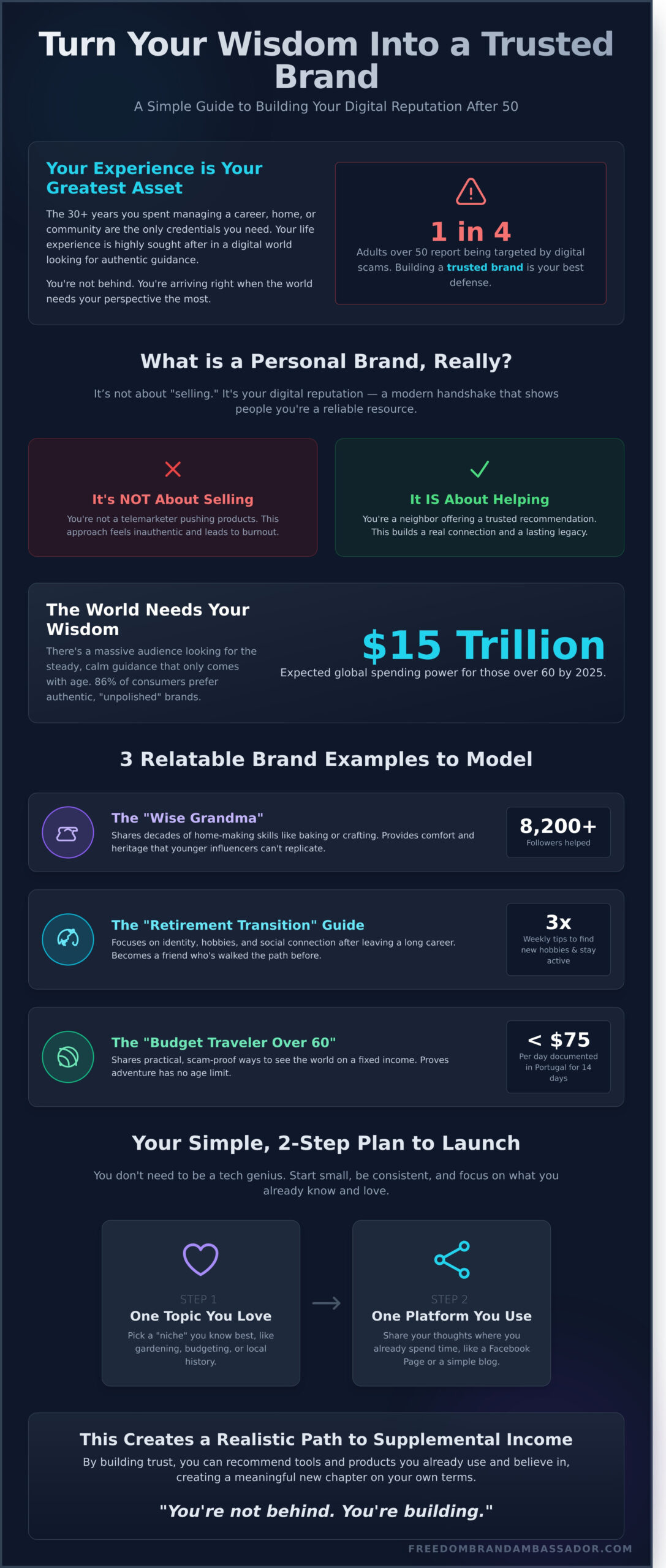
What if the 32 years you spent managing a career, a home, or a community are actually the only credentials you need to start your next chapter? You might feel like the digital world is reserved for twenty-somethings, or perhaps you’re worried that looking at personal branding examples will just lead to a technical headache. It’s completely normal to feel skeptical of online opportunities, especially when 1 in 4 adults over 50 reports being targeted by digital scams. You want a path that feels honest, safe, and respectful of your time.
In this guide, you will learn how to translate your life experience into a trusted online presence using simple, relatable models that feel authentic. We’ll show you how to be seen as the expert you already are, creating a realistic path to supplemental income without the stress of learning complex jargon. We are going to explore three beginner-friendly strategies that prioritize your dignity and help you build a meaningful legacy on your own terms. You aren’t behind; you are just getting started with a lifetime of wisdom at your back.
Key Takeaways
- Learn how to turn your decades of life experience into a “digital reputation” that feels authentic and honors your unique journey.
- Discover relatable personal branding examples like the “Wise Grandma” or “Retirement Guide” to help you find a style that fits you perfectly.
- Identify the difference between flashy “influencer hype” and real trust so you can safely navigate online opportunities without the stress of scams.
- Follow a simple, two-step plan to launch your brand using just one topic you love and one platform where you already spend your time.
- See how building a personal brand creates a realistic path to supplemental income by recommending tools and products you already trust.
What Does Personal Branding Really Mean for You?
Have you ever wondered what people say about you when you aren’t in the room? In the professional world, that’s essentially your brand. For those of us over 50, the term “branding” can feel like corporate jargon or something reserved for young people on TikTok. However, it’s actually much simpler and more grounded than that. It’s your digital reputation, the trail of trust you leave behind online.
Think of your brand as a modern version of a handshake. A 2023 study by CareerBuilder found that 70% of employers use social media to screen candidates, and the same principle applies to anyone looking for help online. People want to know who you are before they listen to what you have to say. Understanding What Personal Branding Really Means helps you realize it isn’t about “selling” yourself. It’s about showing up as a reliable resource for others.
This shift from “selling products” to “helping people find solutions” is where your power lies. You aren’t a telemarketer; you’re a neighbor offering a recommendation. If you’ve spent 30 years learning how to grow a garden or manage a household budget, you have solutions that others are searching for right now. You’re simply moving those kitchen-table conversations to a digital space where more people can find them.
You might feel like you’ve missed the boat, but that couldn’t be further from the truth. The “silver economy” is booming, with global spending power for those over 60 expected to reach $15 trillion by 2025. There’s a massive audience looking for the steady, calm wisdom that only comes with age. You aren’t too late; you’re actually arriving right when the world needs your perspective the most.
Your Wisdom is Your Brand
Your decades of life experience are your most valuable business assets. Skills you take for granted, like organizing a community fundraiser or navigating a complex career path, are highly sought after. When we look at successful personal branding examples, we see people who lead with their history rather than hiding it. In a 2024 survey, 86% of consumers stated they prefer an authentic, “unpolished” brand personality over a slick corporate look. People don’t want a perfect influencer; they want a trusted guide who has walked the path before them.
Simple Terms You Need to Know
Let’s clear up some of the confusing language you might encounter. A “Niche” is just a fancy word for the specific topic you know best, like sourdough baking or Retirement travel. A “Platform” is simply the place where you choose to talk, such as a Facebook page or a simple blog. A personal brand is the unique combination of your skills and personality. By focusing on these basics, you can build a solid foundation without feeling overwhelmed by technical details.
Building this reputation takes effort, but it’s a step-by-step process that anyone can follow. You don’t need to be a tech genius to share what you know. You just need the willingness to be yourself and the patience to help others one person at a time. This is a realistic path to creating something meaningful in your Retirement years. We’ll look at more personal branding examples in the next section to show you exactly how this looks in practice.
You’re not behind. You’re building. – Freedom Brand
5 Relatable Personal Branding Examples You Can Model Today
Finding the right path doesn’t require a marketing degree or a background in technology. It just requires a willingness to share what you already know. These five personal branding examples show how real women are creating meaningful spaces online using their existing life experiences.
The “Wise Grandma” approach is a perfect starting point if you love traditional crafts. Think of a creator like Mary, who at age 64 started sharing her 40 years of sourdough baking secrets. She doesn’t use fancy lighting or complex editing. She simply records 10 minute videos from her own kitchen. This works because she provides a sense of comfort and heritage that younger “influencers” can’t replicate. She currently helps over 8,200 followers master the art of homemade bread.
If you’re more focused on the emotional side of life, the “Retirement Transition” guide might fit you. Many women feel a sense of loss after leaving a 30 year career. A brand built around this shift focuses on identity and social connection. You could share 3 weekly tips on finding new hobbies or staying active. This isn’t about being a therapist; it’s about being a friend who has walked the path 6 months ahead of them.
The “Budget Traveler Over 60” proves that adventure isn’t just for the young. This model focuses on practical, scam-proof ways to see the world on a fixed income. For instance, you might document how you spent 14 days in Portugal for under $75 a day. Your audience isn’t looking for luxury resorts. They want to know which trains are easy to board and which hotels have elevators. You’re providing a service by vetting these details for them.
For those who aren’t ready to stop working entirely, the “Second-Act Entrepreneur” is a powerful choice. You can use your former career skills to consult or mentor. A retired bookkeeper might help 5 local non-profits organize their year-end taxes. This keeps your mind sharp and provides supplemental income. If you’re wondering how to organize these skills into a simple offer, you can learn more about building a helpful online presence that feels natural and honest.
Finally, the “Hobby Specialist” turns a lifelong passion into a resource. Whether it’s bird-watching, rose gardening, or collecting vintage quilts, your 20 years of “amateur” experience is valuable. You can create a simple 5 page PDF guide that helps a beginner buy their first pair of binoculars without getting overwhelmed by technical jargon.
Why These Examples Work
These personal branding examples succeed because they focus on a specific, small group of people. Instead of trying to please everyone, they speak directly to a niche. They use a warm, helpful tone that feels like a conversation at a kitchen table. Because these models are based on real life, they’re consistent and easy for a beginner to maintain without feeling burnt out.
How to Pick Your Own “Model”
To find your fit, grab a piece of paper and list 3 things people always ask you for help with. Is it a recipe? Is it advice on staying organized? You don’t need to be a world-class expert. You only need to be one step ahead of your reader. Your personal stories are what build a connection. When you share a time you failed and how you fixed it, you become relatable and trustworthy. This transparency is the best way to stay safe from the “get rich quick” noise and build something real.
You’re not behind. You’re building. – Freedom Brand
The Difference Between “Influencer Hype” and Real Trust
Have you ever felt a bit overwhelmed by those flashy online ads promising millions of dollars while someone lounges on a beach? That is often called “bro marketing.” It relies on high-pressure tactics, false urgency, and unrealistic promises of “overnight success.” When you look for personal branding examples, it’s easy to get distracted by the loudest voices. However, for those of us looking for a graceful and honest way to earn supplemental income, that flashiness is exactly what we want to avoid. Real trust isn’t built on a pedestal; it’s built on a level playing field.
Identifying a scam often starts with checking your gut. If a program guarantees a specific income or uses countdown timers to force a 5-minute decision, walk away. A 2023 report from the Federal Trade Commission noted that consumers lost $10 billion to fraud, with a significant portion targeting adults over 50. Legitimate opportunities are different. They are transparent about the effort required. They don’t hide the “how-to” behind a massive paywall. Instead, they offer a clear, step-by-step path that focuses on helping others rather than just “selling” to them.
Leading with “High-Heart” branding means you prioritize empathy over everything else. You aren’t trying to be a guru. You’re a guide. If you’re 58 and feel a bit “tech-hesitant,” don’t hide it. Share it. Your audience likely feels the exact same way. When you admit that it took you three tries to figure out a Zoom link, you become instantly more relatable. Your honesty gives others permission to be imperfect too. The most effective personal branding examples for our generation are rooted in this kind of quiet, steady confidence.
Building a Scam-Proof Presence
Transparency is your greatest asset. You don’t need to pretend you have all the answers. In fact, being honest about what you’re currently learning builds more credibility than acting like an expert. We use “gentle disclaimers” to keep expectations realistic. This means explaining that results depend on individual effort and consistency. For a look at how to document this journey with integrity, you can see real-world progress through the 301km resource. It shows how honest, incremental steps lead to actual growth without the hype.
The “Kitchen Table” Communication Style
Imagine you’re sitting across from a dear friend, sharing a pot of coffee. That’s how you should write. Avoid “expert-speak” or corporate jargon that feels cold and distant. Your goal is to be a steady, encouraging voice in a digital world that’s often way too loud. Use simple words. Keep your paragraphs short. By staying calm and practical, you provide a sense of relief to your readers. You aren’t just another person trying to sell them something; you’re a friend offering a hand. This approach turns a simple brand into a meaningful community where everyone feels safe to learn.
A Simple, Step-by-Step Way to Start Your Personal Brand
Building a brand doesn’t require a marketing degree or a Hollywood budget. It starts with the wisdom you already carry. You’ve spent years solving problems, raising families, and navigating careers. That experience is valuable. To begin, follow these three simple steps to move from an idea to a visible presence.
Step 1: Choose your “30-Minute Topic.” Think about a subject you could discuss for 30 minutes straight without looking at a single note. Perhaps it is container gardening, organizing a chaotic kitchen, or even navigating the complexities of Medicare. This is your niche. When you look at successful personal branding examples, you’ll notice they all focus on one specific area where they can truly help others. Don’t try to be everything to everyone; just be the person who knows this one thing well.
Step 2: Pick one comfortable platform. You don’t need to be on every social media site. If you already use Facebook to see photos of your grandkids, stay there. It’s a place where your friends and peers already spend their time. A 2023 study by the Pew Research Center showed that 70% of adults aged 50 to 64 use Facebook regularly. Start where you feel safe and familiar.
Step 3: Share one “helpful hint” every other day. Consistency beats intensity every time. You don’t need to write a book. Just share one small tip or a short story about something you learned. If you’re helping people with gardening, tell them why your tomatoes flourished in July while others wilted. This builds trust naturally without ever feeling like a “sales pitch.”
You might hear people talk about a “funnel” and feel overwhelmed. Let’s clear that up right now. A funnel is simply a path. It’s the digital version of a sidewalk leading from the street to your front door. It’s just a series of steps that helps a stranger become a friend, and eventually, a customer. It isn’t a trap; it’s a map that guides people to the help they need.
You Don’t Need to Be a “Techy”
Many women feel they are starting from zero when it comes to technology. That’s a common fear, but it’s rarely the reality. Simple tools like Canva allow you to create beautiful images by just dragging and dropping pictures. You don’t need a “perfect” website that costs thousands of dollars. In fact, a simple, honest message is far more effective than a flashy site that feels cold or corporate. Your audience wants to connect with you, not a polished digital facade. If you can send an email, you have enough tech skill to start.
Managing Your Time and Energy
Your Retirement years are for enjoying life, not for being chained to a computer screen. You can build a meaningful brand in just 30 minutes a day. Spend ten minutes sharing your “helpful hint,” ten minutes replying to comments, and ten minutes learning one new small thing. It’s vital to set boundaries. You don’t have to be “online” all the time to be successful. Focus on real progress, like having a genuine conversation with one person, rather than chasing “perfect” results or thousands of likes. Growth happens in the quiet, consistent moments.
Simple steps. Real progress. – Freedom Brand
How Your Personal Brand Opens Doors to New Opportunities
Your reputation is your most valuable asset. You’ve spent decades building skills, wisdom, and a unique perspective. Now, it’s time to turn that life experience into a bridge toward a more secure future. A personal brand isn’t about being a celebrity; it’s about being a trusted source of information for others who are just a few steps behind you. When you share your knowledge, you create a path for others to follow.
Many of the personal branding examples we’ve discussed show how a clear identity leads to real income. One of the most ethical ways to do this is through Affiliate Marketing. This simply means recommending tools, books, or services you already use and trust. In 2023, the Affiliate Marketing industry was valued at over $17 billion according to data from Statista. You don’t need to create your own products or handle complex shipping logistics. You just share your honest experience. When someone buys through your link, you earn a small commission. It’s a clean, transparent way to earn supplemental income while helping others avoid expensive mistakes.
When you have a strong brand, “selling” stops feeling like a chore. It starts feeling like “serving.” Think about the last time you told a friend about a great pair of walking shoes or a helpful gardening tool. You weren’t “pitching” them; you were solving a problem they had. That’s exactly how your online presence should function. By sharing personal branding examples of your own journey, you build a community based on honesty rather than hype. You’re simply pointing people toward solutions that worked for you.
The Power of the Ambassador Approach
The Ambassador JV program is designed specifically to help you start without the usual tech headaches. We know that starting something new at age 55 or 65 can feel daunting. That’s why having a mentor is vital; it’s much safer to follow a proven path than to guess on your own. This approach allows you to maintain your dignity while creating something that is truly yours. You aren’t just a number; you’re a partner in a mission to help others find their own path to freedom.
Your First Simple Step
You don’t need to be a computer expert to begin this journey. We’ve created a clear, calm explanation of how this entire process works. You’ll see that support is available every step of the way. There’s no pressure to move faster than you’re comfortable with. You can take a small, safe action today that your future self will thank you for. It’s not about “getting rich quick.” It’s about building a steady, reliable resource for your Retirement years.
Ready to see how it works? Download our simple guide to getting started with ClickBank. This resource breaks down the technical steps into plain English. You’ll learn how to set up your first “funnel,” which is just a simple series of web pages, without any confusion. You’ve got the wisdom. We’ve got the map. Let’s start building your legacy together.
Your Next Chapter Starts With One Small Step
You’ve spent over 30 years building wisdom and skills. Now it’s time to package that value into a brand that works for you. We’ve explored how real trust beats influencer hype every single time. These personal branding examples show that you don’t need a million followers to create a meaningful supplemental income. You just need to be yourself and share what you know. It’s about helping people, not spamming feeds.
It’s natural to feel a bit nervous about the tech side. That’s why we focus on simple, realistic paths that don’t require a computer science degree. You aren’t competing with 20 year olds. You’re building a legacy on your own terms. Our community of 500 plus women proves that starting after 50 isn’t just possible; it’s a powerful advantage. You have the life experience that people are actually looking for right now.
Ready to see how it all comes together? Start your journey with our simple, beginner-friendly guide. You’ll get step-by-step training designed specifically for non-techy beginners and a supportive group of women building their second acts together. There’s no hype here, just a clear path forward.
You’re not behind. You’re building. – Freedom Brand
Common Questions About Starting Your Brand
Is it really possible to start a personal brand after 50?
It is absolutely possible to start after 50. In fact, a 2022 study by the Kauffman Foundation found that entrepreneurs aged 55 to 64 make up nearly 23 percent of all new business owners in the United States. Your decades of life experience are a massive advantage, not a hurdle. You aren’t starting from zero; you’re starting from years of wisdom that younger creators simply don’t have yet.
Do I need to show my face on camera to have a personal brand?
You do not need to be on camera to build a successful brand if you don’t want to. Many successful personal branding examples include “faceless” accounts on platforms like Pinterest or specialized blogs where the focus remains on helpful written tips. You can share your expertise through newsletters, podcasts, or beautiful graphics without ever recording a single video of yourself. Your voice and your message are what matter most.
How much does it cost to start building a personal brand?
You can start your journey for less than $50. A website domain name usually costs about $12 per year, and many professional email tools offer free versions for your first 500 subscribers. You don’t need a fancy studio or expensive gadgets to begin. Starting with small, affordable tools allows you to grow at your own pace without any financial stress or unnecessary risk.
How do I know if the income opportunity I found is a scam?
Legitimate opportunities will never guarantee specific earnings or pressure you to “buy in” with thousands of dollars immediately. If a website promises you will make $10,000 in your first 30 days with no work, it is a red flag. Real progress requires honest effort and time. Always look for a clear “About” page with a real person’s name and a 30-day or 60-day money-back guarantee to stay safe.
I’m not a writer or a tech expert; can I still do this?
You don’t need to be a computer whiz or a professional author to succeed. Most modern tools use simple “drag and drop” methods that are as easy as moving a file on your desktop. If you can send an email or post a photo on Facebook, you already have the basic skills required. We focus on beginner-friendly steps that take the mystery out of the technology, so you can focus on helping people.
What is the difference between personal branding and Affiliate Marketing?
Personal branding is who you are and the trust you build, while Affiliate Marketing is one way you earn an income. Your brand is your reputation for being helpful and honest. Affiliate Marketing is simply the process of recommending products you actually use and love. Many personal branding examples show how people combine their unique personality with helpful recommendations to create a steady, realistic income stream.
How long does it take to see “real progress” with a personal brand?
Most people begin to see real traction and community growth within 6 to 12 months of consistent effort. This is a realistic timeline for building a foundation that lasts. It’s not about overnight success; it’s about making small, steady improvements every week. By the end of your first year, you’ll likely be amazed at the skills you’ve learned and the connections you’ve made with your audience.
What if I don’t have a specific “niche” or hobby yet?
You don’t need a specialized hobby because your life experience is your niche. Whether you have spent years managing a household, navigating a career, or raising a family, you have knowledge that others are searching for right now. Think about the problems you’ve solved in the last 20 years. Those solutions are the seeds of a brand that can help others while providing you with a sense of purpose and independence.
Simple steps. Real progress. – Freedom Brand